REVIEW · SEOUL
Seoul Tram Pedal Challenge
Book on Viator →Operated by We Ride Korea Bicycle Tours · Bookable on Viator
Pedal Seoul without reading a map. This tram bike tour is a clever way to cover big sights with less fuss, while your guide keeps you moving toward landmarks like Gwanghwamun and Tongin Market. I really like the small-group feel and the way the route is built for sightseeing, not just transportation.
One thing to plan for: boarding depends on height rules (under 100cm won’t be allowed, and 100–140cm may need extra safety gear and pants).
Key Highlights
- Tram bike sightseeing: A fun ride that still feels easy to manage.
- Guide-led navigation: You skip the map-wrestling and photo-hunting stress.
- Built-in stops for comfort: The pacing includes breaks for restroom and food tasting.
- Historic context on the move: Guides give clear stories as you pass major areas.
- Tongin Market snack included: You get to try tteokbokki there (not just browse).
- Small group size: Maximum of 9 travelers, so it stays controlled.
In This Review
- Why a Seoul Tram Bike Makes the City Feel Simpler
- Start at Jongno: Timing, Gear Fit, and the First Reality Check
- Jeongdong Observatory: A Fast Look at Seoul’s Layout
- Gwanghwamun Square and Insadong: Iconic Seoul Meets Street-Level Texture
- Ikseon-dong Hanok Street and Changdeokgung: What You Notice from the Tram
- Wonseo-dong Hanok Village Stroll: A Calm Brake from the Main Route
- Tongin Market Snack Break: Real Food Time, Not Just Looking
- The Role of the Guides: Stories, Photos, and Good Pacing
- Price and Time: Does $85 Really Add Value?
- Small-Group Comfort and Helmet Rules You Should Plan Around
- Weather and Scheduling: When Plans Might Shift
- Who This Tour Fits Best (and Who Might Want Something Else)
- Should You Book the Seoul Tram Pedal Challenge?
- FAQ
- How long is the Seoul Tram Pedal Challenge?
- Where do I meet for the tour?
- What’s included in the price?
- Are there height requirements for the tram bike?
- Does the tour run in bad weather?
- How many people are in a group?
Why a Seoul Tram Bike Makes the City Feel Simpler
Seoul can be a lot, even when you’re excited. Roads, crossings, and train transfers eat time fast. This tour is a smart antidote: you’re on a guided route that’s designed to keep you out of the “What bus is this?” and “Where do we cross?” loop.
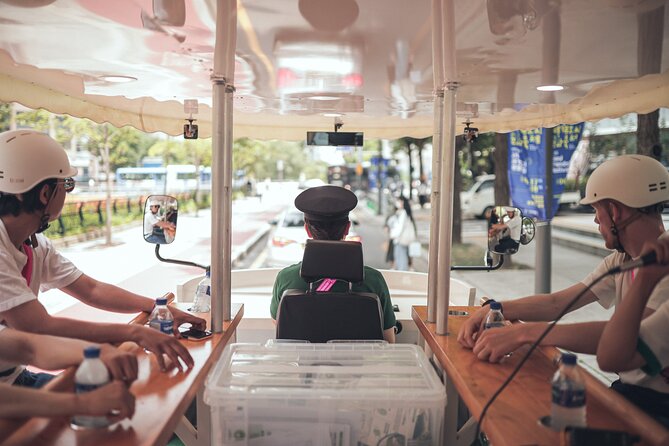
The tram bike format helps because you’re not fully relying on walking. You still get the street-level feel, but with less physical grind than a half-day of sightseeing on foot. And because you’re cycling on a set plan, you get to focus on looking, not figuring.
I also like that the experience is structured around famous Seoul anchors. You’re not wandering randomly—you’re moving between high-recognition landmarks, and that makes it easier to understand what you’re seeing.
Start at Jongno: Timing, Gear Fit, and the First Reality Check
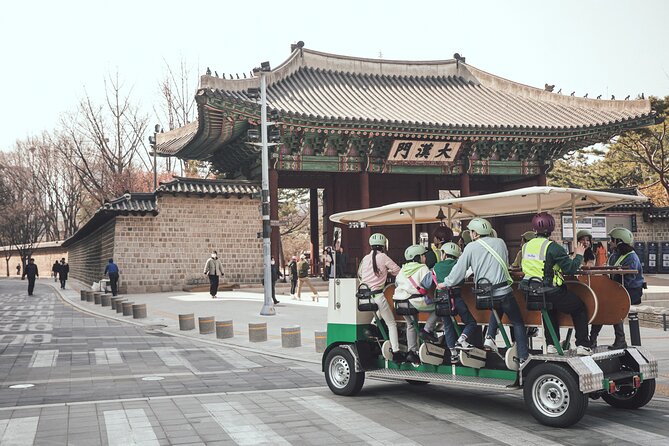
The tour begins at Le Meiller Jongno Town near Jongno Station, with a 9:30 am start. You’ll want to arrive about 20 minutes early for ticketing, safety training, and equipment fitting. That time matters because the tour won’t just hand you a bike and send you off.
Before you ride, your height is measured on-site. If you’re under 100cm, you won’t be allowed to board. If you’re between 100cm and 140cm (regardless of age), you must wear additional safety equipment, including a harness—and you’ll need to be sure the person is wearing pants. This is the kind of detail that can quietly ruin a trip plan if you forget, so it’s worth taking seriously.
Once you’re fitted, the rest feels more relaxed. Based on what people focus on in their feedback, the guides pay attention to making the bike experience comfortable, and they keep the group moving at a pace that doesn’t feel chaotic.
You can also read our reviews of more tours and experiences in Seoul.

Jeongdong Observatory: A Fast Look at Seoul’s Layout
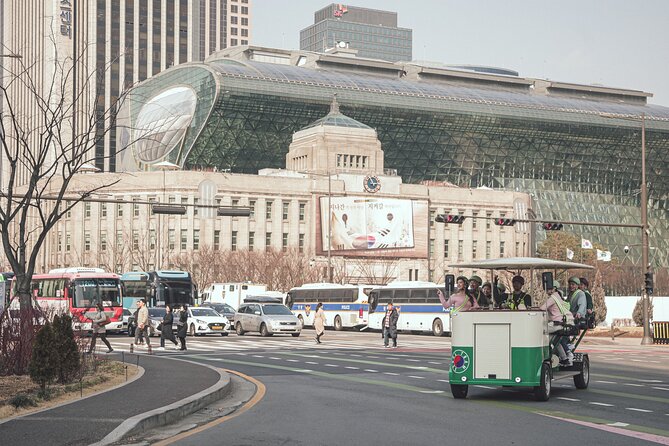
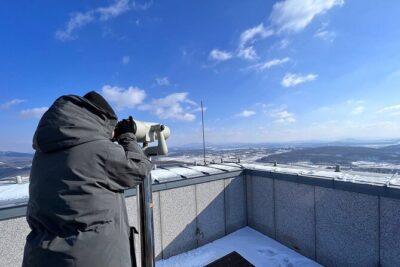
One of the early stops is Jeongdong Observatory, located on the 13th floor of the Seoul City Hall annex in Seosomun. The value here is simple: it gives you a higher-level view of the city that you can mentally connect to later street-level sights.
From the observatory, the views are described as sweeping—covering areas around Jeong-dong, Deoksugung Palace, Seoul City Hall, Seoul Square, and even the direction of Inwang Mountain on clear days. This matters because Seoul can feel confusing when you’re only moving street to street. A quick skyline or city-layout peek helps you orient fast.
It’s also a low-effort stop. You’re not hiking for an hour. You’re getting a controlled snapshot and then getting back on your route.
Gwanghwamun Square and Insadong: Iconic Seoul Meets Street-Level Texture
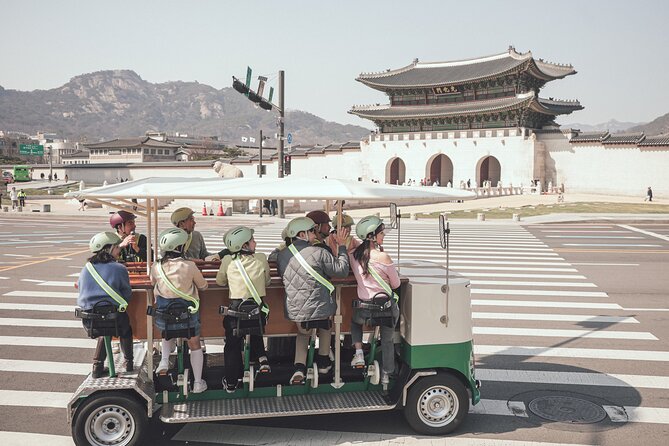
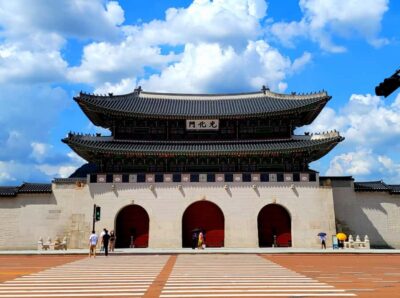
Next comes the historic heart zone: Gwanghwamun Square. It’s a wide open plaza stretched between Gwanghwamun Gate and City Hall. This is one of those places where Seoul feels official and grand all at once—big monuments, big space, and a lot of recognizable landmarks.
The tour then shifts into Insadong antique street, also known as a traditional culture street. You’ll ride through this area on the tram bike, which is a practical win. Instead of weaving through crowds on foot for every block, you glide along and still get that street feel.
If you care about photos, this section is a good test of whether a guide’s skills matter. In feedback, one of the guides—Ma Dong-seok—is praised for historical introductions and especially for photo help. That’s not a small detail. When you’re moving, the difference between random shots and clean framing is huge.
Ikseon-dong Hanok Street and Changdeokgung: What You Notice from the Tram
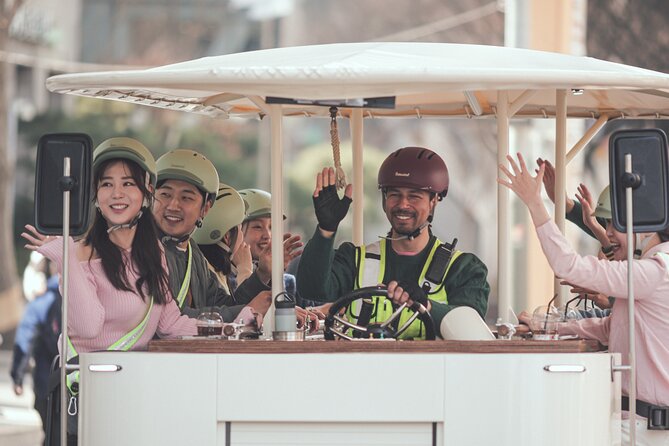
After Insadong, you enter Ikseon-dong Hanok Street, where you’ll have time for a short stop connected to Ikseondong Salt Bread. This part is short, but it’s a useful kind of stop: it gives you a taste of what the neighborhood vibe is like without turning the tour into a long food-only detour.
As the tram moves onward, you’ll also pass near Changdeokgung Royal Palace. Even if you’re not spending the whole day inside palaces, this passing view can help you connect the scale and layout of the palace to what you’re seeing on the ground.
Changdeokgung is one of those names you’ll hear in Seoul travel planning. So when you see it from the tram route, it clicks: you’re not just collecting stops—you’re building a mental map of where these major sites sit.
Wonseo-dong Hanok Village Stroll: A Calm Brake from the Main Route
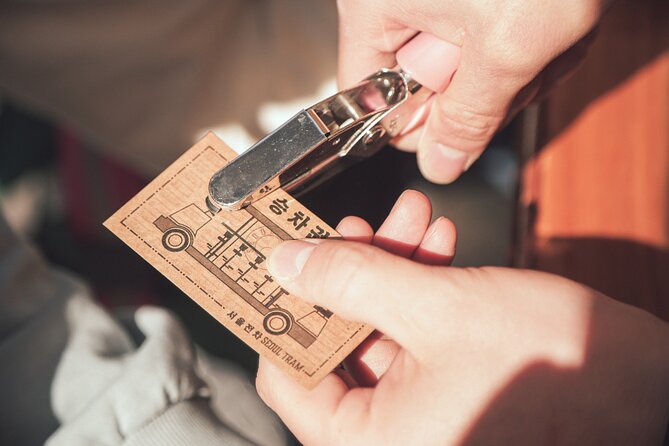
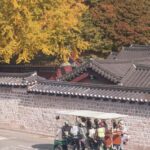
A short walking segment takes you through Wonseo-dong Hanok Village, with traditional houses along quieter alleyways. This is one of the best parts of a “cycle and sightseeing” mix because it slows things down in a gentle way.
You get a little of the classic hanok lane atmosphere without needing to commit to a long walk. The key is to use the time for simple observation: doors, alley angles, and the way the neighborhood sits alongside modern Seoul.
This section also helps break up the ride so you don’t feel like you’re only on a machine. After a few stops, that change of pace is welcome.



Tongin Market Snack Break: Real Food Time, Not Just Looking
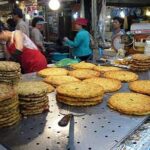
The most enjoyable payoff for many people is Tongin Traditional Market. The tour sets aside about 20 minutes here, and the highlight is eating.
You’ll be able to try a new type of tteokbokki, plus other market food as part of the tasting. One feedback detail I consider important: the food included is vegetarian, and people specifically call out that it was excellent. So if you eat vegetarian (or you’re traveling with someone who does), this is a point in your favor.
Even if you’re not a “market person,” Tongin works because it’s guided. You’re not standing there wondering what you should order. Instead, you’re sampling what’s offered in that context—so you get the experience, not just the venue.
The Role of the Guides: Stories, Photos, and Good Pacing
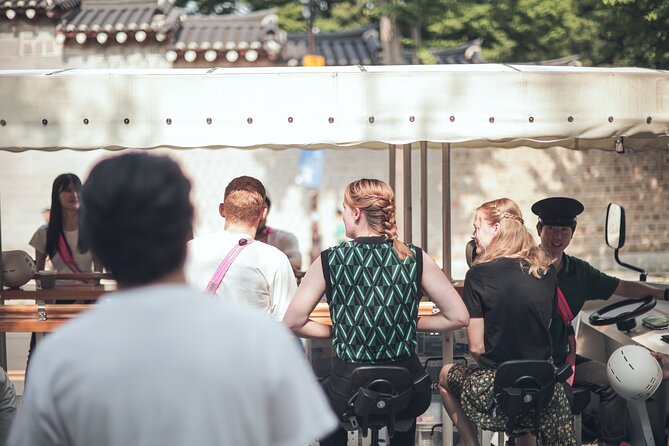
A tour is only as good as the person leading it, and the best part here is how the guides work the flow.
In feedback, both Ma Dong-seok and Vincent are mentioned as standout guides. They’re praised for clear historical introductions and for being skilled at taking great photos. That combination matters: if the guide can tell you what you’re seeing and also help you capture it, you come away feeling like you didn’t just “pass through.”
You’ll also appreciate the pacing. People highlight that there are considerate pit stops, including for restroom and for local food tasting. That sounds small, but on a city route with multiple landmarks, it’s the difference between a tour that feels smooth and one that feels stressful.
Price and Time: Does $85 Really Add Value?
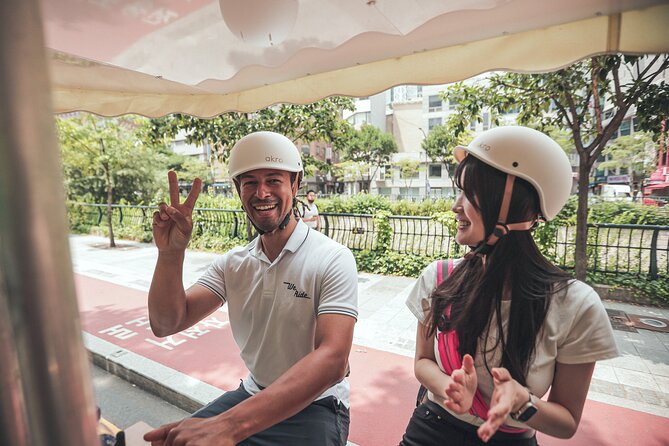
At $85 per person for about 2 hours 30 minutes, you’re paying for more than a bike ride. You’re buying:
- A guided route that hits multiple famous Seoul zones
- Helmet use and safety gear fitting
- A structured observatory + palace-area + market flow
- A snack experience at Tongin Market
If you try to recreate this on your own, you’d spend time coordinating transit, sorting out directions, and losing the advantage of a “stop-by-stop” plan. The tram bike format also helps you cover ground quickly without turning your legs into the main activity.
Is it the cheapest way to see Seoul? No. But if you want an efficient, fun slice of the city in one morning, this price can make sense—especially with the included helmet and market snack.
Small-Group Comfort and Helmet Rules You Should Plan Around
This tour has a cap of 9 travelers, which keeps things manageable and usually makes photo stops easier. Also, helmet use is included, and you’ll go through safety training before riding.
One practical tip: wear clothes that match the safety requirements. The tour notes that for the 100–140cm range, harness use requires pants. Even if that doesn’t apply to you, pants and comfortable footwear generally make a cycling-and-walking hybrid far less annoying.
And remember the bike ride is meant to be approachable. People describe the tram bike as fun and not hard to cycle, which is exactly what you want if your goal is sightseeing rather than training.
Weather and Scheduling: When Plans Might Shift
This experience runs in all weather conditions, but it also says it requires good weather. In real life, that means you should treat it as “weather-dependent in practice.” If conditions are poor enough, you could be offered a different date or a refund.
Also, the tram tour has a minimum of two confirmed participants. If fewer than two people are confirmed for your time slot—and no extra bookings come in by two days before—you might be asked to adjust your schedule.
If your trip is fixed and Seoul is your only chance to do this, plan a backup option for that morning. That’s not pessimism; it’s just smart travel planning.
Who This Tour Fits Best (and Who Might Want Something Else)
This is a great fit if you want Seoul highlights without burning a half-day on logistics. It also suits couples and small groups because the maximum size keeps the route smoother.
You’ll likely enjoy it more if you:
- Want a guided route with clear landmark connections
- Like photos and appreciate guides who help with framing
- Enjoy eating while you travel (Tongin Market is a real stop, not a drive-by)
If you want full, in-depth palace time at slow speed, you may find the cadence a bit brisk. This is not a “stay inside every museum” style tour. It’s a move-and-see tour—so you get breadth and context, not hours of deep museum work.
Should You Book the Seoul Tram Pedal Challenge?
If you’re planning a first or second visit to Seoul and you want an efficient, fun morning with major landmarks, I think it’s an easy “yes.” The biggest reasons are the combination of guided route planning, easy tram bike riding, and a real market food moment at Tongin.
The main reason to hesitate is the height/safety setup. If you’re traveling with kids or anyone near the 100–140cm range, read the rules carefully so you don’t reach the shop and get stopped.
If those rules fit your group, this tour is a strong way to see a chunk of Seoul without the map headache—while still getting enough character from neighborhoods like Insadong and the hanok lanes.
FAQ
How long is the Seoul Tram Pedal Challenge?
It runs for about 2 hours 30 minutes.
Where do I meet for the tour?
You meet at Le Meiller Jongno Town, 19 Jong-ro, Jongno District, Seoul, South Korea, and the tour ends back at the same meeting point.
What’s included in the price?
The tour includes helmet use and a snack at Tongin Market. It also uses a mobile ticket.
Are there height requirements for the tram bike?
Yes. If you are under 100cm, you won’t be allowed to board. If you are 100–140cm, you must wear additional safety equipment (including a harness), and the tour notes that pants are required for that height range.
Does the tour run in bad weather?
It operates in all weather conditions, but it also notes it requires good weather. If canceled due to poor weather, you’ll be offered a different date or a full refund.
How many people are in a group?
The tour has a maximum group size of 9 travelers.