REVIEW · SEOUL
K-Pop Making Class with a Producer!
Book on Viator →Operated by KING STUDIO · Bookable on Viator
You can make a K-pop track in two hours. At KING STUDIO in the Gangnam/Seolleung area, you learn how K-pop songs get built by doing the work, not just watching it. The class is designed around three key roles, so you get a taste of what it’s like to operate like a real production team.
I especially like that you’re doing hands-on studio tasks in one session: recording, editing, and mixing your own song result. I also like the practical language support—lyrics come with Korean plus romanized spelling, and there’s professional English interpretation to help you nail timing and pronunciation.
One thing to consider: your “song input” is based on pre-selected songs arranged in advance for the class, so this is more about production and performance direction than fully writing from scratch.
In This Review
- Key highlights you’ll feel fast
- A 2-hour K-pop makeover at KING STUDIO
- How the class teaches you to think like a producer
- Finding KING STUDIO near Seolleung and COEX
- Inside the session: your mini studio production cycle
- Step 1: Get set up and learn the workflow
- Step 2: Record your vocal as the singer
- Step 3: Shift into producer and sound engineer mode
- Step 4: Wrap up with a finished result
- What’s included: lyrics, accompaniment, and English support
- Price and value: what $109 buys in Seoul
- Is this the right fit for you?
- You’ll probably love it if you:
- You might want to rethink it if you:
- Booking, timing, and the small logistics that matter
- Should you book this K-pop making class with a producer?
- FAQ
- Where is the K-Pop making class located?
- How long does the experience take?
- What is the price per person?
- What will I do during the class?
- Do I get lyrics and music support?
- Is there English help?
- How do I get to the studio from Seolleung Station?
- Is this a shared group activity?
- Do I need to be on time?
- What if weather is bad or the class can’t run?
Key highlights you’ll feel fast
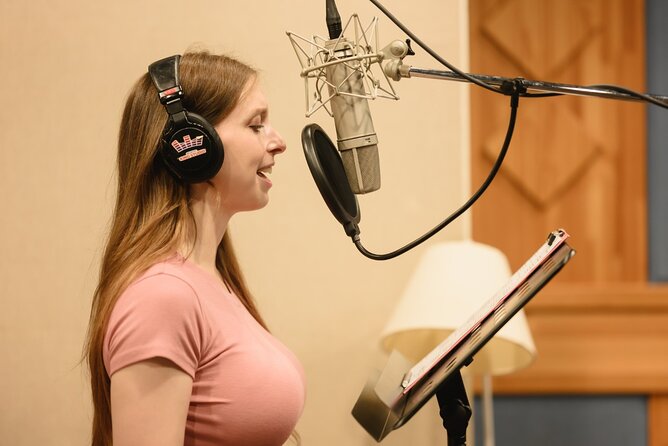
- Three roles in one session: singer, producer, and sound engineer tasks all get covered.
- Studio-level outcome: you record, edit, and mix your own track during the experience.
- Lyrics support built in: Korean Hangul plus romanized lyrics, plus English interpretation.
- Private group format: it’s just your group in the studio.
- Easy-to-reach area: near Seolleung Station and the COEX/Seolleung district.
A 2-hour K-pop makeover at KING STUDIO
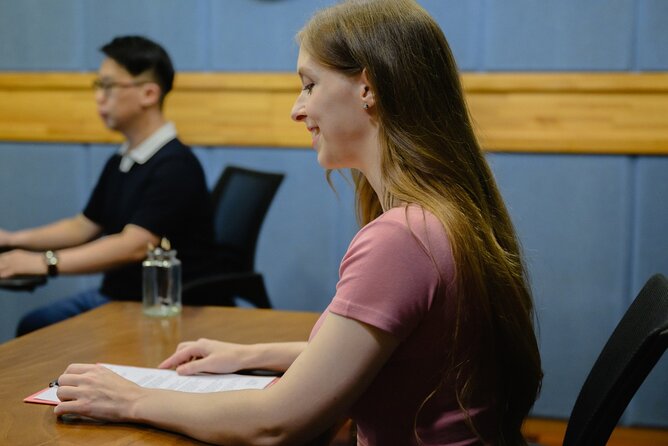
If your travel list includes Seoul nightlife, cafés, and shopping, add one more box: a working K-pop recording studio experience. This class is short by design—about 2 hours—but it’s structured like a real mini production cycle. You’re not sitting in a classroom. You’re getting set up, recording your part, then doing the post work.
The best part is how the session frames K-pop as a process. You’ll hear the idea that music production isn’t one magic button. It’s communication between people who understand sound, timing, and performance. Then the class puts that concept into your hands by giving you multiple roles to practice, not just one.
Also, the vibe tends to matter in this kind of activity. One manager, Kingsman, is described as warm and hands-on, and staff are said to be professional and friendly. That’s the kind of detail that can make the difference between you freezing at the mic and actually having fun.
You can also read our reviews of more tours and experiences in Seoul


How the class teaches you to think like a producer
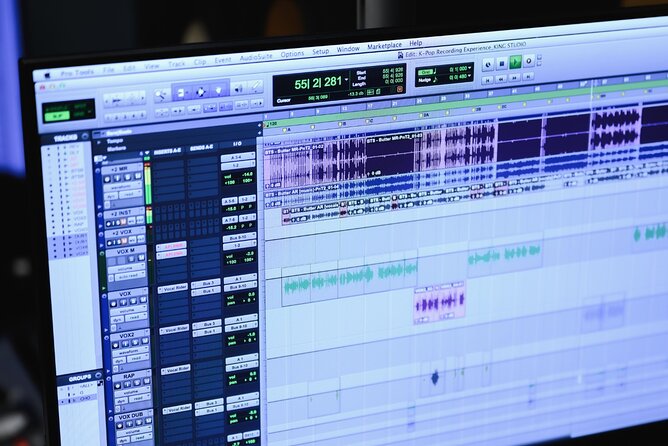
K-pop production can feel mysterious from the outside. Inside the studio, it’s more practical than you’d expect. The class breaks the process into three positions that you’ll rotate through:
1) Producer mindset
You’ll get an understanding of music and how sound engineers and producers communicate. In real studios, a big chunk of the job is decisions: what to emphasize, what to clean up, and how to shape the final sound.
2) Singer performance setup
You’ll record songs that are selected in advance for the session. This isn’t about writing your own melody, but it’s about interpreting a track, following guidance, and recording accurately.
3) Sound engineer workflow
You’ll also practice the technical side: recording, editing, and mixing. Even if you’ve never touched audio software before, you’ll experience what the job feels like—listening critically, making adjustments, and hearing the difference between a rough take and a polished result.
You get the value of seeing how these roles fit together. You don’t just learn terms; you watch how sound decisions affect what the singer needs to do, and you see how editing and mixing change the final feel.
Finding KING STUDIO near Seolleung and COEX
Location-wise, you’re in a neighborhood that’s easy to reach if you’re already riding Seoul Subway Line 2. You’ll start from Seolleung Station (Exit 1). From there it’s about two stops from Gangnam Station.
Here’s the straight shot for arriving:
- Exit at Seolleung Station Exit 1
- Turn right at Dunkin’ Donuts
- Go upstairs to the basement studio level
- The studio is described as being in front of a 7-Eleven
The meeting point address is listed as 52 Samseong-ro 75-gil, Gangnam District, Seoul. And the activity itself ends back at the meeting point, so you’re not dealing with a long walk across town afterward.
Practical tip: in a studio class, being on time matters more than you think. The experience requires you to enter at the appointed time. Plan to arrive a bit early so you’re not stressed about finding the basement level with soundproof doors.
Inside the session: your mini studio production cycle
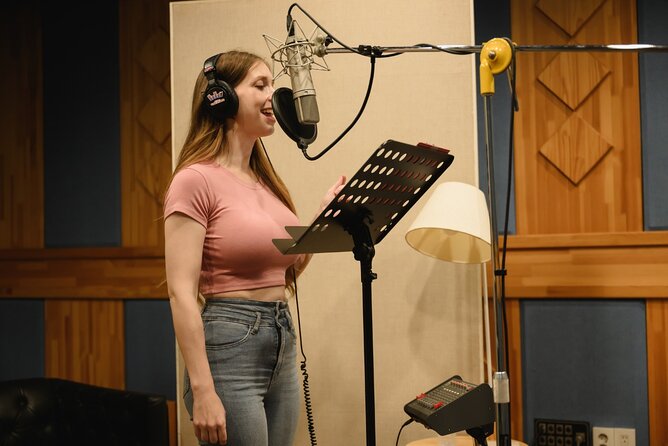
The schedule runs for about 2 hours (approx.), and you’ll be active throughout. That matters, because passive experiences can feel long even when they’re short. This one keeps moving.
Step 1: Get set up and learn the workflow
You’ll start with orientation around the idea of K-pop production—how roles connect, what the studio session will cover, and what you’ll do as a group. The point here is simple: you learn what you’re about to attempt before you attempt it.



Step 2: Record your vocal as the singer
You’ll record a song from the pre-selected options used for the class. That means you’ll be guided through performance for the track you’re assigned. In practice, this is where the language support becomes huge. You’ll get lyrics in Korean (Hangul) with romanized spelling, so you can follow along even if your Korean reading is limited.
If you’re worried about singing in a foreign language, you can relax a bit. The class includes professional English interpretation, and staff guide the recording process.
Step 3: Shift into producer and sound engineer mode
After the recording moment, the energy changes from performing to shaping. You’ll take part in:
- Editing your recording
- Mixing to balance the vocals and the track elements you’re working with
This is where you feel the difference between hearing music at home and hearing it like a technician. Small changes in timing and balance can alter how “finished” something sounds.
One review described guided mastering of music editing, plus staff helping through the process in a way that feels supportive, not intimidating. That’s exactly what you want in a short class: you don’t need total technical mastery, just the ability to understand what’s happening and participate without getting lost.
Step 4: Wrap up with a finished result
While the details of how files are delivered aren’t fully spelled out, you can expect a session outcome that reflects your recorded and processed work. The goal is that you leave with something you made in the studio, not just a set of photos.
What’s included: lyrics, accompaniment, and English support
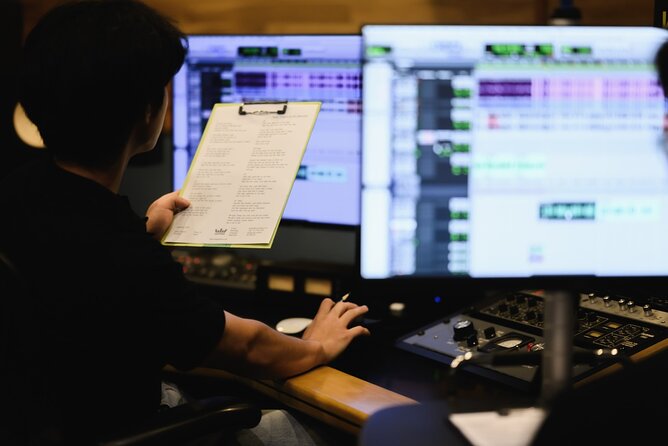
The included elements are built around one big goal: make it possible for you to participate even if you don’t speak Korean.
You’ll get:
- Accompaniment and lyrics (with Korean plus romanized versions)
- Professional interpretation (English)
That pairing is smart. Lyrics help you stay accurate during recording. English interpretation helps you understand instructions and timing cues quickly. Together, they reduce the most common stress points: not knowing what you’re supposed to do next, and not knowing how to follow the lyrics you’re hearing.
And if you like practical learning, you’ll appreciate that the lyrics aren’t just dumped on you. They’re part of the workflow so you can actually record.
Price and value: what $109 buys in Seoul
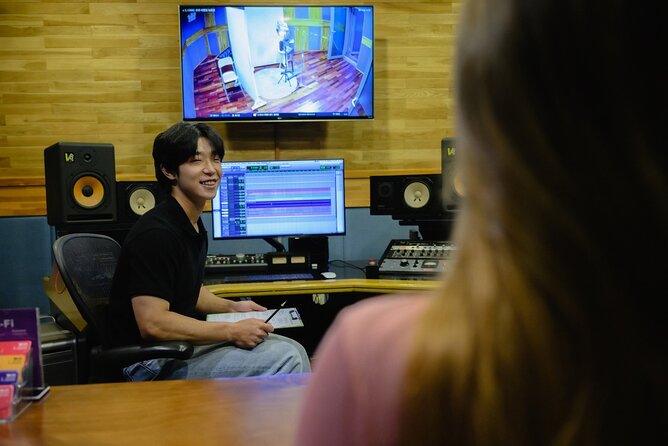
At $109 per person, this isn’t the cheapest activity in Seoul. But it’s also not a “museum demo” price. You’re paying for studio time, guidance, and the fact that you do the work: recording, editing, and mixing. That’s a real skill-based experience.
Here’s where the value clicks:
- You’re getting an outcome from the session work, not only a tour.
- The language support helps you participate fully, not just watch.
- The short duration keeps cost and time aligned while still covering multiple roles.
Also, the experience is described as being booked about 19 days in advance on average. That suggests demand stays steady. In practice, that means you should pick your date early if your Seoul trip is tight.
If you’re doing a lot of paid experiences while in Seoul, think of this as your “one technical, hands-on thing.” It pairs well with more typical sightseeing because it gives you something you can brag about later that’s not just a photo.
Is this the right fit for you?

This experience fits best if you want a hands-on Seoul story. You don’t have to be a singer. You do need a willingness to try and follow direction for a short time.
You’ll probably love it if you:
- Want a behind-the-scenes taste of how K-pop production works
- Like interactive activities where you touch real equipment (in a guided way)
- Enjoy group experiences with a creative payoff
- Sing comfortably enough to record a take with guidance
You might want to rethink it if you:
- Expect original songwriting and full track creation from scratch
- Want a long, deep technical course (this is built for 2 hours)
- Dislike structured activities that require punctual arrival
Booking, timing, and the small logistics that matter
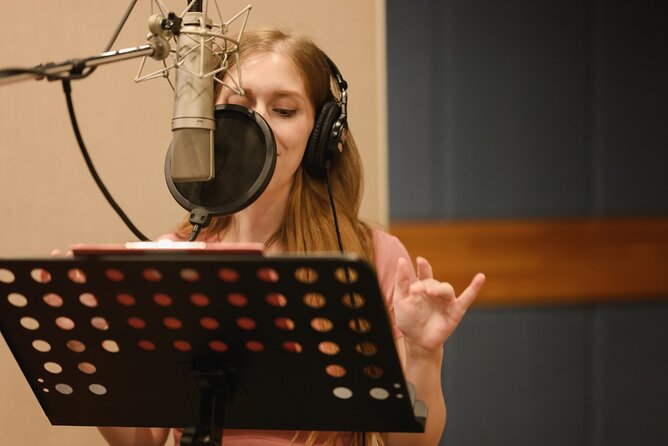
This is a private tour/activity, meaning only your group participates. That’s a meaningful difference versus large shared classes. It usually leads to more attention per person and a smoother experience.
The ticket is described as mobile, which is handy. Bring your phone and make sure you can access your ticket quickly at arrival.
Two more practical notes from the experience details:
- You must enter at the appointed time (punctuality is required).
- The experience has conditions for weather and minimum traveler numbers, with options like a different date or full refund if it can’t run.
Should you book this K-pop making class with a producer?
My take: yes, if you want one memorable, hands-on studio experience in Seoul and you’re excited about singing and basic audio production. The format is designed for tourists who don’t have Korean fluency, and the built-in lyrics support plus English interpretation removes the biggest barrier.
It’s also a solid choice for birthdays and small groups, based on the positive tone around a warm studio environment and staff guidance. You’ll walk away with the feeling that you did more than perform—you helped build and polish a track.
If your goal is a deep course in mixing theory, or you want to create an original composition, you’ll likely want something longer and more specialized. For a short, guided, producer-style intro with a real studio workflow, this is one of the better-value ways to get that K-pop “making” story.
FAQ
Where is the K-Pop making class located?
The class takes place at KING STUDIO in Seoul. The meeting point is listed as 52 Samseong-ro 75-gil, Gangnam District, Seoul, South Korea, and the stop is associated with the COEX Center area.
How long does the experience take?
It runs for about 2 hours (approx.).
What is the price per person?
The price is $109.00 per person.
What will I do during the class?
All participants are directly involved in singer, producer, and sound engineer roles. You’ll record, edit, and mix your own song result during the session.
Do I get lyrics and music support?
Yes. You’ll be provided with accompaniment and lyrics, including Korean and romanized lyrics.
Is there English help?
Yes. Professional interpretation is included in English.
How do I get to the studio from Seolleung Station?
Go to Seolleung Station Exit 1, turn right at Dunkin’ Donuts, go upstairs to the basement studio level, and look for the studio in front of a 7-Eleven.
Is this a shared group activity?
No. This is a private tour/activity, so only your group participates.
Do I need to be on time?
Yes. You must enter at the appointed time, and punctuality is required.
What if weather is bad or the class can’t run?
The experience requires good weather and a minimum number of travelers. If it’s canceled due to poor weather, you’ll be offered a different date or a full refund. If it’s canceled because the minimum isn’t met, you’ll also be offered a different option or a full refund.