REVIEW · SEOUL
DMZ Tour: 3rd Tunnel, Option(Suspension Bridge, Boat) from Seoul
Book on Viator →Operated by PLK TRAVEL · Bookable on Viator
The DMZ is close enough to feel real. This Seoul tour pairs major border sights with a walk into the Third Tunnel and lets you add a bridge walk or a river boat ride.
What I like most is how smoothly the day is paced, with round-trip transfers and a private, air-conditioned bus. The second win is the guide-led storytelling—clear context for sites like Bridge of Freedom, Dora Observatory, and Unification Village.
One consideration: you need a valid passport and a moderate fitness level, because the tunnel section involves a steep walk.
In This Review
- Key highlights to know before you go
- DMZ in One Day: Why This 3rd Tunnel Option Works
- Price and value: $35 that actually covers the hard parts
- Getting to the meeting point in Seoul and what to bring
- Bridge of Freedom and Mangbaedan Altar: the story starts before the tunnel
- Walking the Third Tunnel: 40 minutes that test your comfort zone
- Dora Observatory and Unification Village: looking north, then living near the line
- Dora Observatory
- Tongilchon-gil (Unification Village)
- After Dora: choose your add-on bridge or the Imjin River boat
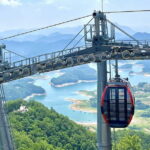
- Option 1: Gamaksan Chulleong Suspension Bridge (hike + long bridge walk)
- Option 2: Lake Majang Bridge / Majang Reservoir Suspension Bridge (battle-linked stop)
- Option 3: Imjin River boat ride (water-level perspective)
- The final stop: Peace Park and the point of the whole day
- Comfort, timing, and what you should expect from the group day
- Who should book this DMZ Third Tunnel tour (and who should reconsider)
- Should you book this tour?
- FAQ
- How long is the DMZ tour?
- Is DMZ admission included in the ticket price?
- Do I need a passport?
- What’s different about Mondays?
- What add-on options are available after the main DMZ highlights?
- What happens if weather is bad?
Key highlights to know before you go
- Third Tunnel walk included: A rare on-foot look at a major invasion passageway at the DMZ.
- Flexible add-ons after Dora: Choose Gamaksan Chulleong Suspension Bridge, Lake Majang Bridge, or an Imjin River boat ride.
- DMZ admission fees included: You’re not doing mental math on top of the ticket price.
- Private comfort from Seoul: A licensed guide plus a private, air-conditioned bus keeps the day manageable.
- Good group size for touring: The group max is 43, so you’re not stuck shoulder-to-shoulder all day.
DMZ in One Day: Why This 3rd Tunnel Option Works
A DMZ tour can go one of two ways: either it feels like a fast-moving checklist, or it gives you enough context to understand why each place matters. This version leans hard into the second one. You start with the Korean War narrative through sites like Bridge of Freedom and Mangbaedan Altar, then you physically enter the Third Tunnel, and only after that do you shift into the “see North Korea from here” perspective at Dora Observatory.
The big practical advantage is the structure. You’re not just getting one dramatic stop—you’re getting a day shaped around cause and effect: the story of the war, the military plan, the viewing point, and then the border-side life near the DMZ. If you only have a day in Seoul, that sequencing is a lot easier to process than stacking a random set of sights.
You can also read our reviews of more boat tours in Seoul

Price and value: $35 that actually covers the hard parts
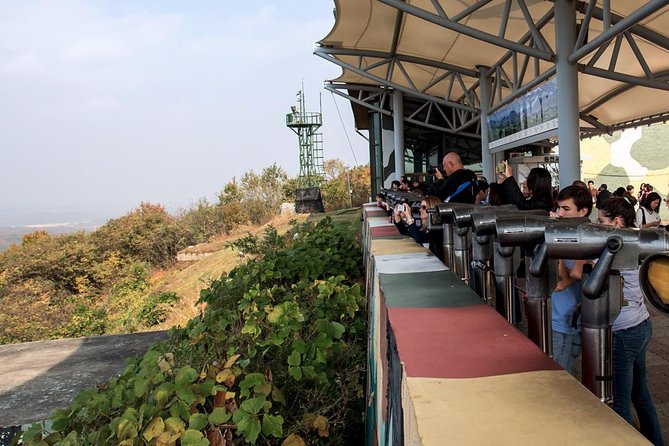
At $35 per person, this tour is aimed at maximum value for the money. Here’s what you’re paying for that matters in real terms:
- Round-trip transfer from Seoul (so you’re not figuring out timing, parking, or multiple transit legs on a schedule that can be tight).
- A licensed tour guide, which is huge for a subject as politically loaded as the DMZ.
- DMZ admission fees included, so you don’t get surprised by extra entry costs at the checkpoints.
- Private, air-conditioned bus transport to keep the day comfortable.
What’s not included is also clear: lunch and travel insurance. So you should budget time (and hunger) accordingly. If you’re the type who likes to eat well and take breaks, you’ll be happier if you plan your lunch stop rather than assuming one will magically happen.
Getting to the meeting point in Seoul and what to bring
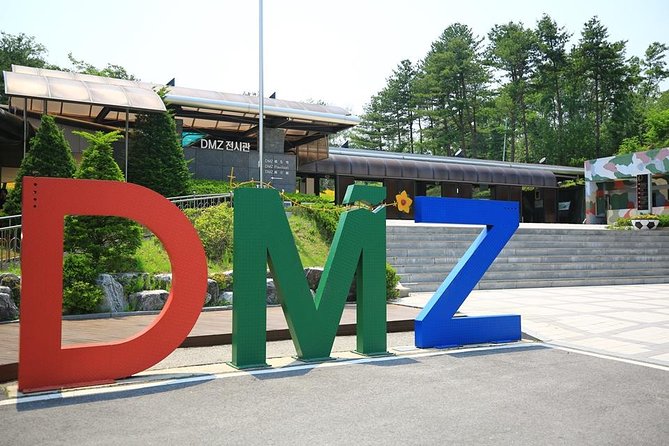
This is a “meet your guide” style day. You make your own way to one of the three designated meeting points in Seoul. After that, the tour takes over with the bus, guidance, and the DMZ process.
You’ll want to travel with:
- A current valid passport (required on the day of travel).
- A willingness to show up ready for ID checks (the ID check comes early in the DMZ portion).
- A calm attitude about schedule shifts. The tour notes changes can happen due to military training schedules, traffic, and weather.
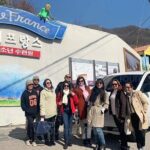
One practical tip: when tour buses pull up in Seoul, you’ll often see multiple groups lining up. Look for the vehicle with your guide’s name displayed so you’re in the right place quickly. That small bit of attention saves time when the clock is already moving.
Bridge of Freedom and Mangbaedan Altar: the story starts before the tunnel
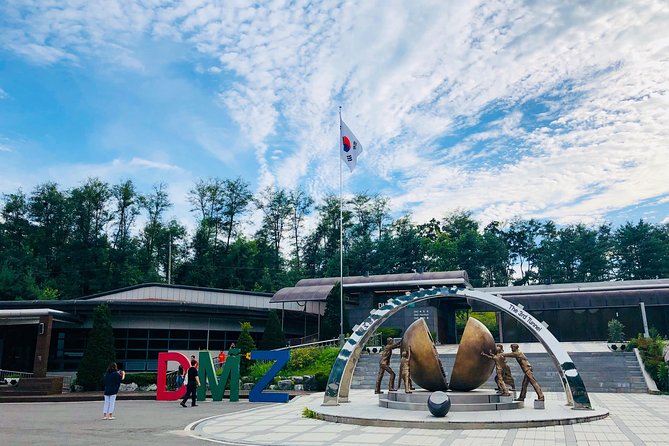
Before you go into the DMZ area, the group handles ID check, and then you get two early historical stops.
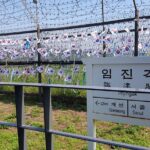
Bridge of Freedom is the kind of place where you feel how borders shape lives. It’s tied to the Korean War narrative, and your guide uses it as the opening chapter—why the armistice lines ended up where they did, and why this zone still matters.
Next is Mangbaedan Altar, another Korean War-linked historical site. You’re not just passively viewing plaques. The way this tour is timed gives you a “set the context first” feeling—so when you hit the tunnel later, you understand what kind of engineering and planning it represented.
These first stops are short (about 20 minutes), but they’re strategically placed. If you skip context, the rest of the day can feel like dramatic scenes with no emotional thread. Here, the thread is there early.
Walking the Third Tunnel: 40 minutes that test your comfort zone
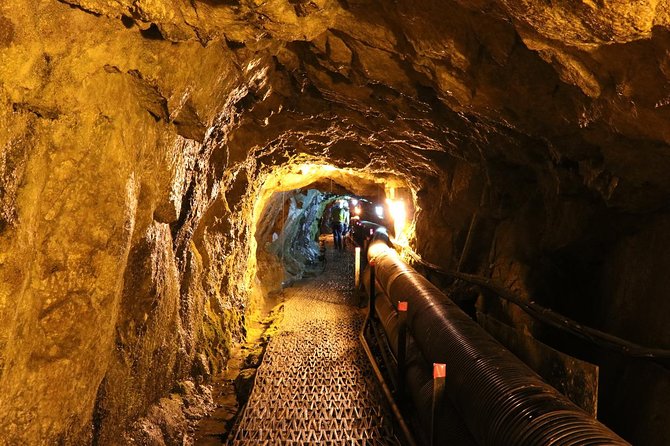
Then comes the moment most people come for: the Third Tunnel. You walk into it as part of a controlled course. The tunnel is described as roughly 1.95 meters high and 2.1 meters wide, so it’s not a cavern you can stroll through comfortably. It’s tighter than you expect, which means your posture and movement matter.
What to know in a practical way:
- The time here is about 40 minutes, including entry and exit flow.
- It’s a walking course, not a quick peek.
- The tunnel walk can be tiring because the route involves a steep section and then a return climb. If you have a weaker stomach for steep, enclosed spaces, plan to go slower and take breaks when allowed.
Also note the day-of nuance: on Mondays, the tour visits the 2nd Tunnel instead of the 3rd. If the Third Tunnel is your top goal, check your day before you book.
If you want the closest feeling to the DMZ’s military engineering side, the Third Tunnel is the best “you are here” moment on the itinerary. Just be honest with yourself about whether cramped, steep walking fits your body today.


Dora Observatory and Unification Village: looking north, then living near the line
After the tunnel, the tour shifts from physical hardship to perspective.
Dora Observatory
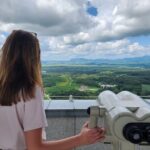
Dora Observatory is positioned as a northern-most viewpoint on the western front. You get panorama-style views that can include landmarks such as the Gaeseong Industrial Complex and Songhaksan Mountain in a single sight line. The key value here isn’t just the view—it’s what your guide can explain from that vantage point. Your brain naturally asks what you’re seeing, who controls it, and how far the line really is from daily life. That’s where the guide-led context makes the stop click.
Expect about 40 minutes here.
Tongilchon-gil (Unification Village)
Then you move to Tongilchon-gil, described as a unique farming community located near the DMZ where South Korean civilians live under special regulations. This is one of the better “human scale” stops of the day because it’s not purely military and it’s not purely a viewpoint. You’re seeing what life looks like on the border’s edge.
This stop is shorter (about 20 minutes), but it gives you a different kind of understanding: not just what happened, but what continues.
After Dora: choose your add-on bridge or the Imjin River boat
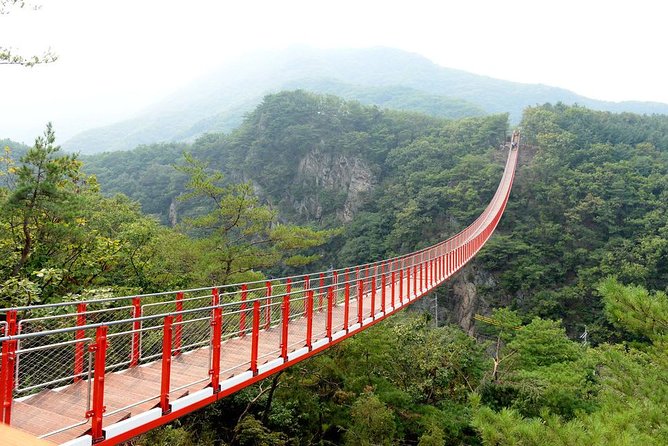
This tour is smartest when it gives you a choice after Dora. Instead of forcing one style of sightseeing, you pick the tone you want for the afternoon.
Option 1: Gamaksan Chulleong Suspension Bridge (hike + long bridge walk)
If you choose Gamaksan Chulleong Suspension Bridge, the tour includes a short hike—about 15 minutes walking to reach the bridge. The bridge is described as around 150 meters (500 feet) long and is treated as historically significant in the context of battle.
This option is great if you:
- like light hiking and want scenery to offset the tunnel day,
- enjoy walking across structures with a clear sense of history,
- don’t mind that you’ll be walking more than you do at the viewpoints.
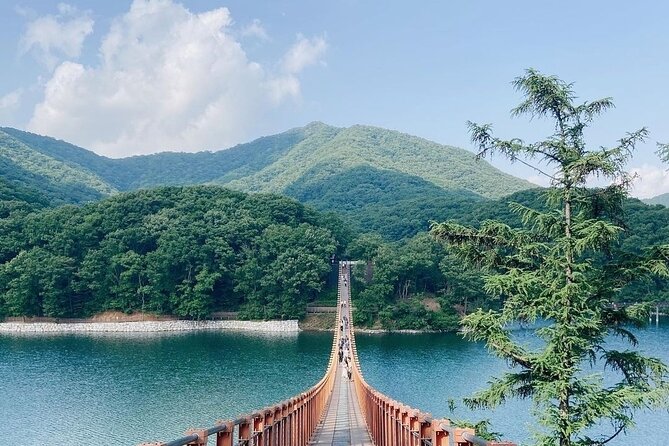
Option 2: Lake Majang Bridge / Majang Reservoir Suspension Bridge (battle-linked stop)
If you choose the Lake Majang Bridge area, the emphasis is on the Korean War battles that took place nearby. The tour frames it as a place where Allied forces fought and where sacrifices occurred.
This option can feel less like a hike and more like a structured historical walk. It’s also listed at about 1 hour, so you get time to enjoy it without feeling rushed.
Option 3: Imjin River boat ride (water-level perspective)
The third option is a boat ride on the Imjin River. This river is described as flowing out of North Korea into South Korea, and it notes access was forbidden for decades after the Korean War. That detail matters, because it explains why seeing the river by boat can feel like more than sightseeing.
Plan for about 40 minutes here.
A quick thought to help you choose: if you want movement and views, pick one of the suspension bridges. If you want a calmer, different tempo—especially after tunnel walking—choose the Imjin River boat.
The final stop: Peace Park and the point of the whole day
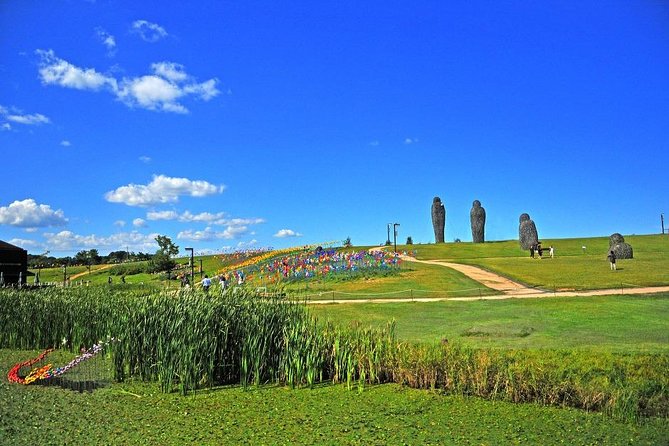
At the end, the tour returns to Seoul after visiting a park built for wishing reunification and peace on the Korean Peninsula. You’re not leaving with just a series of sights. You’re ending on a theme.
That matters, because the DMZ can easily turn into numbers, routes, and strict rules. This last stop brings it back to the human reason these places still draw attention: the hope for a different future.
Comfort, timing, and what you should expect from the group day
A few things I’d plan around, based on how these DMZ days typically run and how this tour describes itself:
- Duration is flexible: expect 6 to 9 hours depending on conditions and scheduling changes.
- The group max is 43, so you’ll be guided as a group, with enough space to move at most stops but not enough to “wander solo” when rules tighten.
- The schedule can shift due to weather and other operational issues. Your “plan” should be resilient, not fragile.
And yes, a good guide can make a huge difference here. On this kind of day, I look for two things: humor that loosens the mood without disrespecting the subject, and explanations that keep the story coherent. Names you may see associated with this operator include Simba, Julie, Jay, Eddie, Cindy, Charles, Lucy, and Paul, with people describing them as entertaining, clear, and good at answering questions. You can’t guarantee the guide, but you can expect the tour to rely on that kind of storytelling to work.
Who should book this DMZ Third Tunnel tour (and who should reconsider)
This isn’t for everyone, and that’s okay.
You should strongly consider it if:
- you have limited time in Seoul and want the Third Tunnel plus multiple DMZ highlights,
- you’re okay with a structured day that moves between historical and viewpoint stops,
- you like having a guide tie the stops together into one story.
You might want to reconsider if:
- you don’t handle enclosed, steep walking well (the tunnel is tight and physically demanding),
- you have health issues that make “not recommended/restricted” risky,
- you know you’ll struggle with weather disruptions, since the tour requires good weather.
It also helps if you’re traveling with a moderate fitness level. The tour explicitly mentions that you should be able to handle the day physically.
Should you book this tour?
If you want a DMZ day that feels like a guided story—Third Tunnel included—this is a good value play. The $35 price works because it bundles in transfers and DMZ admission, not just a driver and a bus.
I’d book it if the Third Tunnel is on your must-do list and you’re comfortable with a physically tougher stop. I’d also choose your add-on based on your energy level: suspension bridges if you want more walking and views, the Imjin River boat if you want a calmer change of pace.
If the Third Tunnel is less important to you than comfort, or if steep enclosed spaces are a deal-breaker, you might look for a less physically intense DMZ option instead.
FAQ
How long is the DMZ tour?
The duration is about 6 to 9 hours.
Is DMZ admission included in the ticket price?
Yes. DMZ admission fees are included in all options.
Do I need a passport?
Yes. A current valid passport is required on the day of travel.
What’s different about Mondays?
On Mondays, the tour visits the 2nd Tunnel instead of the 3rd Tunnel.
What add-on options are available after the main DMZ highlights?
After Dora Observatory, you can choose one option: a walk to Gamaksan Chulleong Suspension Bridge, a visit to Lake Majang Bridge, or a boat ride on the Imjin River.
What happens if weather is bad?
The experience requires good weather. If it’s canceled due to poor weather, you’ll be offered a different date or a full refund.