REVIEW · SEOUL
Gyeongbokgung Palace, Jogyesa Temple and Bukchon village
Book on GetYourGuide →Operated by Honey Trail · Bookable on GetYourGuide
Seoul clicks on foot. This walking route strings together Jogyesa Temple, Gyeongbokgung Palace, and Bukchon Village so the city feels less like a checklist and more like a story. You also get cultural moments along the way, including a traditional drink at the palace and some language/culture teaching.
I especially like the calm pause at Jogyesa, the head temple of the Jogye Order of Korean Buddhism, right in the thick of Insadong. And I love how Gyeongbokgung turns into something you can picture once someone explains the Joseon-era purpose of the palace grounds.
One thing to consider: this is a short walk overall (about three hours), so you won’t get to linger forever in Bukchon or go ultra-deep on every historical detail. Also, food isn’t included, so plan your meals around tea and a slower pace after.
In This Review
- Key highlights that make this tour worth it
- Getting oriented fast: Anguk to Insadong to the palace zone
- Jogyesa Temple: the peace of Korea’s Jogye Order headquarters
- Gwanghwamun Square and King Sejong: the Joseon story in one big stop
- Gyeongbokgung Palace: a powerful Joseon main stage (with herbal tea)
- Bukchon Village: hanok streets, views, and architecture you can actually read
- The guide makes it: English teaching, patience, and smart surprises
- Price and value: why $82 can make sense for first-time Seoul
- Practical logistics that actually affect your day
- Who should book this tour (and who should skip it)
- FAQ
- Where does the tour start and end?
- How long is the tour?
- What language is the tour offered in?
- What stops are included?
- What’s included in the price?
- Is food included?
- What should I bring?
- What are the cancellation and refund rules?
- Are there any restrictions during the tour?
Key highlights that make this tour worth it
- Jogyesa’s Buddhist calm in Insadong: You get a peaceful reset before the big-palace sights.
- Gwanghwamun Square and King Sejong: A quick, powerful historical anchor that helps you place the rest of the day.
- Gyeongbokgung Palace ticket included: Fewer hassles, more time inside.
- Traditional herbal tea at the palace: A small break that feels like part of the experience, not an add-on.
- Bukchon Village architecture walk: Good views and hanok streets, with enough time to actually enjoy the neighborhood feel.
- Guide touches that go beyond the script: The guide style is a big reason people rate this so highly, including friendly surprises like a Korean board game.
Getting oriented fast: Anguk to Insadong to the palace zone
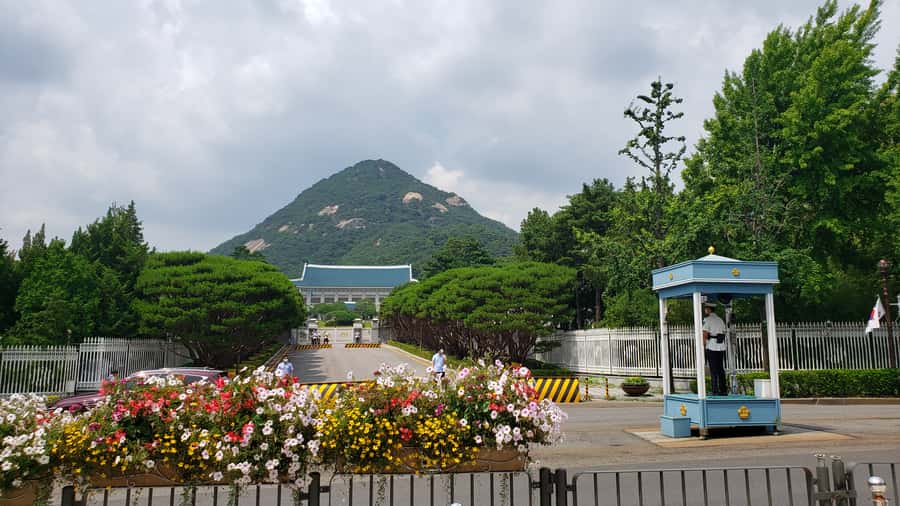
Meeting at Anguk Station Exit 6 is handy because it puts you near the middle of Seoul’s older neighborhoods. From there, you move toward Insadong, an area known for traditional shops, tea houses, and snack spots. Even if this is your first time in Korea, that opening stretch matters: it sets a slower rhythm before you hit the top formal landmarks.
The flow of the tour is also smart. Instead of jumping from one place to another with no thread, the guide builds context as you go. You’ll hear history and culture explained in a way that helps you connect what you’re seeing to why it matters. That’s what turns a palace photo stop into a real understanding of Joseon-era Seoul.
One practical note: you are walking. Comfortable shoes are not optional. The pace is moderate, but you’ll cover enough ground that you’ll notice it if your footwear is wrong.
You can also read our reviews of more tours and experiences in Seoul.

Jogyesa Temple: the peace of Korea’s Jogye Order headquarters
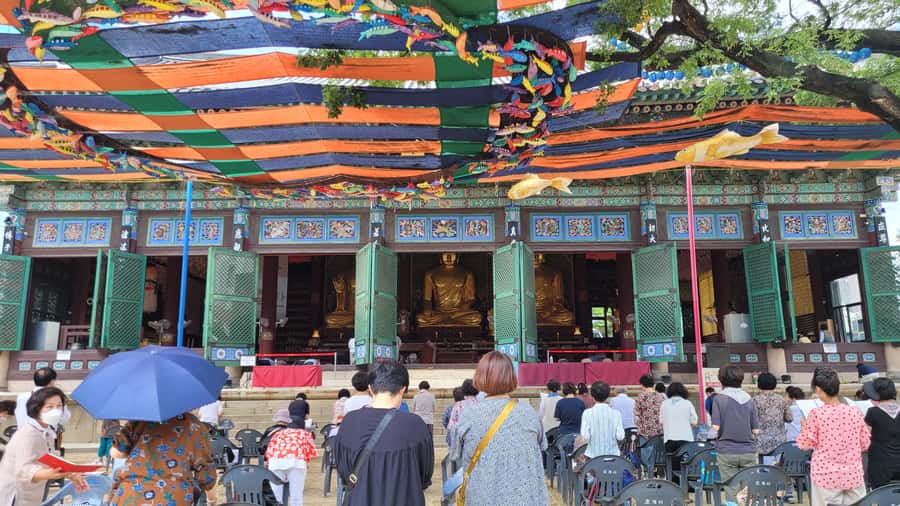
Jogyesa is a great first emotional “landing.” It’s the head temple of the Jogye Order of Korean Buddhism, and that role shows in the atmosphere. When you arrive, you’re in a place that feels designed for steadiness—an antidote to the noise outside.
I like this stop because it doesn’t pretend Buddhism is just decoration. The guide’s commentary helps you understand what you’re looking at, and you get a sense of why people come here as a spiritual anchor. You’re also in Insadong, so you can feel that blend of the everyday Seoul streets with a calmer interior world.
There’s also a subtle benefit for first-time visitors: by starting with a temple, you get an easy cultural entry point. Then when you move to royal palace grounds, you’re not only seeing structures—you’re comparing two different ways the Joseon-era and modern Korea have shaped daily life.
Gwanghwamun Square and King Sejong: the Joseon story in one big stop
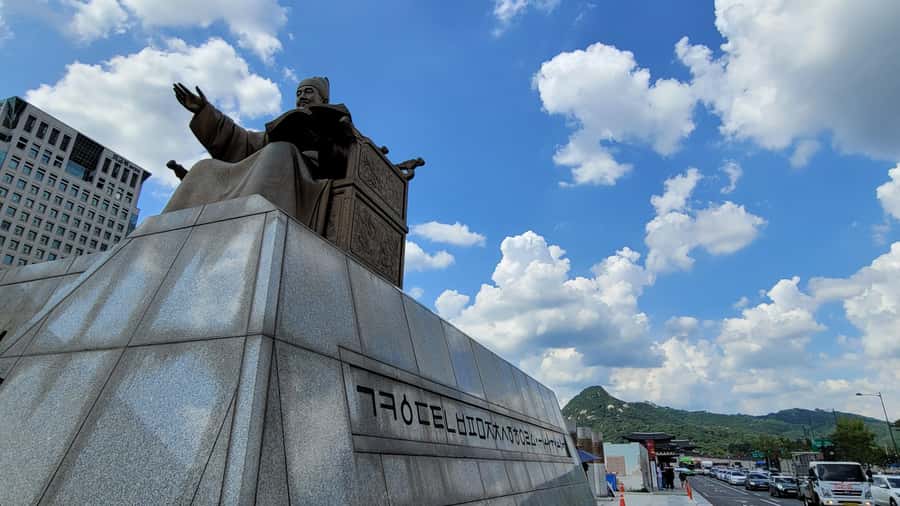
Next you’ll head to Gwanghwamun Square to see the King Sejong statue. This is one of those public-history moments that can feel simple at street level, but it works well in a walking tour.
Why it helps: King Sejong is more than a name on a plaque. When the guide ties him to the Joseon period and connects what you’ve heard at the earlier temple stop, the day gains a spine. The statue becomes a pivot point. You start to recognize how Seoul’s layout and identity grew around long-standing cultural priorities.
This is also where you get an easy “reset” for photos and orientation. If you’re mentally keeping track of directions, the square helps you map where the main palace sits relative to the rest of central Seoul.
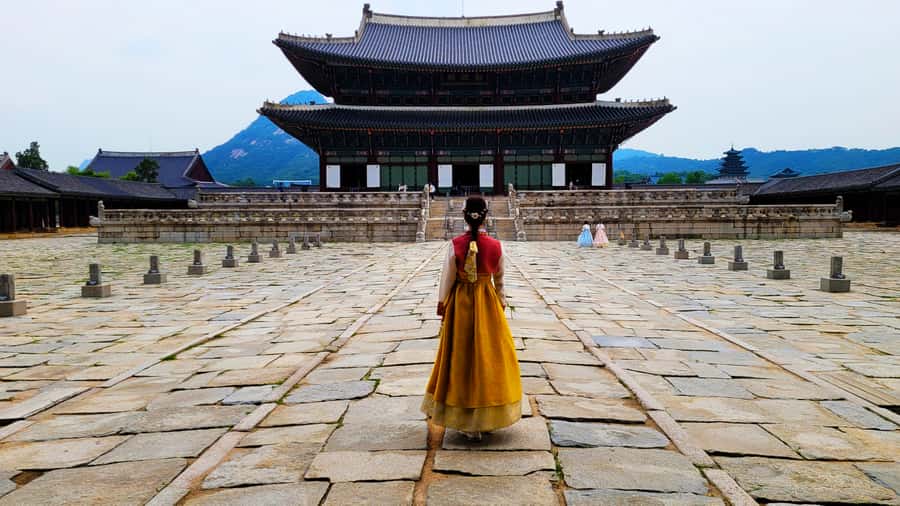
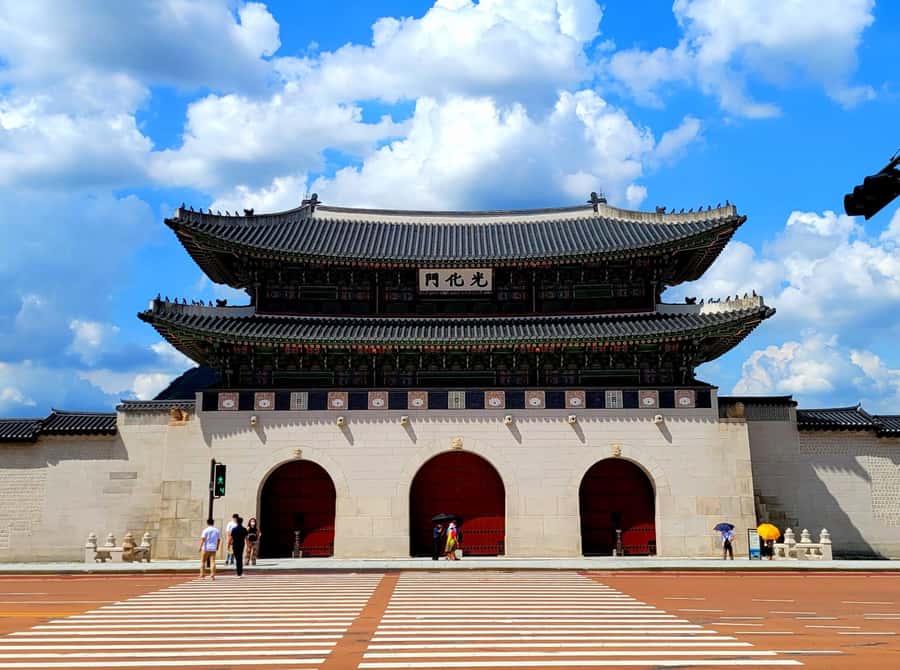
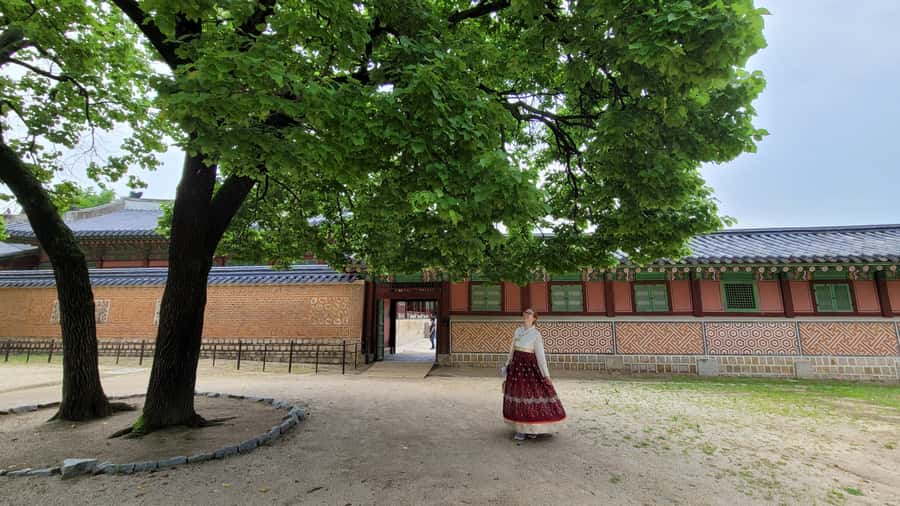
Gyeongbokgung Palace: a powerful Joseon main stage (with herbal tea)
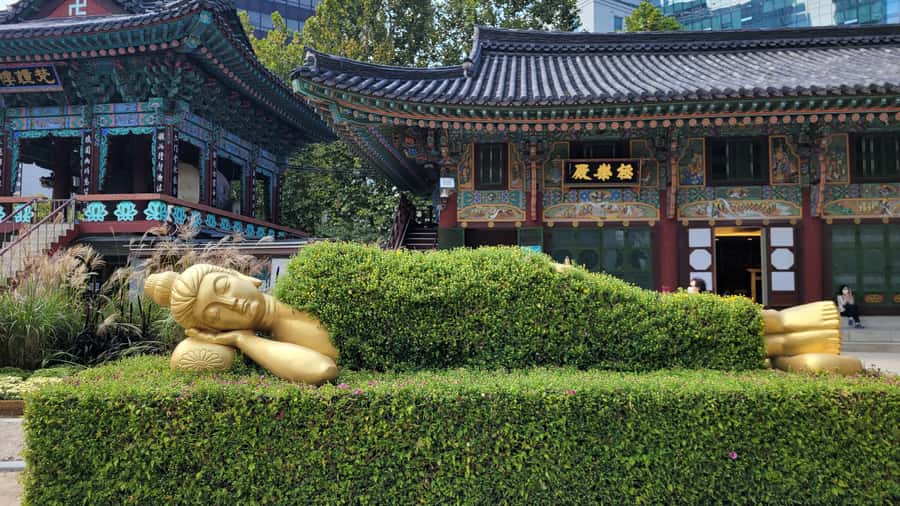
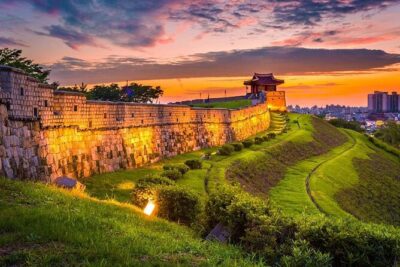
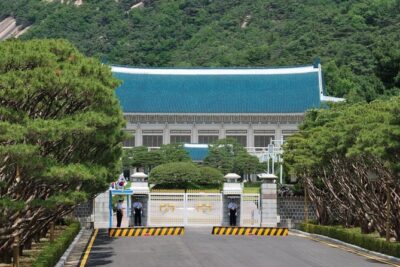
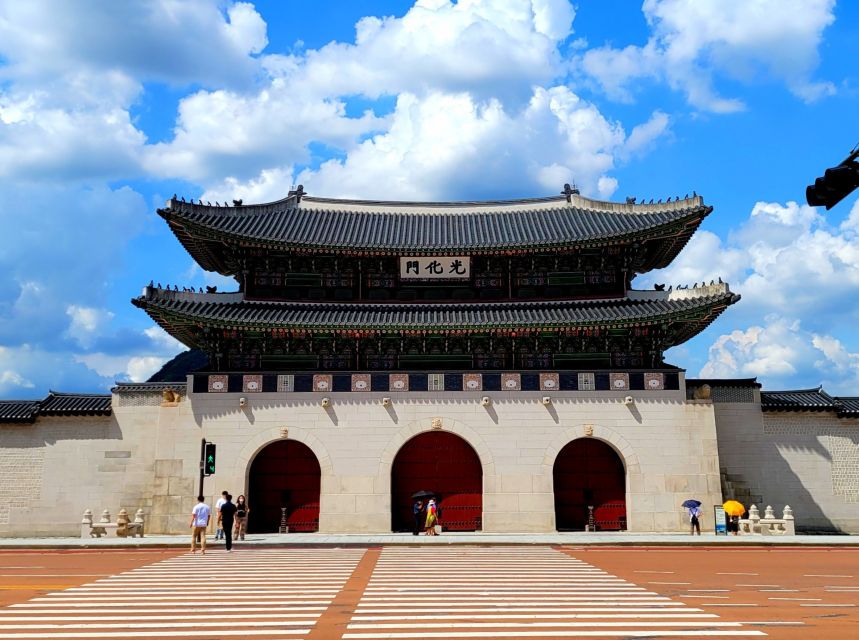
Gyeongbokgung Palace is the main palace of the Joseon Dynasty, established in 1395. Even if you’ve seen palace images before, walking the grounds is different from looking at them on a screen. The scale and layout make it easier to understand how power, ceremony, and governance were expressed through architecture.
The tour includes your Gyeongbokgung entrance ticket, which is a real value point. You’re not scrambling at the gate or waiting for entry. It keeps the day moving, and it lets you spend time where it counts: inside the palace spaces.
What I like most here is the way the guide connects palace design to everyday meaning. The palaces aren’t just pretty buildings. They are planned environments for rituals, authority, and state functions. When someone explains that role clearly, your walk becomes more than “look and move.” It becomes “this is why the space is built like this.”
And yes, there’s a tradition break: you can enjoy a traditional herbal drink at the palace. That small pause changes your pace for a few minutes, and it gives the tour a more human rhythm. You’re not only collecting sights; you’re also experiencing Korean-style hospitality along the way.
Bukchon Village: hanok streets, views, and architecture you can actually read
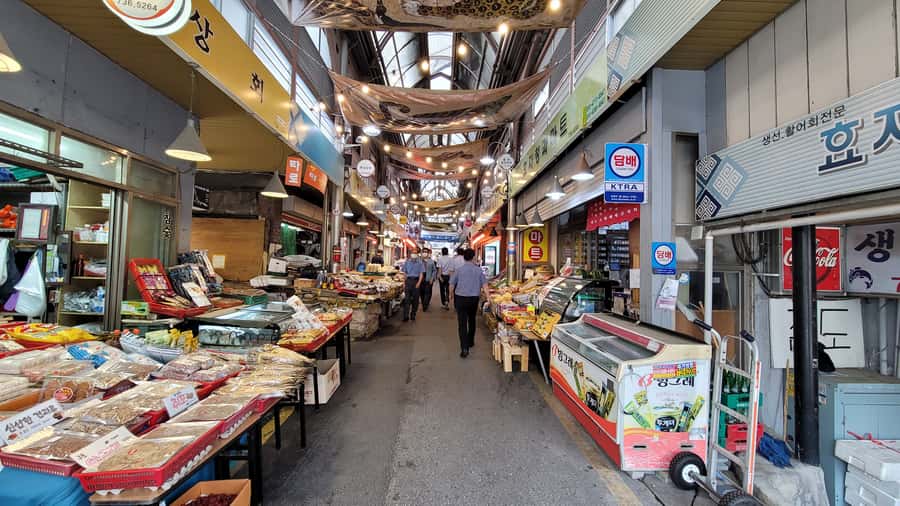
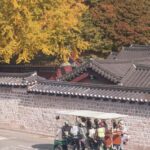
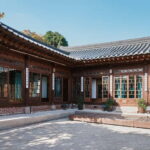
Then you head to Bukchon traditional village, a neighborhood known for its hanok architecture and the way the streets still feel shaped by tradition. This stop is the part that often surprises people. You expect “buildings.” You get streets that help you see how households and community life were arranged.
The walking here is moderate, and the payoff is that you can slow down enough to notice details. Even without a deep architectural background, you’ll likely find yourself looking at rooftlines, street angles, and the way the neighborhood opens to views. The guide’s explanation helps you connect the visual design to the historical context behind it.
A fair consideration: because the tour is about three hours total, Bukchon may feel like a walk-through rather than a long linger. If you want maximum time for photos or extra historical depth, you might wish for an extra stop or more extended commentary here. Still, it’s a great sampler that leaves you with clear ideas of where you’d want to go back on your own.


The guide makes it: English teaching, patience, and smart surprises
This tour stands or falls on the guide, and the feedback you get around this experience is consistently about a friendly, patient approach. Many groups are guided by Lee, and the vibe matters: the guide is described as efficient, very professional, and good at working at a pace that fits real people, including families.
Another high point is how the tour brings in Korean language and culture rather than treating the day as a museum script. You may pick up quick cultural context and small language moments that help you recognize what you’re seeing. Even a few useful phrases can turn awkward confusion into simple confidence.
One of the more memorable extras: there’s often a break where your guide may include a Korean board game surprise. It’s the kind of left-field, human touch that makes a short walking tour feel warmer and more personal than a standard lecture.
Also, communication seems to be handled smoothly. If you don’t have a Korean phone number, you may still be able to coordinate meetup details by email. That kind of practical care reduces stress on the ground.
Price and value: why $82 can make sense for first-time Seoul
At $82 per person, this tour isn’t the cheapest option, but it’s not priced like a private driver-and-car day either. The value comes from three concrete things you receive:
- Gyeongbokgung Palace ticket included: That single item can significantly offset the cost for most first-timers.
- A guide doing the heavy lifting: You’re paying for interpretation, not just walking between stops. That explanation is what turns famous sights into something you understand.
- Traditional herbal tea included: Small, but it’s part of the tour experience and helps break up the walking.
What’s not included matters too: food isn’t included. So you’ll want to think of this as a sightseeing block, not a full-day meal plan. Plan to eat before you start or afterward.
For who this price fits best: if you’re a first-time visitor, you’ll often spend money anyway on tickets plus the time cost of figuring out context on your own. A guided route compresses learning and reduces wasted backtracking.
Practical logistics that actually affect your day
This is a walking tour, and your comfort is the main variable you can control. Wear comfortable shoes and dress for Seoul weather.
A couple of restrictions are listed up front: pets and mobility scooters aren’t allowed, and alcohol and drugs aren’t permitted during the activity. If you’re traveling with a group that has mobility needs, this is the kind of detail you should check early.
Your tour ends back at the meeting point near Anguk Station Exit 6, which is convenient because you don’t end stranded in a different part of the city without an easy plan.
Who should book this tour (and who should skip it)
Book this tour if you want:
- A fast, guided Seoul highlights route that still includes quieter cultural context (not only big monument photos)
- A first-time-friendly introduction to Joseon history through Gyeongbokgung and Korea’s Buddhist tradition through Jogyesa
- Time in Bukchon that’s enough to enjoy the neighborhood feel, with a guide to explain what you’re seeing
- English guidance plus cultural moments like traditional herbal tea and language/culture teaching
Skip it or pair it with something else if:
- You’re hoping for a longer, slower deep-dive into Bukchon or extended time inside Gyeongbokgung
- You want food included, or you prefer a more flexible hop-on hop-off style day
- You rely on mobility scooters, since they’re not allowed
FAQ
Where does the tour start and end?
It starts at Anguk Station Exit 6 and ends back at the meeting point.
How long is the tour?
The tour is described as a great three-hour experience.
What language is the tour offered in?
The tour is offered in English.
What stops are included?
You’ll visit Jogyesa Temple, Gwanghwamun Square (with the King Sejong statue), Gyeongbokgung Palace, and Bukchon traditional village.
What’s included in the price?
Included items are the Gyeongbokgung Palace entrance ticket, traditional herbal tea, and a guide.
Is food included?
No, food is not included.
What should I bring?
Bring comfortable shoes for walking.
What are the cancellation and refund rules?
You can cancel up to 24 hours in advance for a full refund.
Are there any restrictions during the tour?
Pets, mobility scooters, and alcohol or drugs are not allowed.