REVIEW · SEOUL
Seoul: Gyeongbokgung Palace Half day Tour
Book on Viator →Operated by koreaguidetour · Bookable on Viator
Palace doors open fast with the right guide. This half-day Gyeongbokgung Palace tour is built for people who want context, not just photos, with English narration and stories that connect the rooms to the Joseon Dynasty. I really like the focus on the core buildings, especially Geunjungjeon, plus the way the guide calls out the palace’s architecture and the animal motifs you’ll see around the grounds.
One thing to plan for: it’s about 2 hours, so you get clarity and highlights, but you won’t have time for a slow, unstructured wander. Also, it runs outdoors more often than you’d expect, so weather can change how comfortable it feels.
In This Review
- Quick things to know before you go
- Why Gyeongbokgung Palace is the Seoul stop that actually teaches you something
- Meeting at the National Palace Museum of Korea: how to start without stress
- Gwanghwamun Gate: the big entrance and why it sets the tone
- Geunjungjeon (Throne Hall): where the main Joseon story lands
- Sajeongjeon (King’s Office Space): power isn’t only ceremonial
- Gangnyeongjeon (King’s Bed-Chamber): where privacy becomes history
- Gyotaejeon (Queen’s Bed-Chamber): understanding the palace as a family system
- Gyeonghoiru Pavilion (Event Hall) and the animal details you’ll actually notice
- The 2-hour pace: what you’ll get, and what you won’t
- Price and value: is $35 worth it here?
- Rules that shape your experience (and how to plan around them)
- The guide factor: asking questions makes the palace stick
- Who this half-day tour suits best
- Should you book this Gyeongbokgung Palace half-day tour?
- FAQ
- How long is the Gyeongbokgung Palace half-day tour?
- Is the admission ticket included in the price?
- Where do I meet for the tour?
- Does the tour offer explanations in English?
- What should I know about days the palace is closed?
- Can I record or film during the tour?
- What happens if the weather is bad or there aren’t enough participants?
Quick things to know before you go
- English explanations in detail for the key palace areas, with time for questions
- Geunjungjeon, Sajeongjeon, Gangnyeongjeon, and Gyotaejeon in one logical route
- Animal statues and motifs pointed out as you walk, not left for you to puzzle out
- Small group size (up to 20 people) and a 2-hour pace
- Admission ticket included so you’re not scrambling for anything at the gates
- Tuesday closure means plan around it (Deoksugung night tour is the alternative)
Why Gyeongbokgung Palace is the Seoul stop that actually teaches you something
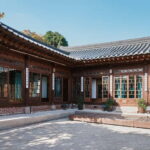
Gyeongbokgung Palace isn’t just a pretty landmark. It’s the representative palace tied to the Joseon Dynasty, built in 1394 and considered the oldest and most important among the five Seoul palaces. The guide frames it as a place with rules and purpose—how power worked, where different roles of the royal family were housed, and why the buildings look the way they do.
I like this approach because it helps you see the palace as a system, not a pile of courtyards. When you know which hall served as the main throne space and which areas functioned more like working or private rooms, the whole layout starts to click. And since the palace was heavily damaged during the Japanese Colonial Period but preserved through continuous restoration, you also get a sense of why parts feel both historic and carefully maintained.
You’ll also get the fun layer: the guide talks about animals and animal statues found around Gyeongbokgung. It’s the kind of detail that’s easy to walk past on your own—until someone tells you what you’re looking at and why it’s there.
You can also read our reviews of more tours and experiences in Seoul.


Meeting at the National Palace Museum of Korea: how to start without stress
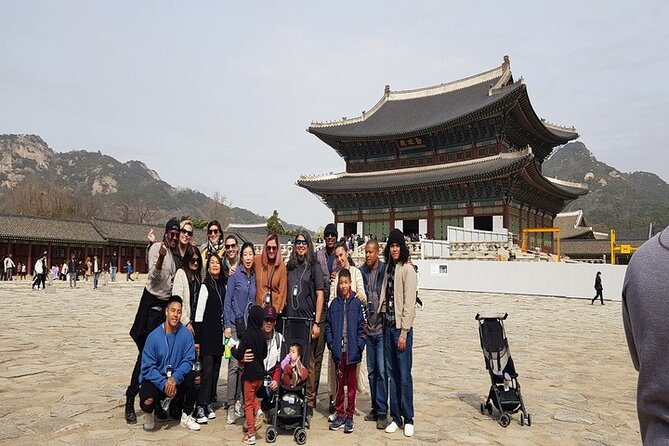
The meeting point is the National Palace Museum of Korea, 12 Hyoja-ro, Jongno District. The tour ends at 7-25 Tongui-dong, Jongno District, so you’re not returning to the exact same spot when you’re done.
This matters because the palace area can be confusing at first glance. A fixed start point helps you get your bearings fast. It also keeps the group together, which is especially important since the tour doesn’t run long—about 2 hours—so missed minutes add up.
A practical note: the tour uses mobile tickets, and the organizers will message you via email/WhatsApp with the meet-up place and time. Make sure your contact info works while you’re in Korea. Late or incorrect contact details can create problems, and joining after the tour begins isn’t allowed for others in the group.
Gwanghwamun Gate: the big entrance and why it sets the tone
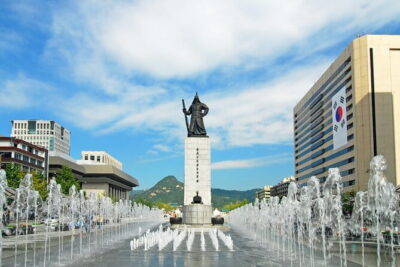
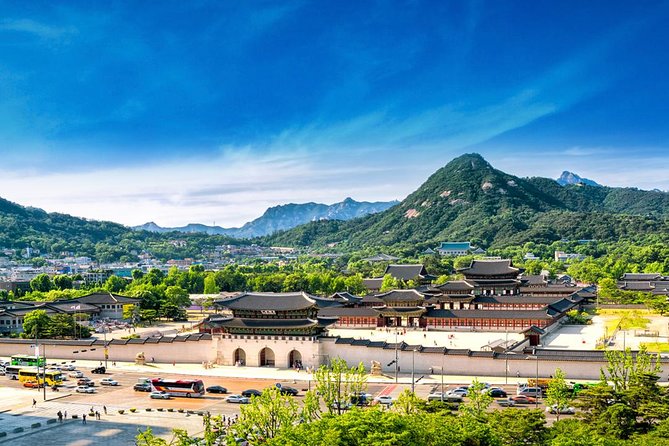
The first major stop is Gwanghwamun Gate, the south gate of Gyeongbokgung Palace. Starting at the gate is smart. It’s the kind of landmark you instantly recognize, but without context it’s easy to treat it like just a backdrop for a picture.
With guidance, you start noticing the palace as a designed approach—where you enter, what feels ceremonial, and how the main grounds are organized. The guide also uses this early moment to set up the later halls, so by the time you reach Geunjungjeon you’re not just looking at a building—you’re following a story.
If you want an easy tip for your own pace: arrive a bit early, take one calm look at the main buildings from your first viewpoint, and mentally label what you’ll see next. That’s the fastest way to turn 2 hours into a real understanding.
Geunjungjeon (Throne Hall): where the main Joseon story lands
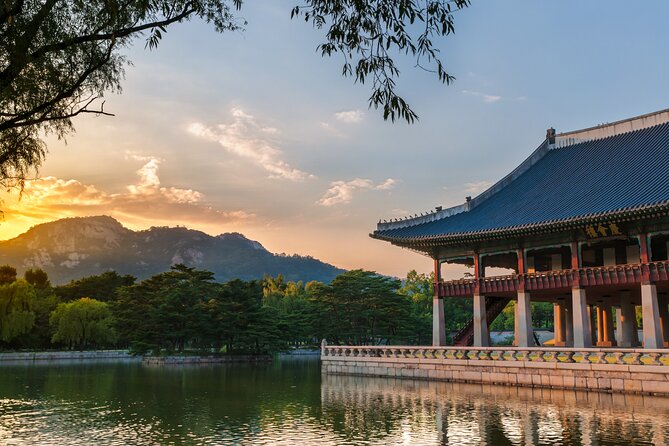
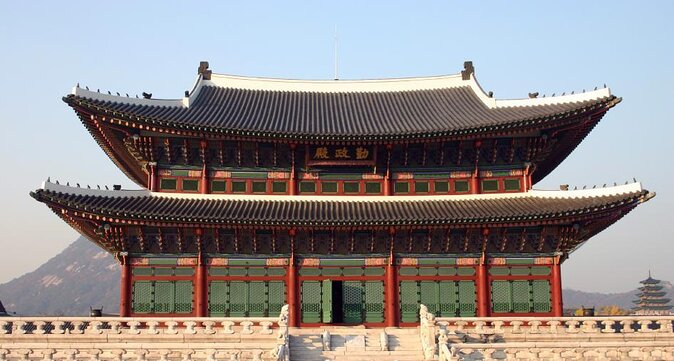
Next is Geunjungjeon, the main throne hall. This is the heart of the palace route. The guide focuses on what this space represented and how it fits into Joseon royal life.
This is where an English explanation pays off the most. From the outside, a throne hall can feel like “big room, impressive roof.” With context, it becomes “this is where authority was displayed and where ceremony mattered.”
I also like that the tour doesn’t treat the palace like a static photo exhibit. It ties architecture to function. You start seeing why details exist, not just that they look dramatic.
Sajeongjeon (King’s Office Space): power isn’t only ceremonial
After the throne hall, you move to Sajeongjeon, the king’s office space. This stop is valuable because it balances the palace story. Not everything is about ceremonies. This is about administration, decisions, and daily governance.
If you’ve ever wondered why historical buildings can feel both grand and oddly practical, this kind of stop answers that question. The guide brings out the logic of how different buildings matched different kinds of activity—ceremony in one area, office work in another, and private royal living in others.
One drawback to note: because it’s a half-day tour, the guide’s explanations are focused. You’ll get what you need to understand the major points, but you won’t get the kind of deep architectural study you might see on a longer specialized tour.



Gangnyeongjeon (King’s Bed-Chamber): where privacy becomes history
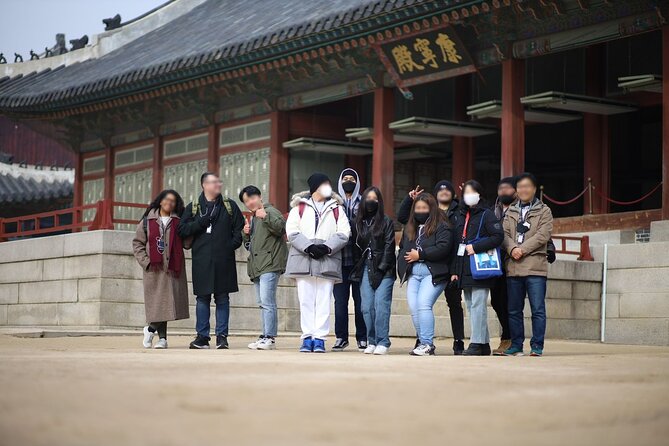
Then comes Gangnyeongjeon, the king’s bed-chamber. This is one of those places that helps you see the palace as a real home for people—just people with roles far beyond what most of us can relate to.
The guide connects the meaning of space with royal life. That matters because it changes your viewpoint: you stop treating the buildings like symbols only and start understanding them as rooms built for specific routines and responsibilities.
It’s also a useful moment to slow down and just look. Even when the tour is moving, the guide’s explanations give you something to anchor your attention on. You’ll know what you’re seeing, not just where you are.
Gyotaejeon (Queen’s Bed-Chamber): understanding the palace as a family system
Next is Gyotaejeon, the queen’s bed-chamber. This stop rounds out the royal story. You get the contrast between spaces tied to the king and spaces tied to the queen, and you learn how palace planning reflected different roles.
For many people, this is where the tour feels more human. The buildings aren’t only about the public image of power. They also reflect family structure and day-to-day presence within the royal compound.
I appreciate that the tour includes these named chambers rather than only “the biggest hall and the best gate.” It’s a quicker route to understanding how the palace functioned as a whole.
Gyeonghoiru Pavilion (Event Hall) and the animal details you’ll actually notice
The route finishes at Gyeonghoiru pavilion, an event hall. This is a fitting closing point because event spaces are where you see the palace’s social and ceremonial side again—how it hosted moments that mattered in royal life.
One of the most fun parts is the recurring talk of animal statues and animal-related details around Gyeongbokgung. These motifs can be easy to ignore if you’re walking fast. On this tour, they become a guided scavenger hunt: you’re encouraged to look, and the guide explains what the animal elements represent and where they appear across the palace environment.
It’s the kind of knowledge that keeps paying off after you leave. When you revisit later (or even just scroll back through your photos), you’ll notice those details with new eyes.
The 2-hour pace: what you’ll get, and what you won’t
This tour is about 2 hours (approx.), capped at a maximum group size of 20. That’s a good sweet spot for first-timers. You cover the main named areas—Gwanghwamun Gate, Geunjungjeon, Sajeongjeon, Gangnyeongjeon, Gyotaejeon, and Gyeonghoiru—without turning your day into a full marathon.
Here’s the trade-off: you’ll get clarity and key highlights, but not hours of optional wandering. If you like to linger in courtyards or read every sign, you’ll still want a separate self-guided hour later.
My advice: treat this tour as your foundation layer. Then, if you want extra time, add it afterward on your own so you can follow what actually grabbed your attention during the guided route.
Price and value: is $35 worth it here?
The price is $35.00 per person, with admission ticket included, and you get a professional guide explaining the palace in detail in English.
Value-wise, what you’re really paying for is interpretation. At this site, the difference between reading the palace yourself and having an English guide is huge. The tour helps you understand why specific halls matter, how the spaces relate to Joseon life, and what the animal details contribute to the overall palace theme. Without that, you can easily spend a couple hours walking through buildings and only later realize you didn’t know what you were looking at.
Also, a small group (up to 20) helps keep the experience from feeling like a rush. You also can ask questions, which is a big deal if you’re the type who likes to connect the dots while you’re still standing in front of the dots.
Rules that shape your experience (and how to plan around them)
A few on-site rules can affect your comfort and pacing:
- Recording or filming is not allowed, so plan on enjoying with your eyes (and regular photos if you’re already set up for that).
- Pets are not allowed, so don’t plan on bringing one.
- Joining after the tour begins isn’t allowed for other group participants, so arrive early enough to settle in.
These aren’t deal-breakers, but they help you avoid awkward moments mid-walk.
The guide factor: asking questions makes the palace stick
The tour is designed around guide-led explanations in English, and you can ask questions throughout. That’s where the experience turns from sightseeing into learning.
In one of the standout accounts, the guide Gabriela was described as kind and full of insight, even helping someone who walked to the wrong meeting spot by going out of her way to find them. That kind of support signals the tour’s main strength: the guide isn’t just reciting facts. They’re actively managing the experience so you don’t lose time or understanding.
If you’re curious about Joseon history, palace architecture, or the meaning behind decorative elements, you’ll get more out of the tour by actively asking at least a couple questions—especially at the major hall stops.
Who this half-day tour suits best
This tour is a strong match if you want:
- A focused first look at Gyeongbokgung Palace with English explanations
- A guided route that covers the named main buildings rather than random photo stops
- A structured 2-hour plan that feels efficient but still teaches you the basics
- Time to ask questions instead of reading your way through confusion
If you prefer going completely at your own pace for hours and hours, you might find the tour’s half-day format limiting. But as a foundation for the palace—especially if it’s your first time in Seoul—it’s a practical way to make sure your time has direction.
Should you book this Gyeongbokgung Palace half-day tour?
If you’re choosing between wandering the palace on your own and having an English guide connect the dots, I’d lean toward booking this one. $35 with admission included is reasonable when you consider what you’re getting: a guided story of Joseon life, the purpose behind key halls, and the animal details that most people miss.
Book it if you want a smart first pass that makes later exploration easier. Skip it only if you already feel comfortable reading the palace layout without interpretation, or if you’re planning a very slow, wide-open day where 2 hours feels too structured.
One final check: don’t book it for a Tuesday, since Gyeongbokgung is closed then and the tour notes an alternative Deoksugung night tour.
FAQ
How long is the Gyeongbokgung Palace half-day tour?
It runs for about 2 hours (approx.).
Is the admission ticket included in the price?
Yes, admission is included.
Where do I meet for the tour?
You meet at the National Palace Museum of Korea, 12 Hyoja-ro, Jongno District, Seoul.
Does the tour offer explanations in English?
Yes. The tour provides detailed explanations in English.
What should I know about days the palace is closed?
On Tuesdays, Gyeongbok Palace is closed. The tour notes that you can book a Deoksugung night tour instead.
Can I record or film during the tour?
No. Recording or filming the tour is not allowed.
What happens if the weather is bad or there aren’t enough participants?
The experience requires good weather. If it’s canceled due to poor weather, you’ll be offered a different date or a full refund. If the group doesn’t meet the minimum (under 4 participants), the tour will be canceled and you’ll be notified.