REVIEW · SEOUL
From Seoul: Seoraksan Mountain with Cable Car- Shuttle Bus
Book on GetYourGuide →Operated by S.A. Seoul · Bookable on GetYourGuide
Autumn views start before you even hike. This Seoraksan trip blends Mount Seorak scenery with a guided visit to Sinheungsa Temple, one of the most striking stops in the park. Expect fall color in October, plus a cable car ride that gets you higher with less legwork.
I especially like the focus on two showstoppers: the 14-meter bronze Buddha at Sinheungsa and the scenic cable car to the fortress area. And having an English/Chinese professional guide matters here—you get context, not just photo stops.
One drawback to plan around: the day can tighten if traffic is heavy, and mountain weather can shut down trails. Also, autumn leaf color is not guaranteed, even in peak-season timing.
In This Review
- Key highlights worth knowing
- Where Seoraksan fits in your Gangwon-do plan
- Cable car to Gwongeumseong Fortress: the shortcut to big altitude
- Sinheungsa Temple and the Gwaneumjeon bronze Buddha (14 meters)
- Autumn leaf timing: October color, weather reality, and smart expectations
- Getting there from Seoul: air-conditioned transport, but traffic can bite
- What the professional guide actually changes
- Comfort and clothing: the mountain’s small print
- Price and value: is about $67 a good deal?
- Who this Seoraksan day trip suits best
- Should you book this Seoraksan tour?
- FAQ
- What’s included in the trip price?
- Where does the tour start and end?
- Do I need to pay extra for cable car or entry fees?
- What should I bring?
- Is the tour suitable for wheelchair users?
- What happens if the tour is canceled due to the group size or other reasons?
Key highlights worth knowing
- Mount Seorak (third-highest in South Korea): big views, big scale.
- Sinheungsa Temple’s Gwaneumjeon bronze Buddha: a towering landmark you can’t really fake with photos.
- Cable car to Gwongeumseong Fortress: height gain with less grind.
- A guided stop at the temple complex: you’ll understand what you’re seeing.
- Autumn timing in October: fall color is the main draw, but weather can change the plan.
- Strong wind may close trails: your hiking options can shrink on bad-airflow days.
Where Seoraksan fits in your Gangwon-do plan
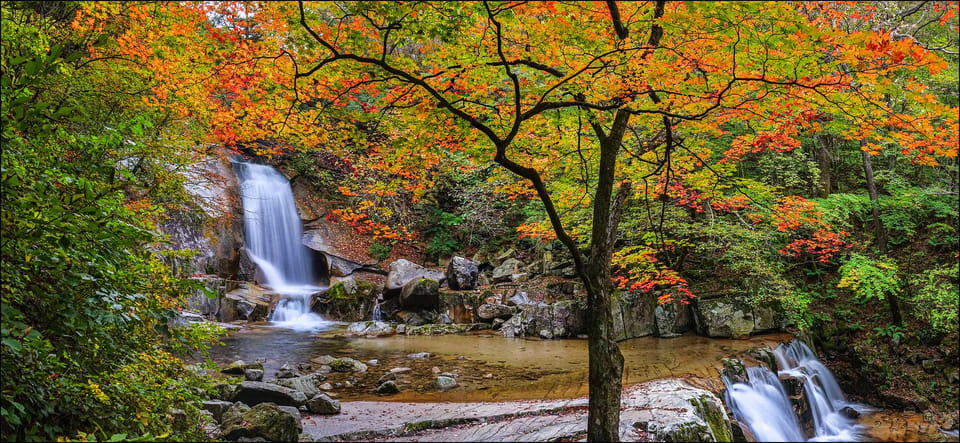
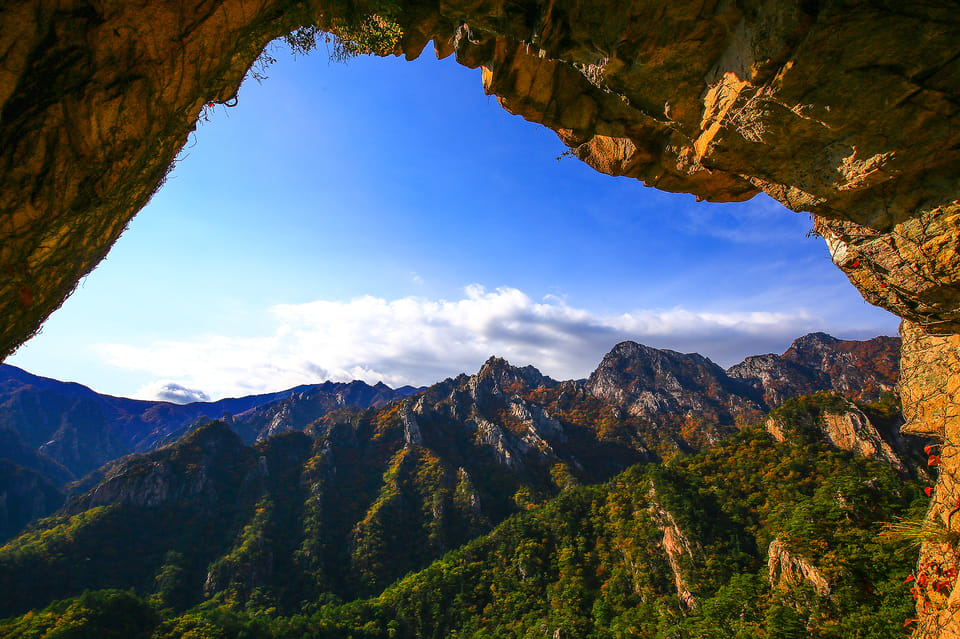
Seoraksan National Park sits in Gangwon Province, not far from Seoul in travel terms, but worlds apart in atmosphere. If you’re coming for fall color, Mount Seorak is the star: it’s the third-highest mountain in South Korea, and that altitude shows in the views.
What I like about this kind of day trip is the mix. You get both sides of the mountain coin: culture at Sinheungsa Temple and scenery from above via the cable car. It’s not just a bus tour through pretty places. The guide-led temple visit gives you something to hold onto while the mountain does its dramatic thing in the background.
The tradeoff? You’re compressing a national park into one day. That’s fine if you want the highlights. It’s less ideal if you’re hunting for long, uninterrupted hiking hours.
You can also read our reviews of more tours and experiences in Seoul.

Cable car to Gwongeumseong Fortress: the shortcut to big altitude
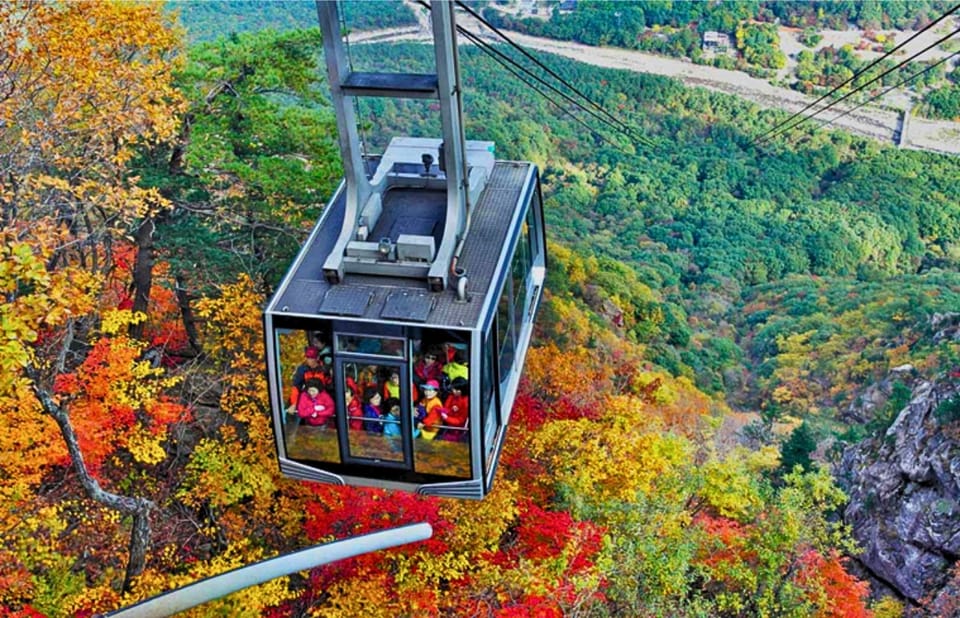
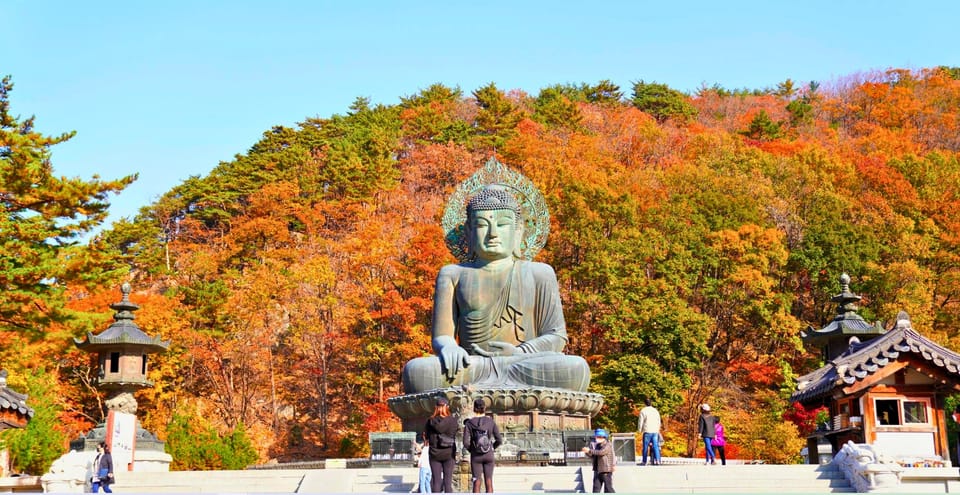
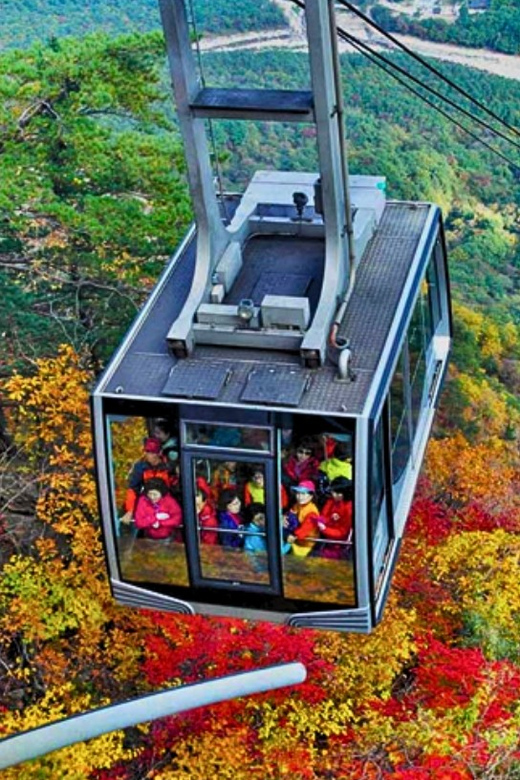
The core “wow” moment is the cable car ride up toward the fortress area at Gwongeumseong. Even if you’re not a major hiker, you’ll still get that classic mountain perspective: ridgelines stretching out, valleys folding into the distance, and layers of fall color when conditions are good.
Why this matters for your day: cable cars change the math. You can enjoy height and viewpoints without spending every minute climbing. For many people, that’s the difference between a fun fall photo day and a legs-only workout day.
There is one thing to keep your expectations grounded. Mountain weather can be unpredictable. One review mentioned strong winds that led to trail closures. Translation for you: if conditions turn, the cable car might still run, but walking routes can be limited, so keep your plans flexible and don’t assume you’ll follow every trail segment.
Sinheungsa Temple and the Gwaneumjeon bronze Buddha (14 meters)
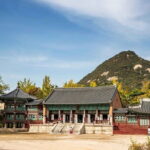
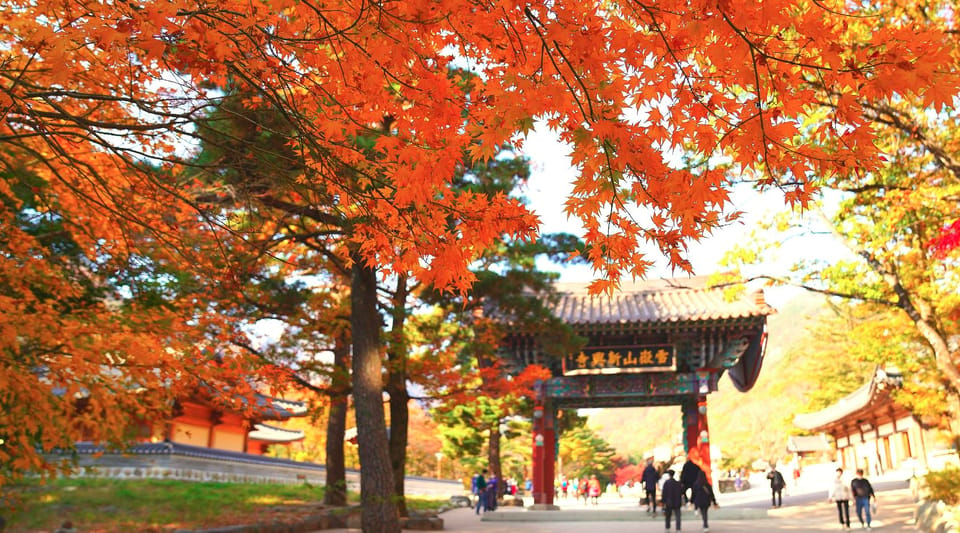
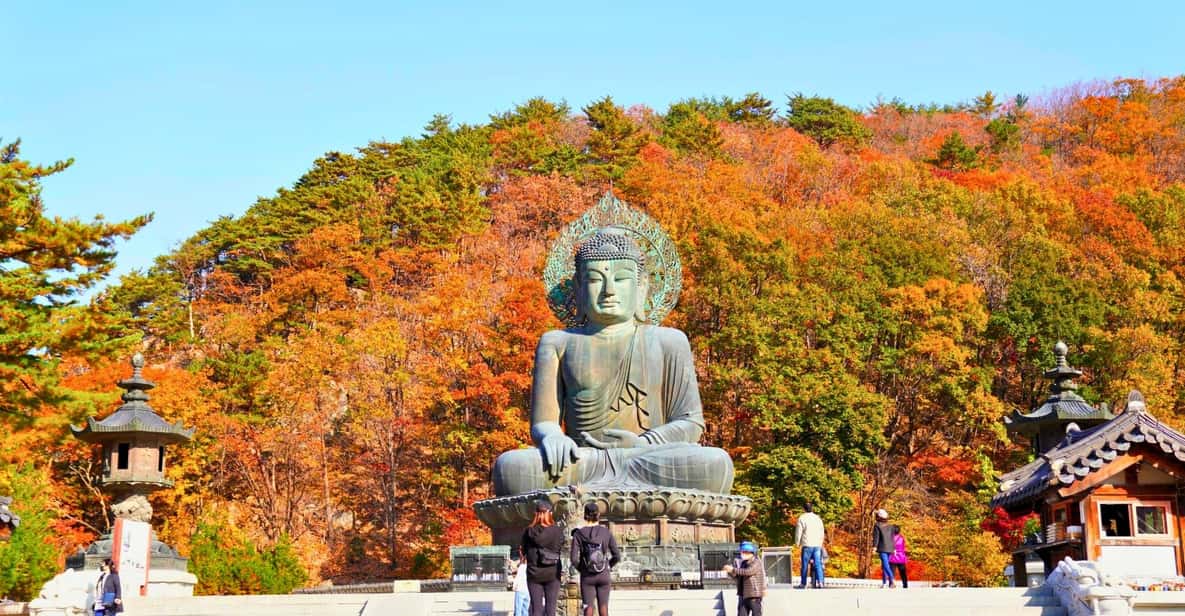
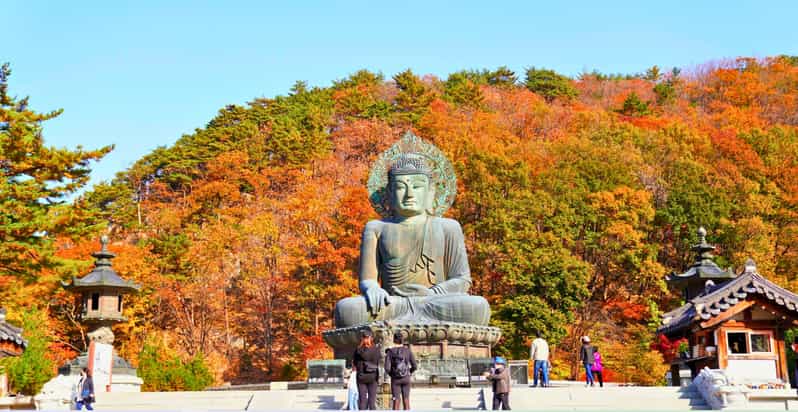
Sinheungsa Temple is the cultural anchor of this outing. You go for the setting first—pine and fall trees around the temple grounds—and then you hit the main landmark: the Gwaneumjeon bronze Buddha, a statue measuring about 14 meters tall.
This is one of those sights where scale does the talking. You can take pictures all you want, but the real impact is seeing how the statue dominates the space, then noticing the calm, spiritual feeling created by the surrounding trees and temple layout.
What makes the temple stop more valuable is the guided component. The guide’s job here isn’t to read a script. It’s to explain what you’re looking at and why it’s important in the story of the temple—built during Queen Jindeok’s era, per the tour information. In practice, that helps you move through the grounds with understanding instead of just walking and snapping.
A practical tip from the way this day is structured: when you arrive at the temple, give yourself time to slow down. The morning light and the colors in the trees can shift quickly. If you rush straight to viewpoints, you’ll miss some of the quieter temple angles that make the place memorable.
Autumn leaf timing: October color, weather reality, and smart expectations
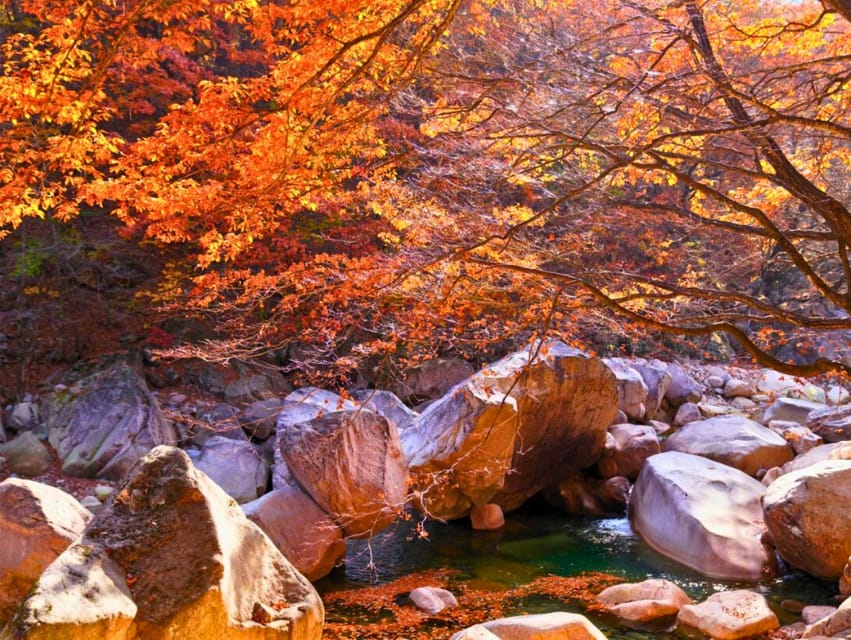
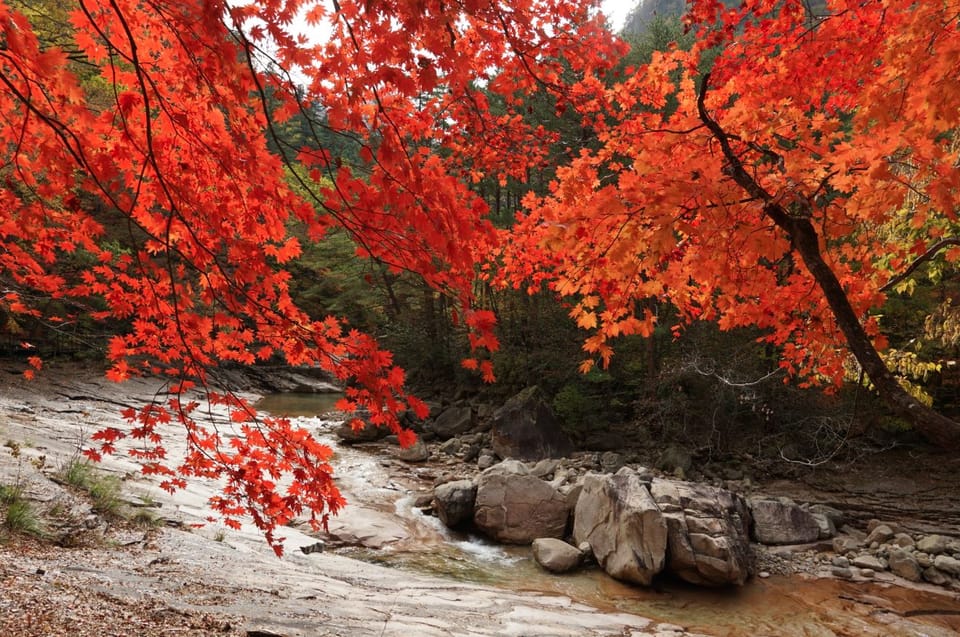
This trip is designed around autumn, and October is when leaf color is expected to start showing up strongly. When it’s working, it’s gorgeous—maples turning and pine framing the temple and mountain views.
But the tour information is honest about the one thing you can’t control: the autumn period is adjusted based on weather, and the maple leaves situation isn’t guaranteed. That’s not a buzzkill; it’s the truth of mountain tourism. Some years peak earlier. Some years it’s later. Some years the wind or rain makes the colors less vivid—or makes trails unsafe.
So how should you handle that? Go in planning to enjoy the scenery even if the peak look isn’t exactly at the moment you arrive. If leaves are only partly colored, you can still enjoy the pine-dark contrasts and the misty layered views that happen when mountains are in that shoulder-season mood.
Also note how weather can affect movement. The strong-wind example from one review is a good reminder: if the weather is rough, routes can close. When that happens, you’re still in a scenic national park—but your hiking options might be shorter than you expected.
Getting there from Seoul: air-conditioned transport, but traffic can bite
You’ll start from Seoul and travel by shuttle bus with round-trip air-conditioned transportation. Depending on the option you choose, there can also be hotel pickup and drop-off (the private option includes that).
This kind of logistics is exactly why people book day trips: you don’t have to think about buses, schedules, or driving. You show up, and the day rolls.
The catch is time. One negative experience described a day that ran early due to traffic, leaving less time for hiking. That’s a real possibility on a Friday or during peak travel hours when Seoul roads are unpredictable. In other words: even with a smooth plan, your hiking time can get squeezed if the schedule shifts.
My practical advice: treat this as a highlights day, not a guaranteed long-hike day. If your main goal is a specific trail length, you’ll be happier if you build your Seoul-to-mountain plan with extra buffer—or choose a plan that isn’t so time-boxed.

What the professional guide actually changes
A guided day is not automatically better. But here, the guide makes the difference because the temple and the mountain both reward attention.
The tour includes a professional guide fluent in English and Chinese (and the experience lists Korean as well). In the feedback, Peter Park got a strong thumbs-up for being great. Another mention praised Yami as fun. Even with different personalities, the consistent theme is clear: a good guide turns route confusion into understanding.
At Sinheungsa, that understanding matters. The guide explains the significance behind what you’re seeing, including the temple’s connection to Queen Jindeok’s era and what to look for around the main bronze Buddha (Gwaneumjeon). Without that, you’d still enjoy the place. With it, you’ll remember it with sharper details.
For the cable car and mountain sections, the guide can help you prioritize what to do when conditions change. On windy days, when some trails close, you need someone to steer you toward the best remaining options quickly.
Comfort and clothing: the mountain’s small print
This day assumes you’ll do some walking. The big “bring this” item is simple: comfortable shoes. That’s not a formality. Temple grounds are uneven in places, and mountain routes—even short ones—add up.
Then there’s the weather layer. Autumn in the mountains can bring wind and chill, and one review explicitly mentioned strong winds leading to trail closures. You can’t control the weather, but you can control preparedness: dress in layers and avoid planning on only one thin outer layer.
Also: eat breakfast before you start. This is one of those tips that sounds basic until you’re hungry at the exact moment the day is tight.
If you’re sensitive to cold or wind, plan ahead. Bring a light wind layer even in autumn warmth. If the day turns blustery, you’ll thank yourself quickly.
Finally, this experience is not suitable for wheelchair users, so if mobility is a concern, you’ll want an accessibility-focused plan instead.
Price and value: is about $67 a good deal?
The listed price is $67 per person. On a day trip, you’re paying for more than a view.
Here’s what’s included: round-trip air-conditioned transportation, admission fees, the Seoraksan cable car ticket, and a professional guide fluent in English and Chinese. Depending on the option, there may also be hotel pickup and drop-off.
That’s the value equation. Cable car admission alone can feel like a big chunk when you’re paying individually. Add in transportation and guide interpretation, and the price starts to make sense for convenience.
What’s not included is food and beverage, plus personal expenses. So you’ll want to budget for at least one meal (and probably snacks). If you’re expecting lunch to be included, you’ll feel the pinch.
My “value check” for you: if you want the big highlights without dealing with transport planning and without skipping the temple interpretation, $67 can be a fair trade. If you’d rather self-pace and you’re comfortable organizing your own route, you may prefer a do-it-yourself plan.
Who this Seoraksan day trip suits best
This experience is best for you if:
- You want Seoraksan National Park highlights in one day from Seoul.
- You love fall scenery, especially when maples are starting to turn in October.
- You’d rather take the cable car for viewpoints than plan a full hiking day.
- You appreciate context from a guide at major cultural stops like Sinheungsa.
It’s less ideal if:
- You want long, uninterrupted hiking time.
- You’re extremely schedule-sensitive (traffic and weather can tighten the day).
- You need wheelchair accessibility.
If you’re the type who enjoys “see the main things well” more than “do every trail segment,” this is a strong fit.
Should you book this Seoraksan tour?
I’d book it if your priorities are autumn views, the cable car experience, and the Sinheungsa Temple visit with a guide who helps you understand what you’re seeing. The combination of Mount Seorak scenery plus the 14-meter bronze Buddha is exactly the kind of “two worlds in one day” trip that makes sense for visitors with limited time in Korea.
I would hesitate if you’re planning for a specific hiking goal with a strict time requirement. Between possible traffic delays and the chance of wind-related trail closures, this is not a “guaranteed perfect hiking itinerary” kind of day. Think of it as a highlights day where nature and weather set the tempo.
FAQ
What’s included in the trip price?
The tour includes round-trip air-conditioned transportation, a professional guide fluent in English and Chinese, admission fees, and the Seoraksan cable car ticket. Hotel pick up and drop off are included only if you select the private option.
Where does the tour start and end?
It starts at a meeting point that can vary by the option you book and ends back at the same meeting point.
Do I need to pay extra for cable car or entry fees?
No. Admission fees and the Seoraksan cable car ticket are included.
What should I bring?
Bring comfortable shoes. Also, make sure to eat breakfast before you start the activity.
Is the tour suitable for wheelchair users?
No. This activity is not suitable for wheelchair users.
What happens if the tour is canceled due to the group size or other reasons?
A minimum of 6 people is required. If that minimum isn’t met, the tour may be canceled and you’ll get an email notification 1 day prior. In case of force majeure or unforeseen events, the provider may cancel and you’ll be offered a chance to reschedule or request a full refund.