REVIEW · SEOUL
Seoul: Deoksugung Palace Night Tour
Book on Viator →Operated by koreaguidetour · Bookable on Viator
Night at Deoksugung feels like time travel. On this Deoksugung Palace Night Tour, I love the calm evening pace and the way the buildings look after dusk, when history feels less like a museum and more like a living place. I also love the guide-led focus on the Korean Empire era and the palace’s unusual mix of traditional halls and western-style architecture, explained clearly in English and Chinese.
One thing to consider: the tour relies on good weather, and Deoksugung Palace is closed on Mondays (so you’ll need an alternate day or a different palace tour).
In This Review
- Key things to know before you go
- Deoksugung at dusk: the night tour advantage
- Price and value: what $35 buys you (and what it doesn’t)
- Meeting near City Hall: start time and how to avoid stress
- Stop-by-stop: Junghwajeon, Seokjojeon, Seokeodang, Hamnyeongjeon, and Jungkwanhun
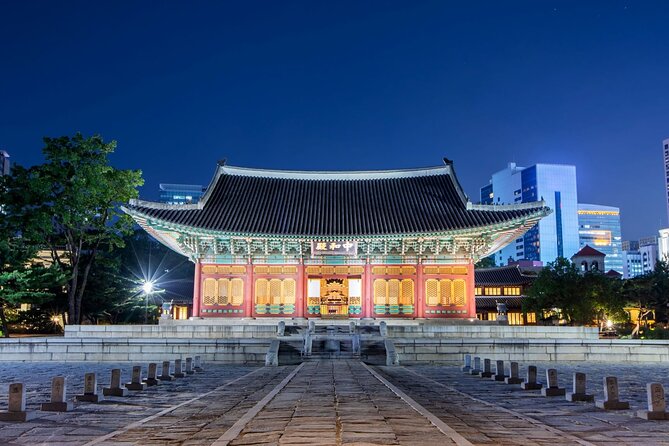
- Junghwajeon: the main throne hall
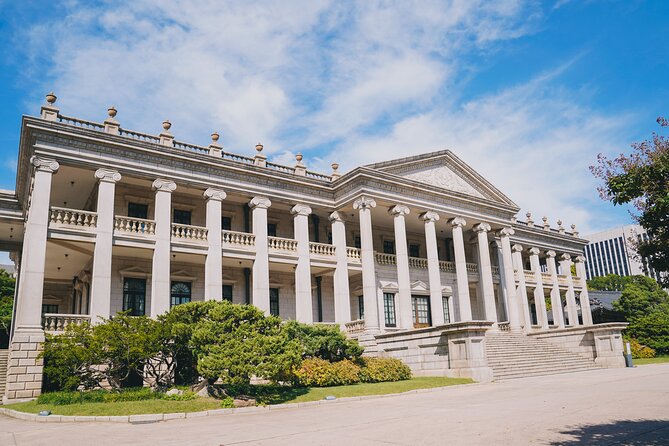
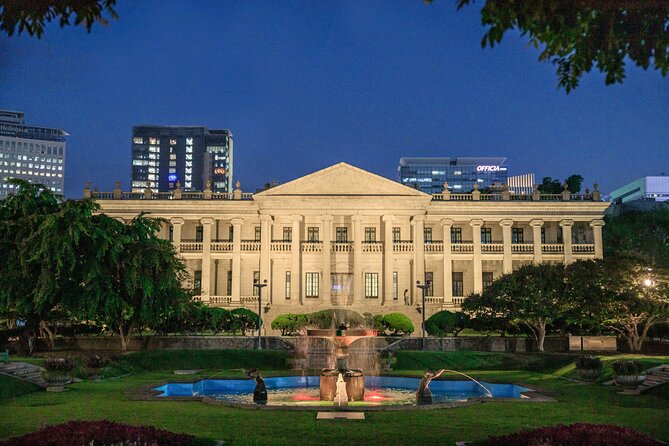
- Seokjojeon: a western-style building inside a palace
- Seokeodang: the building most beloved by King Gojong
- Hamnyeongjeon: the king’s bed-chamber
- Jungkwanhun: a cafeteria stop point
- The Korean Empire angle: what you’re really learning
- Photos, filming, and etiquette: small rules, big impact
- Weather and the Monday closure reality check
- Who this night tour suits best
- Should you book the Deoksugung Palace Night Tour?
- FAQ
- How long is the Deoksugung Palace Night Tour?
- What does the ticket cost?
- Is palace admission included?
- What language is the tour explained in?
- Where do I meet the guide?
- What time does the tour start?
- Will I get a mobile ticket?
- Is Deoksugung Palace open on Mondays?
- Can I record or film during the tour?
- What happens if the weather is bad?
Key things to know before you go
- City Hall meeting point: Meet near Exit 1 of City Hall Station (Line 1/2) around 6:20–6:30 pm.
- Small group: Maximum 20 people, which makes it easier to ask questions.
- Bilingual explanations: English and Chinese are used during the tour.
- Western-style stop included: You’ll visit Seokjojeon, a western-style building inside the palace grounds.
- Bed-chamber look: Hamnyeongjeon is part of the route, so you see a more private side of royal life.
- Mobile ticket: You use a mobile ticket instead of printing something out.
Deoksugung at dusk: the night tour advantage
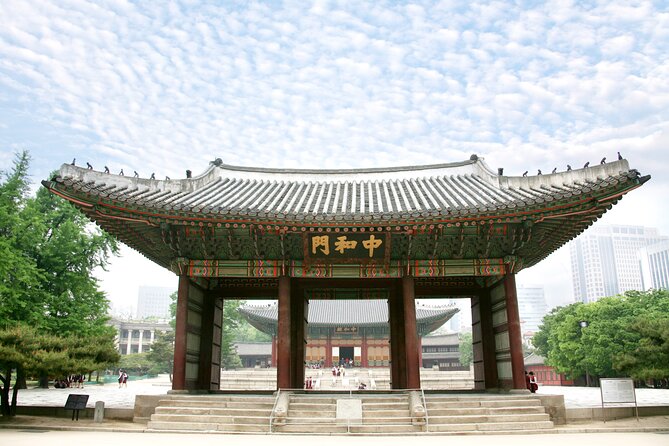
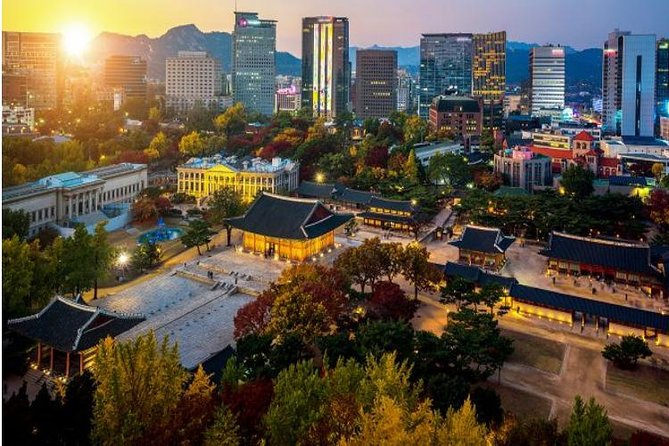
Deoksugung Palace is one of Seoul’s most interesting palaces partly because it is not stuck in one style. You get traditional royal buildings next to western-influenced architecture, and in the evening that contrast looks even more striking. At night, the palace feels calmer, and the guide’s storytelling lands better because you can hear it over fewer daytime distractions.
The tour is also designed around peace. Instead of rushing between big attractions, you slow down and look at details—roof lines, doorways, stonework, and how each building’s role changes the mood of the grounds. That matters here because the palace is tied to a key period when Korea began its first wave of modernization after centuries of the Joseon era. In other words, you’re not just looking at pretty structures; you’re watching a period transition.
I also like that the palace sits close to major transport. The meeting point is near City Hall Station, and the route stays central, so you are not spending your whole evening commuting across town. You can keep your energy for what you came for: the palace itself.
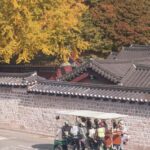
Quick practical note: Deoksugung sits next to a famous stone wall, and it’s exactly the kind of photo-worthy detail you don’t want to skip when your guide is talking nearby. Even if your main focus is the buildings, take 30 seconds to look along the wall area when you get the chance.
You can also read our reviews of more evening experiences in Seoul
Price and value: what $35 buys you (and what it doesn’t)
At $35 per person for about two hours, this tour sits in the guided-tour sweet spot: not cheap enough to feel disposable, but not so pricey that it feels like a splurge. The value angle is that admission is free, so you’re really paying for the guide and the structure of the walk—someone telling you what you’re looking at and why it matters.
If you’ve done self-guided palace visits before, you know the problem: you can read signs, but the bigger story stays fuzzy. Here, the guide helps connect the architecture to the Korean Empire period—especially the palace’s role as a main palace during a time often described as Korea’s early modernization era. When someone explains which buildings reflect court life versus western influence, your photos stop being just snapshots and start being meaningful.
This is also a good choice if you like asking questions. The tour is set up for interaction, and with a small group size, you’re not stuck listening silently. I found that this kind of “guided meaning” is what makes the price feel fair.
Meeting near City Hall: start time and how to avoid stress
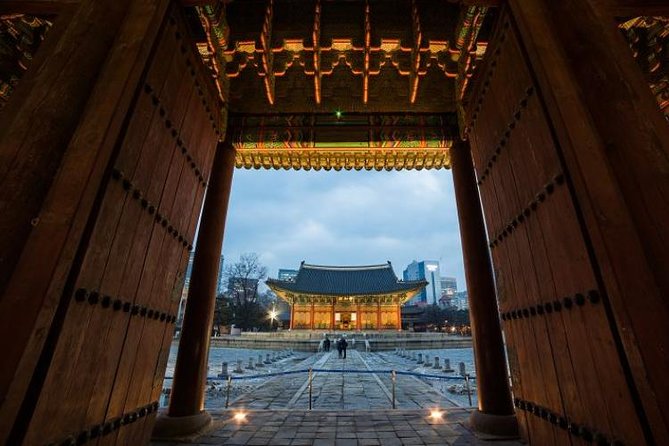
The meeting point is close and straightforward: Exit 1 of City Hall Station (Line 1,2). You meet around 6:20 pm, with the start time listed as 6:30 pm. The best move is to arrive a little early, not because you’ll be sweating logistics, but because you’ll be calmer when the guide starts lining people up.
The tour runs for about 2 hours and ends at Jeonggwanheon area (listed as Jeonggwanheon99 on Sejong-daero). That central ending is handy. Once you’re done, you’re still in a part of downtown Seoul where it’s easy to grab transit or continue your evening.
A small but real consideration: joining late is not allowed for other participants. So if you’re someone who enjoys arriving exactly on time, build in buffer here. It’s not about being strict; it’s about keeping the group together on a dark, evening walk.
Mobile ticket means you don’t need to print anything, which is one less thing to mess up. And because the tour provider says they’ll message you by email/WhatsApp about the meetup details, keep an eye on your phone—especially if your plan is to use public transit.
Stop-by-stop: Junghwajeon, Seokjojeon, Seokeodang, Hamnyeongjeon, and Jungkwanhun
Here’s what your evening walk is built around, and why each stop is worth your attention.
Junghwajeon: the main throne hall
Junghwajeon is the starting anchor of the tour. This is the kind of building where you naturally ask, Why does this space feel so official? The guide’s job is to connect the architecture and layout to the palace’s role as a center of royal power during its heyday.
At night, you’re also seeing the building differently. Daytime visits tend to make palaces feel like stone and wood. At night, the lighting helps you notice scale—how the hall and its surroundings create a sense of authority. Even if you don’t know the royal protocol, you’ll feel the intention.
One practical tip: stand where your guide suggests and let the explanation play out before you wander off for photos. With a throne hall, small positioning choices change what the building communicates.


Seokjojeon: a western-style building inside a palace
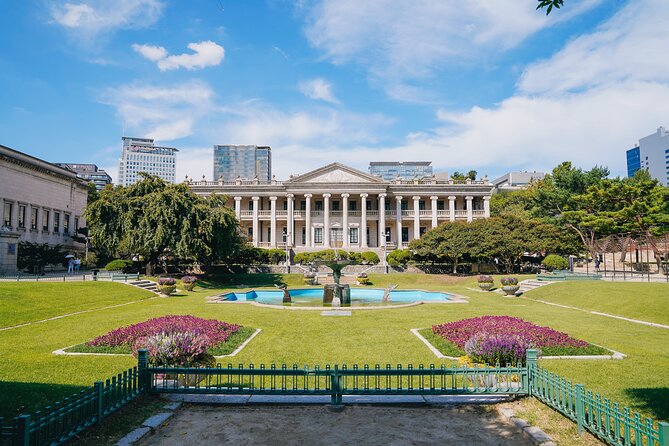
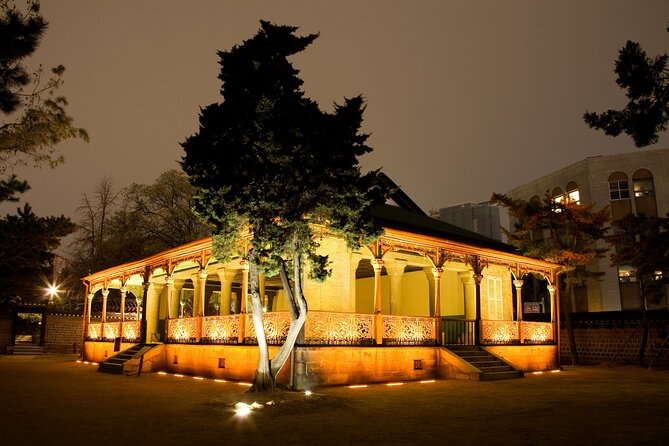
This is the stop many people are most curious about. Seokjojeon is the western-style building within Deoksugung Palace grounds. Since Deoksugung is the palace known for combining traditional and western-style structures together, this stop is where the theme becomes visible, not just theoretical.
The guide’s storytelling here helps you understand the modernization context—how Korea was experimenting and reshaping parts of its world during the Korean Empire period. You start seeing the building not as a random foreign-looking structure, but as a marker of a turning point.
Drawback to expect: if you only want traditional-only palace aesthetics, Seokjojeon might feel like a change of mood. But if you came for the bigger story of transformation, it’s exactly the point.
Seokeodang: the building most beloved by King Gojong
Seokeodang is described as the king’s favorite building. That detail matters because it shifts the tone away from pure ceremony and toward personal preference. I like stops like this because they make history less abstract.
When your guide explains why King Gojong favored this part of the grounds, you get a sense of daily royal life—what felt comfortable or meaningful, not just what looked impressive for public events. At night, that personal angle can feel even more intimate.
Tip: don’t treat this as a quick photo stop. Pause, listen, and try to connect what the guide says with what you see in the building’s placement and atmosphere.
Hamnyeongjeon: the king’s bed-chamber
Hamnyeongjeon is the most private stop on the itinerary: the king’s bed-chamber. It’s a strong contrast to throne-hall energy, and it changes how you think about the palace as a lived-in environment.
This is where the evening tour format helps. Nighttime lighting and quieter pacing make it easier to imagine the daily rhythm of court life. The guide’s role is key here, since you’re not just looking at a room—you’re stepping into a story about power, vulnerability, and how rulers lived behind palace walls.
Practical note: if you’re the type who hates dark, narrow walkways, take your time around this segment. The tour is designed to be easy near central Seoul transit, but evening lighting means you should watch your footing.
Jungkwanhun: a cafeteria stop point
Jungkwanhun is listed as a cafeteria stop. Even if you don’t grab food, it’s a useful moment to regroup during a two-hour walk. Think of it as your chance to reset—water, check your photos, and ask any final questions that popped up during the earlier buildings.
It’s also a good time to think about the big picture you just heard. The palace’s mix of traditional and western elements can be a lot to take in fast. A short pause helps your brain file the information into place.
The Korean Empire angle: what you’re really learning
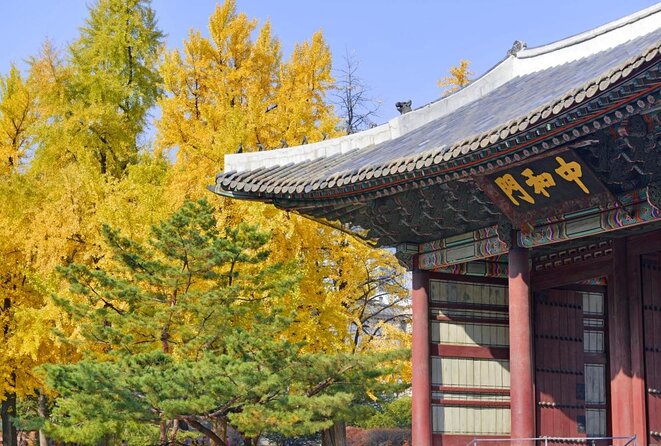
One reason this tour feels worth it is that it doesn’t treat Deoksugung as just another palace stop. The emphasis is on Korea’s transformation around the late Joseon era and into the Korean Empire period, plus the palace’s connection to the pain of later historical events, including the era of Japanese invasion.
The practical payoff for you: once the guide ties architecture to time, you’ll walk away seeing the buildings as evidence. That’s true for:
- Traditional royal halls, which reflect old court ideals and ceremony.
- Western-style elements, which reflect modernization efforts and outside influence.
- Royal preference spaces, like Seokeodang, which help you understand that the palace was also a personal world for rulers.
If you care about history but don’t want to drown in dates, this format is a good match. The guide’s job is to keep the story human: who lived here, what changed, and how the spaces communicate those changes.
From what I’ve seen in guides who lead this route—like Alan Han, who is known for explaining the end of Joseon dynasty and linking it to what you see—you’ll usually get clear, story-driven explanations. Another guide style, like Lee’s, is remembered for strong storytelling and historical context delivered in a way that keeps you paying attention.
You don’t need to be an architecture nerd to benefit. You just need the guide’s pointers so your eyes know what to look for.
Photos, filming, and etiquette: small rules, big impact
This is one of those tours where the rules actually help the experience run smoothly. Recording or filming is not allowed, so plan for normal photos without video. That keeps the focus on the guide’s spoken explanations.
Also, pets are not allowed. If you’re traveling with an animal, you’ll need to make alternate arrangements.
Because the group can be up to 20 people, late arrivals can throw off pacing. Joining after the tour begins is not allowed for other participants, so treat the meeting time as real, not optional.
My advice is simple:
- Bring a light layer. Even in Seoul, evenings can feel colder than you expect.
- Wear shoes that are comfortable for a walking tour inside palace grounds at night.
- Keep your questions ready. If something the guide says sparks curiosity, ask it while you’re still standing in the right spot.
Weather and the Monday closure reality check
Two scheduling realities matter here.
First, the experience requires good weather. If conditions are poor, you’ll be offered a different date or a full refund. This is common for night tours, but it’s still worth planning with flexibility.
Second, on Mondays, Deoksugung Palace is closed. The tour notes that you can book a Gyeongbok Palace tour instead. So if your trip plan puts you in Seoul on a Monday night, don’t assume you can just show up to Deoksugung—plan a swap.
One more practical factor: the tour has a minimum number of travelers. If it doesn’t meet the minimum, you’ll be offered another date/experience or a full refund.
Who this night tour suits best
I think this tour is a smart fit for you if:
- You want something more guided than a self-walk but still relaxed and short.
- You care about the Korean Empire period and the story of modernization, not just general palace sightseeing.
- You like architecture when it’s explained in plain language.
- You enjoy night atmospheres and want fewer daytime crowds.
It’s also a solid option if you’re already planning to spend time near Gwanghwamun and Seoul City Hall. The location makes it easy to combine with other central evening plans.
If you only want a traditional Joseon-only aesthetic, you might find the western-style Seokjojeon moment changes the vibe. But if you came for the fuller Deoksugung story, that mix is the entire point.
Should you book the Deoksugung Palace Night Tour?
If you’re deciding between this and a self-guided palace visit, I’d usually lean toward booking. The free admission plus a guide who connects the Korean Empire story to what you see is where the real value shows up. At $35 for about two hours, you’re buying interpretation, not just access.
Book this tour if your schedule is flexible enough to handle weather and you can make the 6:30 pm start on time. Skip it (or swap plans) if Monday is your only option or if you know your evening will be too unpredictable for a night walk.
Bottom line: for a short, central, bilingual-guided evening, this is one of the more satisfying ways to experience Deoksugung Palace without feeling lost.
FAQ
How long is the Deoksugung Palace Night Tour?
The tour is about 2 hours (approx.).
What does the ticket cost?
The price is $35.00 per person.
Is palace admission included?
Yes. The admission ticket is free for this experience.
What language is the tour explained in?
The tour provides explanations in English and Chinese.
Where do I meet the guide?
You meet in front of Exit 1 of City Hall station (Line 1,2).
What time does the tour start?
The start time is 6:30 pm.
Will I get a mobile ticket?
Yes, this experience uses a mobile ticket.
Is Deoksugung Palace open on Mondays?
No. Deoksugung Palace is closed on Mondays, and you can book the Gyeongbok Palace tour instead.
Can I record or film during the tour?
No. Recording or filming the tour is not allowed.
What happens if the weather is bad?
The experience requires good weather. If it’s canceled due to poor weather, you’ll be offered a different date or a full refund.