REVIEW · SEOUL
3-Day Korea Western course by K-shuttle Tour from Seoul to Busan
Book on Viator →Operated by US Travel Korea · Bookable on Viator
West Korea clicks into place in three days. You ride a comfortable coach from Seoul to Busan and still reach far-flung stops that are hard to stitch together solo. Logistics are handled, so you can focus on the history and the views.
Two things I really liked: the route mixes eras in a way that feels logical, not random—Baekje royal tombs, a mountain fortress, then Jeonju’s Hanok life. And the guidance tends to be practical, with real context and on-the-ground tips (I saw praise for guides like Justin and Mr Kim (MS) for both history clarity and easy hotel/onward-travel help). You’re not just passing by.
One drawback to plan for: you start early, and group pickup can be confusing if you’re not looking at the exact meeting spot and bus. Do arrive a bit ahead so you’re not stuck hunting the correct vehicle.
In This Review
- Key highlights worth marking on your map
- Price and What You Really Get for $749
- The Seoul Meeting Point, Mobile Ticket, and The Real-Life Flow
- Day 1: Songsan-ri Royal Tombs, Gongsanseong Fortress, and Jeonju Hanok Village
- Songsan-ri Tombs and the Royal Tomb of King Muryeong
- Gongju Gongsanseong Fortress: views plus a timeline in stone
- Jeonju Hanok Village: traditional roofs, traditional food
- Day 2: Democracy Memorial, Suncheon Bay Garden, and Admiral Yi Sun-sin
- May 18 National Cemetery: a memorial with a clear purpose
- Suncheon Bay Garden: conservation with seasonal color
- Statue of Admiral Yi Sun-sin: headquarters tied to Imjin War
- Day 3: Jinjuseong Fortress and Finishing at Busan Station
- Jinjuseong Fortress: names change with dynasties
- Busan Station Plaza drop-off around 13:00
- 4-Star Lodging, Room Setup, and How to Avoid Common Friction
- Guide Style: What Makes This Tour Feel Effortless
- Who This Tour Suits Best (and Who Should Skip It)
- Should You Book the 3-Day Korea Western Course?
- FAQ
- How long is the tour?
- What’s the meeting time and location in Seoul?
- Where does the tour end in Busan?
- What’s included in the price?
- Are lunch and dinner included?
- What room setup should I expect for two or three people?
- Can I request a queen bed instead of twin beds?
- Do I need to provide passport details?
- How much luggage can I bring?
- What is the cancellation window for a full refund?
Key highlights worth marking on your map
- Coach comfort from Seoul to Busan with far fewer logistics headaches than DIY public transit
- Baekje royal tombs at Songsan-ri where the building style and contents matter
- A mountain fortress day in Gongju with viewpoints over the Geumgang riverside
- Jeonju Hanok time that includes real traditional food like bibimbap
- May 18 National Cemetery built as a living memorial, not just a stop sign
- Jinjuseong Fortress history across three dynasties ending at Busan Station Plaza
Price and What You Really Get for $749
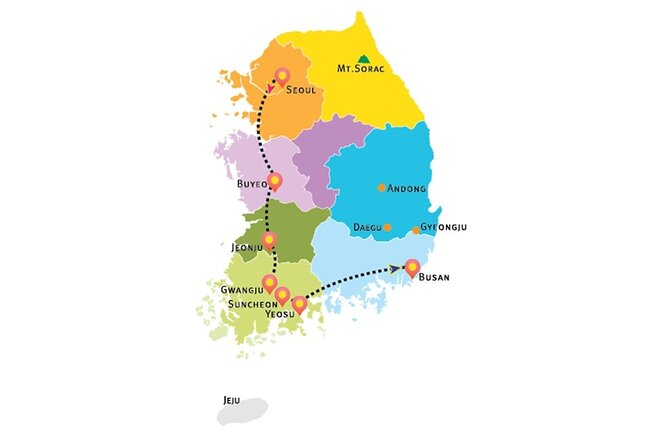
At $749 per person, this is not a “budget bus tour.” It’s closer to paying for convenience plus a guided route—because the big costs are already baked in: 2 nights in 4-star accommodations, transfers by coach, a professional guide, and breakfast each morning. You also get some entrance fees (not every site, but key ones).
You still pay for lunch and dinner on your own. That’s the main trade-off: you’re saving time and stress, but you’re also giving yourself flexibility to choose your own food stops. If you like control over meals, that can be a good fit.
Also note the tour caps at 40 travelers and runs as long as there are at least 2 participants. That helps explain why it’s often booked about 34 days in advance—it’s popular enough that planning ahead matters.
You can also read our reviews of more tours and experiences in Seoul
The Seoul Meeting Point, Mobile Ticket, and The Real-Life Flow
Your day starts with a set meeting plan in Seoul: you gather by DongHwa Dutyfree near Sejong-daero, with instructions tied to Gwanghwamun Station exit 6 and the parking lot next to the duty free. Start time is 8:00 am. That early start is important because the itinerary packs a lot into each day.
The tour uses a mobile ticket, which is handy for most people. The practical tip: before you show up, double-check your exact meeting coordinates and arrive with a little buffer. One of the mixed reactions I saw wasn’t about the sights—it was about getting onto the right bus at the start.
From there, the “flow” is simple: coach transportation between regions, guide-led visits at each stop, and a final handoff in Busan around 13:00 near Busan Train Station Plaza. You don’t need to solve transit puzzles at the end of the day.
Day 1: Songsan-ri Royal Tombs, Gongsanseong Fortress, and Jeonju Hanok Village
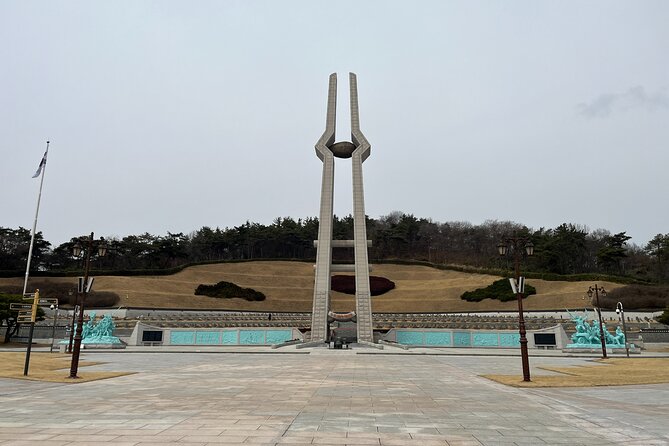
Day 1 is where the tour earns its keep, because it moves through Baekje-era history and then shifts into daily life in Jeonju. You’ll spend longer blocks at each stop, so it doesn’t feel like you’re just checking boxes.
Songsan-ri Tombs and the Royal Tomb of King Muryeong
This stop is all about the details of how power was buried. The Songsan-ri Tombs contain representative relics from the Baekje period, and the story here is that the site is linked to kings when Baekje’s capital was Gongju. The tour notes that 10 graves are believed to exist, and seven have been discovered so far.
The highlight is the Tomb of King Muryeong, described as the 7th tomb and the resting place of King Mu-Ryeong and his queen. What makes it especially interesting is how it was uncovered—during pipe work meant to prevent flooding near other tombs. The tomb is also unusual in construction and contents, with many national treasures found inside. For you, this means the visit isn’t just “old rocks,” it’s a chance to understand how archaeology shapes what we know about Baekje culture.
Value tip: wear shoes you can trust for uneven ground and plan to slow down at the tomb explanations. If you rush this one, you miss the “why” behind the discoveries.
Gongju Gongsanseong Fortress: views plus a timeline in stone
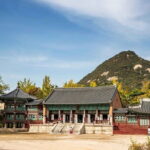
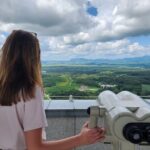
Next is Gongsanseong Fortress, a mountain castle established during the Baekje era. The tour focuses on the payoff: the view over the Geumgang riverside, plus the trail leading deeper into the fortress.
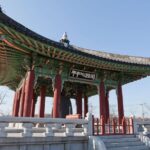
Near the upper part of the site is Imnyugak Pavilion, noted as the largest of its kind within the fortress. This stop works well if you like your history paired with physical scale—fortresses always feel different when you stand where people once watched the horizon.
The time here is about an hour. That’s enough for the main viewpoints and key pavilion area without turning the day into a hike marathon.



Jeonju Hanok Village: traditional roofs, traditional food
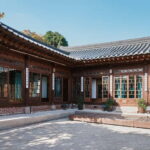
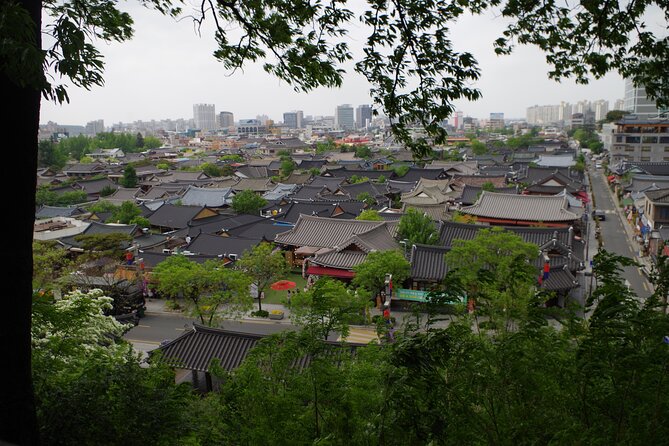
Then the tour shifts gears into Jeonju Hanok Village. Here the emphasis is on atmosphere and experience. While other parts of the country pushed ahead with industrialization, this village preserves traditional Korean life.
The tour points out one design clue that you’ll notice quickly: the roof edges are slightly raised toward the sky. Part of the area is set aside for a Hanok Life Experience Hall, where you can experience traditional Korean routines.
You’ll also be able to enjoy traditional food—bibimbap from Jeonju is specifically called out as a must. Since lunch isn’t included on the itinerary, this is a smart moment to eat something that actually matches the setting.
Practical note: Jeonju can be popular, so you’ll enjoy it more if you use the time to wander slowly between the hanoks and read what’s available inside the experience hall.
Day 2: Democracy Memorial, Suncheon Bay Garden, and Admiral Yi Sun-sin
Day 2 is emotionally and visually different from Day 1. It goes from remembrance to nature conservation, then lands on military history anchored in one key person.
May 18 National Cemetery: a memorial with a clear purpose
The May 18th National Cemetery is described as a symbol of freedom and democracy. It serves as the grave of victims from the struggle for democracy in May 1980.
This memorial’s details matter: the tour explains that victims were carried and buried by handcarts and garbage trucks in 1980, and the site was later exhumed and reburied at the memorial in 1997. May 18 became a national holiday tied to the public desire for democracy.
You’ll spend about two hours here. If you want a meaningful visit, don’t treat this like a quick photo stop. Let yourself read the explanations and watch for how the cemetery is designed as a place of reflection.
Suncheon Bay Garden: conservation with seasonal color
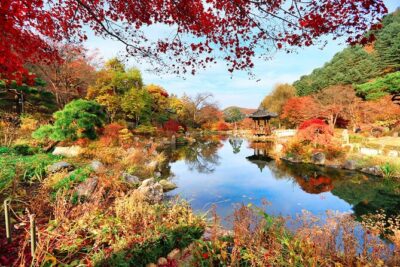
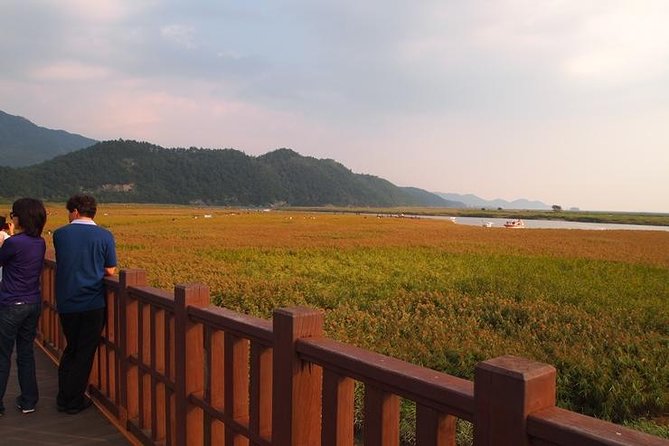
After a serious memorial, this garden stop gives you a different kind of education: how nature is protected and managed. The Suncheon Bay Garden covers 1.12 square kilometers and was set up as a conservation area.
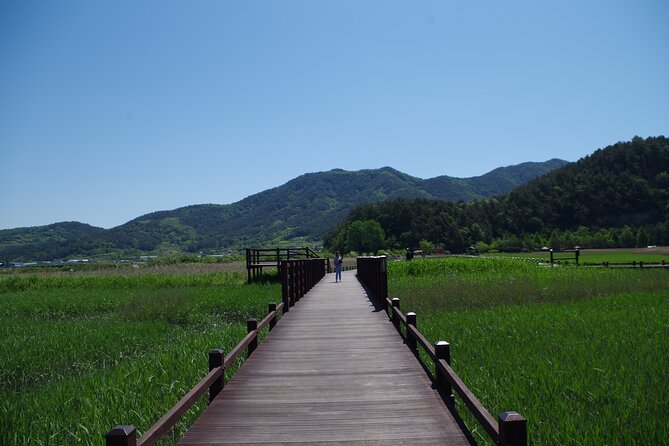
The tour notes the variety: over 505 species of trees and 113 species of flowers. You’ll especially want to pay attention to seasonal blooming—tulips and royal azaleas are highlighted, and a canola flower field of 30,000 square meters can create a yellow “wave” in May.
That May timing matters because if you go outside peak bloom, the garden will still be worth it, but the color intensity may be different. Either way, the conservation angle is the main point, and it’s a nice break from city noise.
Statue of Admiral Yi Sun-sin: headquarters tied to Imjin War
Then you move into a strong story about leadership during invasion. The stop is linked to Admiral Yi Sun-sin and his headquarters location during the Japanese invasion (1592–1598) in the Imjin War.
The tour states that the site displays many artifacts honoring his defense efforts. It also notes that the hall itself was designated a National Treasure No. 304 in 2011.
This is a good stop if you like history that connects place to decision-making. The time is about two hours, which gives you enough room to absorb the exhibits without being rushed.
Day 3: Jinjuseong Fortress and Finishing at Busan Station
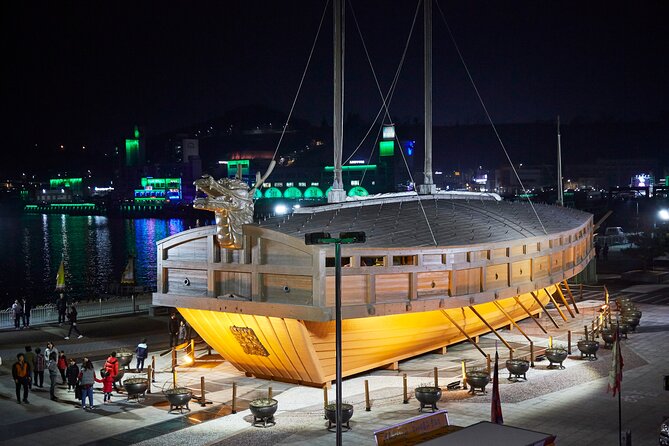
Day 3 is shorter, and it ends in a very practical place: where you can keep traveling without fighting city navigation.
Jinjuseong Fortress: names change with dynasties
Jinjuseong Fortress is tied to the Japanese invasion in 1592, and the tour walks you through the evolution of the fortress’s name across periods: originally Geoyeolseong Fortress in the Three Kingdoms era, later Chokseokseong Fortress in the Goryeo Dynasty, and finally Jinjuseong Fortress in the Joseon Dynasty.
The visit is about one hour. That’s just enough time to connect the geography with the history and then move on.
For you, the value here is closure: after multiple stops of Baekje, democracy history, and Admiral Yi, you get a fortress that’s specifically about conflict and defense, with a clear timeline you can remember.
Busan Station Plaza drop-off around 13:00
The tour ends with a drop point at Busan Train Station Plaza around 13:00, about 30 minutes at that final stop. That timing can work well if you have reservations in Busan the same afternoon—just plan to keep your plans flexible until you know exactly how long transfers take that day.
4-Star Lodging, Room Setup, and How to Avoid Common Friction
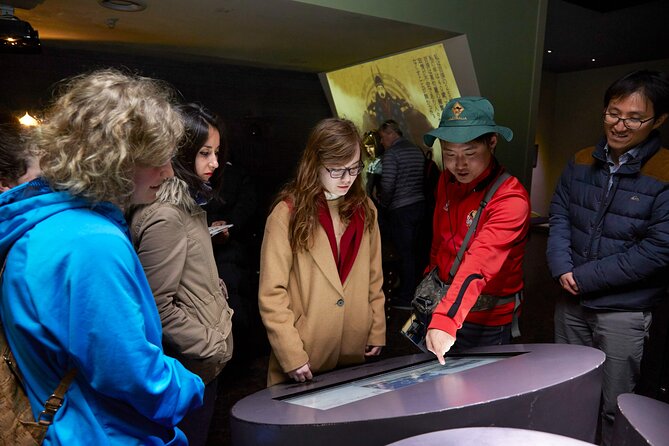
This tour includes 2 nights in 4-star accommodation, plus breakfasts. That matters because it saves you from hunting for hotels on a tight route, and it usually improves sleep quality after long sightseeing days.
Room arrangements follow clear rules:
- If a group booking results in an odd number of travelers, a third person can share the same room with a pullout bed at no extra charge.
- Double rooms default to two separate twin beds.
- If you want a queen bed, you need to note it in special requirements at checkout.
Single rooms are possible, but a single traveler surcharge applies. Also, you’re asked to bring only one luggage per person depending on group size and vehicle space, so travel light helps.
My practical advice: pack a day bag for your visits so you don’t rummage through the whole suitcase at every stop. With coach travel, you’ll be happier if you can move fast and stay organized.
Guide Style: What Makes This Tour Feel Effortless
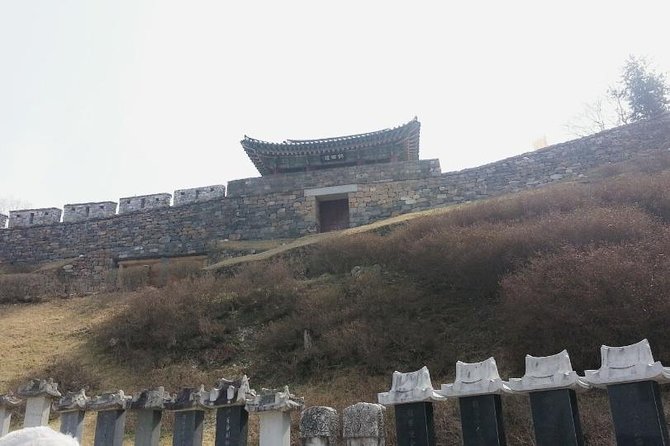
The biggest “difference” between a good tour and a great one is how the guide turns walking time into understanding. In the feedback I reviewed, guides such as Justin and Mr Kim (MS) were praised for explaining Korean history and culture clearly, plus sharing practical tips for evening activities and food.
Even if your guide isn’t the exact person from that feedback, the structure suggests you’ll get a professional guide who stays with the group and helps manage check-ins and onward travel. That’s exactly what you want when you’re traveling west Korea—areas where public transport can be doable but slower and more stressful if you’re working across the language barrier.
One more practical note from the mixed feedback: the initial bus-boarding step can feel like a puzzle. If you’re sensitive to that kind of chaos, use the early arrival buffer as your “insurance policy.”
Who This Tour Suits Best (and Who Should Skip It)
This tour is a great match if you:
- want to see multiple regions of West Korea without planning every connection yourself
- like guided history explanations at major sites (tombs, fortress, memorials, national treasures)
- prefer coach travel over handling intercity transfers on your own
- value having 4-star beds and breakfasts handled for you
It may not be the best fit if you:
- hate early mornings and tight schedules
- want maximum freedom to pick your own start times each day
- plan to spend most meals far from guided stops (since lunch/dinner aren’t included)
If your travel style is more slow-and-local than “route and rhythm,” you might prefer building your own day-by-day itinerary. But if you want structure and fewer transport headaches, this hits the sweet spot.
Should You Book the 3-Day Korea Western Course?
Book it if you want value through saved time: you’re paying for coach logistics, a guide, and 4-star lodging, with enough landmark variety to feel like a real journey across West Korea. It’s especially smart if you’re trying to reach places like Songsan-ri, Gongsanseong Fortress, and Suncheon Bay Garden without navigating transit and timing alone.
Pass or consider another option if you’re the type who needs full control over meals, pacing, and daily planning. The route is organized, and that structure is the point.
My final take: if you’re coming to South Korea and want your west-coast week to feel organized from the first 8:00 am meeting onward, this is a strong way to do it. You’ll leave with memories that aren’t just photos—you’ll understand the place names, dynasties, and why each site matters.
FAQ
How long is the tour?
It’s 3 days (approx.).
What’s the meeting time and location in Seoul?
Meeting is at 8:00 am at the parking lot next to Dongwha Duty Free shop near Gwanghwamun Station exit 6 (Sejong-daero area).
Where does the tour end in Busan?
The drop-off is at Busan Train Station Plaza around 13:00.
What’s included in the price?
The price includes 2 nights in 4-star accommodation, transfer by coach, a professional guide, and breakfast as per the itinerary, plus some entrance fees.
Are lunch and dinner included?
No. Lunch and dinner are not included.
What room setup should I expect for two or three people?
For odd-number bookings, three people may share one room with a pullout bed available for the third person at no extra charge. Otherwise, you can request a single room (with a single traveler surcharge).
Can I request a queen bed instead of twin beds?
Yes. The default is two twin beds, and you can request a queen bed in Special Requirements during checkout.
Do I need to provide passport details?
Yes. Passport name, number, expiry, and country are required at the time of booking.
How much luggage can I bring?
You should bring only one luggage per person, depending on group size and vehicle luggage space.
What is the cancellation window for a full refund?
You can cancel up to 6 days in advance for a full refund.