REVIEW · SEOUL
Gyeongju UNESCO Sites Tour by KTX train; The Museum Without walls
Book on Viator →Operated by Tagytravelkorea · Bookable on Viator
Gyeongju hits hard in one long day. This KTX-powered outing turns the ancient Silla kingdom into a walkable story, with stops that range from royal tombs to the Bulguksa–Seokguram UNESCO landscape. I like the way the day is structured so you spend less time figuring things out and more time looking closely at what’s actually there, including Cheonmachong Tomb and the Seokguram grotto.
Two things I really like: first, the tour includes hotel-area pickup plus round-trip KTX tickets and admissions, so the trip feels packaged and low-stress. Second, you get an English-speaking guide who can connect the dots between sites, and the experience is guided by real people whose names have come up in past groups, like Jay, John, and Dylan.
One possible drawback is simple: it’s a long day, and several major stops are outdoors. If rain shows up, you’ll still visit, but the walking and viewing can feel less pleasant, so plan for weather.
In This Review
- Key things to know before you go
- Why Gyeongju feels like a museum without walls
- KTX day trip from Seoul: timing that actually works
- Private transfers and getting on the rails stress-free
- Cheonmachong Tomb: royal power written in earth and stone
- Gyeongju National Museum: the fast way to read the city
- Cheomseongdae Observatory: Silla astronomy you can still see
- Donggung Palace and Wolji Pond (Anapji): where palace life met water
- Bulguksa Temple and Seokguram: the UNESCO payoff
- What you’re paying for: value, not just sightseeing
- The pace: a long day with a clear rhythm
- Who should book this Gyeongju UNESCO tour
- Should you book the Gyeongju UNESCO Sites Tour by KTX?
- FAQ
- How long is the Gyeongju UNESCO Sites Tour from Seoul?
- What does the $470 per person price include?
- Are meals included?
- Do I need to pay for entrance tickets at each stop?
- Is pickup provided in Seoul?
- Is this tour private?
- What train is used for the trip from Seoul to Gyeongju?
- What time does the tour start?
- What’s the cancellation policy?
- Is there a mobile ticket?
Key things to know before you go
- KTX day trip pacing: You’re out early (7:00 am) and back the same day, so bring comfortable shoes and keep your expectations realistic.
- Historic sites in a smart order: Royal burials, astronomy, palace grounds, and then UNESCO temples happen in a logical flow.
- Admissions handled for you: Site fees are included, and the Gyeongju National Museum stop is free on this itinerary.
- Guide quality matters: English-speaking historians like Jay, John, and Dylan can change how much you take away from the stones.
- Pickup but no Seoul drop-off: You’ll be collected, but hotel drop-off isn’t included after the tour ends.
- Mobile ticket included: Helpful for keeping the day organized once you reach Gyeongju.
Why Gyeongju feels like a museum without walls
Gyeongju is the kind of place where history isn’t behind glass. It’s set into mounds, temple stonework, and old architectural shapes you can still see today. The best part of this tour is that it doesn’t treat the sites like separate postcards. It links them into one Silla-world story.
You’ll start with Silla burial culture and end with two of Korea’s most famous Buddhist treasures. In between, you get the in-between layers: royal power, scientific pride (yes, astronomy), and the palace-pond setting that shows how carefully the Silla elite curated nature.
This approach works well if you want depth without spending a full day researching. I especially like that you get context fast, so when you look at things like carved stone and ancient layout, you’re not staring at mystery.
You can also read our reviews of more museum experiences in Seoul

KTX day trip from Seoul: timing that actually works
The tour is built around high-speed rail, so you’re not burning half your day on slow transportation. The total time is about 8 to 9 hours, starting at 7:00 am in Seoul. That early start is the tradeoff for getting a full day of sites without sleeping in a different city.
KTX is included round trip in economic class, which keeps the cost predictable. Also, you’re not left to figure out train logistics alone. In multiple past experiences, the transfer team has met people at pickup points, helped them get to the station, and even stayed with the group until boarding time.
If you hate rushed travel days, you may find this one long. But if you can handle a packed schedule, you’ll get an efficient sampler of the most important Gyeongju themes in a single push.
Private transfers and getting on the rails stress-free
This is described as a private tour, meaning your group participates together without mixing with strangers. That matters because the day runs smoother when schedules stay inside your party.
You get hotel pick-up in Seoul areas, plus a private vehicle transfer for the ground portion. One real-life detail that stands out from guide-driver stories is how the team can physically help you move from pickup to subway or to your train seat. That little bit of escorting can save energy, especially on a morning when your brain is still on coffee mode.
Just know the tradeoff: hotel drop-off in Seoul isn’t included. The tour includes your return train, but after you finish, you’ll need to arrange your own ride back to your final destination.
Cheonmachong Tomb: royal power written in earth and stone
Stop 1 is Cheonmachong Tomb, and it sets the tone immediately. Gyeongju’s Silla legacy isn’t only temples and buildings. It’s also burial mounds—big, engineered landscapes built to last.
What to look for here:
- There are more than 20 large and small tombs from the Silla period.
- The tombs are thought to be for kings and court officials.
- Many are earthen, mound-shaped.
- Some are described as double gourd-shaped, which is the kind of detail that makes the whole burial style feel specific, not generic.
This stop is also great if you like “how did they do this?” moments. Tombs are architecture, just buried. You’ll likely spend your time connecting the guide’s explanations to the physical shapes in front of you.
The main drawback: you’ll be outside in open areas. On a sunny day, that’s a win. On a rainy day, expect wet ground and less comfortable walking.
Gyeongju National Museum: the fast way to read the city
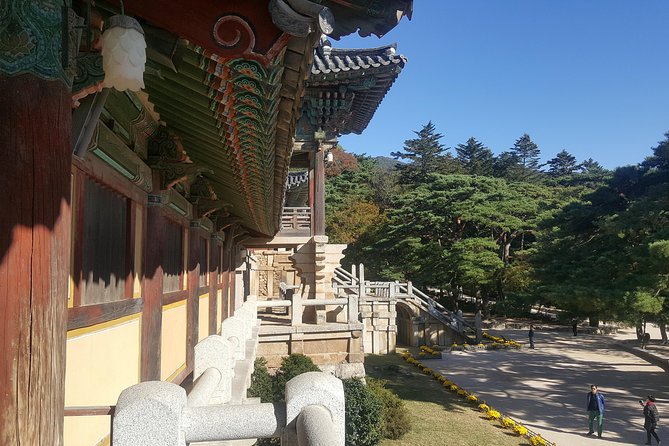
Stop 2 is Gyeongju National Museum, and it’s one of the best ways to turn random sights into a real understanding. The museum is described as arguably the best history museum in Korea for capturing why this ancient city mattered.
Even if you only have an hour, this is where the tour helps you “get it.” You see archaeological material and how different objects connect to Silla life and authority. The goal isn’t to see everything. It’s to build a mental map you can carry into the temple and outdoor sites.
A nice practical bonus: museum admission is listed as free for this stop. That means your time inside feels like part of the plan, not an extra cost decision.



Cheomseongdae Observatory: Silla astronomy you can still see
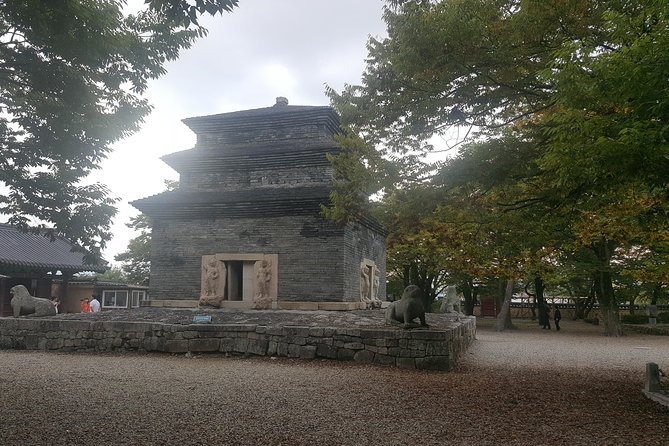
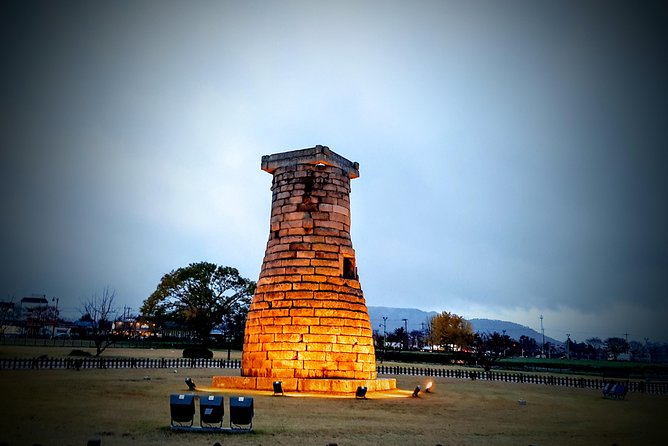
Stop 3 is Cheomseongdae Observatory, known as the Star Gazing Tower. This is one of those rare places where you get science plus ancient engineering in one compact site.
Key facts to keep in mind as you look:
- It was built during the reign of Queen Seonduk, the 27th ruler of the Silla dynasty, in 634.
- It’s described as the oldest existing observatory in the Far East.
- The tower is made with 27 levels of stones, which is the kind of symbolism that makes you slow down and look longer than you planned.
This stop is especially valuable because it expands what “heritage” means in Gyeongju. You’re not only visiting royal tombs and religious sites. You’re seeing how the Silla kingdom treated the sky as something measurable and important.
Time-wise, it’s about an hour, so you’ll get focused viewing without museum-fatigue.
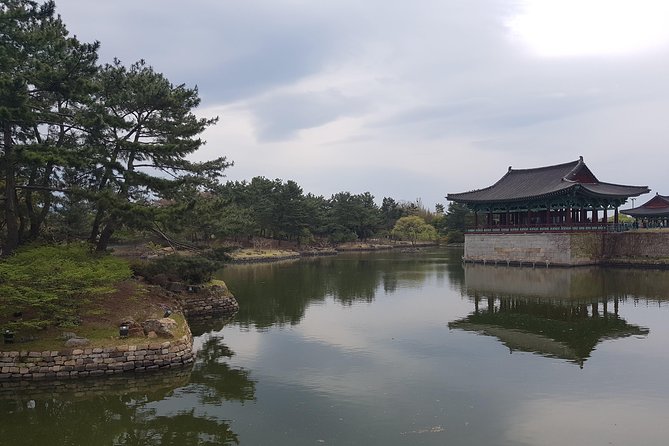
Donggung Palace and Wolji Pond (Anapji): where palace life met water
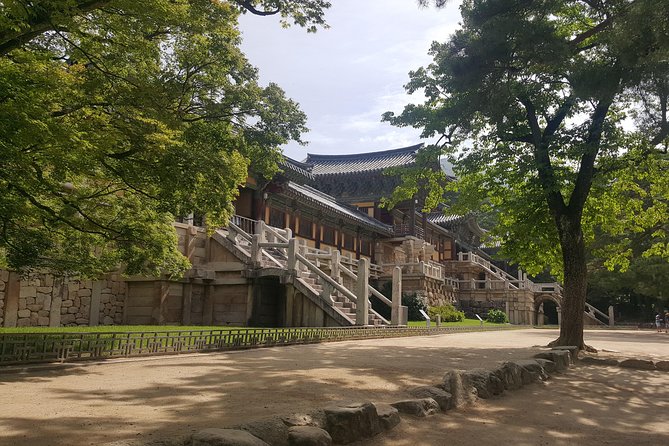
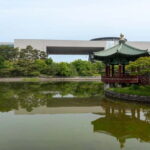
Stop 4 is Donggung Palace and Wolji Pond, also known historically as Anapji Pond. This is a different mood from tombs and observatory stones. It’s about the palace landscape: controlled nature, curated views, and elite leisure.
What makes it stand out:
- The pond is described as built in 674, after the unification of the Korean Peninsula.
- Inside the palace walls, small mountains were created.
- Trees, flowers, and rare birds and animals were brought in, showing how intentional the setting was.
This stop helps the tour avoid becoming purely about funerals and temples. You get a sense of how the Silla court lived and displayed power through environment.
Practical note: like other outdoor stops, it can be less pleasant in cold wind or heavy rain. Still, even on a gray day, the pond-and-garden layout is easy to understand visually.
Bulguksa Temple and Seokguram: the UNESCO payoff
Stops 5 and 6 are the big finale: Bulguksa Temple and Seokguram Grotto, both part of the UNESCO story here.
Bulguksa is described as the most famous Buddhist temple in Korea, with important Silla-period relics. You’ll see the stone pagodas, including Dabotap. This is the moment where you can feel why people build whole trips around these sites. Even if you’ve seen photos, the scale and stone detail are usually more impressive in person.
Then you move to Seokguram:
- It’s a hermitage within the Bulguksa temple complex.
- It overlooks the East Sea.
- It sits 750 meters above sea level.
- The grotto holds some of the best Buddhist sculptures in the world, according to the tour description.
This pairing works because it blends temple architecture with sculpture inside a mountain setting. From a value perspective, it’s also smart: UNESCO sites are hard to reproduce on your own without careful planning. Here, the logistics are handled, and your guide can translate the visual language of the stonework.
Weather caution matters most here. If it’s raining, the ground approach and views can be harder. One less-fun day experience can happen when it rains during outdoor-heavy parts, so I’d bring a rain layer even if the forecast looks calm.
What you’re paying for: value, not just sightseeing
The price is $470 per person, and the tour includes a lot of operational costs that add up fast if you DIY. You get:
- Hotel-area pickup in Seoul
- Round-trip KTX in economic class
- Private vehicle transfers on the ground
- An English-speaking guide
- All admission fees to the listed sites
- A mobile ticket
So you’re not just paying for entrances. You’re paying for time saved and confusion avoided. For a day trip, that’s the real value: not having to map trains, connect local transport, and coordinate multiple distant stops.
Does it feel expensive? For Korea, it can still be reasonable because major UNESCO sites and train rides cost real money and real planning effort. If you’re traveling in a small group or you’re the type who hates logistics puzzles, the price starts looking fair.
If you’re a super independent traveler with strong Korean transit skills, you might think about doing it on your own. But you’ll still end up paying for transport and entry fees, and you’ll miss the quick context that turns “cool stones” into meaning.
The pace: a long day with a clear rhythm
This is not a slow sightseeing stroll. It’s a guided circuit with about one hour at each stop. Over 8–9 hours, that rhythm means you’ll see a lot and spend less time wandering.
That can be a plus. You’ll get key highlights without burning your whole day on one site. But if you like to sit and absorb quietly, you may find you’re moving before you’re ready.
The start time is early, so plan for a full-day commitment. I’d also pack snacks or plan for a lunch break, since meals aren’t included. One small detail from past experiences: guides have helped groups find good lunch spots with generous portions, so you might not be stuck eating something bland—but you still need to plan for food on your end.
Who should book this Gyeongju UNESCO tour
This tour fits best if you:
- Want a big hit of Silla-era heritage without an overnight plan.
- Prefer an English-speaking guide to explain what you’re seeing.
- Care about UNESCO sites like Bulguksa and Seokguram and want the day organized for you.
- Are okay with a full day that includes outdoor walking.
It may be less ideal if you:
- Have low tolerance for early mornings and long transit-heavy schedules.
- Get uncomfortable in rain or cold, since several major stops are outdoors.
If you’re visiting Seoul and want one high-impact day outside the city, this is a strong way to do it.
Should you book the Gyeongju UNESCO Sites Tour by KTX?
I’d book it if you want the most efficient way to understand Gyeongju’s big themes in one day. The combination of KTX round-trip, hotel-area pickup, and included admissions makes it a straightforward deal on paper and in real time.
Skip it if you’re the type who wants a flexible, slow itinerary. Also skip it if you know you’ll be miserable when it rains, because weather can blunt the outdoor parts of the experience.
If you do book, do yourself a favor: wear shoes you can walk in for hours, bring a rain layer, and go in ready to learn. This tour is at its best when you treat it like a guided history walk through real places, not just a photo hunt.
FAQ
How long is the Gyeongju UNESCO Sites Tour from Seoul?
The tour runs about 8 to 9 hours.
What does the $470 per person price include?
It includes hotel pickup (in Seoul areas), round-trip KTX tickets (economic class), private vehicle transfers, an English-speaking guide, and admissions to the listed sites.
Are meals included?
No. Every meal is listed as not included.
Do I need to pay for entrance tickets at each stop?
Admissions are included for the tourist sites on the itinerary. The Gyeongju National Museum stop is listed as free.
Is pickup provided in Seoul?
Yes, hotel pickup is offered in Seoul areas. Hotel drop-off service in Seoul is not included.
Is this tour private?
Yes, it’s private. Only your group participates.
What train is used for the trip from Seoul to Gyeongju?
The tour uses KTX round-trip service in economic class.
What time does the tour start?
The start time is 7:00 am.
What’s the cancellation policy?
You can cancel for a full refund up to 24 hours before the experience’s start time.
Is there a mobile ticket?
Yes, a mobile ticket is included. Confirmation is received at the time of booking.