REVIEW · SEOUL
Closest Observatory to DMZ & Suspension Bridge Tour from Seoul
Book on Viator →Operated by I Love Seoul Tour · Bookable on Viator
North Korea, from Seoul, at 1.4 km.
This tour takes you into the Civilian Control Zone to visit Aegibong Peace Eco Park and the Jogang Observatory, where you can look toward North Korea from the nearest public viewing distance (about 1.4 km). I like how the stop is more than a photo op: Aegibong traces back to Hill 154, a fierce Korean War battleground, and it’s tied to postwar families who returned again and again to see what they lost. I also love the human touch of the Starbucks on the observatory, because it shows how even a tense place gets shaped into something people can visit, walk through, and talk about.
One thing to plan for: this experience is strict about documents and conditions. You need a passport, the tour requires good weather, and there’s a minimum number of participants to run. If your schedule is tight, that matters.
In This Review
- Key highlights worth knowing
- Aegibong Peace Eco Park: Hill 154, Displaced Families, and Peace Symbols
- The Jogang Observatory Connection You’ll Feel in Your Photos
- The Peace Eco Park Christmas Tree Story (and Why the Bridges Matter)
- The Starbucks on the Observatory: Practical Stop, Real Emotion
- Walking Through the Schedule: 4 Hours 45 Minutes That Move at a Good Pace
- Guides Like Sunny, Thomas, and Shin Make the Politics Make Sense
- Getting Your Money’s Worth: Why $48 Feels Fair Here
- Civilian Control Zone Reality: How to Prepare Without Stress
- Who This Tour Fits Best (and Who Might Want Another Option)
- Should You Book This DMZ-Adjacent Observatory Tour?
- FAQ
- What is the closest observatory stop on this tour?
- Where does the tour start and end?
- How long is the tour?
- What do you do at Aegibong Peace Eco Park?
- Is the Starbucks coffee included?
- Do I need a passport?
- Is there hotel pickup or drop-off?
- What’s included in the ticket price?
- Do I need good weather?
- How many people can be on the tour?
- What is the cancellation deadline?
Key highlights worth knowing
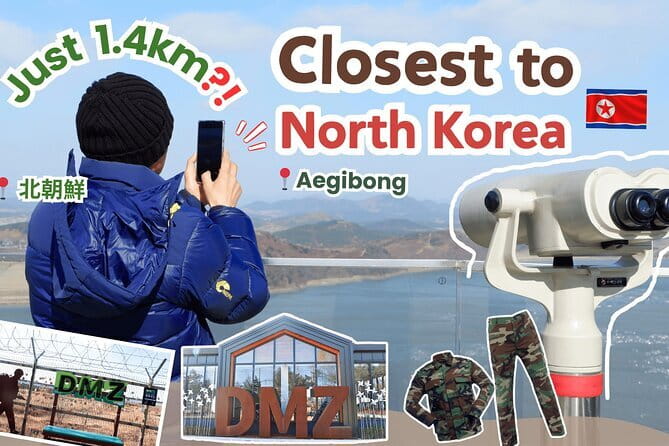
- Closest public view toward North Korea: About 1.4 km from the observatory point
- Aegibong Peace Eco Park story: Hill 154 history plus displaced families and hope after the war
- Civilian Control Zone visit: You’re not just sightseeing from afar
- Starbucks on the observatory: Buy a drink there, but coffee isn’t included
- Guides make the difference: Many guests rave about guides like Sunny, Thomas, and Shin
Aegibong Peace Eco Park: Hill 154, Displaced Families, and Peace Symbols
Aegibong Peace Eco Park sits at a historically intense location. It used to be Hill 154, where fighting between the two Koreas was especially fierce during the Korean War. The park also ties into the geography of the area—at the mouth of the Hangang River and alongside the Jogang River—so it’s easy to understand why this spot mattered strategically, not just emotionally.
What makes your visit feel real is that it isn’t presented like an abstract memorial. Aegibong is especially famous for displaced people who kept returning after the war. They missed their homes and came to this area hoping to see their hometown from where they could. That’s why the atmosphere here lands differently than a typical viewpoint: you’re walking through a place built around longing, then later around reconciliation.
You can also read our reviews of more tours and experiences in Seoul.

The Jogang Observatory Connection You’ll Feel in Your Photos
The story continues at the observatory. The old observatory was established in 1978, then it was demolished and renewed under the name Jogang Observatory. The whole point is that you can see northern land from the closest distance available for this type of visit—about 1.4 km toward North Korea from the observatory area.
Now, a quick reality check for your expectations: you’re not going to see daily life like it’s a street corner movie. But you will get something that’s hard to replicate elsewhere—an honest, close visual sense of how close the two sides are, and how that proximity shapes attitudes, rules, and daily life in the region.
This observatory stop is also where the tour earns its reputation. Seeing North Korea from the nearest distance is the big draw, but you’ll likely remember the context more than the distance itself. It’s one thing to read about division. It’s another to stand where the geography has consequences you can point to.
The Peace Eco Park Christmas Tree Story (and Why the Bridges Matter)
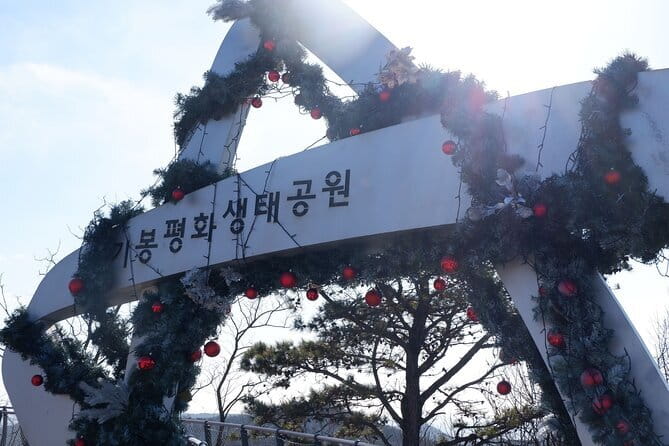
Aegibong has a particular piece of visual history: it was once known for a huge Christmas tree. But the lights were reportedly too bright for North Korea, and that created conflict tied to electricity limitations in the North.
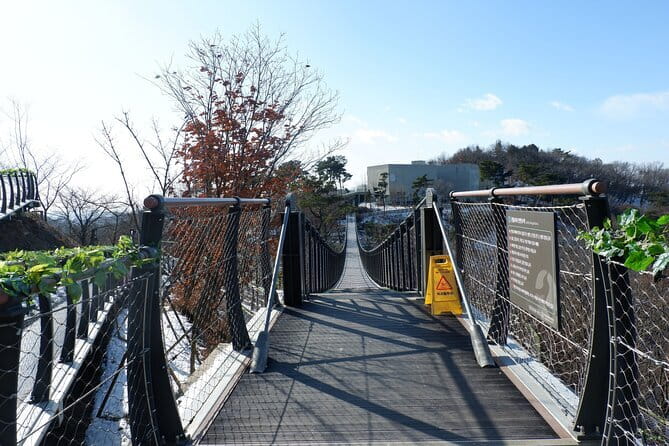
When that tree was removed, the staff didn’t just wipe the theme away. They built bridges shaped like the tree instead. That detail sounds almost whimsical until you connect it to the bigger message: even a decorative light display had political and technical consequences here. The replacement bridges keep a familiar landmark look, while shifting it into something that doesn’t provoke the same problem.
So when you see those bridges, treat them like more than decoration. It’s a very practical example of how people adapt in a divided space—trying to keep visitors connected while working within real limits.
The Starbucks on the Observatory: Practical Stop, Real Emotion
Yes, there’s a Starbucks at the observatory. For many people, it’s the easiest way to break the tension while you’re standing in a place that carries heavy history.
Just keep expectations in the right lane: the coffee itself isn’t included. The tour includes the admission ticket for the eco park, plus transportation and the passport requirement, but you’ll need to pay for any coffee or tea you order at Starbucks.
Still, I like this stop because it gives you a normal rhythm inside an abnormal setting. You can sit, drink something warm or cold, and let what you just learned settle in. And if you’re traveling with family or friends, it can be a helpful pause before you re-focus on the view.
Walking Through the Schedule: 4 Hours 45 Minutes That Move at a Good Pace
The tour runs about 4 hours 45 minutes. You’ll start in Myeong-dong (Jung District), and it ends back in the same neighborhood at Myeongdong Station. That round-trip convenience matters if you’re staying in central Seoul, because you’re not stuck crossing town for half a day.
Timing is built around two core experiences:
- Around 1 hour 30 minutes at Aegibong Peace Eco Park
- Then the rest of your time supports travel, the observatory visit, and the group flow
The pace is typically manageable for people with a moderate fitness level. That’s not a trek kind of day, but you will be moving, standing, and walking outdoors. If you’re sensitive to long periods in open air, plan for the weather.



Guides Like Sunny, Thomas, and Shin Make the Politics Make Sense
The standout pattern in the feedback is the guiding. Names that come up again and again include Sunny, Thomas, and Shin. The praise isn’t just about friendliness. It’s about explanation—how the guide frames the South–North conflict in a clear, understandable way without turning it into a lecture.
One guide style that really helps is connecting big-picture history to what it means to live in South Korea now. When a guide brings personal perspective—like describing the impact of division from the South—it makes the visit feel grounded. You’re not only looking at faraway land; you’re hearing how policies and proximity affect ordinary people.
If you’re choosing the option that includes a professional tour guide, this is exactly the kind of tour where a strong guide can be worth it. The observatory view is the headline, but the interpretation is what makes it stick.
Getting Your Money’s Worth: Why $48 Feels Fair Here

The price is $48.00 per person, and the tour is booked about 31 days in advance on average. I’d call it good value for a DMZ-adjacent experience because several key pieces are included up front: air-conditioned vehicle transport, an admission ticket for Aegibong Peace Eco Park, and the required passport focus to keep the tour running smoothly.
Not included are things you’d expect to pay for separately: snacks, lunch, and coffee/tea (even though Starbucks is on-site). If you show up hungry, you might end up paying extra for convenience, so it’s smart to budget for at least a drink during the stop.
Also, remember the group size: maximum of 120 travelers. That can affect how much you can ask questions or take in details, but the general review pattern suggests the guide manages the group well.
Civilian Control Zone Reality: How to Prepare Without Stress

This isn’t a casual park-and-stroll only tour. It’s framed around access to a Civilian Control Zone area, and that’s why the passport requirement is mandatory. If you’re missing your passport on tour day, you won’t be able to participate.
You should also plan for weather. This experience requires good weather, and if it’s canceled due to poor conditions, you’ll be offered a different date or a full refund. In other words: don’t treat it as a backup plan you can gamble with on the day.
Finally, there’s a minimum of 2 participants. So if you’re traveling during a slow season or on a weird schedule, there’s a small chance your departure could shift to meet that minimum.
Who This Tour Fits Best (and Who Might Want Another Option)
This is a great fit if you want:
- A close, specific view angle toward North Korea from a public observatory
- A guided explanation of the division of the Korean Peninsula
- A “history plus symbolism” experience that doesn’t feel purely political
- Central Seoul logistics (meeting and ending near Myeong-dong)
It’s less ideal if:
- You hate document rules and tightly controlled access
- You need guaranteed operating days regardless of weather
- You’re only after food and shopping (Starbucks is there, but it’s not the point)
If you’re a history-minded traveler, or you simply want to understand the geography and tension behind the headlines, this tour gives you a clear route to do that in one half-day block.
Should You Book This DMZ-Adjacent Observatory Tour?
If your goal is the closest public observatory view toward North Korea while also visiting a peace-focused historical site, I’d say yes—book it. The combination of Aegibong Peace Eco Park’s postwar story and Jogang Observatory’s proximity creates a visit with emotional weight and practical value. And the guide impact is real: names like Sunny, Thomas, and Shin show up as favorites for a reason.
Just don’t book it casually. Bring your passport, watch the weather situation, and plan a little time for standing and walking outdoors. If you do those basics, you’ll leave with something most Seoul tours can’t provide: a direct sense of how close two worlds are, and how people built places here to live with that reality.
FAQ
What is the closest observatory stop on this tour?
You visit Jogang Observatory, described as the observatory closest to the DMZ area and where you can see northern land from about 1.4 km away.
Where does the tour start and end?
The tour starts in Myeong-dong (Jung District, Seoul) and ends at Myeongdong Station.
How long is the tour?
It runs about 4 hours 45 minutes total.
What do you do at Aegibong Peace Eco Park?
You visit Aegibong Peace Eco Park, which includes the historic Hill 154 background and the peace-themed setting, with an admission ticket included.
Is the Starbucks coffee included?
No. Coffee and tea at Starbucks are not included, even though there is a Starbucks on the observatory area.
Do I need a passport?
Yes. Passports are mandatory for this tour.
Is there hotel pickup or drop-off?
No, hotel pick-up and drop-off are not included.
What’s included in the ticket price?
Included items are air-conditioned vehicle transport and (if you select that option) a professional tour guide, plus the passport requirement support.
Do I need good weather?
Yes. The experience requires good weather, and if it’s canceled due to poor weather you’ll be offered another date or a full refund.
How many people can be on the tour?
The group has a maximum of 120 travelers, and the tour requires at least 2 participants to proceed.
What is the cancellation deadline?
You can cancel up to 24 hours in advance for a full refund.