REVIEW · SEOUL
DMZ Past and Present: Korean Demilitarized Zone Tour from Seoul
Book on Viator →Operated by KOREA TOUR (DMZ TOUR) · Bookable on Viator
Binoculars across a tense border. This DMZ tour from Seoul gives you a rare, guided view of the North Korea–South Korea divide, with binocular viewing at Dora Observatory and a walk through the 3rd Infiltration Tunnel that you cannot do on your own. You get expert commentary throughout, so the place feels less like a scary movie set and more like a real, complicated border with real consequences.
My favorite part is how the day mixes big ideas and human scale: war relics and POW stories at Imjingak and Freedom Bridge, then physical “you are here” understanding underground at the tunnel. The main drawback is physical: expect a steep, narrow tunnel walk (about 400 meters) with an 11-degree gradient, so bring proper shoes and don’t schedule anything tight afterward.
In This Review
- Key Points at a Glance
- What Makes This DMZ Tour From Seoul Worth Your Time
- Pickup, Timing, and Getting There Without Headaches
- Imjingak Pyeonghoa-Nuri Park: Where the War’s Objects Do the Talking
- Freedom Bridge: The Hope-and-Impact Moment
- The 3rd Infiltration Tunnel Walk: Small Distance, Big Reality
- DMZ Museum: Photos and Artifacts Before You Look North
- Dora Observatory: Using Binoculars to See Across the DMZ
- Price and Value: Why $37 Feels Like a Bargain (If You Fit the Format)
- Comfort Tips That Make the Tunnel and Observatory Easier
- Should You Book the DMZ Past and Present Tour?
- FAQ
- How long is the DMZ Past and Present tour from Seoul?
- What does the tour cost, and what is included?
- Do I need a passport for this tour?
- Is hotel pickup included?
- What will I be walking like inside the tunnel?
- Where do I get binocular access?
- Which major stops are part of the route?
- How large is the group?
- Is lunch included?
Key Points at a Glance
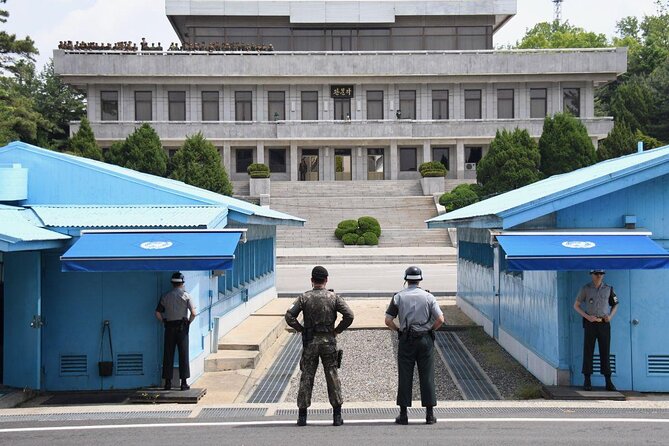
- Dora Observatory binoculars: You use viewfinders to spot across the DMZ, including the area of Kijongdong as your guide explains what you’re seeing.
- Access you can’t DIY: This is one of those DMZ experiences designed for escorted entry into restricted areas.
- The 3rd Infiltration Tunnel walk: Short distance, but real effort, in a steep and narrow space.
- Imjingak Park + Freedom Bridge: War artifacts, then a powerful reminder of POW crossings.
- Small-group feel: Maximum 40 travelers, so you’re not just lost in a crowd.
- Good structure for a half-day: A coach day that moves efficiently without feeling like a drive-by.
What Makes This DMZ Tour From Seoul Worth Your Time
If you care about how history turns into geography, this tour hits hard. The DMZ is the most heavily protected border in the world, and seeing it with a guide helps you connect the dots between past events and the present-day reality of a sealed line.
I also like the way the tour balances “look” time and “stand inside” time. You spend real time at major points of interest, including a museum stop for artifacts and photos, and then you physically experience what “infiltration” meant by walking the tunnel.
Finally, it stays practical. It’s about 6 hours 30 minutes total, and the route is built around a handful of stops that matter, rather than trying to cram in every photo spot on the peninsula.
You can also read our reviews of more tours and experiences in Seoul.

Pickup, Timing, and Getting There Without Headaches
You start in downtown Seoul with hotel pickup. The tour is designed to be simple: you board an air-conditioned coach for the drive toward the DMZ, then return to central Seoul for drop-off.
One practical detail I appreciate: communication is usually clear and fast. In past departures, the meeting point info has been sent via WhatsApp, and people have mentioned that it made finding the group easy.
Also, plan around passports. A current valid passport is required for the day of travel, and you do not need to send a copy in advance. Bring the passport in your day bag, because it’s the difference between going and standing at the wrong security line.
Imjingak Pyeonghoa-Nuri Park: Where the War’s Objects Do the Talking
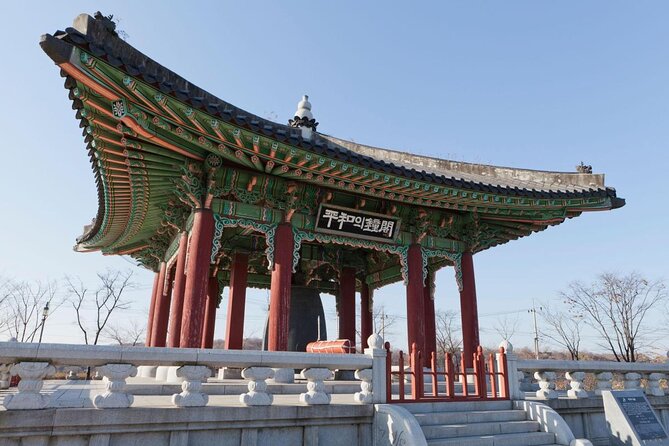
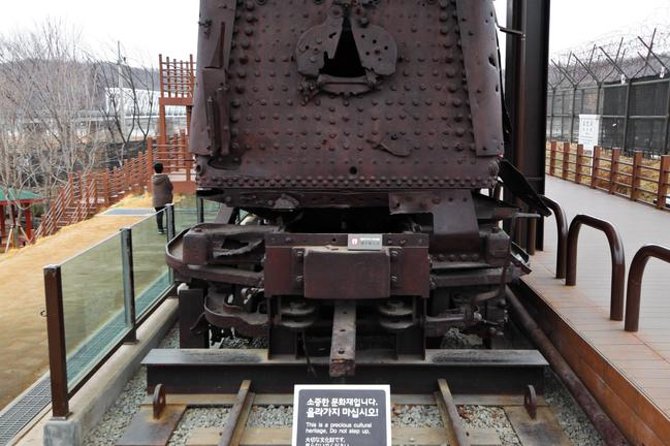
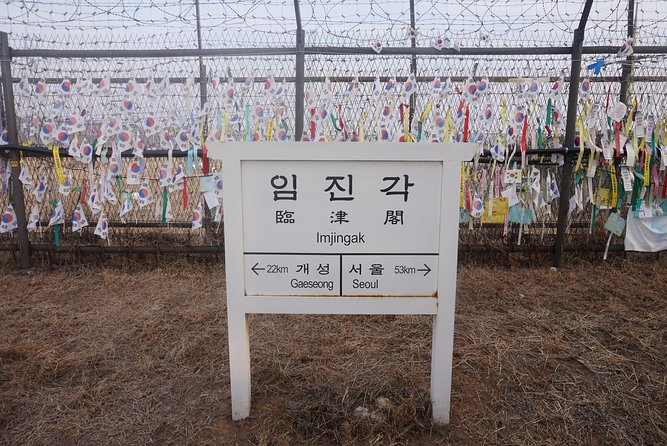
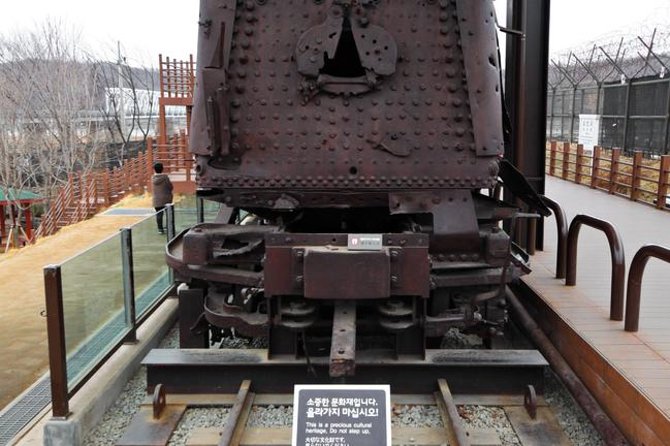
The first stop is Imjingak Pyeonghoa-Nuri Park, set by the Imjin River. This is where the conflict shows up in physical form—artillery and other war artifacts you can actually see and process in person.
What makes this stop useful is the context. Before you go north and peer into the barrier, you see what the Korean War did on this terrain: the objects, the scale, and the stubborn fact that the DMZ didn’t wipe out the war’s material history. Your guide ties it together with the story of separation and return.
Time here is relatively short (about 15 minutes), so treat it as a chance to get your bearings. If you want photos, move efficiently. If you want to listen closely, that’s even better—because you’ll build understanding faster later at the tunnel and the observatory.
Freedom Bridge: The Hope-and-Impact Moment
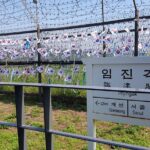
Next comes the Freedom Bridge, a symbolic crossing point with a very specific human story. It’s known for the nearly 13,000 POWs who crossed it on their path to freedom in South Korea.
This is one of those places where the emotions sit under the facts. You’re standing at a bridge, but the meaning comes from what happened there: separation, then the rare, complicated chance to return. A guide can point out what the bridge represents in the broader conflict narrative, and that’s where your time pays off.
You’ll also get a sense of why the DMZ still feels so charged even today. Places like this aren’t just landmarks. They’re reminders that the border isn’t an idea—it’s a set of consequences.
The 3rd Infiltration Tunnel Walk: Small Distance, Big Reality
Then you re-board the coach and head to the 3rd Infiltration Tunnel. This is beneath the North and South Korea border, and it’s tied to North Korea’s tunnel program—commonly called infiltration tunnels.
Here’s what matters for your body and your expectations:
- You should anticipate a moderate amount of walking.
- It’s a steep, narrow tunnel.
- You may need to walk about 400 meters (roughly 1,300 feet) along an 11-degree gradient.
That’s why comfortable clothes and shoes are non-negotiable. Even if you’re athletic, a tunnel is not like a trail. It’s tight, and your pace slows down automatically because you’re navigating space you can’t stretch out in.
One more practical note: people have shared that a hard hat can be part of the experience, and if you’re tall, you may still feel the ceiling close overhead. I’d plan for that reality rather than hoping it won’t apply to you.
If you’re the type who gets nervous in confined spaces, this stop is the one to think about first. The tunnel walk is brief in time terms, but it’s the most physically intense moment of the day.



DMZ Museum: Photos and Artifacts Before You Look North
After the tunnel, the day shifts gears. At the DMZ Museum, you’ll spend time with photographs and war artifacts on display.
This part helps a lot because it fills in what the stops can’t fully explain by themselves. The tunnel gives you the physical “how.” The observatory gives you the visual “what.” The museum is where your guide’s commentary can connect the dots into a clearer timeline and meaning.
You’ll want to pay attention here if you plan to stand at the observatory later trying to interpret shapes, terrain, and the far-off village areas your guide mentions. Museum time makes the binocular view more than just looking. It turns it into observation with context.
Dora Observatory: Using Binoculars to See Across the DMZ
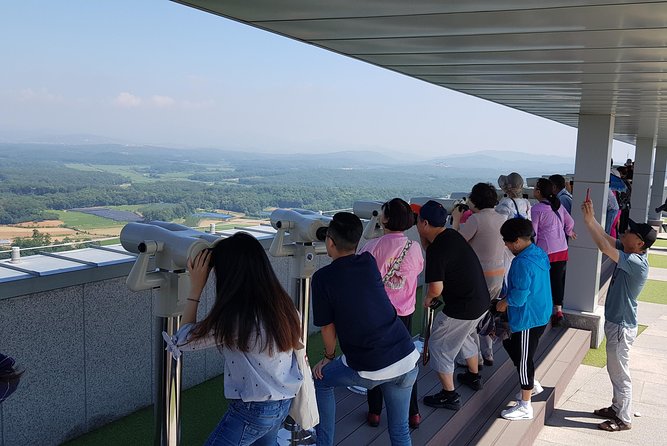
Dora Observatory is the signature finale for many people, and it’s easy to see why. From here, you can use binoculars to look across the DMZ into North Korea.
Your guide explains what you’re looking at, including the village of Kijongdong. The binoculars matter because it’s not just a vague silhouette view. You’re meant to study details and understand that the border is not a blank wall—it’s a lived-in area on both sides, with activity shaped by strict limitations.
This stop lasts about 15 minutes, which is just enough time to get your bearings, use the binoculars, and ask questions if your guide invites it. I like to treat observatory time like a focused photo session: look first, then zoom in with the binoculars, then ask the guide to point out what you might miss at first glance.
This is also where good guiding makes the biggest difference. People have praised guides like AJ, Katie, Grace, Sadie, Felicity, and Chloe for pacing and clarity at Dora. When the guide is strong, your binocular time feels purposeful instead of random.
Price and Value: Why $37 Feels Like a Bargain (If You Fit the Format)
At $37 per person, this is priced for serious value. The tour includes an expert guide, air-conditioned coach transport, and admission fees.
What you’re paying for is not comfort—it’s access and interpretation. You’re getting:
- escorted entry to DMZ-area sites you can’t simply visit independently,
- structured time at several high-impact locations,
- a guide who ties history to what you see.
Also, the duration helps. At about half a day, you’re not losing an entire vacation day to one activity. It’s easier to fit into a Seoul itinerary, especially if you want a strong “big experience” without spending 10 hours traveling.
Just be honest about fit. This is a structured tour. If you want total freedom to linger in one place for an hour, or if you hate any walking inside or outdoors, you may feel rushed. For most people, the pacing works.
Comfort Tips That Make the Tunnel and Observatory Easier
For this tour, packing smart beats packing cute.
Start with footwear. The tunnel is steep and narrow, and you’ll walk enough to notice it. Wear comfortable shoes with good grip.
Wear layers. You’ll be on a coach, then in outdoor areas near the river, then inside a tunnel, then back outside again. Temperature swings happen, and you don’t want to be stuck with a single heavy layer or a single thin layer.
If you’re prone to claustrophobia, consider this your heads-up. The tunnel experience is short, but the space is tight. Go in calmly and slowly.
Bring your passport. You need a current valid passport on the day of travel, and it’s required for entry.
Also, if you’re trying to avoid surprises, consider that drop-off is in central Seoul. Hotel pickup is included in the general tour plan, but the easiest way to avoid confusion is to confirm your exact pickup and drop-off points when the host sends details.
Should You Book the DMZ Past and Present Tour?
Yes, if you want one efficient, high-impact day in Seoul that connects modern Korea to the conflict that shaped it. Booking makes sense if you’re comfortable with a coach day, short stops, and a real tunnel walk.
I’d also recommend it if you like guided structure. This tour works best when your guide is doing the connecting work—turning artillery artifacts, POW crossing symbolism, tunnel engineering, and Dora binocular viewing into one coherent story. Many people have specifically praised guides for making the experience clear and well-paced, and that matters here.
Skip it or think carefully if you can’t handle steep, narrow confined spaces or if you’re not up for about 400 meters of tunnel walking at an 11-degree gradient.
If you do book, take advantage of the free cancellation window and decide with confidence. And once you’re going, keep the day simple: good shoes, passport, and nothing tight scheduled afterward.
FAQ
How long is the DMZ Past and Present tour from Seoul?
It runs about 6 hours 30 minutes.
What does the tour cost, and what is included?
The price is $37.00 per person and it includes an expert guide, transport by air-conditioned coach, and admission fees.
Do I need a passport for this tour?
Yes. A current valid passport is required the day of travel.
Is hotel pickup included?
Yes, the tour includes a convenient hotel pickup, but the drop-off is in central Seoul.
What will I be walking like inside the tunnel?
You’ll do a moderate amount of walking through a steep and narrow tunnel. The walk is about 1,300 feet (400 meters) with an 11 degree gradient.
Where do I get binocular access?
You use binoculars at the Dora Observatory to look across the DMZ into North Korea.
Which major stops are part of the route?
You visit Imjingak Pyeonghoa-Nuri Park, the Freedom Bridge area, the 3rd Infiltration Tunnel, the DMZ Museum, and then Dora Observatory.
How large is the group?
The tour has a maximum of 40 travelers.
Is lunch included?
No, lunch is not included.