REVIEW · SEOUL
Gyeongbokgung Palace & Bukchon Village Walking Tour
Book on Viator →Operated by MyProGuide_Korea · Bookable on Viator
Royal walls and quiet alleys in one walk. This tour strings together Gyeongbokgung Palace and Bukchon Hanok Village, with a local guide who helps you connect what you see to the Joseon Dynasty story. I love how the guide gives fast orientation inside the palace grounds, and I love the way the route is built for satisfying photo stops without turning the walk into a sprint.
One thing to weigh before you book: you’re on a set 2.5 hours timeline, so you’ll want to choose what to linger on if you’re the type who could spend an hour in just one courtyard.
In This Review
- Key points before you go
- Gyeongbokgung Palace: how the walk starts with the big story
- What to look for inside the palace grounds
- Bukchon Hanok Village: the calm contrast after the palace
- Photo spots in Bukchon: where to aim your time
- Why the Joseon context makes the architecture click
- Timing and pace: getting value from 2.5 hours
- Price and included ticket: is $62.89 worth it?
- Getting there: near public transportation
- Who should book this walking tour?
- Should you book the Gyeongbokgung & Bukchon Walking Tour?
- FAQ
- What is the duration of the Gyeongbokgung Palace & Bukchon Village walking tour?
- How much does the tour cost?
- What’s included in the price?
- Do I need to buy a ticket for Gyeongbokgung Palace?
- How do I receive my ticket?
- Can I cancel for free?
Key points before you go
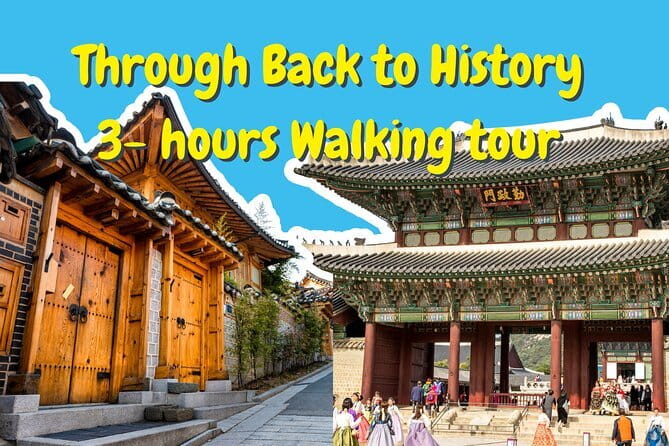
- Gyeongbokgung Palace entrance is included, so you’re not scrambling for tickets mid-plan.
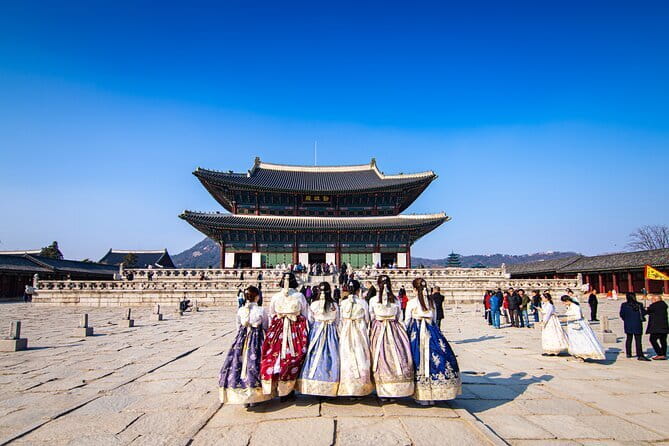
- Geunjeongjeon Hall and the Geonghoeru Pavilion are highlighted, with context that makes the architecture easier to read.
- Bukchon Hanok Village fits well as a calmer second act, with preserved hanok houses and photogenic alleys.
- Small group size (max 10) keeps the pace friendly and the questions flowing.
- Mobile ticket means you can travel lighter once you have your confirmation.
Gyeongbokgung Palace: how the walk starts with the big story
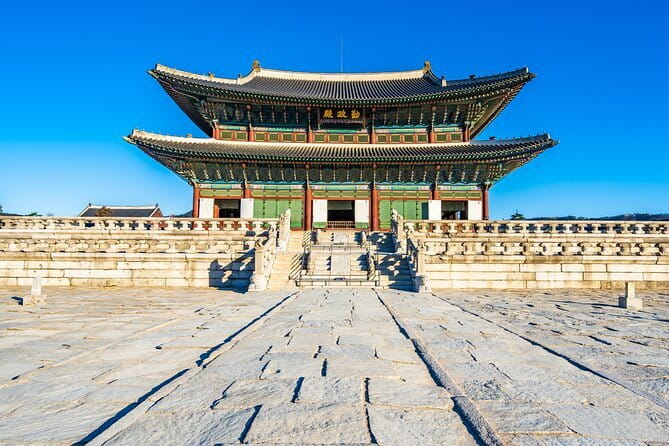
Gyeongbokgung Palace is the kind of place where it helps to have a guide, because the layout is huge and the details are constant. The palace was built in 1395, and even the name matters: it means Palace Greatly Blessed by Heaven. That isn’t trivia for trivia’s sake. It frames what you’re looking at—this was the main royal residence of the Joseon kings and queens, and the seat of government.
On this tour, you don’t just get dropped at a gate and pointed toward photo spots. You get a narrative rhythm: why the palace exists, who used it, and how the buildings relate to the daily workings of royal life. That makes your photos better too. Instead of shooting random roofs and gates, you start capturing scenes with meaning.
And yes, this is also one of Seoul’s most visually satisfying settings. You’ll be surrounded by classic Korean palace architecture—pavilions, courtyards, and gardens—so even if your Korean is basic, the sights do a lot of the teaching.
You can also read our reviews of more walking tours in Seoul
What to look for inside the palace grounds
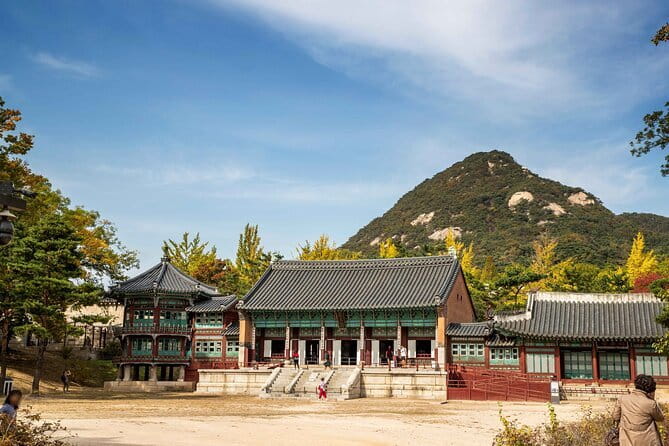
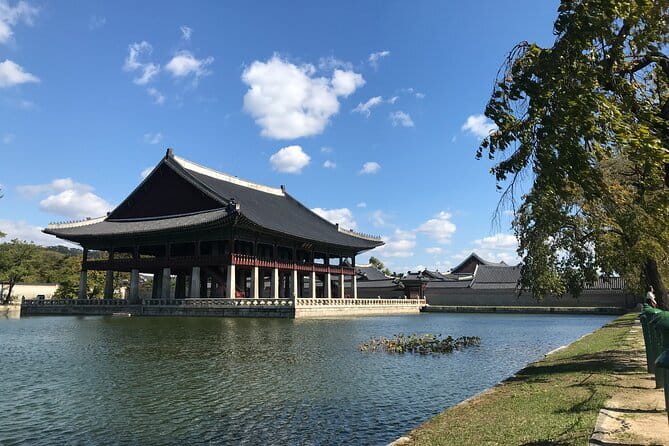
The tour focuses on iconic pieces of Gyeongbokgung, and that matters because the palace has more than enough to overwhelm you if you try to DIY it. Two highlights are specifically called out: Geunjeongjeon Hall and Geonghoeru Pavilion.
- Geunjeongjeon Hall is tied to the idea of royal authority and ceremony. It’s the kind of structure that feels designed to be seen by everyone with a role to play, not only the people inside.
- Geonghoeru Pavilion is the sort of place you’ll notice from a distance, then want to circle back to. It’s a classic “oh, that’s why that view exists” stop.
Beyond the big names, you’ll also get a sense of how the palace uses space—open courtyards for movement and gatherings, and pavilions that act like focal points. The guide’s job is basically to help you read the palace like a plan, not like a maze.
Practical tip: bring a camera mindset rather than a checklist mindset. In a 2.5-hour walking format, you’ll enjoy it more if you pick a few targets and let the rest stay as background.
Bukchon Hanok Village: the calm contrast after the palace
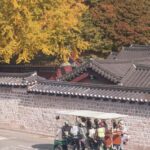
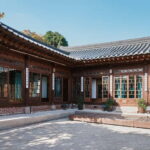
After the royal complexity, Bukchon Hanok Village feels like a breather. This is where Seoul’s modern energy steps back and you get a preserved look at traditional hanok houses—those distinctive Korean homes with their traditional roof lines and street-facing forms.
What I like about this stop is the contrast. Gyeongbokgung is about the scale of power. Bukchon is about everyday space: narrow streets, close building relationships, and that gentle sense of walking through an older city layer.
The village sits between Gyeongbokgung Palace and Changdeokgung Palace, which makes it a logical extension of a palace-focused day. You don’t feel like you’re traveling far out of the way—you’re shifting from grand royal grounds to a more intimate urban texture.
Photo spots in Bukchon: where to aim your time
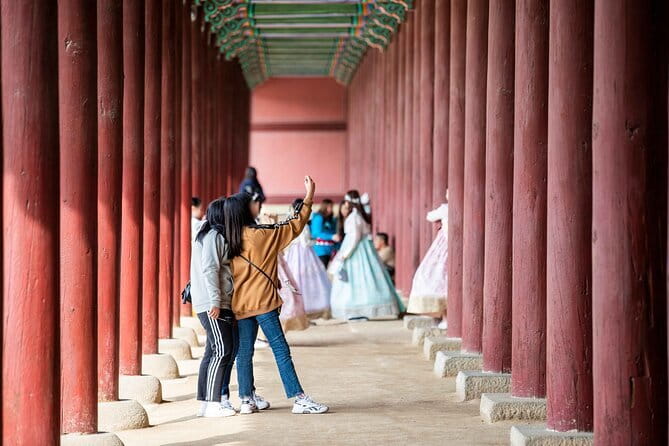
You’ll find plenty of photo chances here, and the best ones tend to come from walking rather than stopping randomly. The alleys are the star. Look for:
- Tight lanes where traditional facades frame the street
- Angled views where rooftops create repeating patterns
- Spots where you can include both architecture and the way people move through the neighborhood
You also get the benefit of a guide who knows the flow. In a small-group tour (max 10), you’re less likely to lose time stepping onto the wrong side of a viewpoint or waiting for others to catch up. That keeps the experience relaxed while still feeling like you covered the good angles.
If you’re new to South Korea, this is a strong first taste. The palace can feel intimidating when you don’t know what you’re looking at. Bukchon helps you shift gears into “slow down and look” mode.
Why the Joseon context makes the architecture click
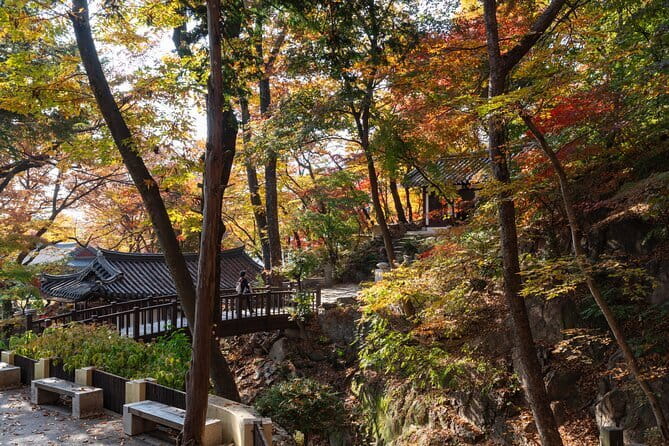
Korean palaces and hanok villages can look impressive on their own. But the difference between a good and a great visit is understanding what you’re seeing.
This tour ties the palace to the Joseon Dynasty—Gyeongbokgung as the main residence of the kings and queens, and as the place where governance took place. Once that’s in your head, details stop being just decoration. You start noticing why certain spaces feel formal, why buildings look the way they do, and how the whole complex functioned.
That same idea carries into Bukchon. The hanok houses aren’t just pretty. They’re a way of living that worked with the street, the seasons, and community life. The guide helps you connect the visual with the practical.
Even if you can’t name every structure, you’ll leave with a clearer mental map. And that’s what makes the photos feel like more than souvenirs.



Timing and pace: getting value from 2.5 hours
The tour runs about 2 hours 30 minutes. That’s a sweet spot if you want a high-impact cultural walk without committing a full half-day. But it’s also short enough that your preferences matter.
Here’s how I’d approach it:
- If your priority is palace highlights, focus on the big named stops and the key viewpoints the guide leads you to.
- If your priority is photography in Bukchon, stay attentive when you’re walking the alleys—those moments are where the best angles tend to show up.
Shoes matter. This is a walking tour across palace grounds and neighborhood streets. Wear comfortable footwear you trust on uneven surfaces and lots of steps.
Also, plan your day so you’re not rushed afterward. Your brain will want time to process what you just saw—especially if this is your first time seeing Korean palace architecture up close.
Price and included ticket: is $62.89 worth it?
At $62.89 per person, you’re paying for three things:
- A tour guide
- Entry to Gyeongbokgung Palace (the entrance ticket is included)
- A structured route that connects the palace with Bukchon Hanok Village
Because the palace ticket is included, a big chunk of the cost is already handled for you. And the guide matters here. Gyeongbokgung is iconic, but it’s also easy to feel lost inside the grounds if you’re going alone. The guide’s storytelling helps you make sense of the buildings you’re standing next to—so you don’t just check boxes.
Is it cheaper to DIY? Often, yes—especially if you’re already comfortable using transit and reading signs on your own. But the value of this tour is in the time saved and the context delivered while you’re actually there.
Small-group size (max 10) is part of the price-value equation too. In crowded settings, that can mean a calmer pace and more chance to ask questions.
Getting there: near public transportation
You don’t need a car to make this work. The tour is described as being near public transportation, which is a major plus in Seoul. You can keep your day flexible and avoid turning this into a logistics headache.
One detail to remember: transportation isn’t included. So if you’re building your day around this walk, check how you’ll move between your morning stop and the start point. Also budget time for walking from transit if the nearest station is a few blocks away.
Meals aren’t included either. That’s normal for a shorter walking tour, but it means you’ll want a snack plan—especially if you’re someone who gets hungry during cultural sightseeing.
Who should book this walking tour?
This is a great match if:
- You’re seeing Seoul for the first time and want an easy cultural intro
- You like having a guide explain what the buildings mean, not just what they look like
- You want both palace grandeur and hanok neighborhood vibes in one outing
- You prefer smaller groups and a more personal walking pace
You might think twice if:
- You hate feeling time-boxed (this is about 2.5 hours)
- You want to spend long stretches inside multiple halls without a guided route
- You’re traveling with a schedule that can’t handle walking and a short itinerary
Should you book the Gyeongbokgung & Bukchon Walking Tour?
If you want a high-value Seoul experience that connects two of the city’s most recognizable sights, I’d book it. The blend is smart: you start with the scale and meaning of Gyeongbokgung Palace, then shift to the calmer, photogenic texture of Bukchon Hanok Village. You also get a real head start thanks to the included palace entrance ticket and a guide from MyProGuide_Korea.
My only caution is about pacing. If your idea of “great sightseeing” means lingering for hours, you may wish you had more time. But if you want context, structure, and strong photo opportunities in one compact walk, this is exactly the kind of tour that makes a first visit feel organized and rewarding.
FAQ
What is the duration of the Gyeongbokgung Palace & Bukchon Village walking tour?
It takes about 2 hours 30 minutes.
How much does the tour cost?
The price is $62.89 per person.
What’s included in the price?
You get a tour guide and an entrance ticket to Gyeongbokgung Palace.
Do I need to buy a ticket for Gyeongbokgung Palace?
No. The Gyeongbokgung entrance ticket is included.
How do I receive my ticket?
You’ll use a mobile ticket.
Can I cancel for free?
Yes. You can cancel up to 24 hours before the experience start time for a full refund. If you cancel later than 24 hours before, the amount paid is not refunded.
![3-Days 2-Nights Gyeongju UNESCO Sites & Busan City [Private Tour from Seoul] - Day 2: Seokguram and Bulguksa, then Busan views, markets, and coast](https://2.letsgoseoul.com/wp-content/uploads/3-days-2-nights-gyeongju-unesco-sites-busan-city-private-tour-from-seoul-400x267.jpg)