REVIEW · SEOUL
Half-Day South Korea DMZ Small-Group Tour from Seoul
Book on Viator →Operated by Etourism Co.Ltd · Bookable on Viator
The border is close enough to feel. This half-day South Korea DMZ tour from Seoul mixes war-era memorials with hard-to-forget border sights, including a walk through the 3rd Tunnel and a North-facing view at Dora Observatory. It runs as a small-group outing with an English-speaking guide, so the day stays focused even when the schedule is tight.
Two things I really like about it: the DMZ access itself (especially the tunnel walkthrough), and the guide-led explanations that help you connect what you’re seeing to the bigger story of Korean war and separation. You also get a smooth, all-transport plan with the key sights spread out so you’re not burning half the day in transit.
The main thing to consider is that DMZ entry is not guaranteed. Tickets are limited and effectively first-come, first-served, plus you’ll need your original passport (no copies, no photos), and the tour also requires good weather.
In This Review
- Key highlights at a glance
- DMZ Day Plan: How the Morning Feels in Seoul
- Imjingak Pyeonghoa-Nuri Park: Memorials That Set the Tone
- Freedom Bridge and Paju: Why a Short Stop Still Matters
- The 3rd Tunnel: Narrow Space, Big Meaning
- Dora Observatory: North-Facing Views With Context
- Seoul Interlude: Ginseng Museum and Duty Free Time
- Transport and Timing: Why the Schedule Works
- Guide Impact: Henry Park’s Style and Time Management
- Price and Value: Is $500 Actually Fair?
- What Can Go Wrong: Tickets, Passports, and Weather
- Who This Tour Suits (and Who Might Skip)
- Bottom Line: Should You Book This DMZ Half-Day?
- FAQ
- Do I need an original passport for this DMZ tour?
- What time does the tour start and where do I meet?
- How long is the tour?
- How big is the group?
- What’s included in the price?
- What’s not included?
- Are mobile tickets used?
- How are DMZ entrance tickets handled?
- What happens if the weather is bad?
- Is the booking refundable?
Key highlights at a glance
- Original passport required to enter the DMZ gates (no copy, no photo)
- Small group feel with a maximum of 10 travelers, plus up to 4 per group for pricing
- 3rd Tunnel walkthrough with its narrow dimensions and serious historical weight
- Dora Observatory for a North Korea overlook after the tunnel stop
- Imjingak Pyeonghoa-Nuri Park memorials built with unification hopes in mind
DMZ Day Plan: How the Morning Feels in Seoul
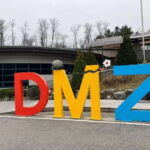
This tour starts bright and early at 8:00am from Seoul City Hall (Subway Line 1), so you’ll be out the door before Seoul fully shakes off morning fog. It’s a 6.5-hour half-day by the clock, but it feels like a full mental workout because the sights are heavy and very real. You’ll head north toward the DMZ area, using guided timing that keeps the day from dragging.
The overall style here is straightforward: big views, key border sites, then back toward Seoul. That matters because DMZ logistics can be finicky. When you’re relying on limited entry, you want a plan that’s built around time windows and efficient stops.
And yes, the day’s tone is different from typical sightseeing. Instead of chasing photo ops, you’re tracking what changed after the war and how the border still shapes daily life. That’s also why a good guide helps so much. If your guide pays attention to pacing and clarity, you’ll walk away with more meaning than just landmarks.
You can also read our reviews of more tours and experiences in Seoul
Imjingak Pyeonghoa-Nuri Park: Memorials That Set the Tone
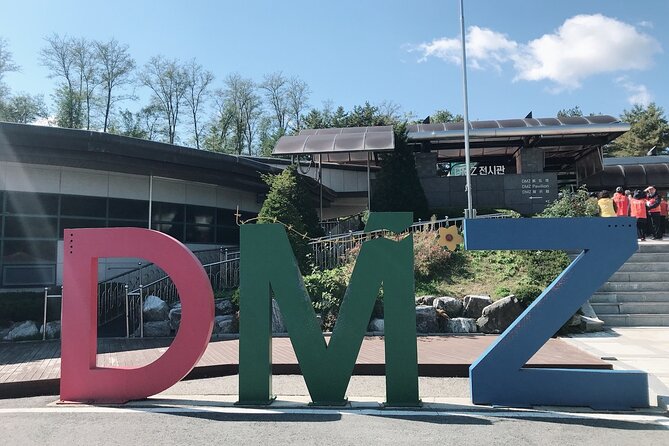
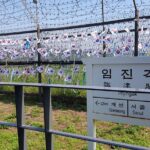
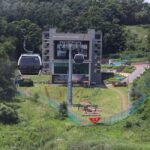
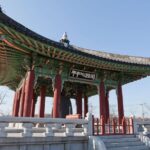
The first stop is Imjingak Pyeonghoa-Nuri Park, about 7 km from the military demarcation line. This is where the day’s mood locks in. The park is filled with statues and monuments about the Korean War, built in 1972 with the hope that unification might be possible one day.
You’ll likely notice two things right away:
1) this place is designed for reflection, not speed
2) the memorials are meant to show up before you see the border structures
That sequencing is smart. When you start with memorials, the tunnel and observatory don’t just become “places where you can look.” They become part of the same story: separation, attempt at passage, and the long shadow of conflict.
Admission is included here, so you’re not juggling payments before the harder part of the day. Time-wise, expect about 45 minutes at this stop. It’s enough to read and absorb without feeling trapped.
Freedom Bridge and Paju: Why a Short Stop Still Matters
Next comes Paju, and specifically Freedom Bridge. The bridge is described as being built for temporary use, so don’t expect grand architecture or a long photo walk. But it’s named “Freedom Bridge” for a reason: it symbolizes South Koreans returning through it.
This is the kind of stop that can be easy to overlook if you only want dramatic scenery. Here’s why it works anyway: it gives you a glimpse of the human side of the border story. Even when you’re just watching a bridge, you’re also watching the idea of passage—how something that looks simple on the ground can carry huge political and emotional weight.
Time here is short—about 20 minutes—and there’s no admission fee. It’s a breather stop in the schedule, but it still keeps you oriented.
The 3rd Tunnel: Narrow Space, Big Meaning
Then comes the main event for many people: the 3rd Tunnel. It was discovered in 1978 by South Korean forces and runs roughly 1,635 meters long, with very tight dimensions: about 2 meters in width and 2 meters in height.
Even if you’re not into military engineering, those numbers change how you experience the tunnel. This isn’t a wide, comfortable attraction space where you can stroll freely. It’s constrained. That’s the point. It helps you feel how hard movement would have been, and why tunnels are so serious in conflict scenarios.
Admission is free at this stop, and the time budget is about 45 minutes. I’d treat that time as a chance to slow down inside your own head. If you only hurry for the exit photo, you’ll miss what the space is doing to your sense of scale.
A practical note: bring your tolerance for rules. DMZ-style sites tend to come with strict entry requirements and controlled movement. If you’re the type who gets frustrated by waiting and instructions, this might test your patience. If you’re willing to follow the flow, the tunnel becomes unforgettable for all the right reasons.
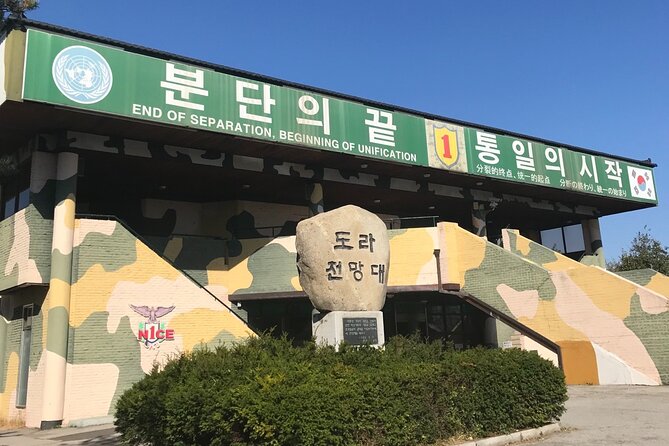
Dora Observatory: North-Facing Views With Context
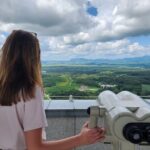
After the tunnel, you head to Dora Observatory, located nearby. It first opened to the public in 1987, and this is your official North-facing overlook.
Here, the value is not only the view. It’s the way the view gets connected to specific places you can name while you’re looking. The observatory is set up so you can observe North Korea and areas including Gaeseong and Songaksan (and other locations visible from the site). Your guide’s commentary matters most at this point, because a plain horizon can feel blank without context.
Time is about 45 minutes at Dora Observatory, and admission is included. If the weather is clear, you’ll get more out of it. If conditions are poor, you can still learn from the commentary, but your actual sightlines may be reduced.
This stop is where you’ll likely feel the day’s emotional shift. You’re not just reading about separation now—you’re standing in a position that was built for controlled watching. That realization hits quietly, not dramatically. It just lands.


Seoul Interlude: Ginseng Museum and Duty Free Time
On the way back toward Seoul, there’s a lighter stop: Ginseng Museum. This is about history and different types of ginseng, plus the commonly promoted effects of the plant. It’s a 30-minute stop, and it’s free (admission included).
There’s also a duty free stop built into the schedule. You’ll have time for luxury brand shopping rather than a long market wander. If you like browsing, it’s convenient. If you don’t shop, you may find it a little bland compared with the DMZ stops. Still, it helps break up the day, and it’s common for tours to include one quick non-memorial stop when the main sites require strict timing.
The key here is to treat this as a flexible add-on, not the reason you booked. Your reason is the border access. Your “bonus” is that you get a small amount of Seoul-area culture and shopping time without adding extra planning.
Transport and Timing: Why the Schedule Works
One of the best values of this tour is that all transportation is handled, along with the guide and included fees. With DMZ tours, the biggest hidden cost can be mental energy: figuring out how to get out there, where to wait, and how to time everything around limited entry windows.
Here, the plan is built around a morning start, a sequence of stops that lead from memorials to border structures, and then a return through Seoul stops. Duration is about 6 hours 30 minutes, so it still feels like half a day, not a whole day gone.
Group size also helps. The tour is described with a maximum of 10 travelers, and the pricing is listed as $500 per group (up to 4). That doesn’t guarantee a private van, but it usually means you’re not in a huge cattle-car group. In practice, you’ll get enough space to hear your guide’s explanations and keep moving without bottlenecks.
Guide Impact: Henry Park’s Style and Time Management
A major reason this tour gets strong praise is the guide experience. Several repeat highlights center on Henry Park, with compliments for his clear explanations and his ability to manage the day’s timing.
What “time management” means on a DMZ tour is simple: you don’t want your group waiting around for long stretches. You want each stop to feel intentional. When a guide handles timing well, you spend more of your time at the meaningful places—memorial park, tunnel, observatory—rather than losing momentum in transit delays or pacing gaps.
Henry Park is also praised for cultural context and practical knowledge, which matters because DMZ sites can otherwise feel like disconnected “attractions.” With the right commentary, you can connect the memorials, bridge symbolism, the tunnel’s physical constraints, and the observatory’s named locations into one coherent picture of separation.
If you’re choosing between DMZ experiences, prioritize guide quality as much as you prioritize the sites. Here, that’s where the value shows up.
Price and Value: Is $500 Actually Fair?
At $500 per group (up to 4), this isn’t a bargain. But DMZ access isn’t a mass-market thing. It depends on limited daily entry and strict identification rules, and that kind of access usually costs real money to organize.
To judge value fairly, look at what’s included:
- English-speaking guide with commentary
- All transportation
- All fees and taxes (for included sites)
- Mobile ticket
Then compare that to what you’d likely spend on your own to replicate the plan: independent transport, time planning, and the real risk of wasted day time if entry doesn’t work. When a tour takes the entry requirements off your shoulders and schedules the stops around limited access, the price starts making sense.
Also, the tour is short enough that it won’t derail a tight Seoul itinerary. You get a major regional experience without giving up a full day of city exploring.
My take: it’s expensive, but the cost is tied to the access and guide setup. If DMZ is on your must-do list, this price can feel justified. If you’re price-first, you may find cheaper border-area tours, but you won’t get the same combination of tunnel + observatory within the same guided plan.
What Can Go Wrong: Tickets, Passports, and Weather
There are three practical issues you should plan around.
First: ticket limitation and first-come behavior. DMZ entrance tickets are sold as first come, first served, and there’s a limited number available per day. The tour also notes suggested booking about one month in advance, with last-minute bookings possible but random.
Second: your passport must be original to enter the DMZ. No copy, no photo. This is the rule that most easily ruins a trip if you forget it at the hotel.
Third: good weather is required. The experience can be canceled if weather is poor, with an alternative date or full refund offered in that case.
If you’re the type who hates uncertainty, you may want extra buffer time in Seoul. If you only have one day available and the weather turns, you’ll feel it.
Who This Tour Suits (and Who Might Skip)
This tour is a great fit for you if:
- you want real DMZ access, not just distant viewpoints
- you like guided context so the border story makes sense
- you’re okay with early mornings and strict site rules
- you travel with a small group or want an easy group option with transport handled
You might skip it if:
- you dislike memorial sites and expect only scenic stops
- you’re uncomfortable with narrow spaces and controlled movements inside tunnels
- you can’t manage the original passport requirement
- your schedule is so tight that a weather-related change would stress you out
If you’re curious about Korean history but also want structure, this tour hits a sweet spot: the day is short, and the stops are chosen to build understanding in a logical sequence.
Bottom Line: Should You Book This DMZ Half-Day?
If your top priority is a focused, small-group DMZ experience with the 3rd Tunnel and Dora Observatory, I’d book this. The structure is efficient, the included guide commentary turns landmarks into meaning, and the guide reputation—especially with Henry Park—leans strongly toward clear, well-timed explanations.
The decision hinges on your tolerance for uncertainty:
- tickets are limited,
- entry depends on your original passport,
- and weather matters.
If you can plan ahead and keep your passport ready, this is a high-value way to use half a day in Seoul to see what the border looks like from inside the story.
FAQ
Do I need an original passport for this DMZ tour?
Yes. The tour states that an original passport is mandatory to enter the DMZ. No copy and no photo are accepted.
What time does the tour start and where do I meet?
You meet at Seoul City Hall (Subway Line 1) at 8:00am. The meeting point address listed is 110 Sejong-daero, Jung District, Seoul, South Korea.
How long is the tour?
The duration is approximately 6 hours 30 minutes.
How big is the group?
The experience has a maximum of 10 travelers. The pricing is listed as $500 per group (up to 4).
What’s included in the price?
Included: all fees and taxes, an English-speaking guide with commentary, and all transportation.
What’s not included?
Not included: accommodation and lunch, plus personal expenses.
Are mobile tickets used?
Yes, the tour includes mobile ticket entry.
How are DMZ entrance tickets handled?
DMZ entrance tickets are described as first come, first served, with a limited number of tickets per day. The tour also suggests booking about one month before and notes last-minute bookings can be available at random.
What happens if the weather is bad?
The experience requires good weather. If it’s canceled due to poor weather, you’ll be offered a different date or a full refund.
Is the booking refundable?
No. This experience is non-refundable and cannot be changed for any reason.