REVIEW · SEOUL
Korean Folk Village Half-day Guided Tour from Seoul
Book on Viator →Operated by Seoul N Tour · Bookable on Viator
A Joseon-era day trip, minus the hassle. This half-day guided tour takes you from Seoul to the Korean Folk Village, where 270+ restored homes and live folk performances help you understand everyday life from the late Joseon era. You’ll also get a bus ride with context, so the site feels like more than just pretty buildings.
Two things I really like: you can walk into authentic houses rather than only look from the outside, and the guide helps connect what you see to real Korean traditions. On some departures, guides like Veronica, Jenny, and Anna have been praised for clear explanations that make the cultural parts click fast.
One possible drawback: expect walking on the village grounds. If you have walking problems, this tour isn’t recommended, even though the schedule is designed for a half day.
In This Review
- Key highlights at a glance
- Why This Half-Day Works: Big Village, Small Time Pressure
- Getting to the Korean Folk Village: Climate-Controlled Comfort Out of Seoul
- Stop 1: Seoul to Arrival Timing (and What to Do With Your First Hour)
- Inside the Village: 270+ Restored Homes You Can Actually Step Into
- Folk Performances and Weather Notes: When Shows Happen
- Artisan Workshops: Crafts That Make Korean Daily Life Feel Real
- Stop 2: The Village Block (About Two Hours Fifty Minutes)
- Stop 3: Return to Seoul and Drop-Off at Myeongdong
- Price and Value: Is $63 a Good Deal?
- Group Size, Tickets, and How to Prepare
- Who Should Book (and Who Might Skip It)
- Should You Book This Korean Folk Village Half-Day?
- FAQ
- How long is the Korean Folk Village half-day guided tour?
- Where do I meet and where do I get dropped off?
- What’s included in the price?
- What should I expect to see at the village?
- Is there transportation from Seoul?
- What if the weather isn’t good?
- Is the tour suitable if I have walking problems?
Key highlights at a glance
- 270+ restored Joseon-era homes you can enter and explore at your own pace
- Traditional performances (including folk arts like jultagi and nongak) when weather allows
- Artisan workshops you can watch, from blacksmith-style work to crafts like pottery and brassware
- Guide + entrance fees included, so you’re not juggling tickets mid-day
- Small-ish group size up to 40, with drop-off back near Myeongdong
Why This Half-Day Works: Big Village, Small Time Pressure
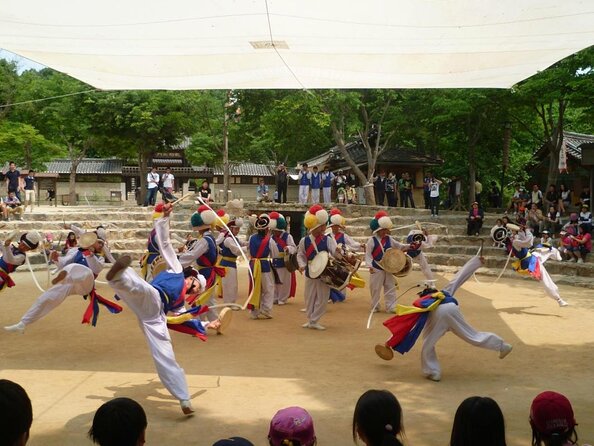
This tour is built for people who want the Korean Folk Village experience without turning it into a whole-day mission. You’re gone long enough to see the main buildings, catch live demos, and understand the cultural context—but you’re back in Seoul while you still have energy for dinner and wandering.
What makes it feel efficient is the combination of a guided structure and a site that’s laid out for strolling. The village has hundreds of restored homes from the late Joseon period, and it’s easy to get distracted taking photos. The guide keeps you focused on what matters: what households looked like, how rooms were used, and why certain crafts and performances were important.
Another value point: you’re not just transported to the entrance and left on your own. You get professional guidance plus entrance fees, which matters here. The site is the point, and the cost-to-time ratio stays reasonable because you’re spending your hours on the village itself.
You can also read our reviews of more guided tours in Seoul


Getting to the Korean Folk Village: Climate-Controlled Comfort Out of Seoul
You’ll start in central Seoul, meeting at Myeongdong Station (Exit 1061-7, Chungmuro 2(i)-ga). The tour start time is listed at 12:30 pm, and the plan is to depart to the village around the early afternoon with a drive of about one hour in a climate-controlled bus.
This ride is not just travel time. It’s where the guide can set the stage. On past departures led by guides like Jenny, people appreciated the added historical background during the trip, which helps the village stop feel less like a theme park. Even if you’re short on sleep, having that context ready when you arrive makes the homes and performances land faster.
Also, the bus format means you don’t have to figure out your own route while you’re managing a half day window. You just show up, meet your group, and go.
Stop 1: Seoul to Arrival Timing (and What to Do With Your First Hour)
Your group arrives at the Korean Folk Village after the drive, and the schedule gives you a clear rhythm: start in Seoul, then settle into the village portion with dedicated time.
Here’s how to use that first stretch well:
- If you’re the type who likes photos, quickly scan the guide’s pointers when you arrive so you know where to aim first.
- If you prefer to understand buildings before photographing them, wait a moment, let the guide explain what you’re looking at, then start walking.
The tour is planned so you’re not burning your best minutes just finding your way. That’s a surprisingly big deal at large cultural sites—especially when you want to catch live action shows later.
Inside the Village: 270+ Restored Homes You Can Actually Step Into
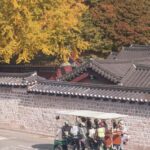
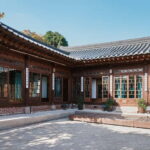
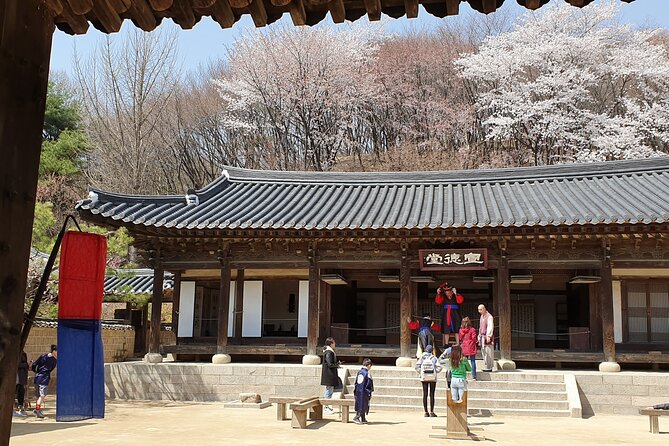
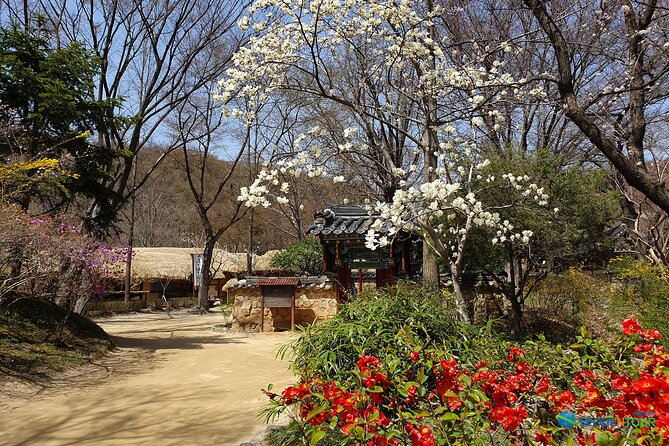
The Korean Folk Village covers a wide area and includes more than 250 restored traditional homes (often described as 270+ across different references). These buildings are associated with the late Joseon era and are relocated and reconstructed from different parts of Korea, so you’re not only seeing one regional style.
What you’ll appreciate is the idea behind restoration: you’re meant to walk into structures with architectural details and household artifacts, which makes daily life feel more tangible. A doorway, a room layout, or household objects can tell you more than a signboard ever will—especially when your guide explains what those details mean.
Practical reality check: you’ll be doing some strolling. This isn’t a quick “look and leave” stop. The advantage is that you can take your time inside the homes when they’re open and move on when you’re ready. The disadvantage is physical effort, which is why the tour isn’t recommended for travelers with walking problems.
If your goal is cultural understanding, this is the heart of the experience. If your goal is only photos, you’ll still get plenty—but your photos will look better once you understand what you’re photographing.
Folk Performances and Weather Notes: When Shows Happen
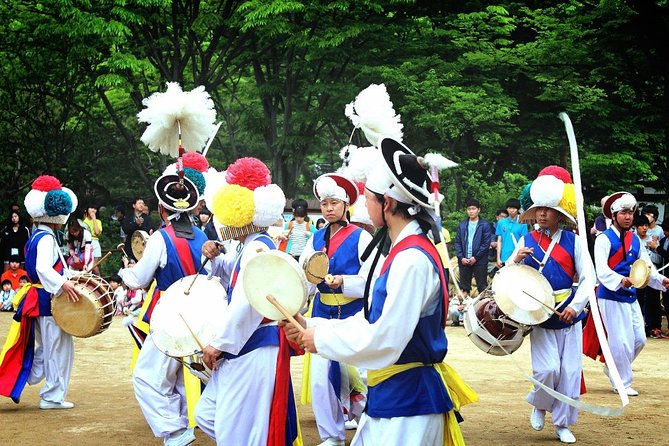
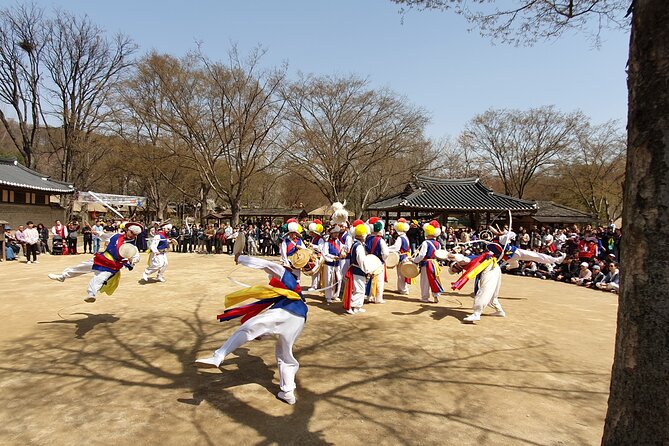
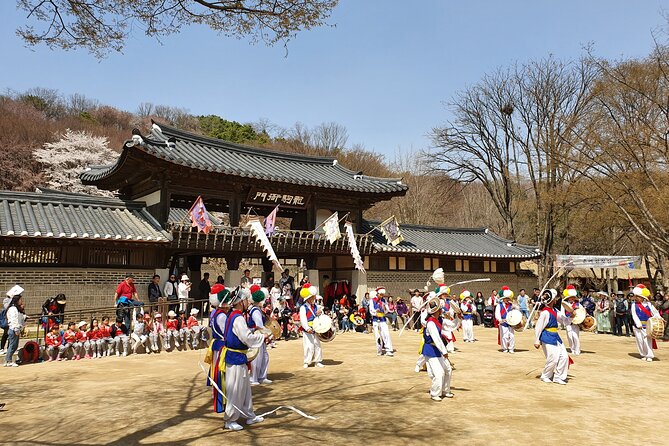
One of the biggest reasons people book the tour is the chance to see live folk entertainment in an authentic setting. You’ll have opportunities to watch traditional artistry, including jultagi tightrope acrobatics and nongak performances.
The tour notes performances are weather permitting, so keep your expectations flexible. On a clear day, you’ll likely catch more of the live program. On a less cooperative day, you may spend more time focusing on houses and workshops.
Here’s the smart move: don’t wait until you’re bored to check show timing. A guided schedule and a guide who helps manage the flow can make the difference between missing a key performance and seeing it.
From the way guides have been described on past departures—especially guides like Anna—the value isn’t just that shows exist. It’s that you’re helped to time your visit so the “live action” part doesn’t get swallowed by free roaming.
You can also read our reviews of more tours and experiences in Seoul


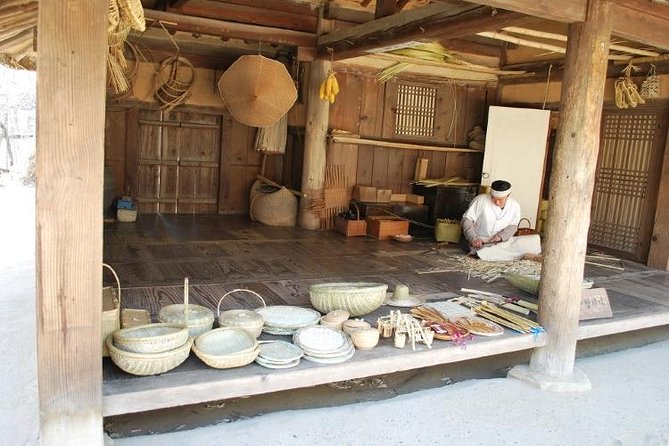
Artisan Workshops: Crafts That Make Korean Daily Life Feel Real
Between homes and performances, you can also visit workshops where artisans demonstrate traditional crafts. The tour specifically mentions watching crafts such as:
- blacksmith work style demonstrations
- pottery
- basket weaving
- brassware and other typical handicrafts
This part works well even if you’re not a hardcore craft person. Why? Because it gives you a bridge from what you see in the houses to how people made and repaired everyday items. A home full of objects makes sense when you also see the hands and tools that produce them.
If you love souvenirs, this is also where you might spot handmade items. The tour doesn’t promise purchases, but watching the process often makes whatever you do buy feel more connected than a generic store stop.
Also, the guide’s role matters here. When someone can point out what you’re looking at—what’s traditional, what’s regional, what tools or materials are used—you tend to pay attention longer and miss fewer details.
Stop 2: The Village Block (About Two Hours Fifty Minutes)
You’ll spend the majority of your tour time inside the Korean Folk Village area—about 2 hours and 50 minutes in the village. That’s a strong chunk for a restored-site visit.
What I like about that timing:
- It’s long enough to enter multiple houses without rushing.
- It’s long enough to wait for or catch at least one major performance segment.
- It leaves room to pivot if you’re tired—workshops and demonstrations are an easier pace than constantly stepping through every building.
What you should watch for:
- If you’re determined to see everything, you’ll feel the limits of the half-day format. That’s normal. Pick your priorities: houses, performances, or workshops.
This is exactly the kind of half-day that works because you can shape it a bit. The guide provides the structure; you still get to choose what you slow down for.
Stop 3: Return to Seoul and Drop-Off at Myeongdong
After your village time, you’ll head back to Seoul and be dropped off at Myeongdong Station (Exit 1061-7, Chungmuro 2(i)-ga). The return segment is about an hour.
This drop-off location is convenient because it keeps you in one of the easiest areas to keep traveling. Myeongdong is a practical base for meals, shopping, and grabbing a taxi or transit connection without needing to plan your route from scratch.
One small tip: after a walking-heavy few hours, you might be hungry. Food and drinks aren’t included, so plan to grab something in Myeongdong after you return.
Price and Value: Is $63 a Good Deal?
At $63 per person, this tour sits in a mid-range zone for guided cultural experiences from Seoul. The value comes from what’s included, not just the headline cost.
Here’s what’s covered:
- Professional guide
- Entrance fees
- Transportation between Seoul and the village
- All fees and taxes
What’s not covered:
- Food and drinks
That included entrance fee is a big deal. If you tried to DIY this outing, you’d still need your transport and site entry, and you’d likely spend time figuring out timing for performances. With a guide and scheduled timing, you’re buying the ability to show up and focus.
So who gets the best deal?
- People who want cultural context and don’t want to plan the details of a large site.
- People who want live performances without guessing show times.
- People who prefer half-day structure over open-ended exploring.
If you’re the type who loves total independence and likes slow, unguided wandering, you might find the price less appealing. But even then, the guided experience can help you get more out of the homes and craft demonstrations without spending your time reading and researching on the spot.
Group Size, Tickets, and How to Prepare
The tour runs with a maximum of 40 travelers. That size usually means you can still move around without feeling like a single moving line, but you’ll still have the group pacing and meeting points to keep track of.
You’ll get a mobile ticket, so have your phone charged. Also, confirmation is received at booking time, so you can plan your afternoon with confidence.
One more prep note: performances are subject to weather, and the tour itself requires good weather. If weather is poor, the tour can be rescheduled or refunded. In practice, it’s a good idea to have at least one flexible day near this plan if you’re traveling at a time when rain is more common.
Who Should Book (and Who Might Skip It)
This tour fits best if you:
- want an easy half-day way to experience Korea’s traditional culture
- like guided interpretation of buildings, crafts, and performances
- want your outing to stay close to central Seoul
It’s less ideal if you:
- have limited mobility or significant walking difficulties
- need a very quiet, low-energy experience (the village is active and walking-focused)
- prefer purely self-paced travel with no scheduled structure
If you’re traveling with kids, the tour notes a child rate applies only when sharing with two paying adults, so check that before booking.
Should You Book This Korean Folk Village Half-Day?
I think this is a strong choice if you want traditional Korea in one concentrated outing. The best part is how the village is built for understanding: you can enter homes, watch artisans, and see live folk entertainment in the same place. The guide adds meaning, especially for first-timers who don’t yet know what to look for.
If you have decent mobility and you’re okay with some walking, this tour is a smart way to get real cultural texture without spending a full day. If you’re hoping for a fully sheltered, minimal-walking experience, you’ll likely feel the strain.
Book it when:
- you want a structured, guided half day
- you care about performances and want help timing them
- you want entrance fees and transport handled for you
Skip or adjust when:
- walking is a problem
- the weather forecast looks rough and you’d rather not gamble on show conditions
FAQ
How long is the Korean Folk Village half-day guided tour?
The tour runs for about 5 hours total, with a schedule that includes around 2 hours and 50 minutes at the Korean Folk Village.
Where do I meet and where do I get dropped off?
You meet and get dropped off at Myeongdong Station (Exit 1061-7, Chungmuro 2(i)-ga, Jung District, Seoul). After the tour, you return to the same station exit.
What’s included in the price?
The price includes a professional guide, pickup at two places in Seoul, entrance fees, and all fees and taxes. Food and drinks are not included.
What should I expect to see at the village?
You can explore 270+ restored traditional homes from the Joseon era, watch traditional artisans at work, and see folk performances such as jultagi and nongak (weather permitting).
Is there transportation from Seoul?
Yes. You’ll take a climate-controlled bus from Seoul to the Korean Folk Village, and then return to Seoul after the visit.
What if the weather isn’t good?
The tour requires good weather. If it’s canceled due to poor weather, you’ll be offered a different date or a full refund.
Is the tour suitable if I have walking problems?
It is not recommended for travelers with walking problems, since the village involves strolling around the grounds.