REVIEW · SEOUL
Korean Traditional Music Performance Ticket
Book on GetYourGuide →Operated by The Creators · Bookable on GetYourGuide
Music here sounds like time travel. Insa-dong’s hanok setting turns a simple ticket into a staged trip back to the Joseon era, with a calm, candle-warm feel before the first note even lands. What I like most is how the room itself helps you hear every detail, from the soft entrances to the final notes holding in the air.
The second big win is the show’s sound range. You’ll hear the classic string voices like the gayageum and haegeum, then watch the program blend in creative modern touches such as K-pop and drama OST-style arrangements. One thing to factor in: access is stairs only—there’s no elevator—so this isn’t a good fit if walking up multiple flights is hard for you.
In This Review
- Key Highlights You’ll Actually Care About
- A Hanok Concert in Insadong’s 2F Jinyeon Hall
- The 60-Minute Flow: Gilje, Jinyeon, and Together in Harmony
- Stage 1: Gilje (Opening Blessing Ceremony)
- Stage 2: Jinyeon (The Banquet Performance)
- Stage 3: Together in Harmony (Folk Soul + Modern Fusions)
- The Sounds to Listen For: Gayageum, Haegeum, and Human Texture
- What Your Ticket Buys for $47: Intimate, Purpose-Built, Not a Tourist Trap
- Getting There Fast: Jonggak or Jongno 3-ga Walking Routes
- Before You Go: Phone Silence and the Quiet-Mood Expectation
- After the Final Note: Photos and Instrument Conversations
- Who This Experience Fits Best (and Who Should Think Twice)
- Should You Book This Korean Traditional Music Performance?
- FAQ
- Where is the meeting point for this performance?
- How long does the Korean Traditional Music Performance last?
- What are the available performance days and start times?
- Is the venue wheelchair accessible or does it have an elevator?
- What languages are available during the experience?
- What is included with the ticket?
- Are food and drinks included?
- Do I need to arrive early?
- Can I take photos with the musicians?
Key Highlights You’ll Actually Care About
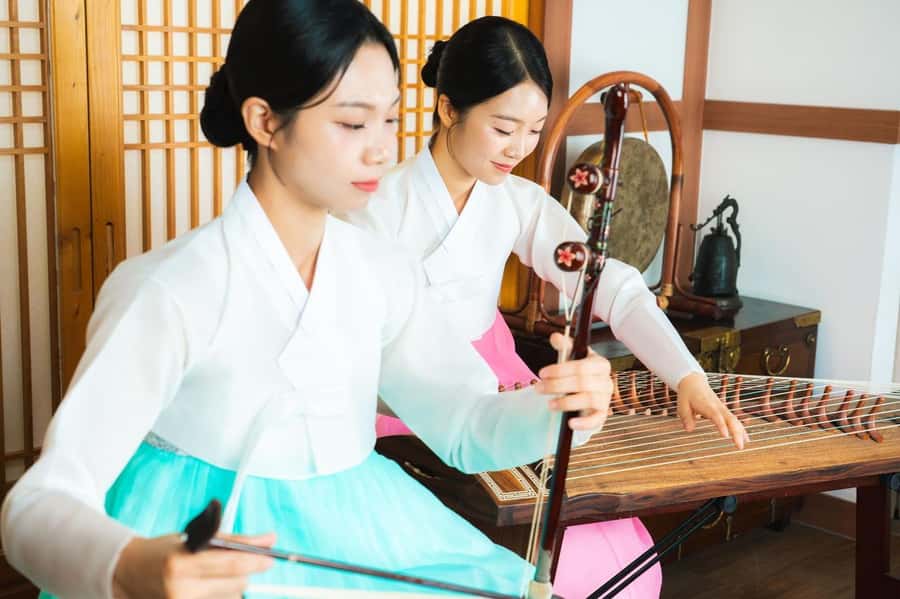
- A hanok concert in Insa-dong: the traditional courtyard-style atmosphere does half the work for you
- Three named stages: Gilje, Jinyeon, and Together in Harmony keep the momentum moving
- Classic instruments plus modern songs: court music, solo instrumentals, and then K-pop/OST-style fusions
- English and Korean support: the experience is designed for both local and international audiences
- Photo time with the musicians: you get a quick, friendly moment after the performance
A Hanok Concert in Insadong’s 2F Jinyeon Hall
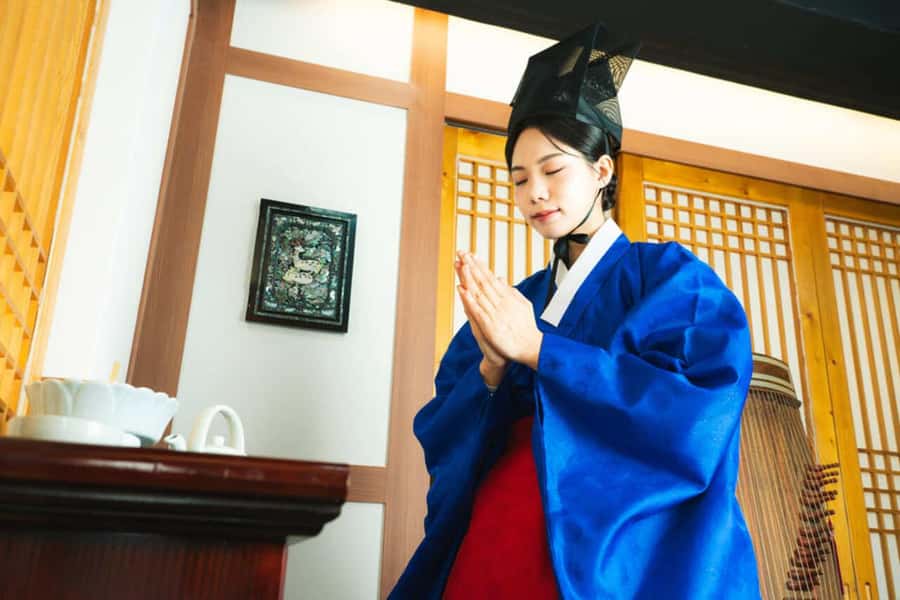
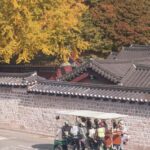
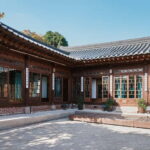
This is the kind of performance where the location changes how you experience the music. The show happens inside a traditional hanok atmosphere, not a modern hall. Even before the performers play, you’ll feel the shift: fewer distractions, more focus, and that sense that the room is part of the show.
You’ll be seated in a prepared area with chairs provided, which matters because it keeps the experience comfortable. The venue is on 2F, and here’s the practical catch: you reach it by stairs only. If you’re traveling with knee trouble or a heavy daypack, plan for it from the start and keep your pace slow.
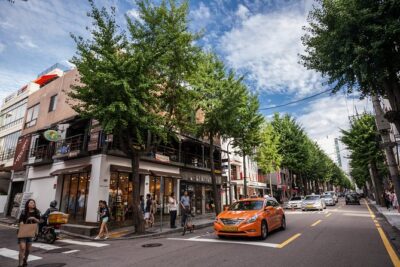
The meeting point is Jinyeon Hall at 2F 10 Insadong 5-gil, Jongno-gu, Seoul. It’s in the heart of Insa-dong, where you’re already surrounded by Korean craft shops, tea stops, and traditional-looking streets. That makes it easy to pair this ticket with an afternoon of browsing—then settle in for a quieter evening moment.
You can also read our reviews of more tours and experiences in Seoul


The 60-Minute Flow: Gilje, Jinyeon, and Together in Harmony
The performance runs about 60 minutes, and it’s built like a story rather than one long playlist. You arrive early, get seated, and then the program unfolds in three stages, each with a different mood.
Plan to arrive 10 minutes early. The room timing matters because there’s a welcome moment when the musicians enter, and the experience is designed to stay respectful and focused once it starts.
Stage 1: Gilje (Opening Blessing Ceremony)
Gilje is the opening—an introduction with a blessing ceremony vibe. It’s meant to set peace and good wishes, which might sound ceremonial on paper, but you’ll feel it in the pacing. The start is slower and more deliberate, like the show is asking you to settle your mind before the music takes over.
Stage 2: Jinyeon (The Banquet Performance)
Then comes Jinyeon, described as court music plus powerful solo instrumentals. This is where the performance leans into elegance and control: graceful sections, then spots where individual musicians take the spotlight. If you’re the type who listens for how instruments project without electronic help, this part is especially satisfying.
Stage 3: Together in Harmony (Folk Soul + Modern Fusions)
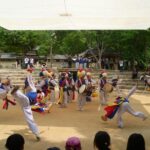
In the final stage, the tone shifts toward Korean folk songs and creative fusions that include K-pop and drama OST-style melodies performed with traditional instruments. This is the part that makes the concert feel usable for people who love modern Korean pop culture but want something deeper than a single genre.
It’s not just “old meets new” as a gimmick. The value is that you hear familiar song shapes reinterpreted through traditional techniques, so you understand what changes—and what stays recognizable.




The Sounds to Listen For: Gayageum, Haegeum, and Human Texture
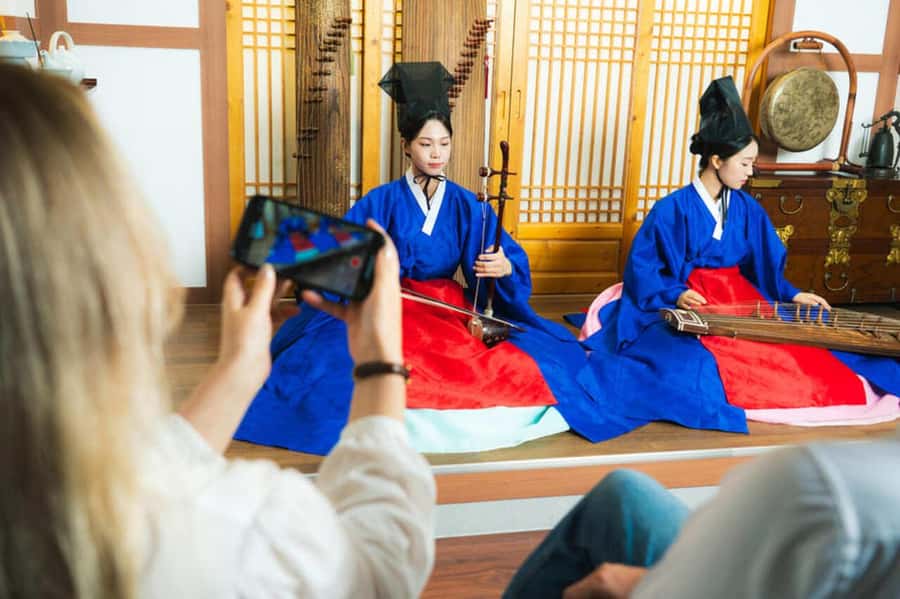
If you’re curious about traditional instruments, this show gives you a clear path to understanding them. The standout sound many people focus on is the gayageum and the haegeum, which can feel different even when they’re playing the same section.
The way these strings work is part of the magic: they can sound bright and singing one moment, then suddenly change into something more resonant and grounded. That blend helps the concert travel across moods—ceremony, court elegance, then folk-leaning emotion.
You’ll also see how performers shift between styles. One moment feels like a formal court setting; the next feels like music designed for a modern audience’s ear. Even when the song choices lean contemporary, the performance keeps the traditional instrument identity at the center.
What Your Ticket Buys for $47: Intimate, Purpose-Built, Not a Tourist Trap
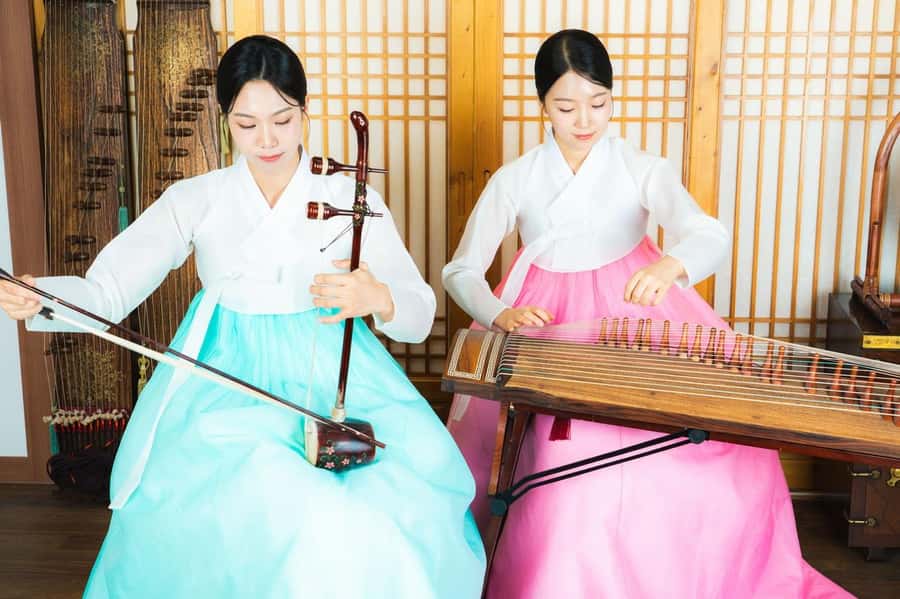
At $47 per person, you’re paying for a small, focused cultural experience—not a big-group entertainment package. The group size is 1–20 people, which usually means you’re closer to the action and the performance feels more personal.
What’s included is straightforward: the Korean traditional music performance. That simplicity is part of the value. You’re not buying a bundle of extras you may not use.
What’s not included is also worth noting:
- No hotel pickup or drop-off
- No food and drinks
That doesn’t make it bad—it just means you should plan your meal earlier. If you’re pairing it with Insa-dong shopping, plan to eat before you head to the hall, then treat the concert as the calm, no-snacks part of your day.
There’s also a tradeoff that one common worry reflects: it can feel a bit pricey compared with more casual performances. If you’re trying to stretch your budget, the best move is to see whether this specific format fits what you want right now. If you want a structured, three-part concert in a hanok setting, the cost makes more sense.
Getting There Fast: Jonggak or Jongno 3-ga Walking Routes
The location is easy enough if you use the right station exits.
From Jonggak Station (Line 1), Exit 3-1, it’s about a 6-minute walk. From Jongno 3-ga Station (Line 5), Exit 5, it’s about an 8-minute walk.
Practical tip: mapping apps sometimes get confused around tight Insa-dong streets. If your directions send you in circles, switch to Google Maps and match the address: 2F 10 Insadong 5-gil. That usually gets you to the correct building more reliably.
Also, set aside a little extra time. Even if the walk is short, you’ll want buffer space for stairs and finding the right entrance.
Before You Go: Phone Silence and the Quiet-Mood Expectation
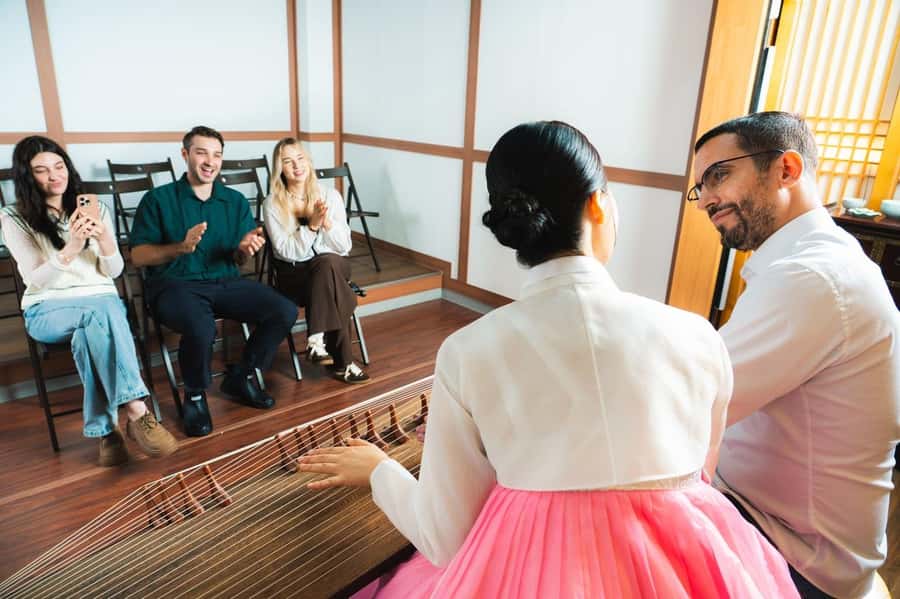
This is not a casual background show. The atmosphere is solemn, so you’ll want to follow the rules that keep it respectful.
Set your phone to silent mode before the performance begins. Keep chatter low while you’re seated. If you’re used to live music in louder settings, treat this as a sit-down concert where attention is part of the experience.
Seating is provided in advance, with chairs available. So you’re not hunting for a spot at the last second. Still, arriving early helps you settle down without rushing.
After the Final Note: Photos and Instrument Conversations
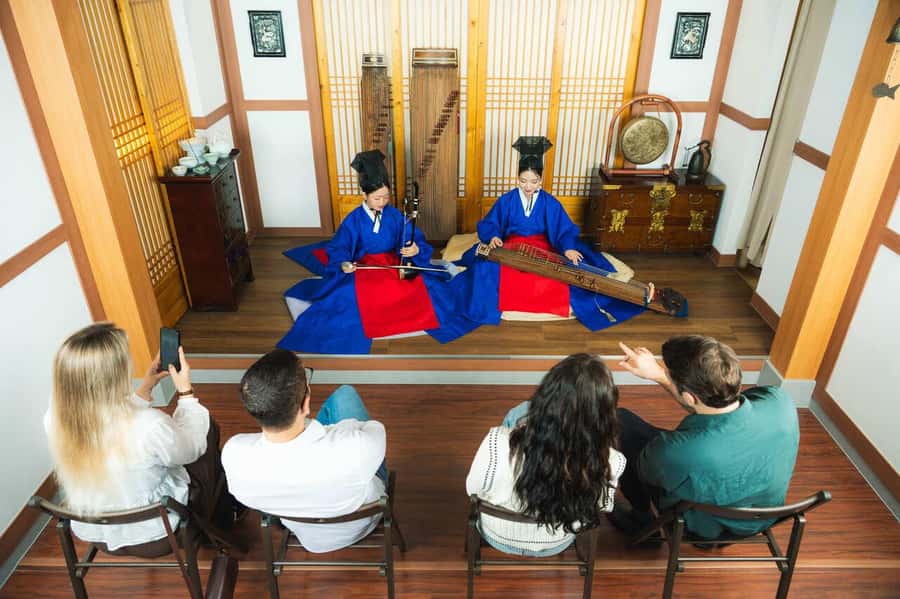
One of the best reasons to buy a live performance ticket is what happens after the music stops. You get a chance to take photos with the musicians after the performance.
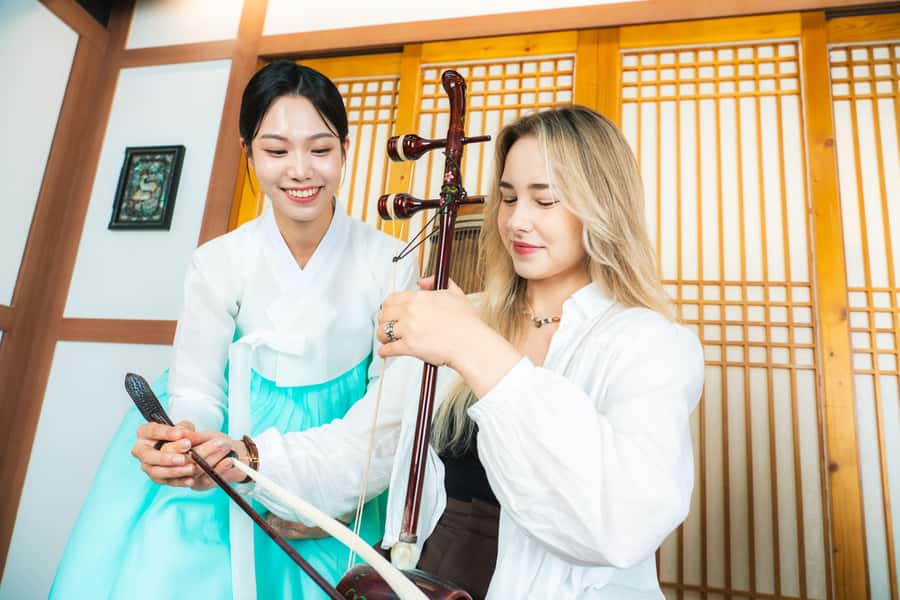
And there’s more than just photos if the program timing works for your session. You may get a chance for brief exchanges that help you understand what you just heard—especially around the instruments. People often leave talking about how much clearer the instruments felt after hearing a few direct explanations and demonstrations, including hands-on moments where you can see how playing works.
That post-show interaction is where the concert becomes more than entertainment. It gives you a story to remember, not just a song list.
Who This Experience Fits Best (and Who Should Think Twice)
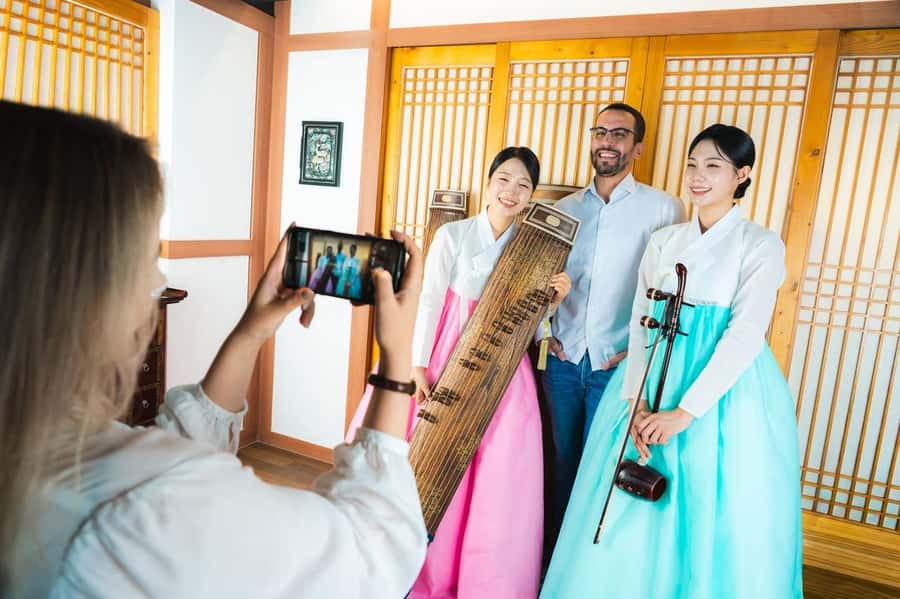
This is a strong match for you if:
- you want a traditional Korean music performance in a real hanok environment
- you like concerts that include both classic and modern-leaning elements
- you want an experience in central Seoul that feels calm and well-structured
It’s especially good for international visitors who want more than mainstream pop culture. The show acts like a bridge: you get the historical and technical side, but it still connects to modern song familiarity through the fusion portions.
It’s not the best choice if:
- you have mobility impairments or you can’t handle stairs only access
- you need a fully informal, no-rules type of event
Also check the schedule. Performances are on weekdays only (excluding weekends and public holidays), with start times at 11:00, 13:00, and 15:00. If you’re in Seoul on a weekend, this might not align.
Should You Book This Korean Traditional Music Performance?
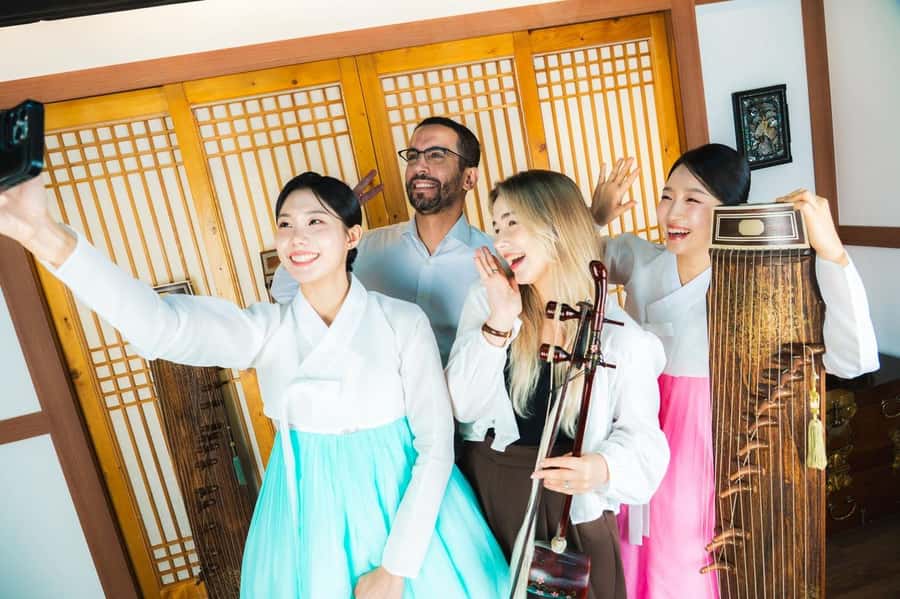
Book it if you want a focused cultural hour in Insa-dong, with an intimate group size and a structured program that moves from ceremony to court music to modern fusions. The hanok setting and the instrument-specific sound experience are the main reasons this feels worth it.
Skip or reconsider if stairs are a problem for you, or if you’re only interested in casual street performances rather than a seated, respectful concert format. And if budget is tight, look at the ticket as a premium cultural event—because it is.
If you’re building a Seoul day around traditional culture, this is a clean, easy-to-plan add-on. Go early, keep your phone silent, and give your ears one hour with no multitasking. The music does the rest.
FAQ
Where is the meeting point for this performance?
The performance meets at Jinyeon Hall: 2F 10 Insadong 5-gil, Jongno-gu, Seoul.
How long does the Korean Traditional Music Performance last?
It lasts about 60 minutes.
What are the available performance days and start times?
Performances are held on weekdays only (excluding weekends and public holidays) at 11:00, 13:00, and 15:00.
Is the venue wheelchair accessible or does it have an elevator?
No. Access is via stairs only, and there is no elevator. It’s not suitable for people with mobility impairments.
What languages are available during the experience?
The performance information is available in English and Korean.
What is included with the ticket?
The ticket includes the Korean Traditional Music Performance.
Are food and drinks included?
No. Food and drinks are not included.
Do I need to arrive early?
Yes. Please arrive 10 minutes early.
Can I take photos with the musicians?
Yes. You have the chance to take photos with the musicians after the performance.