REVIEW · SEOUL
Seoraksan National Park Ulsanbawi Hiking from Seoul
Book on Viator →Operated by Outdoors Korea · Bookable on Viator
A mountain day, minus the Seoul stress. This private trip to Seoraksan National Park for the Ulsanbawi Rock Peak hike is a smart way to see Korea beyond the usual city stops, with hotel pickup, a fluent English mountain expert, and classic temple sights like Shinheungsa and a large bronze Buddha. I like that the guide stays close and keeps the day flowing (and fun, too), and I like the way the route mixes strenuous trail time with calmer cultural stops so you don’t feel like you’re just suffering for views. The only real catch: this course can feel stiff, and crampons/poles aren’t included, so come ready with good footwear and your own support gear if you use it.
You’ll start early (7:30am), ride out by private vehicle, and spend about 4–5 hours hiking—wrapped into an overall day that’s about 11 hours long. The tour is truly private for your group, with entrance fees, parking, and vehicle service handled for you, plus a mobile ticket for the day.
If you’re looking for a calm, guided nature day where someone helps you read what you’re walking through, this is the kind of outing that pays off. If you want a casual stroll with zero effort and no walking between stops, you may find this too active.
In This Review
- Key points before you go
- Getting to Seoraksan feels easier with a private guide and car
- Price and value: what $238 covers (and what it doesn’t)
- The 7:30am start: why the timing works for Seoraksan
- Hiking Ulsanbawi Rock Peak: what the 4–5 hours really feels like
- A practical difficulty check
- Shinheungsa temple and the bronze Buddha: more than a photo stop
- Cable car moments and grotto water: small surprises along the route
- Your guide can make or break a hiking day
- What to bring for Ulsanbawi (and how not to get caught short)
- Who should book this Seoraksan Ulsanbawi hike from Seoul?
- Should you book this tour?
- FAQ
- What time does the Seoraksan Ulsanbawi hike start?
- How long is the tour from Seoul?
- Is hotel pickup and drop-off included?
- Is this a private tour?
- How long do you hike Ulsanbawi Rock Peak?
- What major sights are included during the hike?
- What is not included in the price?
- What is the minimum age for the tour?
- What happens if the weather is poor?
Key points before you go
- Private pickup from Seoul saves hours compared to DIY planning.
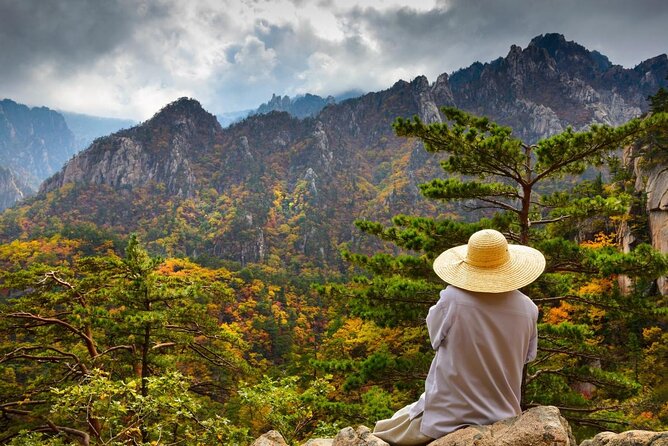
- Ulsanbawi hike (about 4–5 hours) is the main event, built for a real workout.
- Shinheungsa and the bronze Buddha add cultural breaks without turning the day into museum time.
- Fluent English mountain experts bring geology, trees, and local details into the trail.
- Weather matters: the operator notes good weather is required.
Getting to Seoraksan feels easier with a private guide and car
From Seoul, the biggest friction is usually the same: getting out there, then figuring out the route once you’re near the park. This tour solves both problems with hotel pickup and drop-off and private transportation that takes you to the trail starting point. The result is that your day starts on the trail instead of starting in a taxi negotiation.
It also helps that you’re not sharing the experience with a random crowd. The tour is listed as private, meaning only your group participates. That matters on steep sections and when you want to pause, take photos, or ask questions about plants, rock types, or temple details without everyone waiting on you.
A small but real bonus: the tour includes parking fees and entrance fees, so you’re not juggling multiple payments and tickets while you’re trying to hike. Less admin. More movement.
You can also read our reviews of more hiking tours in Seoul

Price and value: what $238 covers (and what it doesn’t)
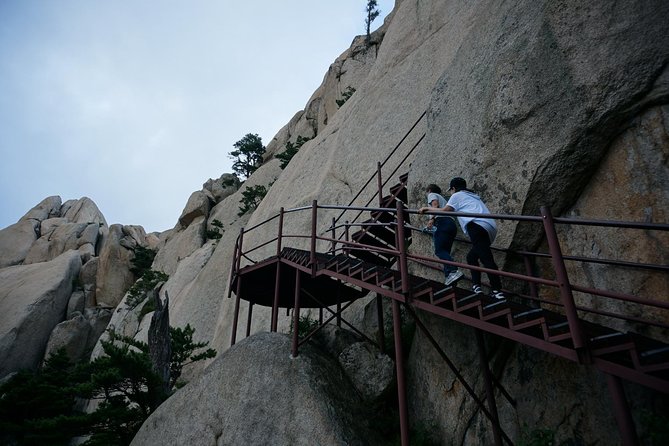
At $238 per person, this is not a cheap add-on. But a lot is bundled into that price in ways that matter on a full-day mountain outing:
- vehicle service (private)
- fluent English-speaking mountain expert
- hotel pickup and drop-off
- parking fees
- entrance fees
- private transportation
For many day tours from Seoul, the “base” price is often just transportation plus a guide. Here, the math is clearer: you’re paying for a guided day that includes both getting there and paying the entry costs, which can otherwise eat up time and energy.
What’s not included is also important:
- lunch
- personal food and water
- crampon and hiking pole
That means the biggest cost you’ll still control is your own trail-day fueling. I’d treat that as part of the planning: bring a simple lunch/snacks approach, or be ready to buy something nearby during the day.
Also, while the listing says group discounts, this is still a private format. If you can split the cost among friends or family, it typically becomes easier to justify.
The 7:30am start: why the timing works for Seoraksan
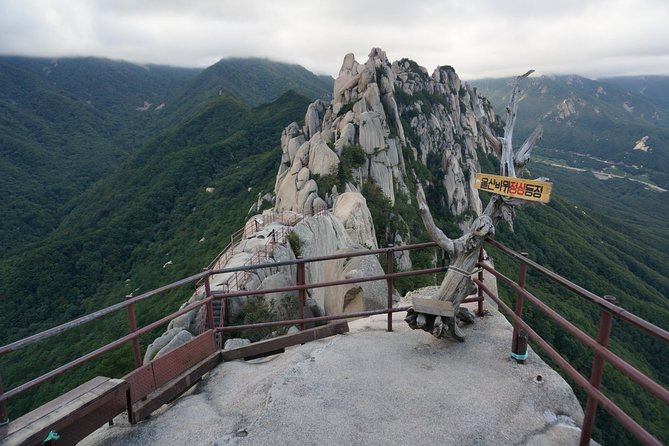
Starting at 7:30am is a quiet win. Seoraksan is the kind of place where early light improves everything—photos, hiking conditions, and the general feeling of being in a less crowded space.
The tour runs about 11 hours total, so you’re signing up for a long day. But the schedule is built around the core hiking window—about 4–5 hours on foot—then the rest is transportation and temple/approach time. In practice, that long day matters because it keeps your day efficient: you’re not driving back and forth repeatedly, and you’re not stuck waiting around.
One consideration: multiple reviews point out the day includes plenty of driving. So if you dislike road time, you’ll want to treat the ride as part of the experience—bring a book, download music, and plan to chat with your guide rather than trying to sleep through it.
Hiking Ulsanbawi Rock Peak: what the 4–5 hours really feels like
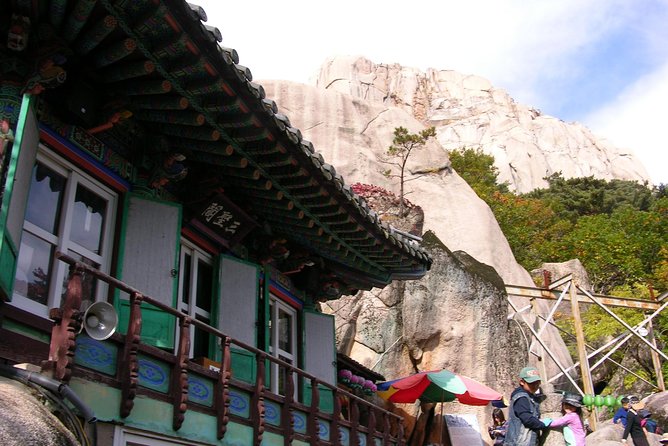
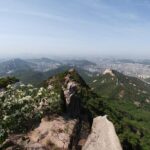
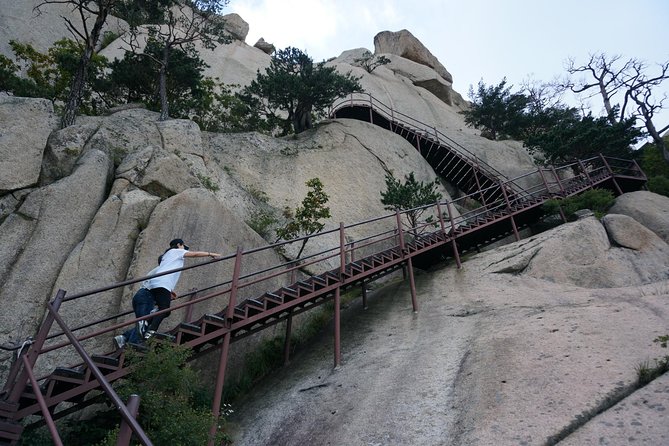
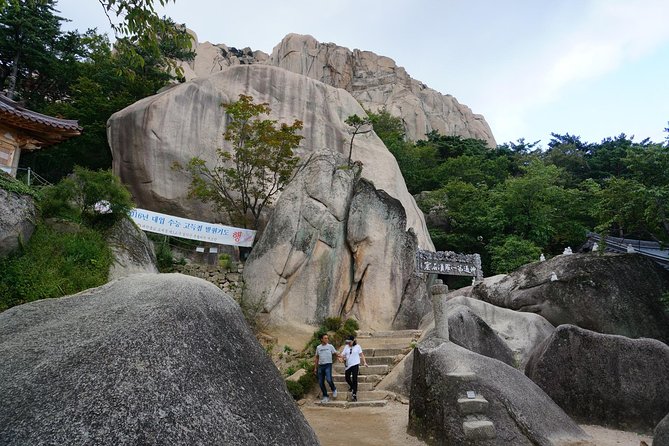
The star hike is to Ulsanbawi Rock Peak. The listed hike time is about 4–5 hours for the course. That’s enough time to feel the mountain working your legs, even if you’re taking breaks for views and photos.
Also, this isn’t sold as an ultra-technical ice climb. Still, multiple highlights describe the route as something that can suit experienced hikers more comfortably. In other words: you can start the day with confidence, but you should be honest with yourself about fitness. A moderate physical fitness level is explicitly required, and the guides are there to help—but you’ll still be hiking uphill.
What I like about this course shape is the mix of effort and pacing. A guided day like this tends to prevent the common beginner mistake: going too fast at the start, then burning out before you reach the viewpoint. With a guide leading the way, you get steadier timing and fewer guesswork pauses.
And because the day includes temple stops and the bronze Buddha, you get natural breaks built into the route. Those breaks matter because they keep the hike from becoming one long grind where you count minutes the entire time.
A practical difficulty check
If you’re unsure, think about your baseline:
- Can you comfortably hike for 2–3 hours with a steady uphill feel?
- Do you have hiking shoes with grip?
- Are you okay with a long day that’s mostly outdoors?
If your answer is yes, you’ll probably find Ulsanbawi rewarding. If your answer is no, consider a gentler option.



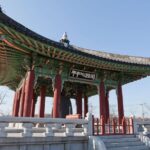
Shinheungsa temple and the bronze Buddha: more than a photo stop
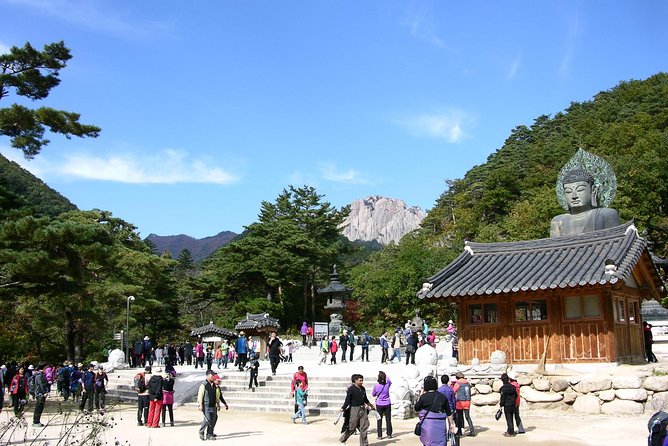
Seoraksan isn’t only about rocks and views. This route adds a meaningful cultural layer with Shinheungsa Buddhist temple and a large bronze Buddha statue, both called out in the highlights.
Here’s why I think that’s smart for hikers. Temples aren’t just scenic backdrops; they provide rhythm. After a tougher section, you get a slower-paced walk where you can reset breathing, notice details, and learn what you’re looking at. That’s the difference between a day that feels like cardio-only and a day that feels like a full experience.
The temple setting also gives your guide an easy opening for useful commentary—history, but also practical stuff like what kind of plants you’re seeing, how the area relates to geology, and why certain trail routes make sense. That kind of information makes the hike feel less like guessing and more like reading the mountain as you go.
If you’re traveling with someone who loves culture but doesn’t want a museum day, this is a nice compromise. It’s still a hike day, but it includes spiritual sights that make you slow down for a reason.
Cable car moments and grotto water: small surprises along the route
One of the best ways to enjoy a mountain day is to expect a few “wait, that’s cool” moments. On this kind of Seoraksan temple approach, the day can include a scenic cable car ride, and there can also be a spot for fresh water from a grotto.
Neither of those are listed as standalone features on the basic tour summary, but they show up as part of how the full trail-and-temple approach often plays out. The practical takeaway for you: don’t plan a strict timeline where you treat every segment like an athletic workout. If there are short transitions like a cable car ride or a water stop, they can break up the day in a good way.
Also, note the basics: the tour does not include personal food or water. If you want to try grotto water, consider it a bonus, not your entire hydration plan.
Your guide can make or break a hiking day
For hiking tours, the guide isn’t just a person who holds the map. This experience is built around a fluent English-speaking mountain expert, and the guide role shows up in the strongest feedback.
Names like Mr. Kim, Jimmy, and Chance (Chansoo) appear in past experiences, and the common theme is that they bring both knowledge and personality. You’ll likely hear clear explanations about geology and trees, which is exactly the kind of information that helps you understand why certain sections of the hike feel the way they do.
Just as important: you’re not stuck in silence. Several descriptions emphasize the friendly conversation—talking about Korea, travel, and everyday topics. That matters on a long day with driving time. A good guide turns “time in the car” into part of the experience rather than dead space.
One more practical benefit: if you’re a nervous first-timer, a guide helps you move with confidence. If you’re an experienced hiker, a guide still helps by pointing out details you might miss and keeping your pacing sensible.
What to bring for Ulsanbawi (and how not to get caught short)
This tour asks for comfortable clothes and hiking shoes, and it calls out a few gear omissions:
- Lunch is not included
- personal food and water are not included
- crampon and hiking pole are not included
Even if you’re not planning to use crampons, it’s worth bringing hiking poles if they’re part of your usual kit. They can reduce strain on steep descents, especially when you’re doing a full day with multiple stops.
Water is another big one. Since personal water isn’t included, you’ll want a plan. If you rely on buying water, you could run into a timing crunch in a mountain setting. A simple snack and hydration strategy keeps you feeling human and helps you enjoy temple stops instead of chasing energy.
Finally, think about the day’s rhythm. With about 4–5 hours of hiking inside an 11-hour outing, you’ll want layers. Korean mountain weather can shift, and you’ll be walking long enough to warm up, then pausing long enough to cool down.
Who should book this Seoraksan Ulsanbawi hike from Seoul?
This is best for you if:
- you want a guided private day trip from Seoul
- you’re excited about hiking but also want temples and bronze Buddha sights
- you like having a guide who explains what you’re seeing
- you’re okay with a long day (about 11 hours total)
It may be less ideal if:
- you want a short, easy walk with minimal physical strain
- you hate driving time and don’t enjoy car conversation
- you don’t have solid hiking footwear
Also, the minimum age is 12, and the day is described as suitable for a moderate physical fitness level. Starting hikers can challenge the course, but be realistic: Ulsanbawi is still a real hike.
Should you book this tour?
I’d book it if you want the cleanest path from Seoul to Seoraksan with a guide who keeps you moving, explains the mountain, and adds temple stops that make the day feel like more than a workout.
I’d pause and consider alternatives if you’re mainly looking for an easy nature stroll, because Ulsanbawi can be demanding and you’ll need to handle your own hydration and gear like trekking poles.
The sweet spot: you’re a nature lover, you don’t want to guess logistics, and you’re ready to earn those views with a guided, temple-and-rock adventure.
FAQ
What time does the Seoraksan Ulsanbawi hike start?
The tour starts at 7:30 am.
How long is the tour from Seoul?
The total duration is about 11 hours.
Is hotel pickup and drop-off included?
Yes. The tour includes hotel pickup and drop-off in Seoul or near Seoul.
Is this a private tour?
Yes. It’s private, and only your group will participate.
How long do you hike Ulsanbawi Rock Peak?
The hike portion is about 4 to 5 hours.
What major sights are included during the hike?
The highlights include Shinheungsa Buddhist temple and a large bronze Buddha statue.
What is not included in the price?
Lunch, personal food and water, and crampon and hiking pole are not included.
What is the minimum age for the tour?
The minimum age is 12 years.
What happens if the weather is poor?
The experience requires good weather. If it’s canceled due to poor weather, you’ll be offered a different date or a full refund.