REVIEW · SEOUL
Seoul Palace Morning Tour
Book on Viator →Operated by SEOUL CITY TOUR CO. LTD. · Bookable on Viator
Three palaces and one guard ceremony, fast. This small morning circuit is a great way to see hotel pickup service plus all entrance fees included without burning your whole day. The main catch: the group timing can feel quick, and the tour includes a stop at a ginseng shop.
I like that the day mixes Zen calm at Jogyesa with the big visual drama of Joseon-era royalty at Gyeongbokgung, then finishes at Gwanghwamun Gate for the changing of the guard. If you get a guide with the storytelling style some have praised (one example is Chloe, noted for helpful photos and clear context), you’ll get more out of the palace grounds than just snapshots.
In This Review
- Key highlights you’ll actually feel
- Morning Start: 9:00am Pickup and a Focused 3-Hour Loop
- Jogyesa Temple: Zen Temple Calm and Those 500-Year Trees
- Blue House Pass-By: Seeing the Symbol Without the Photo Pose
- Gyeongbok Palace: Geunjeongjeon, Royal Living Quarters, and Banquet Space
- Folk Museum Inside Gyeongbok Palace: Daily Life, Not Just Thrones
- Gwanghwamun Gate and the Changing of the Guard Ceremony
- The Ginseng Center Stop: Quick Convenience or Tour Drag
- Price and Value: Why $40 Can Make Sense Here
- Who This Tour Fits Best (and Who Might Want a Different Plan)
- Practical Tips for Getting the Most Out of This Seoul Morning
- Should You Book This Seoul Palace Morning Tour?
- FAQ
- How long is the Seoul Palace Morning Tour?
- What time does the tour start, and is pickup included?
- Where do you get dropped off at the end?
- Are entrance fees included?
- Is lunch included?
- Will I be able to stop at the Blue House?
- Is there a group size limit?
- FAQ
- Can I cancel for a full refund?
- Does the tour include a ginseng center stop?
Key highlights you’ll actually feel
- Hotel pickup with a 9:00am start keeps the morning stress low and your timing tight.
- Jogyesa Temple details you can spot in minutes: the 500-year-old locust and baeksong trees, plus the main building’s color paint and statue focus.
- Blue House pass-by, not a stop: you see it from the route, but security prevents stopping right in front.
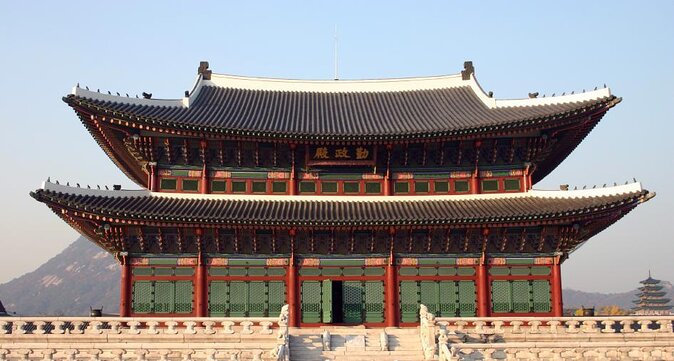
- Gyeongbokgung Palace focus on specific halls and living quarters so it feels organized, not like wandering.
- Changing of the guard at Gwanghwamun Gate gives the tour a strong finish.
- A required ginseng center stop can be either quick and useful or feel like wasted time, depending on your interests.
Morning Start: 9:00am Pickup and a Focused 3-Hour Loop
This is built for travelers who want the headline sites, in one shot, without a long day. You start around 9:00am, and pickup is included, with an air-conditioned vehicle that helps on a hot or chilly Seoul morning.
The tour is about 3 hours (approx.), and the group size is capped at up to 30. That matters because you’ll move efficiently between stops, but you won’t get the slow, linger-and-read pace of a private guide. If you prefer to take your time inside each building, you may want to plan your own follow-up visit later the same day.
At the end, you don’t get dropped back at your hotel. You finish near Seoul City Hall, which is handy for continuing your day on your own.
You can also read our reviews of more tours and experiences in Seoul
Jogyesa Temple: Zen Temple Calm and Those 500-Year Trees
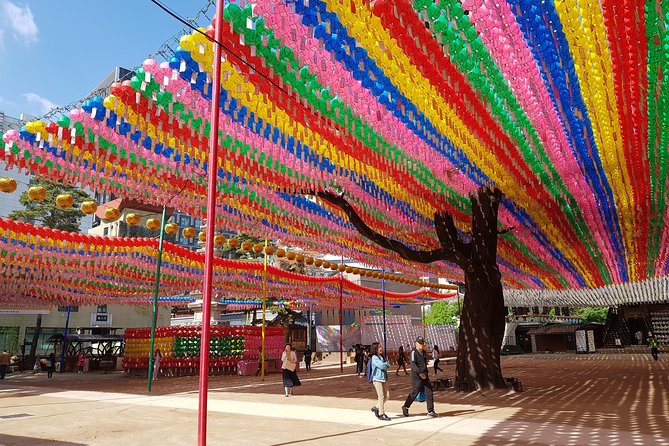
The morning begins at Jogyesa Buddhist Temple, widely considered a key center for Zen Buddhism in Korea. Even before you reach the main hall, you’ll notice the trees in front of the Daeungjeon building—especially the locust trees and baeksong (white pine) trees that are around 500 years old. The baeksong tree is also recognized as a Natural Monument, which is exactly the kind of detail you’ll appreciate once your guide points it out.
From there, the Daeungjeon building is a standout visually. It was built in 1938, and the paintwork is described as especially beautiful because of the different colors. Inside, you’ll see the statue of Seokgamoni, the historical Buddha figure central to Buddhist worship there.
Another Jogyesa feature you’ll likely spot is a seven-storey stone pagoda containing Jinsinsari. These pagodas can look repetitive if you’ve seen a lot of temples elsewhere, but this one is usually worth the photo because of how it anchors the courtyard space.
Why I think this stop works: Jogyesa isn’t just a quick photo stop. The guide structure helps you connect what you’re seeing (trees, architecture, main statue, pagoda) to what the temple is doing in daily religious life.
Blue House Pass-By: Seeing the Symbol Without the Photo Pose
After Jogyesa, you’ll head toward Gyeongbok Palace, and you’ll pass the Blue House area—the seat associated with top government leadership. Here’s the practical point: because it’s a security area, you cannot stop in front of the Blue House.
So instead of a stand-and-stare moment, think of this as a brief view from the route, timed as part of the drive between major sights. This works best if you treat it like a context stop, not the main attraction. You’ll still get the bigger Joseon-era story at the palace, which is where the real time is spent.
Gyeongbok Palace: Geunjeongjeon, Royal Living Quarters, and Banquet Space
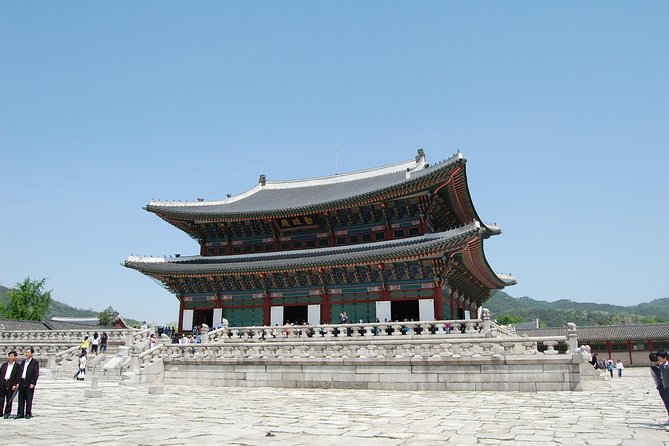
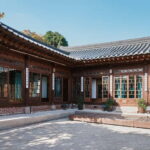
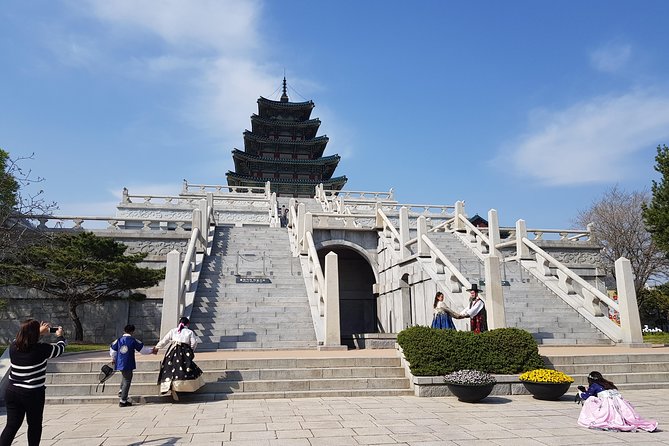
The heart of the tour is Gyeongbok Palace, the most famous royal residence from the Joseon Dynasty era. If you want a quick sense of how the Korean royal system worked—who lived where, who handled affairs, where ceremonies happened—this is the portion that gives it shape.
Rather than aimlessly walking through a giant complex, the tour points you toward specific named buildings, including:
- Geunjeongjeon (the main throne hall): the ceremonial center where royal authority was displayed.
- Sajeongjeon (the King’s office): a different function than the throne hall, which helps you picture governance, not just pageantry.
- Gangnyeongjeon (the King’s living quarters): the shift from public power to private royal life.
- Gyotaejeon (the Queen’s living quarters): important because it expands the story beyond the king alone.
- Gyeonghoeru: the pavilion where the king held formal banquets for foreign envoys.
That last detail—banquets for envoys—turns the palace from a set of buildings into a stage for diplomacy. You start noticing how space and placement matter: ceremonial halls face public movement, while living quarters feel more sheltered and human-scale.
What to watch for: build in a few minutes to look up and scan roof lines and gate-to-gate sightlines. In a short tour, your best “bang for buck” is using the guide’s route to orient you, then returning later if something grabs you.
Folk Museum Inside Gyeongbok Palace: Daily Life, Not Just Thrones
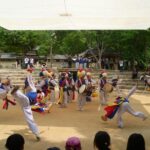
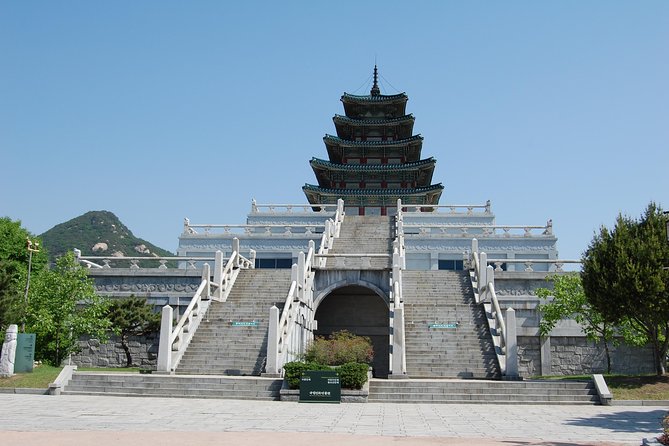
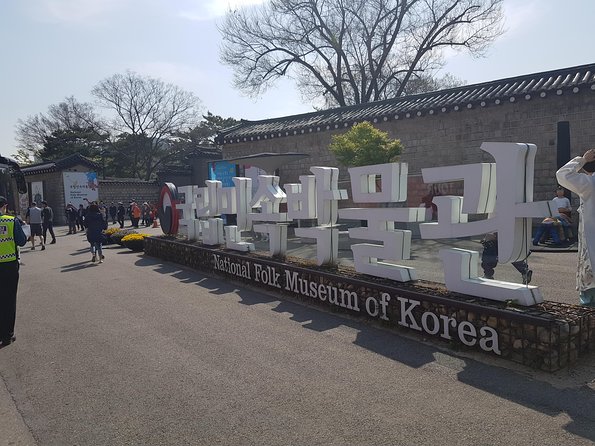
Next comes time at the Korean National Folk Museum, located within the Gyeongbok Palace area. This museum is meant to connect the palace setting to everyday Korean life—daily routines, culture, and the kind of objects and habits people recognize as traditional.
For a morning tour, this stop adds balance. The palace buildings can be overwhelming if all you focus on is the grandeur. The museum helps you understand what life looked like outside the palace walls, even if only through a short visit.
If you enjoy museums, you’ll likely find this portion useful for making the palace feel more grounded. If you’re more in “walk and photograph only” mode, you may prefer to treat it as a quick orientation stop and then come back later for deeper reading.


Gwanghwamun Gate and the Changing of the Guard Ceremony
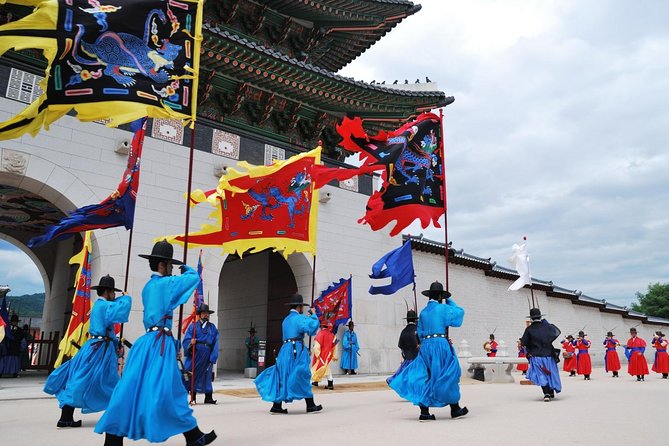
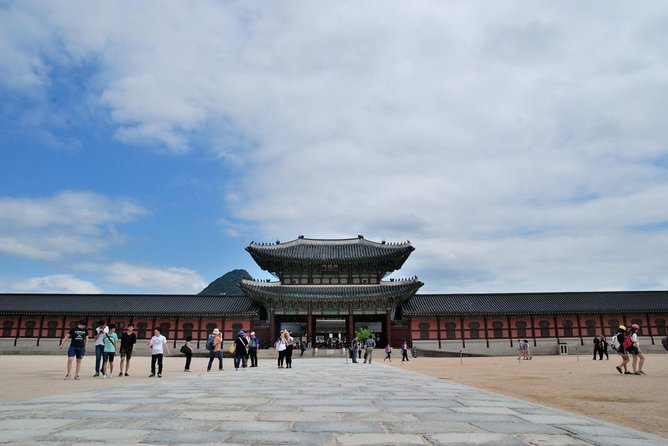
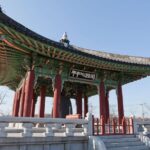
The tour closes at Gwanghwamun Gate, the south gate area of the palace complex. This is the spot where you can see the changing of the guard ceremony, which is often the most memorable moment because it’s visual, timed, and easy to understand even without deep background.
Ceremonies like this work well in a short itinerary because they’re self-contained. You don’t need to read ten labels to get the point—you just watch, and your guide can add context to what you’re seeing while you’re there.
My advice: arrive ready with your phone camera set up quickly, but don’t spend the entire ceremony filming. Take a few seconds to watch with your eyes first, then capture the best moments.
The Ginseng Center Stop: Quick Convenience or Tour Drag
Your tour ends back in central Seoul around the City Hall area, but not before a stop at a ginseng center. The tour information states that one of the shopping centers is included (Ginseng Center).
This is the most polarizing part of the experience. Some people are happy to see how traditional health products are presented, while others feel like it runs longer than the time spent at the sites they came for. If you’re not into shopping, treat this portion as a practical time block: don’t expect it to add historical value to your palace day.
If you know you’ll want to buy nothing, you can still use the stop in a useful way: consider it your buffer time before heading out to nearby neighborhoods near City Hall.
Price and Value: Why $40 Can Make Sense Here
At $40 per person, this tour can be a good value—especially compared with piecing together taxi rides plus individual palace and temple admissions yourself. The price includes a few things that usually add up in Seoul: hotel pickup, an air-conditioned vehicle, and entrance fees included (including free admission to top local attractions).
The math is strongest if you’re staying somewhere that makes pickup convenient. The vehicle and guide coordination matter more when you’re trying to cover multiple major sights in one morning without navigating between them.
Just remember what you’re paying for: a guided, structured highlights route in about 3 hours, not a slow, detailed crawl of every building. If that format matches how you like to travel, the cost feels fair.
Who This Tour Fits Best (and Who Might Want a Different Plan)
This is a strong match for you if you:
- want an efficient morning overview of Jogyesa + Gyeongbokgung + changing of the guard
- like having a guide translate what you’re looking at while you’re walking
- appreciate having entrance fees handled
- prefer a family-friendly group setup with a cap of 30 travelers
It may feel less ideal if you:
- hate shopping stops and want zero time in retail locations
- need a slower pace to read and absorb every detail
- expect long on-site wandering time inside the biggest palace halls
A couple of common pacing complaints show up in the mix, so if you’re the type who likes to take your time, be ready to do your deeper exploring later on your own.
Practical Tips for Getting the Most Out of This Seoul Morning
- Wear shoes you can move in. Even a short palace circuit involves walking surfaces that aren’t always forgiving.
- Bring a light layer. Seoul mornings can swing quickly, and you’ll switch between outdoor ceremonial spaces and indoor stops.
- Use the guide’s route to learn orientation. In a highlights tour, your goal is to understand where key buildings sit so you can come back later with purpose.
- If the ginseng stop bothers you, set expectations early. Decide in advance that you’re either going to browse without pressure or treat it as a quick break.
Should You Book This Seoul Palace Morning Tour?
Book it if you want a smart, guided morning that covers temple calm, palace power, and a ceremony finish—without paying separate admission fees or worrying about transportation between sites. The combination of Jogyesa, Gyeongbok Palace’s named highlights, and Gwanghwamun Gate gives you a coherent Seoul story in just a few hours.
Skip (or choose another format) if you strongly dislike shopping stops, or if you know you need long viewing time inside major sites. The experience works best when you’re okay with a structured schedule and a bit of urgency.
FAQ
How long is the Seoul Palace Morning Tour?
It runs for about 3 hours.
What time does the tour start, and is pickup included?
The tour starts at 9:00am, and hotel pickup is included.
Where do you get dropped off at the end?
The tour ends back in Seoul at City Hall, and hotel drop-off is not included.
Are entrance fees included?
Yes. The tour includes all entrance fees, and it also mentions free admission to top local attractions.
Is lunch included?
No. Lunch is not included.
Will I be able to stop at the Blue House?
No. You can see the Blue House pass-by, but it’s in a security area so the tour cannot stop right in front.
Is there a group size limit?
Yes. The tour has a maximum of 30 travelers.
FAQ
Can I cancel for a full refund?
Yes. You can cancel up to 24 hours before the start time for a full refund.
Does the tour include a ginseng center stop?
Yes. One shopping center is included, and it’s listed as the ginseng center.