REVIEW · SEOUL
Small Group 7D Korea package Tour with Seoul Gyeongju Busan Jeju
Book on Viator →Operated by Here Korea Travel · Bookable on Viator
Seven days, five regions, and zero confusion. This is a small-group Korea package that strings together Seoul, Jeju, Busan, Gyeongju, and the DMZ in one smooth loop, with an English-speaking guide, pickup help, and a mobile ticket. I especially like how it builds in hands-on local flavor: the Gwangjang Market food tour plus a real cooking class, not just photo stops.
The trade-off is simple: the itinerary is packed. You’ll move through major sights fast—especially in Jeju and Busan—so if you hate rushing, you’ll need that free time buffer in Seoul to breathe.
In This Review
- Key highlights worth your attention
- Why this Seoul–Jeju–Busan–Gyeongju loop makes sense in 7 days
- Jeju Island: beaches, a tuff cone, cave time, and the waterfalls of real drama
- Busan markets and coastline temples: Gamcheon to Jagalchi to Haeundae Blue Line Park
- Gyeongju UNESCO-style stops plus a night view that’s actually worth it
- Cooking class in Seoul: bibimbap, pancakes, and soup (not just a demo)
- Seoul in one day with a smart spine: palaces, temples, markets, and towers
- DMZ day: passports, the Third Tunnel, Dora Observatory, and a short bridge hike
- Price and what you get for $1,988 per person
- Hotels, free time, and how to avoid burnout
- Guide experience and small-group reality (who might be part of your trip)
- Should you book this Korea package?
- FAQ
- How big is the group?
- Where does the tour start, and is airport pickup included?
- What transport is included during the trip?
- Which meals are included?
- Is there compulsory shopping on this tour?
- What does the cooking class include?
- Is the Nanta show included?
- Is there a vegetarian option?
- Do I need my passport for the DMZ?
- What is the cancellation policy?
Key highlights worth your attention
- Jeju’s geology lineup: Seongsan Ilchulbong, Manjanggul Cave, black basalt rock formations, and multiple waterfalls
- Busan food + views: Jagalchi Market, BIFF Square area street snacks, Gamcheon Culture Village, Haedong Yonggungsa
- Gyeongju Silla core: Bulguksa + Seokguram, tomb complexes, and a nighttime walk around Donggung Palace/Wolji Pond
- A proper cooking class day: bibimbap, traditional pancake, and soup (season menu changes)
- DMZ includes the essentials: passport checks, the Third Tunnel, Dora Observatory, plus a short nature walk
Why this Seoul–Jeju–Busan–Gyeongju loop makes sense in 7 days
This package is built for people who want the headline Korea moments without spending days mapping transit, booking domestic flights, and guessing which neighborhoods to base in. You get an efficient travel chain: domestic flight over to Jeju, then coastal hopping to Busan, then KTX speed up to Seoul from Gyeongju. That’s the big value behind the price.
Here’s what you’re really paying for: time savings and fewer decision points. Between guided stops, entrance tickets, and an air-conditioned vehicle used for local transfers, you spend less mental energy and more energy actually looking at things. Add a group cap of 15 travelers, and the day-to-day feels busy but not chaotic.
The biggest practical consideration is pace. This is not a slow-simmer tour. It’s more like a well-directed highlight reel—with just enough time included to enjoy each place without turning it into a sprint.
You can also read our reviews of more tours and experiences in Seoul.

Jeju Island: beaches, a tuff cone, cave time, and the waterfalls of real drama
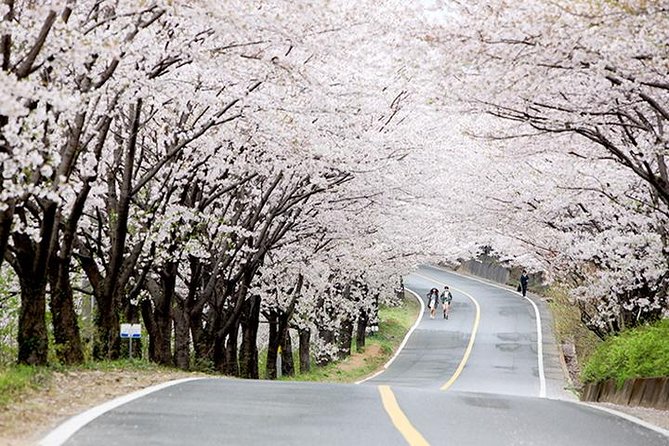
Jeju day one and day two give you an island cross-section: volcanic landforms, seaside views, and traditional life.
Day 1 gives you the coastal hits first. You start at Woljeongri Beach and Café Street, then swing to Gwangchigi Beach with its black sand made from basalt weathering. Next comes Seongsan Ilchulbong (Sunrise Peak). Climbing to the top puts you over a crater filled with grass—an easy way to understand why Jeju is famous for its volcanic shapes. Then you’ll move through Manjanggul Cave (a short visit, but worth it) and Seongeup Folk Village, where you get a look at traditional Jeju island homes and daily life.
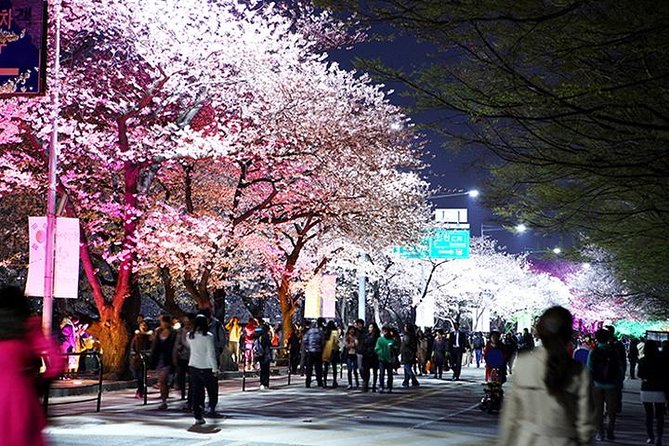
A nice seasonal touch: the Seongsan Canola Flower Field stop is time-dependent—cherry blossom late March to early April, then canola later (April through September). If your trip lines up, it turns an ordinary viewpoint day into an extra pretty one.
Day 2 adds more nature variety. You start with Jeju National University Ara Campus, where cherry blossom timing is listed (7–10 April). After that there’s an optical illusion stop described as objects appearing to roll uphill—great for a quick laugh and a quick photo. Then you get Hallasan National Park, where the altitude and scale matter (Hallasan is listed at 1,950m and described as a dormant volcano).
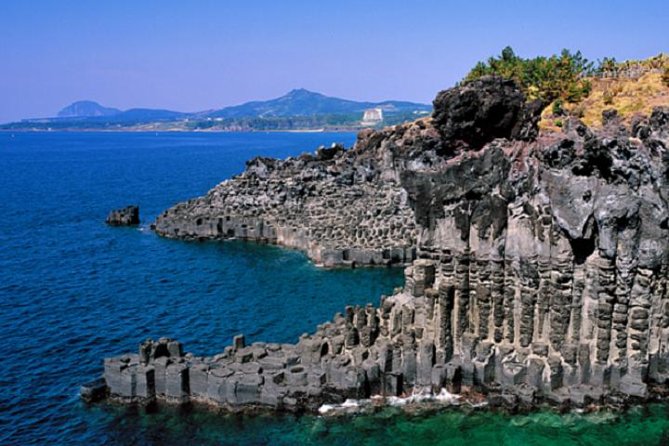
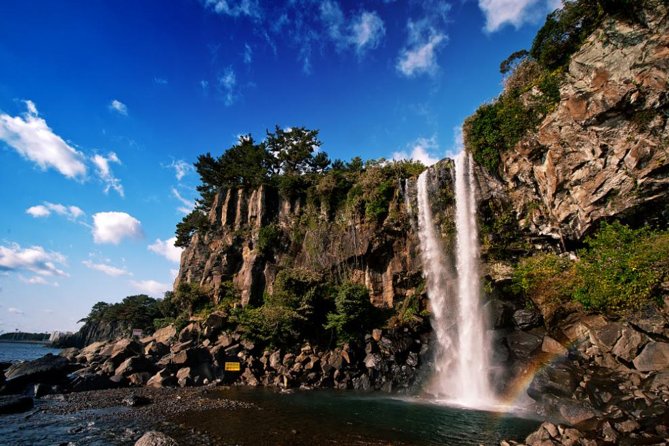
The route then continues with more volcanic scenery: a beach area with mysterious black rock pillars (shaped like cubes and hexagons) and a waterfall double feature. Cheonjiyeon Falls is linked to a fairy legend, while Jeongbang Waterfall is highlighted as one that drops directly into the ocean. Even if you don’t care about legends, the ocean-meets-waterfall layout is the kind of thing that feels uniquely Jeju.
You finish day two with Arte Museum Jeju—an art-and-light, video-style museum. It’s a good change of pace after outdoors time.
Potential drawback on Jeju: you’ll be outdoors a lot. Sunglasses, sun protection, and shoes that handle uneven ground help. Also plan for the fact that cave and viewpoint stops can feel time-boxed if you like lingering.
Busan markets and coastline temples: Gamcheon to Jagalchi to Haeundae Blue Line Park
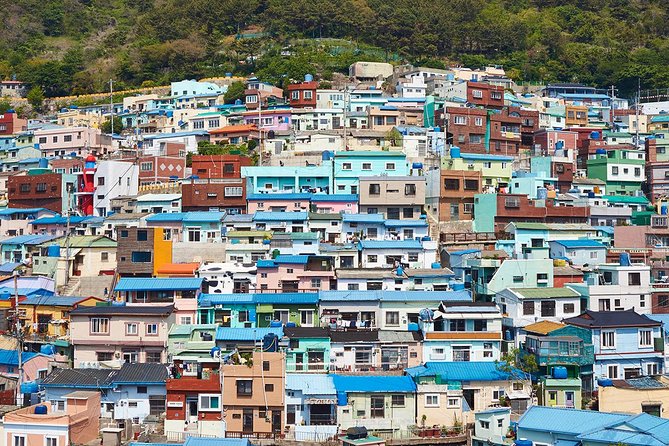
Busan’s day is built around three themes: color-filled neighborhoods, seafood market energy, and sea-facing temples.
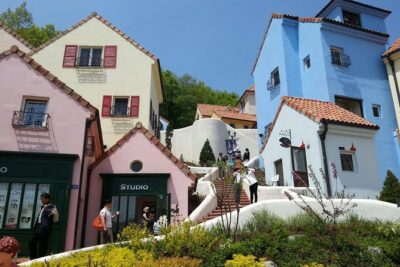
You start with Haeundae Dalmaji-gil Road, described as a cherry blossom-lined lane beyond the main Haeundae Beach. Then you’ll head to Gamcheon Culture Village, which is famous for houses stacked on a hillside—built by war refugees and later reshaped with arts and maintenance.
From there it’s Jagalchi Market—the classic Busan seafood stop. Expect raw fish buying and eating right in the market atmosphere. Next is BIFF Square, tied to Busan International Film Festival culture and presented as a street-food area. Then you continue to Gukje Market for new-and-used goods shaped by post-war refugee settlement.
If you want one big scenic payoff day, Haedong Yonggungsa is that. It’s described as a top temple experience in Korea and is set along the coast. You finish with Haeundae Blue Line Park, where you can ride a train and view the shoreline scenery.
How to get the most out of this day: when you arrive at markets, don’t just browse. Pick one or two foods, then move on. You’ll cover a lot anyway, and you’ll enjoy it more when you don’t overcommit.
Possible consideration: market time can feel intense if you dislike crowds or tight spaces. Pace yourself and give yourself a break if your feet start complaining.
Gyeongju UNESCO-style stops plus a night view that’s actually worth it
Gyeongju is where the tour leans into Korea’s historic core—Silla-era sites and the kind of stone-and-temple craftsmanship that’s hard to reproduce in a museum.
Day 4 starts with Bulguksa Temple, described as a UNESCO heritage site tied to the Silla capital era. You then head to Seokguram, a stone temple/grotto on Tohamsan Mountain that’s praised for being kept intact for over 1,200 years thanks to design and natural ventilation.
Next you get a gentler sightseeing mix: Bomunho Lake Tourism Complex (with cherry blossoms in April), then Daereungwon Tomb Complex where you can even enter Cheonmachong Tomb. There’s also a stop at Gyeongju Gyochon Traditional Village, presented as nobleman-style houses, then Donggung Palace and Wolji Pond, which is framed as a night-view place with traditional pavilions around the lake.
Then you do the big logistics leap: you take KTX back to Seoul. It’s listed as about two hours, and it’s one of the most helpful parts of this package. Instead of spending the whole day on slow transit, you get a real travel break and arrive in Seoul with less hassle.
Potential drawback: if you love “one site for a long time,” Gyeongju may feel structured. The strengths here are variety and efficiency—temples, tombs, and a night pond walk in one day.
Cooking class in Seoul: bibimbap, pancakes, and soup (not just a demo)
Day 5 is where this tour shifts from sightseeing to doing.
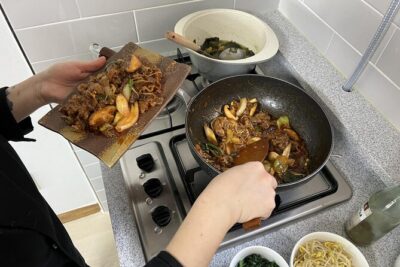
You’ll take a cooking class at 오미 요리연구소, and the class includes cooking three Korean dishes: bibimbab, a traditional pancake, and soup. The menu can change by season. This matters because it turns the class into something you can’t fully replicate at home from memory alone.
After cooking, you head into Hongdae, known for youth-focused street energy, food options, and street performances. Then the optional Nanta theater show comes up next at Myeongdong. Nanta is described as a non-verbal show, so it’s easier to enjoy even if Korean isn’t your strength. Ticket prices are listed by seat type (S 35 USD, P 45 USD, V 55 USD), and the show is optional—so you can skip it if you prefer a quieter evening.
My practical take: if you like interactive experiences more than late-night entertainment, the cooking class alone is a strong reason this tour feels worth it.

Seoul in one day with a smart spine: palaces, temples, markets, and towers
Day 6 is basically Seoul greatest hits with a logical order. You start at Yeouido Park (listed as a cherry blossom festival site), then move to Gyeongbokgung Palace near Gwanghwamun Square. You’ll also visit Jogyesa Temple, described as the head temple of Korean Buddhism and located in the city center.
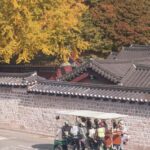
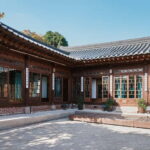
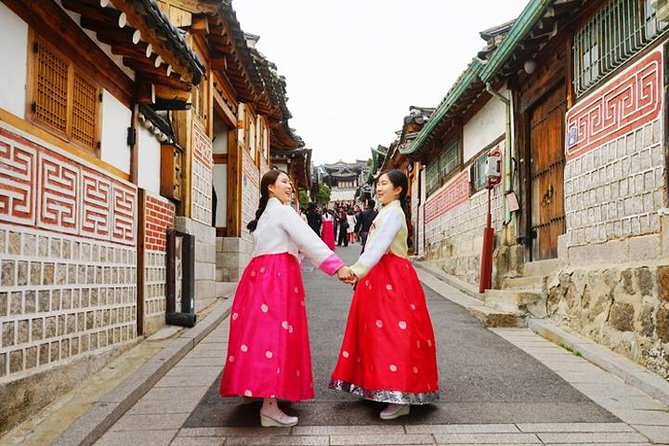
Then it turns into neighborhood texture: Bukchon Hanok Village is included as a traditional hanok area where houses are tightly packed. It’s the kind of place where the “value” is in wandering slowly, but the tour format likely keeps it to a set time.
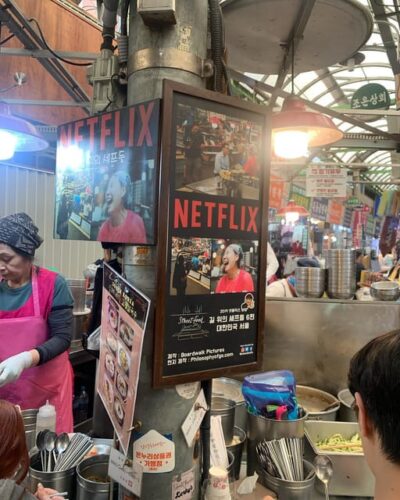
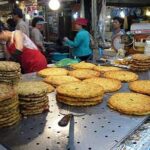
Next is Gwangjang Market, positioned as the food tour location. Since this is a planned food experience, it’s useful when you don’t want to guess what to eat and what’s worth your time.
After that, you get N Seoul Tower for a 360-degree view. The tour notes the tower height and total height context (almost 480m above sea level including Namsan Mountain). It’s a classic viewpoint, but it’s also a great way to understand Seoul’s shape in one glance.
You finish with Myeongdong shopping street and Insadong, which is framed as an area for art, antiques, tea cafes, traditional sweets, and souvenir shopping. This gives you a nice mix: modern retail energy plus older-style craft and snack browsing.
Possible consideration: walking adds up across palaces, hanok lanes, markets, and shopping streets. Bring comfortable shoes. If you want to buy souvenirs, set aside a small budget early so you’re not making decisions at the last minute.
DMZ day: passports, the Third Tunnel, Dora Observatory, and a short bridge hike
Day 7 is the tour’s emotional curveball: the DMZ.
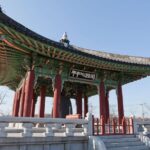
You begin at Imjingak Pyeonghoa-Nuri Park. This is where you stop to buy DMZ shuttle bus tickets. The tour notes a key detail: you’ll need your passport because there’s an ID check point since you’re entering the civilian control zone.
You then visit the Third Tunnel, described as the first stop of the DMZ tour. The tunnel is said to have been dug by North Korea after the Korean War, and you can enter the tunnel itself. After that, you go to Dora Observatory, described as one of the northernmost observatories open to the public where you can see North Korea with your naked eyes.
Then comes Tongilchonan-gil, the last DMZ stop that feels like a village-market area for souvenirs and local products. It’s also described as being under curfew in the civilian control zone—so time matters and you shouldn’t plan to take it slow here.
The day wraps with Gamaksan Chulleong Bridge, described as a former Korean War battle field now turned into a nature stop. You get a short nature walk and suspension bridge view (about 10 minutes of hiking listed) plus scenery.
My advice: keep your passport on you in an easy-to-access spot. DMZ days run on rules, not vibes.
Price and what you get for $1,988 per person
At $1,988 per person, this isn’t a cheap tour. But it’s also not just a seat on a bus.
What you’re getting that usually costs extra if you DIY:
- Domestic flight and KTX bullet train included
- 6 nights in 3–4 star hotels described as clean and in good condition
- Entrance fees included for the listed stops
- An English-speaking guide plus an AC vehicle to move you between sights
- Meals: breakfast included (4 mornings) and lunch included (7 lunches)
- A cooking class included
- A food tour at Gwangjang Market included
And you have a built-in flexibility advantage: the itinerary is stated as flexible because it’s a private tour. That doesn’t mean unlimited wandering. It means if timing shifts, the guide can adjust within reason.
What’s not included (based on provided info):
- Personal expenses
- Dinner isn’t clearly listed as included across the board
- Nanta theater is optional and has listed ticket prices
Value verdict: if you’d otherwise spend time booking flights, figuring out KTX timing, and paying for individual guides/entrance tickets, this package becomes more reasonable. If you already love planning, don’t mind logistics, and travel slow, DIY might cost less. But it will take more work.
Hotels, free time, and how to avoid burnout
The package includes 6 nights in 3–4 star hotels that are described as clean and neat. This matters because after long day legs—Jeju viewpoints, Busan markets, and Seoul walking—your sleep quality affects everything the next day.
You also get built-in breathing space after the main tour: the summary says you can have some free time in Seoul after day 7’s itinerary. Use that for rest first, shopping second, and one final meal you pick yourself.
If you want to make the whole trip feel more relaxing: use mornings for the big sights and save evenings for low-effort things like casual food browsing around where you’re staying.
Guide experience and small-group reality (who might be part of your trip)
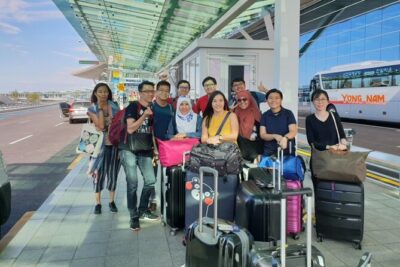
This is an English-speaking guided setup with a group cap of 15. The tour description also notes that it’s a private tour and flexible. That’s what you want if you prefer a guide who can answer questions and keep the day on track.
Past feedback names multiple guides across segments—Jung, Jiyoung, Sang, Harry, Jones, and Clover. One recurring theme in the feedback is that guides bring both historical context and current-day Korea context, including politics and pop culture.
Practical tip: if you have any fear about train stations or connections, ask early. One group expressed that they wished they’d asked for help with the final train leg. You’ll feel better if you confirm the exact route and platform guidance before you step into the station.
Should you book this Korea package?
Book it if you:
- Want major South Korea highlights in 7 days without building your own route
- Like the idea of a guide handling the transport chain (including KTX and domestic flights)
- Care about food experiences like Gwangjang Market and a hands-on cooking class
- Are okay with a schedule that moves briskly between stops
Skip it (or at least think twice) if you:
- Want lots of unstructured time every day
- Hate tight pacing and lots of walking
- Prefer to pick your own hotels and dining with zero guidance
If you’re the type who likes getting oriented fast and then using free time to wander at your own pace, this package fits well.
FAQ
How big is the group?
This tour has a maximum of 15 travelers.
Where does the tour start, and is airport pickup included?
The tour starts from Gimpo airport, and on the first day you’re met with airport pickup by a driver after arrival at ICN in the morning.
What transport is included during the trip?
Domestic flight and KTX bullet train are included, plus an AC tour vehicle for transfers during the day.
Which meals are included?
Breakfast is included (4 breakfasts) and lunch is included (7 lunches). Dinner is not clearly listed as included across the entire program, so you’ll want to confirm the exact itinerary.
Is there compulsory shopping on this tour?
No compulsory shopping is part of the tour design.
What does the cooking class include?
The cooking class includes three Korean dishes: bibimbab, traditional pancake, and soup. The menu can change depending on season.
Is the Nanta show included?
Nanta theater is optional. You can ask to skip it, and ticket prices are listed by seat type.
Is there a vegetarian option?
Yes, a vegetarian option is available if you advise at the time of booking.
Do I need my passport for the DMZ?
Yes. You need passports since there’s an ID check point entering the civilian control zone.
What is the cancellation policy?
This experience is non-refundable and cannot be changed for any reason.
If you tell me your travel month (and whether you’re visiting around cherry blossom season), I can help you judge which days will feel most “worth it” and what to prioritize if you want extra downtime.