REVIEW · SEOUL
(Closed) Korea’s White House Walking Tour Blue House
Book on Viator →Operated by Epic Korea Days · Bookable on Viator
Seoul’s most controlled address now has guided access. On this Blue House (Cheong Wa Dae) walking tour, I love the reserved entrance and the way an English licensed guide turns architecture, politics, and culture into a clear story while you walk the grounds. With only a maximum group size of 9 and access during the window before public entry ends in June, it feels like you’re seeing something that won’t stay open forever.
One thing to keep in mind: this is a straight walking experience with no hotel pickup, so you need to be at Gyeongbokgung Station by 10:00 am and handle your own transit timing.
In This Review
- Why the Blue House Walking Tour Feels Like a Once-Per-Season Chance
- Price and What You’re Actually Paying For at $199
- Meeting at Gyeongbokgung Station: Timing, Transit, and Pace
- Stop 1: Yeongbingwan and the Diplomatic Side of Cheong Wa Dae
- Stop 2 and 3: The Blue Roof Symbol and the Old Presidential Office
- Stop 4: The President’s Residence Area (Privacy by Design)
- Stop 5: Chimnyugak House and the Pavilion Break in the Walk
- Stop 6: Sangchunjae and Why the Traditional Buildings Were for Special Moments
- Stop 7: Chunchugwan and the Former Press Center
- The Guide Makes the Blue House Understandable: Jungho’s Role
- What This Tour Is Best For (and Who Might Want Something Different)
- My Booking Checklist Before You Commit
- Should You Book Korea’s White House Walking Tour (Blue House)?
- FAQ
- What is the duration of the Blue House walking tour?
- How much does the tour cost?
- How many people are on the tour?
- Where do I meet, and when does it start?
- Is hotel pickup included?
- Do I need to buy admission tickets?
- Can I cancel for a refund?
Why the Blue House Walking Tour Feels Like a Once-Per-Season Chance
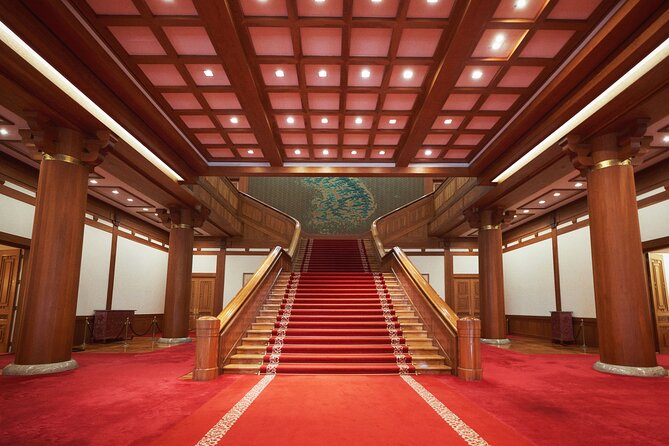
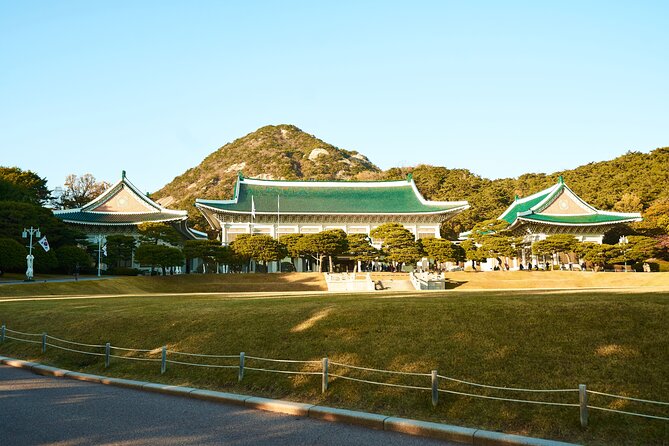
The Blue House is Korea’s presidential residence and office, known for decades as a place you couldn’t just wander into. For a long time, only specially invited people were able to enter—world leaders, Olympic medalists, major K-pop performers, and executives from big Korean companies. Now, that controlled access has reopened, but it’s not permanent, and the tour is designed to give you a smart way to visit before public access ends in June.
What I like about this format is that it’s not just photo stops. It’s a guided walk through the parts of Cheong Wa Dae that helped shape high-level diplomacy, formal announcements, and even private moments for the president’s family. You’re also not doing it in a huge crowd. A maximum of 9 people means you can actually hear the guide and ask practical questions, which matters a lot for a site this political and this symbolic.
A visit to the Blue House is also a lesson in how a government uses space: modern buildings sit next to traditional architecture, work zones sit apart from family areas, and ceremonial guest areas look different from press and public communication areas.
Price and What You’re Actually Paying For at $199
At $199 per person, this tour isn’t the cheapest thing you can do in Seoul. But the value is in the combination of access + storytelling.
Here’s what your money covers:
- Reserved entrance to Korea’s White House (Cheong Wa Dae)
- A licensed English-speaking guide
- Ticketed site access for the stops (admission is listed as free for each stop)
The practical trade-off is that you don’t get hotel pickup or drop-off. You’re meeting at a transit hub, and the tour ends back there. That can be a good deal if you’re already planning to move around the city by subway anyway.
For $199, I see this as paying for time with a guide who can connect what you’re seeing—blue-roof symbolism, guest reception spaces, former office areas, residence areas, and press facilities—into a coherent picture. If you’re the type who gets more out of explanations than out of long lines, this is a strong use of your Seoul day.
You can also read our reviews of more walking tours in Seoul
Meeting at Gyeongbokgung Station: Timing, Transit, and Pace
The tour starts at Gyeongbokgung Station at 10:00 am and ends back at the meeting point. Duration is about 2 hours 30 minutes. It’s designed as a walking tour, so you’ll want comfortable shoes and a calm plan for arriving a bit early.
Because there’s no hotel pickup, I recommend you pick the subway route you’ll use before tour day. Don’t wait until you’re hungry, tired, or already late. This site visit happens on a tight schedule, and your guide’s job is to keep the group moving between the specific areas you’ll visit.
The other reason to arrive on time: with only 9 people in the group, the tour flow depends on everyone being present. Once you’re inside the program rhythm, each stop stays relatively short, and those minutes add up.
Service animals are allowed, and the tour is marked as suitable for most people. If you need extra pacing, it’s best to tell your guide early so they can manage the stops with you.
Stop 1: Yeongbingwan and the Diplomatic Side of Cheong Wa Dae
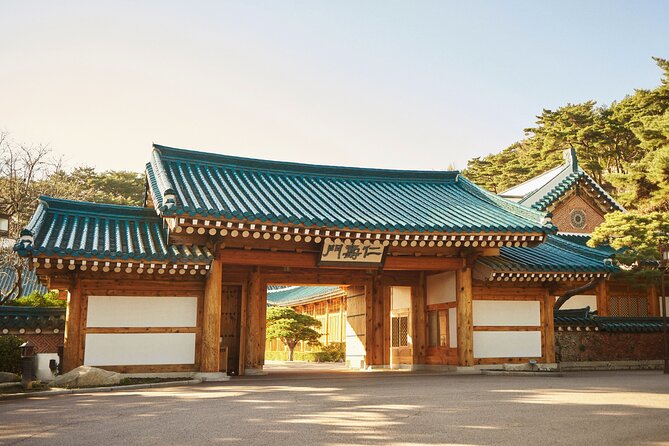
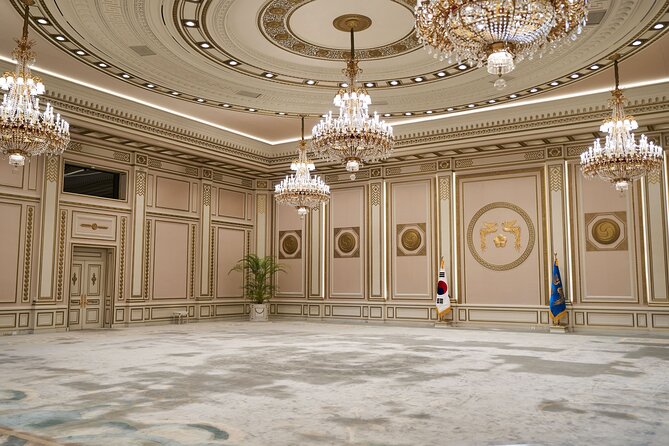
Your first stop is Cheong Wa Dae Yeongbingwan. This building was used to welcome important guests from other countries. In practice, that means it connects directly to diplomacy: presidents met foreign leaders here, and formal dinners or meetings took place inside.
Even if you’ve visited plenty of palaces in Seoul, this is a different kind of power architecture. Yeongbingwan is described as having a modern look, yet it sits in the same presidential complex as traditional structures later on the walk. That contrast is the point. Korea’s leadership spaces aren’t just about tradition or just about modernity—they’re about function and message.
What to watch for at Yeongbingwan:
- How the building’s role as a welcome space shapes its layout and atmosphere
- The way your guide frames it as a stage for high-stakes meetings, not just a pretty landmark
A possible drawback here is also the nature of the tour: each stop is short. If you want to linger and take lots of angles, you might find yourself moving on quickly. The flip side is you’ll see more of the overall complex instead of getting stuck at one location.
Stop 2 and 3: The Blue Roof Symbol and the Old Presidential Office
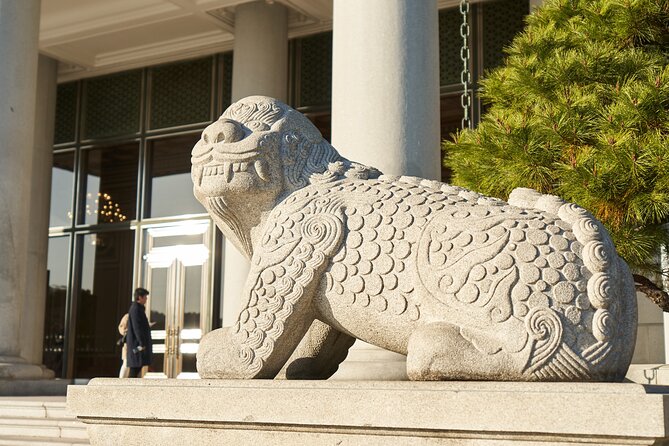
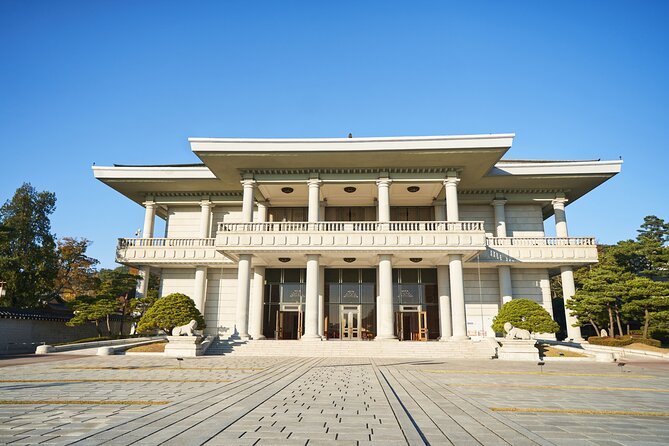
Next you move to the core presidential areas, starting with the Blue House (Cheong Wa Dae). This is described as the main building where the president worked, and where important meetings happened. The blue roof is specifically called out as a symbol of the Korean government, so it’s worth slowing down your photos for a moment and letting your guide explain why that symbol matters.
From there, you also visit The Blue House (Cheong Wa Dae) area connected to the earlier office space. This is where the old main office stood before the current main building was built. The tour frames it as a key place where Korean presidents worked and held important meetings in the modern era.
Why these two stops matter together:
- You see how the government’s leadership spaces evolved
- You get a before-and-after feel rather than a single static snapshot
I like how this pairing helps you avoid a common mistake when visiting places like this: treating them like museum pieces. Instead, you understand them as working spaces that changed over time, shaped by real administrative needs.
Stop 4: The President’s Residence Area (Privacy by Design)
Stop 4 is where things get more human. You’ll visit the area where the president and their family lived—separate from the office to give privacy. The setting is described as quiet and surrounded by trees, which is a big contrast from the formal meeting energy of the earlier stops.
This stop is valuable if you care about how buildings support daily life and not only official business. The tour description points out that inside there are bedrooms and other spaces used by the family. You’re not seeing a show-home. You’re seeing how separation and privacy were built into the layout.
What you’ll likely notice:
- A calmer pace compared to the office-focused areas
- How the grounds blend usable living space with controlled presidential security
A consideration: because the residence area is tied to privacy, your on-site time may feel more restrained than at some public sites. That doesn’t make it less interesting—it just means the experience is about context, not comfort.


Stop 5: Chimnyugak House and the Pavilion Break in the Walk
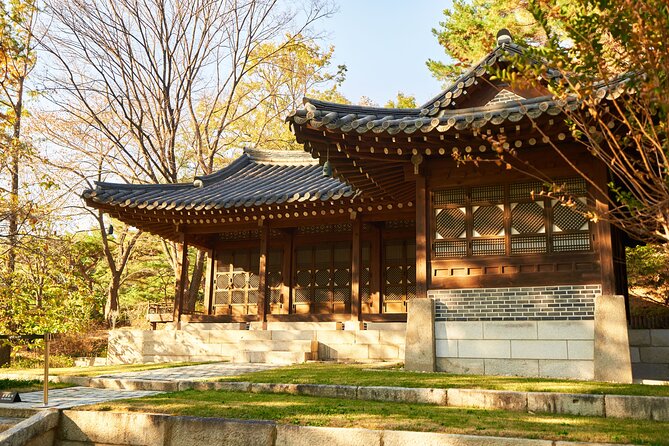
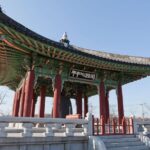
Then you shift tone with Chimnyugak House. This is described as a small traditional pavilion surrounded by trees, where you get a peaceful break while your guide explains architecture and history.
This is one of the smartest parts of the itinerary. After you’ve been focused on offices, meetings, and press-style communication spaces, you need a mental reset. A pavilion stop does that while still staying inside the Cheong Wa Dae story.
What I like about this stop is the pacing benefit:
- You get a short pause without dropping the theme of the day
- You can re-center and absorb what you learned about how the complex mixes modern governance with traditional design
The pavilion setting also makes it easier to take photos that aren’t all dominated by buildings. You’ll get at least one “quiet Seoul” image that still belongs to the presidential grounds.
Stop 6: Sangchunjae and Why the Traditional Buildings Were for Special Moments
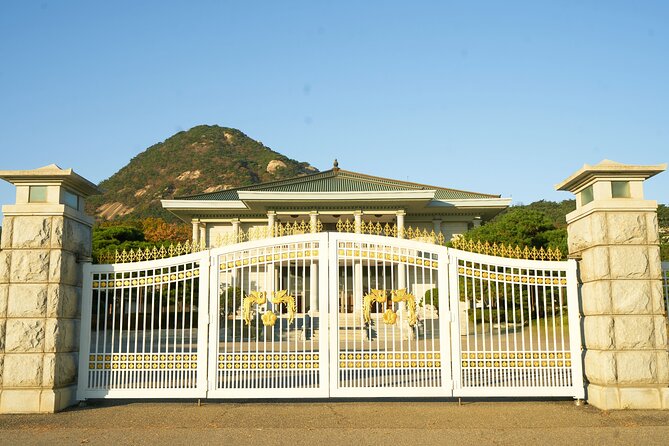
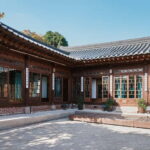
Stop 6 is Sangchunjae, described as one of the most beautiful traditional buildings on the Blue House grounds. You’ll learn how it was used for special guests and quiet meetings, with a look at its wooden structure.
This stop is where the complex’s design language becomes clearer. Traditional wooden buildings aren’t random decoration inside a presidential compound. They served a particular role: hosting important people and creating a calmer setting for conversation.
If you care about architecture, this is the moment where your guide’s explanations can make the building feel more legible. Pay attention to:
- How the structure supports a slower, more intimate type of meeting
- How traditional design fits next to modern government spaces rather than replacing them
Stop 7: Chunchugwan and the Former Press Center
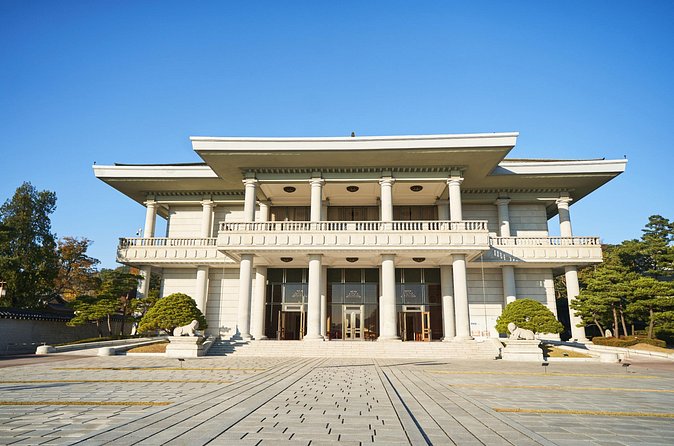
The final stop is Chunchugwan, the former press center where official announcements were made. Reporters from Korea and around the world came here to hear the president speak.
This is the stop that ties the Blue House to media and public communication. It’s also a reminder that presidential power isn’t only about rooms where decisions happen. It’s also about how those decisions get shared to the public.
Why this works well at the end:
- By the time you reach Chunchugwan, you’ve already seen office work, residence privacy, and guest-reception spaces
- You can interpret the press center as the final link in the chain between leadership actions and public knowledge
Because the stop is listed as shorter, you’ll want to listen closely and let the guide connect the dot between the presidential office side and the announcement side.
The Guide Makes the Blue House Understandable: Jungho’s Role
The site can feel intimidating if you show up with only curiosity and no context. That’s where the English-speaking licensed guide matters. In this experience, guides like Jungho have been highlighted for turning the buildings into a story you can actually follow.
In particular, Jungho has been noted for clear instructions on where to meet and a walking style that keeps everyone oriented through the grounds. People also describe his command of the historical meaning behind the buildings and the way he answers questions in a conversational, easy way. That matters at Cheong Wa Dae, where the details are political, symbolic, and layered.
If you like learning through explanations that connect to real life, you’ll probably feel like the time passes fast because you’re not just walking—you’re understanding.
What This Tour Is Best For (and Who Might Want Something Different)
This is a great fit if:
- You want access to Cheong Wa Dae with reserved entry instead of only viewing from the outside
- You enjoy context: how politics, culture, and architecture fit together
- You prefer a small group of up to 9 instead of being packed into a big crowd
- You’re happy meeting at a subway station and walking for about 2.5 hours
You might want to consider a different type of Seoul outing if:
- You hate structured tours with time limits at each stop
- You want a long, slow stroll with minimal talking
- You need hotel pickup as part of your daily routine
For many people, this lands in that rare sweet spot: meaningful and practical.
My Booking Checklist Before You Commit
If you’re deciding between plans, here’s the simple checklist I’d use:
- You can reach Gyeongbokgung Station by 10:00 am without stress
- You’re okay with a walk-based tour and short stops at multiple buildings
- You value a guide who explains symbolism, not just a list of sights
- You want to visit during the limited window before public access ends in June
And one more tip: plan your rest of the day around how the tour ends back at the meeting point. Since there’s no drop-off, you’ll likely continue your Seoul day from that area rather than from your hotel.
Should You Book Korea’s White House Walking Tour (Blue House)?
Yes, if your goal is to understand what you’re seeing at Cheong Wa Dae, not just capture it on your camera roll. The reserved access, the small group size of 9, the English guide, and the stop-by-stop focus on office work, family privacy, reception spaces, and press announcements make this feel like real value.
The main reason to hesitate is practical, not emotional: no hotel pickup and a walking schedule that requires you to show up on time at Gyeongbokgung Station. If that part works for you, this tour is one of the most meaningful Seoul experiences you can slot into a short trip.
FAQ
What is the duration of the Blue House walking tour?
The tour lasts about 2 hours 30 minutes.
How much does the tour cost?
It costs $199.00 per person.
How many people are on the tour?
The group size is limited to a maximum of 9 travelers.
Where do I meet, and when does it start?
You meet at Gyeongbokgung Station in Seoul, South Korea, with a start time of 10:00 am. The tour ends back at the meeting point.
Is hotel pickup included?
No. Hotel pick-up and drop-off are not included.
Do I need to buy admission tickets?
No. Admission tickets for the listed stops are free and reserved entrance is included.
Can I cancel for a refund?
Yes. Cancellation is free up to 24 hours in advance for a full refund. If you cancel less than 24 hours before the start time, the amount paid is not refunded.