REVIEW · SEOUL
DIY Seoul Private Tour: Select 4 places you want to go
Book on Viator →Operated by PLK TRAVEL · Bookable on Viator
Four stops, total control of your day. This DIY Seoul private tour lets you pick exactly what you want to see, then build a smooth day around it with a private driver-guide and comfortable air-conditioned transport.
What I like most is the freedom: you’re not stuck in a fixed parade of sights. And the guide angle matters, too. Guides such as Joseph Hwang and John have been praised for clear English and for keeping things flexible when plans change on the fly.
One consideration: you only get 4 sightseeing choices in an 8–9 hour window, so you’ll want to pick places that match your pace. Also, lunch isn’t included, so budget time and money for a meal break.
In This Review
- Key tour takeaways
- How this DIY Seoul Private Tour Works (without the group stress)
- Price and value: what you’re really paying for
- Picking your four stops: a smart way to decide
- Palace power: Gyeongbokgung, Changdeokgung, Changgyeonggung
- Old Seoul texture: Bukchon, Ikseon-dong, Insadong
- Trendy streets and classic eating: Itaewon and Garosu-gil
- City design day: DDP and COEX/Starfield malls
- Shopping and street energy: Myeongdong and The Hyundai Seoul
- Parks and water: Yeouido Hangang Park, Seoul Forest, Cheonggyecheon
- Museums and temples: where the guide really helps
- Markets for food stops: Gwangjang and Mangwon
- Meeting your driver-guide: English, timing, and small problem solving
- What you should budget beyond the tour
- Should you book this DIY Seoul Private Tour?
- FAQ
- How many places can I choose on this DIY Seoul Private Tour?
- How long is the tour?
- Is pickup included?
- What does the price include?
- Are admission tickets included?
- Is lunch included?
- Is this a private tour?
- When should I book?
- What’s the cancellation policy?
- Does the tour depend on weather?
Key tour takeaways
- Pick four places you actually care about, from palaces to markets to streams
- Private, air-conditioned ride with a driver-guide handling the flow
- Admission tickets included for designated stops, while many others are listed as free
- Good for first-timers and families who want guidance without a big group
- Guides can help with practical details, from timing to what to do next
How this DIY Seoul Private Tour Works (without the group stress)
This is a private, custom day in Seoul built around your choices. You select four destinations, and then your driver-guide stitches them together into one plan. The goal is simple: get you from A to B efficiently, while still letting you choose the parts of the city that fit your mood.
The vehicle is private and air-conditioned, which sounds basic until you remember how much Seoul heat and crowd pressure can drain a day. With a single car and a guide doing the coordination, you can move faster between neighborhoods than you would on your own—especially if you’re juggling multiple metro lines, transfers, or just recovering from jet lag.
You’re also not signing up for a rigid script. This format works best when you’re specific about your priorities: palaces and temples, markets and food, trendy streets, or scenic breaks. If you’re the type who likes to wander once you arrive somewhere, this tour gives you a structure for the travel parts and space for the walking parts.
You can also read our reviews of more private tours in Seoul
Price and value: what you’re really paying for
The price is $183.00 per person for 8 to 9 hours. You also have a practical reason to like the pricing model: it bundles private transportation plus a driver-guide, and then covers admission tickets for whatever stops are designated as included.
Many Seoul highlights on the list are marked as free entry. That means you can build a great day without stacking paid tickets at every stop. But you also have options where admissions are included—like Gyeongbokgung Palace, Changdeokgung Palace, Changgyeonggung Palace, and the Seoul Botanical Garden—so your day can include major cultural anchors without extra hassles.
Group discounts are mentioned, and pickup is offered. That’s a helpful combo because private tours can get pricey fast once you add transfers and separate admissions. Here, you’re paying once, then letting the tour handle the big moving parts.
Your main extra costs are the usual ones: lunch and personal insurance (not included). If you plan your four stops with some variety—one big paid sight plus three lighter stops—you’ll feel the value most.
Picking your four stops: a smart way to decide
You can choose from a long list of possible stops, including Itaewon, Garosu-gil, Gyeongbokgung Palace, Changdeokgung Palace, Changgyeonggung Palace, Yeouido Hangang Park, Seoul Forest, Seoul Botanical Garden, Cheonggyecheon Stream, Bukchon Hanok Village, Ikseon-dong Hanok Street, Insadong, DDP (Dongdaemun Design Plaza), Starfield COEX Mall, The Hyundai Seoul, Myeongdong, Seoul Museum of Art, War Memorial of Korea, National Museum of Korea, Jogyesa Temple, Bongeunsa Temple, Gwangjang Market, Mangwon Market, and more.
To make the day feel balanced, I’d pick based on three categories:
- One anchor that’s “I came to Seoul for this”
- One neighborhood where you can snack and stroll
- One pause point for photos, views, or a calmer pace
Most stops are set at roughly 50 minutes to 1 hour, except for palaces that get more time like Gyeongbokgung Palace (about 1 hour 30 minutes). That means you’ll have less room than you think for a big walking day inside a single area. If you choose a very spread-out neighborhood, decide where you want to focus so you don’t burn your only hour wandering.
Palace power: Gyeongbokgung, Changdeokgung, Changgyeonggung
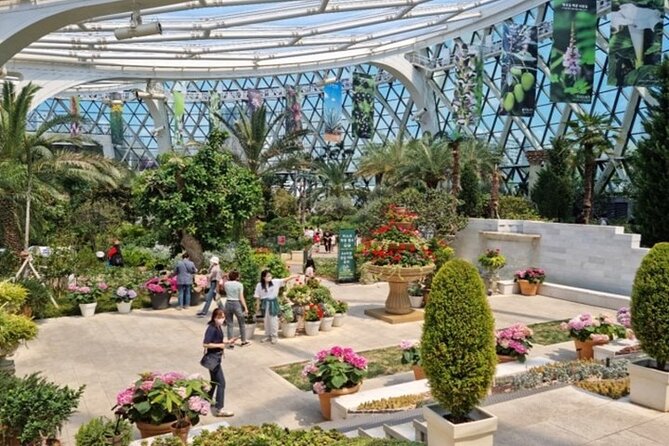
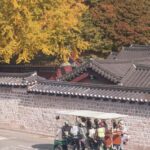
If you want Seoul’s most iconic sight picture, choose a palace. Gyeongbokgung Palace is described as the main palace of the Joseon Dynasty, and it’s located in the heart of Seoul. It’s your best bet for a classic first-palace experience, and it’s allotted more time (about 1 hour 30 minutes), which helps you slow down.
Changdeokgung Palace is noted as a UNESCO World Cultural Heritage site (recognized in December 1997). This is a good pick if you like the feeling of a palace that doesn’t read as just one big courtyard. With a shorter stop length (about 1 hour), you’ll still get the overall sense without feeling locked into a long museum-style timeline.
Changgyeonggung Palace is described as originally built as Suganggung Palace for King Sejong’s retiring father, King Taejong, and it often served residential purposes. Even if your time is limited, this is a great way to compare how different Joseon-era palace spaces feel.
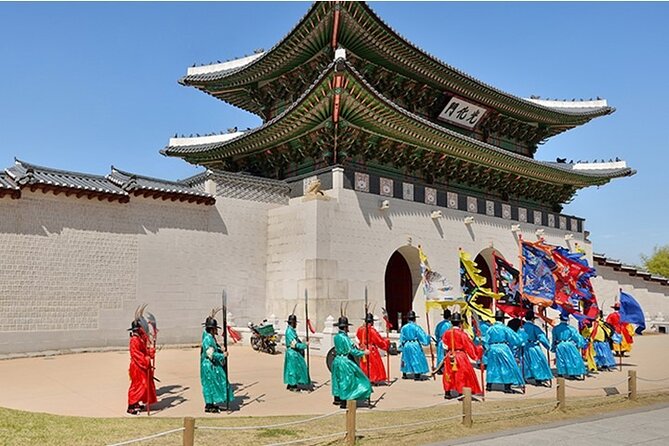
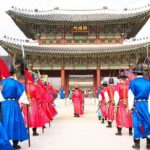
What to watch for: palaces and ceremonies can mean lines and crowd flow. A driver-guide can help you time your arrival and position you where you’ll have a better chance to see what you came for. In practice, some guides have helped guests line up for the changing of the guard experience at the palace, and that can make a huge difference in how the moment feels.
Old Seoul texture: Bukchon, Ikseon-dong, Insadong
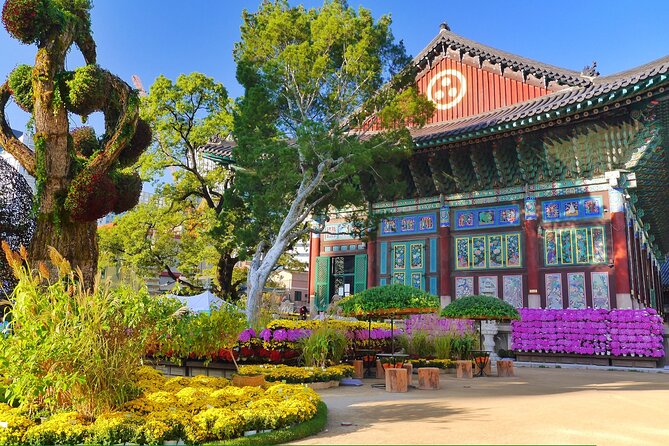
If you want the “Seoul looks like it has a past” side of the city, these stops deliver.
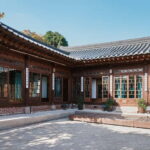
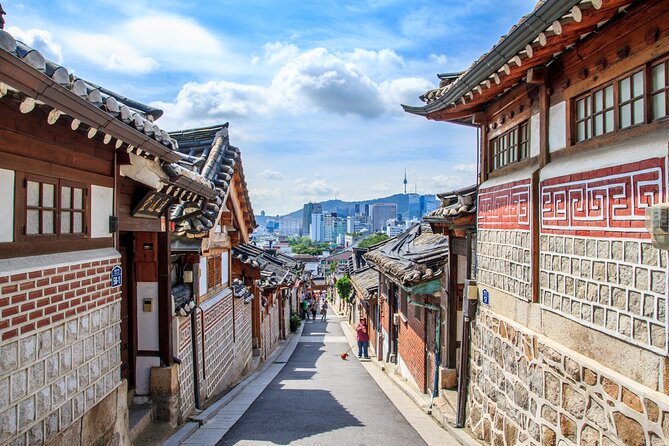
Bukchon Hanok Village sits right between major historic anchors like Gyeongbokgung Palace, Changdeokgung Palace, and Jongmyo Shrine. It’s described as home to hundreds of traditional houses called hanok dating back to the Joseon dynasty. This is one of those places where your best photos usually come from slow walking through alleys, not sprinting between viewpoints.
Ikseon-dong Hanok Street is described as a trendy, popular area mixing modern and traditional elements, with alleyways lined with unique shops. It’s a nice choice if you want hanok atmosphere but also want cafés and street life.
Insadong focuses on galleries, traditional restaurants, teahouses, and cafés tucked into twisting alleys. It’s a practical pick if you want to browse, stop for tea, and soak up a more arts-and-crafts vibe without a long museum visit.
Possible drawback: with only four stops total and each stop typically around an hour, you may not cover as much of these areas as you imagine. Bukchon, for instance, can feel large; if you want more than a surface view, tell your guide what you care about most—views, architecture, photo spots, or shopping—so you don’t waste your limited time.


Trendy streets and classic eating: Itaewon and Garosu-gil
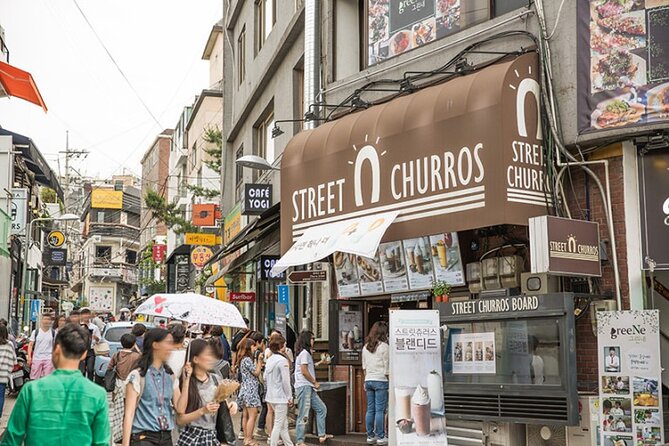
Two stops that often work well early or late in the day are Itaewon and Garosu-gil.
Itaewon is described as having trendiest streets like Gyeongnidan-gil, with a mix of cultures from around the globe and international residents influencing the area early on. This makes it a fun choice if you want a Seoul neighborhood that feels cosmopolitan and easy to explore on foot.
Garosu-gil (also tied to Sinsadong) is presented as an upscale street often called artists’ street, with decorated coffee shops and designer stores. It’s a great option if you like strolling streets, popping into cafés, and looking at modern Korean fashion and design.
The practical upside of choosing these for your remaining two slots: they’re built for walking. You can take your time and still keep the day on schedule because the stops themselves aren’t usually “one big timed ticket event.”
City design day: DDP and COEX/Starfield malls
If you prefer Seoul’s modern side—architecture, exhibitions, and shopping—this is where you can lean in.
Dongdaemun Design Plaza (DDP) is described as hosting exhibitions, fashion shows, forums, and events, and it’s divided into sections named Allimteo, Beaumteo, Sallimteo, and DDP. Even if you don’t plan to go deep into every exhibition, the area works well as a “see the future of Seoul” break.
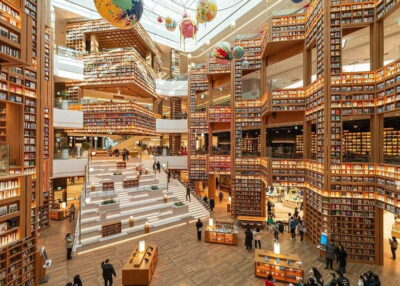
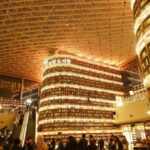
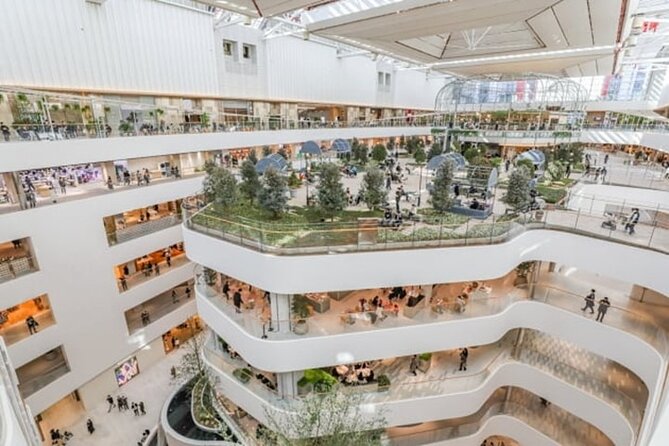
Starfield COEX Mall is described as a central hub for fashion, food, culture, and entertainment, plus the Starfield Library area. If you want a weather-proof block—rain, heat, or just an energy dip—this kind of indoor stop is useful.
One thing to keep in mind: malls can eat time fast. If you choose DDP and COEX on the same day, you might want to set a clear plan with your guide, like “photos first, then one quick browse, then move on.”
Shopping and street energy: Myeongdong and The Hyundai Seoul
Myeongdong is listed as one of Seoul’s primary shopping districts, lined with brand shops and department stores. It’s a strong choice when you want variety in one place: clothes, shoes, and accessories are common shopping targets here.
The Hyundai Seoul is described as opened in Yeouido on February 26, and it highlights designer brands such as Gucci, Prada, Balenciaga, and more. It also mentions an area called Creative Ground on B2 and a first-floor zone with global designer labels.
These are good picks if your goal is to leave Seoul with actual shopping results instead of just browsing. The drawback is the same as any big retail area: the more you shop, the less time you have for palaces, temples, or slower scenery. With this tour’s four-stop limit, choose one shopping-heavy stop unless you’re sure shopping is your priority.
Parks and water: Yeouido Hangang Park, Seoul Forest, Cheonggyecheon
If you want a breather from crowds and want space for photos, pick one of the city’s calmer public areas.
Yeouido Hangang Park is next to the Han River and is described as one of the most frequently visited parks, with events like the Yeouido cherry blossom (noted in the description). It’s a good contrast to palaces and markets.
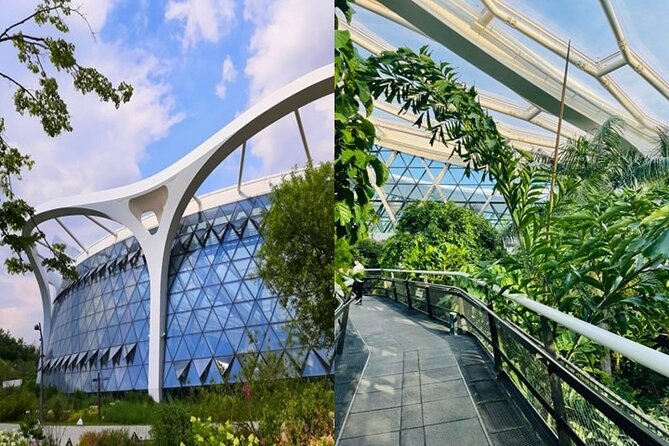
Seoul Forest is described as a beloved park by Seoul citizens, located between Jungnangcheon Stream and the Hangang River. It includes four parts, including a Culture & Art Park and educational-related areas, though the description cuts off before listing everything.
Cheonggyecheon Stream is described as an 11 km-long stream that runs through downtown Seoul, created through an urban renewal project and restored from an earlier stream that once existed there. Even if you don’t walk the entire length, this is a strong “Seoul moves fast, but there’s a calm thread in the center” stop.
In an 8–9 hour day, these breaks help you stay comfortable. You’ll appreciate them if your day includes palace walking plus shopping streets.
Museums and temples: where the guide really helps
This tour list includes several option types that tend to work better when you have an efficient guide. Museums are time investments, and temples are about pacing.
For museums:
- Seoul Museum of Art (SeMA) is described as a 3-story building with six exhibition halls and a lecture hall, plus a public library with art-related books and reference materials.
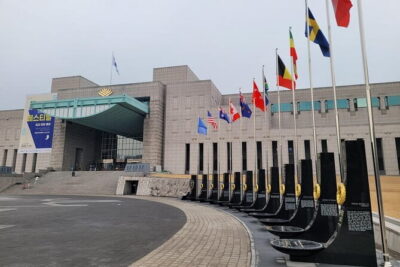
- War Memorial of Korea is described as having been established on June 10, 1994, and it houses approximately 33,000 artifacts.
- National Museum of Korea is described as holding over 420,000 artifacts from ancient to modern times across many topics.
For temples:
- Jogyesa Temple is noted as head temple of the Jogye order, with origins in the late 14th century during the Goryeo period, later destroyed by fire.
- Bongeunsa Temple is in Gangnam, north of COEX, described with construction tied to Silla King Weongseong’s reign (and mentions later refurbishment).
With these stops, the advantage of a driver-guide isn’t speed alone. It’s choosing what to focus on inside the time you have. If you tell the guide what you like—art, modern history, or religious sites—they can steer you toward the right sections so you don’t feel lost.
Markets for food stops: Gwangjang and Mangwon
If you like to eat while you explore, choose a market as your neighborhood anchor.
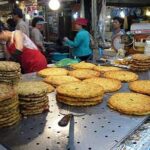
Gwangjang Market is described as the first permanent market in Korea and over 100 years old, still thriving as a popular destination. That’s a strong choice for people who want food-by-stroll energy.
Mangwon Market is described as beloved by young locals with delicious food alleys. It’s a good option if you want something lively but more local-feeling than big shopping streets.
One practical point: lunch isn’t included, and a market stop is one of the most natural ways to solve that. A guide can help you find what to order and where to stand in line, which matters when everything is written for locals and you don’t want to guess.
Meeting your driver-guide: English, timing, and small problem solving
The quality of the guide makes a noticeable difference in how this kind of private tour feels.
In the feedback patterns, guides like Joseph Hwang and John are singled out for strong English and helpful explanations. Others, like Sebastian and Taylor, are praised for being flexible and not rushing. In one example, a guide helped rearrange a day at the last minute to make sure the palace timing worked out well. In another, a guide found a lunch spot for gom tang (ox bone soup) when the plan needed adjusting.
There are also practical details: one guide helped show how to order and pick up food at the COEX food court, and another mentioned help with renting hanbok before entering Gyeongbokgung Palace. You might not need those extras, but it’s reassuring to know the guide role can cover more than just “where to stand for photos.”
What I’d ask your guide early is simple:
- What order makes sense for my four stops?
- Where should we plan lunch?
- If there’s a ceremony or time-based moment, when should we arrive?
That’s how you get the day to feel smooth instead of rushed.
What you should budget beyond the tour
Even though admissions are included for designated stops, you still need to plan for the basics.
Not included:
- Lunch
- Personal travel insurance
- Anything not mentioned in the details
Since each stop is time-limited, you’ll also want to treat meals as scheduled, not accidental. If you pick a palace and a market, it often works well to treat the market as your meal stop. If your four choices are all ticketed or all museum-heavy, plan lunch near your last stop so you’re not zig-zagging across the city to eat.
Also remember this experience requires good weather. If conditions are poor and your date changes, your meal timing will shift too. That’s another reason to pick at least one stop that works well even when the weather isn’t perfect, like COEX or a museum, if your schedule allows.
Should you book this DIY Seoul Private Tour?
Book it if you want Seoul on your terms. This format is ideal when you’re balancing major sights with personal preferences and you don’t want the hassle of planning every transfer. With a private air-conditioned car and a driver-guide, you’ll spend less time figuring out logistics and more time actually enjoying each stop.
Don’t book it if you prefer a packed list of stops or you’re hoping to “hit everything” in one day. Four destinations sounds like a lot, but palaces and neighborhoods take time. If your priority is maximum quantity, you may feel constrained.
If you like getting the big anchors right—palaces like Gyeongbokgung or Changdeokgung, plus one hanok area like Bukchon or Ikseon-dong, plus a food or shopping neighborhood—this tour is a strong fit. You get structure where you need it and flexibility where you want it.
FAQ
How many places can I choose on this DIY Seoul Private Tour?
You choose 4 places for sightseeing. The tour builds the day around those four selections.
How long is the tour?
The duration is 8 to 9 hours (approx.).
Is pickup included?
Pickup is offered.
What does the price include?
It includes private transportation, a driving tour guide, and admission tickets as designated, plus the 4 sightseeing stops.
Are admission tickets included?
Admission tickets are included as designated. Some listed stops are marked as free, while others are marked as included.
Is lunch included?
No. Lunch is not included.
Is this a private tour?
Yes. It’s a private tour/activity, and only your group participates.
When should I book?
It’s described as being booked on average 34 days in advance, so booking earlier is a smart move.
What’s the cancellation policy?
You can cancel for a full refund if you cancel at least 24 hours in advance. If you cancel less than 24 hours before the start time, the amount paid won’t be refunded.
Does the tour depend on weather?
Yes. This experience requires good weather. If it’s canceled due to poor weather, you’ll be offered a different date or a full refund.