REVIEW · SEOUL
Private DMZ the 3rd Tunnel Tour from Seoul (optional Red Bridge)
Book on Viator →Operated by VIP TRAVEL Co.Ltd · Bookable on Viator
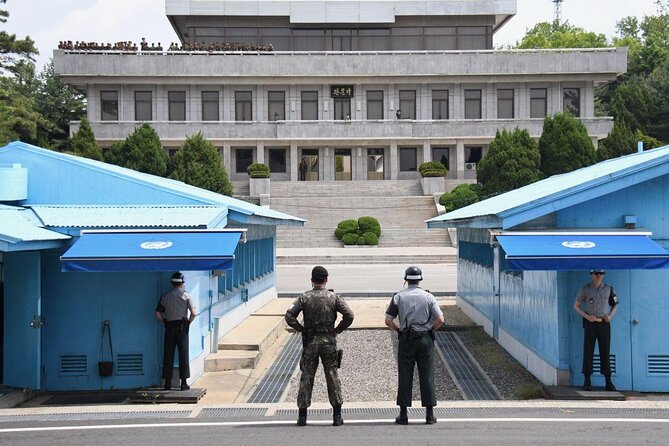
The DMZ feels close from Seoul. A private tour gets you into the Korean Demilitarized Zone with hotel pickup and a dedicated guide who helps you read what you’re seeing. One possible snag: the start time can shift due to military rules, and refunds aren’t available if the day’s order changes.
You’ll move from peace memorials to the Third Tunnel of Aggression and Dora Observatory for a rare look toward North Korea. Guides such as Ray, Alice, Lina (with driver Andy), and Diane often shape the pacing so the war story makes sense, not just shock-value photos.
In This Review
- Key moments that make this tour worth your time
- Why This Private DMZ Tour Feels Like Better Value Than You’d Expect
- Getting From Central Seoul to the DMZ: The Day’s Real Schedule
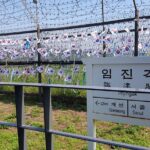
- Imjingak Pyeonghwa Nuri Park: Peace Symbols First, Then the Gravity
- Bridge of Freedom: A Moment of Release With a Heavy Cost
- Mangbaedan Memorial Altar and the River Side Vantage Points
- Jangdan Station’s Steam Locomotive and the Peace Bell: War-Era Reminders, Reunification Promises
- Unification Bridge and the View From the Bus: Where the Future Tries to Look Normal
- The Third Tunnel of Aggression: What It Means to Go Underground
- Dora Observatory at Dorasan: The Closest Official Glimpse Toward North Korea
- Tongilchon-gil: A Quiet Walk Inside the DMZ Boundary Story
- Optional Gamaksan Chulleong Bridge (the Red Bridge): Fun Timing If Your Legs Are Still Ready
- Guides Can Make or Break the DMZ Day: What to Look For
- Logistics You Should Actually Care About Before You Go
- Should You Book This Private DMZ Tour From Seoul?
- FAQ
- FAQ
- How many people are included in the private group?
- Do you get hotel pickup and drop-off in Seoul?
- How long is the DMZ tour from Seoul?
- Do I need a passport for the tour?
- Is lunch included in the price?
- Are there any extra fees besides the tour price?
- What language will the guide speak?
- Is there a dress code for the DMZ?
- Can the start time change on the day of the tour?
Key moments that make this tour worth your time
- Private group up to 6 means you’re not stuck with random pacing or a loud bus group
- Hotel pickup and drop-off in Seoul saves the stress of getting to a DMZ staging point
- Third Tunnel of Aggression is the centerpiece: a 1,635-meter infiltration passage with tight measurements
- Dora Observatory at Dorasan gives your closest official view toward North Korea, with binocular use
- Imjingak Park stops add the human side: prisoner return, reunification symbols, and remembrance sites
- Optional Gamaksan Chulleong Bridge adds extra time if you want a fun photo break on the red suspension span
Why This Private DMZ Tour Feels Like Better Value Than You’d Expect
This is one of those tours where the price looks steep until you do the math. It’s $500 per group (up to 6), so if you fill all six seats you’re effectively splitting the cost (roughly $83 per person). If you’re traveling as a couple, it’s still doable—just know you’re paying for privacy and a dedicated guide.
What makes it feel like value is the structure of the day. You’re not just going for a checkbox photo. You get a professional guide (English or Chinese speaking) and a driver, plus a rhythm of stops that connect the same big theme from different angles: war tactics (the tunnel), surveillance and division (the view points), and family impact (the memorial sites).
You can also read our reviews of more private tours in Seoul
Getting From Central Seoul to the DMZ: The Day’s Real Schedule
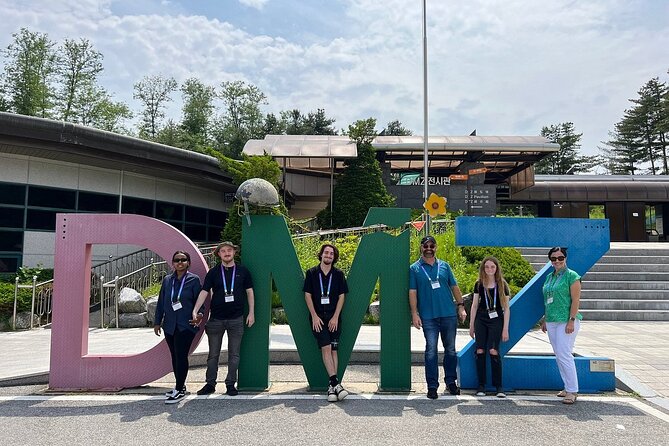
Your day starts with free hotel pickup and drop-off in Seoul (downtown area). If you’d rather not wait for pickup, you can arrange to meet the guide and driver at a nearby subway station.
The tour is about 8 hours total. Still, treat it as flexible. The operator notes that the start time can change due to military guidelines, and the schedule can shift because of military issues or weather. The big practical takeaway: plan your other Seoul activities with a wide buffer before and after, so you’re not rushing.
Inside the DMZ, there’s also an extra step to understand. Since your group may be smaller, you’ll transfer to a group shuttle bus once you’re inside if your group is under 30 people. That’s normal for how access is handled, and it’s one more reason a private guide matters—you’re not left figuring it out on the fly.
Imjingak Pyeonghwa Nuri Park: Peace Symbols First, Then the Gravity
Before you’re in the DMZ zone itself, you get a grounding stop at Imjingak Pyeonghwa Nuri Park. This area was opened in 2005 and is designed as a peace-focused sanctuary near the demilitarized border.
I like this opening because it slows you down. Instead of going straight to fortifications and fences, you start with a place built for reflection. The park is also where you’ll see several key pieces that connect to reunion and the cost of separation—helpful context for what comes later when the day turns sharply more serious.
Expect about 30 minutes here. It’s enough time to walk, read, and not feel like the guide is dragging you to the next photo stop.
Bridge of Freedom: A Moment of Release With a Heavy Cost
Next is the Bridge of Freedom, a temporary wooden span constructed in 1953. It carried 12,773 prisoners of war back toward South Korea, and the story behind it is part of why this stop hits hard.
Even if you don’t memorize every number, the point is clear: the peninsula’s conflict didn’t just freeze in place. People moved. Families changed. Then the line hardened again.
This is a short stop (about 30 minutes), so keep your expectations simple: take in the bridge, listen to the guide’s framing, and use it as a transition into the more direct war artifacts of the DMZ day.
Mangbaedan Memorial Altar and the River Side Vantage Points
After the bridge, you’ll visit Mangbaedan Memorial Altar, set up near the DMZ area and used by families for remembrance, including holiday gatherings like Chuseok. The practical value here is emotional context—why people mark anniversaries when reunification remains complicated.
The time at Mangbaedan is brief (around 10 minutes). That’s fine because you’re not meant to treat it as a museum session. You’re meant to acknowledge what the symbols represent before the tour moves toward the more technical side of the border story.
From there, you’ll look toward the Imjin River Dokgae Bridge, a historic steel structure rebuilt after the Korean War. Even from a distance, the bridge gives you a sense of how geography becomes strategy. This stop is about 15 minutes, and it works best if you pause and let the guide connect the river to earlier battles and the DMZ’s layout.



Jangdan Station’s Steam Locomotive and the Peace Bell: War-Era Reminders, Reunification Promises
Two of the more memorable quick stops in the Imjingak cluster are very different in tone, which is why the sequence works.
At Jangdan Station, you’ll see the Steam Locomotive of the Gyeongui Line. It’s a rusted iron horse preserved since the early years of the Korean War era, and it carries visible bullet-scar history. This is the kind of stop that makes the war feel real, because it’s not a diagram—it’s an artifact.
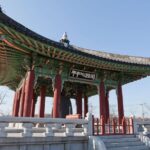
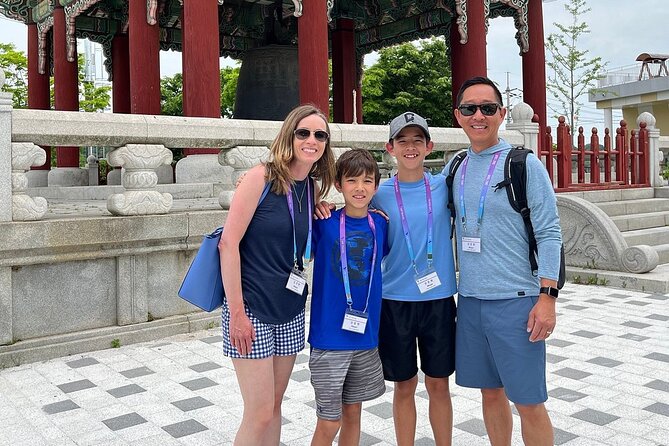
Then comes Pyeonghwauijong, The Peace Bell. It’s a 21-ton bronze bell cast in 2000, built to signal hope for reunification. It’s one of those DMZ-adjacent moments where the story isn’t just about conflict; it’s also about what people keep asking for.
These two are shorter photo-and-walk blocks—around 10 minutes each—but you’ll get more out of them if you keep your questions ready. In private tours, guides like Ray and Diane have a way of making the explanations fit your interests, so if you’re curious about infrastructure, POW history, or reunification efforts, ask early.
Unification Bridge and the View From the Bus: Where the Future Tries to Look Normal
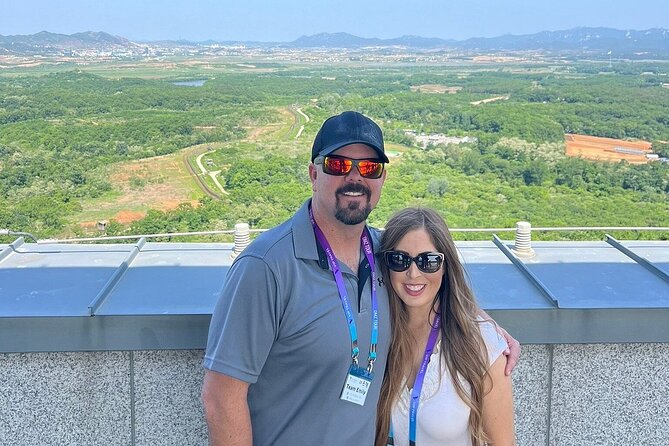
You’ll cross the Unification Bridge, which opened in 1998. It’s the kind of “bridge” stop that sounds simple until you remember it exists because two sides remain separated by design. The tour notes that an admission ticket is included for this stop.
Between the memorials and the tunnel day, the tour also gives you views over the Imjin River from the bus. That matters because you’re not just hearing about the border—you’re seeing it. The river can look calm, even while the region’s story is not. I like this section because it helps you process the day in your own head before you start descending into the tunnel.
The Third Tunnel of Aggression: What It Means to Go Underground

This is the centerpiece: The Third Tunnel of Aggression, also known as the 3rd Infiltration Tunnel. It was discovered in 1978, about 52 km from Seoul, and it’s about 1,635 meters long.
The tunnel is described as roughly 2 meters high and wide. That tight size is a big part of the experience, even if you don’t feel claustrophobic. You’re not walking through a large, cinematic set. You’re moving through a real piece of infiltration engineering that was meant to move people and change the balance quickly.
Plan for about 30 minutes at the tunnel area, with admission included. My advice: bring patience for the queue and the rules once you’re there. Your guide’s job is to keep the technical and historical context clear, so you’re not just going through the motions. In a private setting, you’ll usually have time for follow-up questions, and that’s where the tunnel stops being scary and starts being understandable.
Dora Observatory at Dorasan: The Closest Official Glimpse Toward North Korea
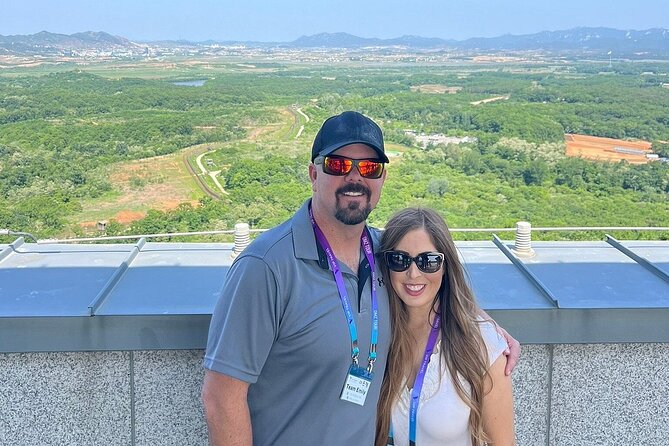
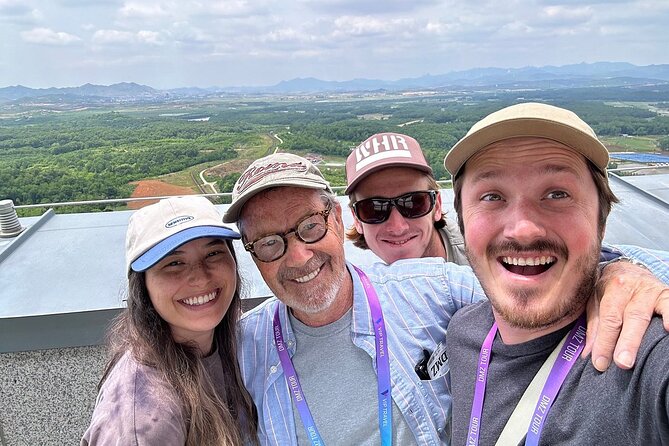
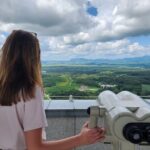
After the tunnel, you head to Dora Observatory, established in 1986 and renovated in 2018. This is the closest official viewing area toward North Korea from the South side, and it’s where your day shifts from war infrastructure to current geography.
Expect about 30 minutes here, with admission included. The tour mentions using binoculars to spot Kijong-dong’s propaganda village and Kaesong City. Even if visibility isn’t perfect, the value is in the guided framing—what you’re seeing, what you’re not allowed to see, and why officials built a viewing point where people can look across but not reach across.
Also, give yourself a moment to read the air. At Dora, the border becomes less theoretical. You’re facing the other side of the peninsula with the reality of separation in front of you.
Tongilchon-gil: A Quiet Walk Inside the DMZ Boundary Story
Next is Tongilchon-gil, a road through Tongilchon village near the DMZ’s Civilian Control Line. This stop is about 30 minutes, and it functions like a palate cleanser after the tunnel and observatory intensity.
The area is described as a serene walking route, and the tour points out fertile farming—specifically Jangdan soybeans. That matters. It’s easy to treat the DMZ as only fences and fear. This stop reminds you life keeps going—just under strict limits.
If you’re traveling with someone who doesn’t love militarized sites, this is often the compromise stop. You still feel like you’re “doing the DMZ,” but you get space to breathe.
Optional Gamaksan Chulleong Bridge (the Red Bridge): Fun Timing If Your Legs Are Still Ready
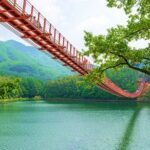
There’s an optional add-on: Gamaksan Chulleong Bridge, a 150-meter-long red suspension bridge built in 2018 to honor Korean War heroes. It’s described as swaying about 30 meters—not enough to scare you into swapping out shoes, but enough to feel like a real bridge experience instead of a flat walkway.
This optional portion is about 1 hour and admission is free. I’d choose it if:
- you want a photo moment that’s not about borders,
- your group has kids or non-history folks,
- you enjoy a light physical break after the tunnel.
If you’re on the fence, remember the tour already runs long, and you still need time to follow access rules.
Guides Can Make or Break the DMZ Day: What to Look For
One of the strongest themes in the overall feedback you’ll see for this tour is guide performance—people praise how the guide answers lots of questions and keeps the day from turning into a rushed lecture.
In particular, the names Ray, Alice, Lina, Diane, and Tom come up with guides who are both informative and good at reading the room. With a private group, that matters. If you’re traveling with kids (or you just don’t want to lose the story thread), ask your guide to slow down and explain the “why” behind each stop, not only the “what.”
Logistics You Should Actually Care About Before You Go
A few practical reminders help you enjoy the day more:
- Bring your passport on tour day. It’s explicitly required.
- There’s no special dress code for the DMZ, but you’ll still want comfortable shoes. You’ll be walking and standing at multiple stops.
- Some attractions show admission ticket included (DMZ, Unification Bridge, Third Tunnel, Dora Observatory). Others are free at the listed stops, and lunch is not included.
- The day can change due to military rules or weather. The operator notes refunds aren’t available if the schedule changes, so keep your other plans flexible.
Should You Book This Private DMZ Tour From Seoul?
If you want the most efficient path through the DMZ day—without splitting your attention across public transport and multiple operators—this private format makes sense. It’s especially good if you care about context. The mix of Imjingak peace sites, Bridge of Freedom, Third Tunnel, and Dora Observatory gives you the full shape of the story: tactics, separation, and the human need for reunion.
Book it if:
- you’re traveling with up to 6 people and want your pace,
- you value a guide who can answer questions,
- you want both technical war history and memorial context.
Skip it (or at least reconsider) if:
- you hate schedule uncertainty and fixed timing,
- you’re expecting a relaxed, casual half-day tour. This runs about 8 hours and you’ll follow access rules.
FAQ
FAQ
How many people are included in the private group?
The tour price is per group up to 6 people. That’s why it works well for families or a small group of friends who want the same guide and car.
Do you get hotel pickup and drop-off in Seoul?
Yes. Free hotel pickup & drop-off in Seoul is included. Pickup is offered in the downtown area.
How long is the DMZ tour from Seoul?
The duration is about 8 hours. The start time and order can shift due to military guidelines or weather.
Do I need a passport for the tour?
Yes. A passport is needed on the tour day, so make sure you bring it with you.
Is lunch included in the price?
No. Lunch is not included in the tour price.
Are there any extra fees besides the tour price?
The tour includes certain admissions, but optional admission fees, parking fees, and toll fees are not included. Your guide can clarify what might apply during your day.
What language will the guide speak?
The guide is English or Chinese speaking, depending on the arrangement for your booking.
Is there a dress code for the DMZ?
There is no special dress code for the DMZ. Comfortable clothing and shoes are still a smart idea for a long day of walking and standing.
Can the start time change on the day of the tour?
Yes. The operator notes that the tour start time may change due to military guidelines, and the schedule can also change due to military issues or weather. Refunds are not available if the schedule changes.