REVIEW · SEOUL
DMZ Tour from Seoul – Optional Suspension Bridge Experience
Book on Viator →Operated by I Love Seoul Tour · Bookable on Viator
The DMZ turns politics into something you can see. This half-day tour takes you from central Seoul into the border region where the Korean War still shapes daily life and the landscape of memory. You’ll visit major sites tied to the dream of unification and the military reality that froze the peninsula into place.
I especially like the tight, efficient route for a half-day window, because you get the big stops without spending your whole day stuck on a bus. I also like that the tour includes both transport and admissions to the tunnel and Dora Observatory, so you’re not doing extra ticket math mid-trip.
One thing to consider: DMZ operations can change on military grounds, and the day can be shortened or rerouted. On top of that, you should expect a longer overall day than you might assume, since pickup timing and traffic can push the return.
In This Review
- Key highlights you should care about
- Why the DMZ Tour from Seoul feels more real than a textbook
- Imjingak Pyeonghoa-Nuri Park: your unification-themed first stop
- Third Tunnel: the engineering of a possible invasion
- Dora Observatory: telescope views depend on the sky
- Dorasan Station closure: why your route may quietly change
- Price and logistics: what $27.50 really buys you
- Guide + group size: how the day stays on track
- The optional pistol shooting add-on: fun, but it’s conditional
- Who should book this DMZ half-day tour
- Should you book this DMZ half-day tour from Seoul?
- FAQ
- Is passport required for the DMZ tour?
- How long is the tour?
- What stops are included?
- Do I get telescope views into North Korea?
- Is lunch included?
- Is pickup from my hotel included?
- Can the tour be canceled?
- Is pistol shooting included?
- Does the tour stop at shopping centers?
- Can I cancel and get a full refund?
Key highlights you should care about
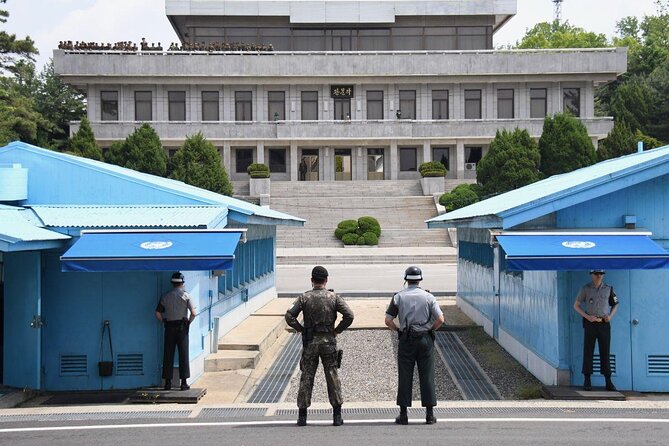
- Imjingak Pyeonghoa-Nuri Park starts the story with memorials and unification-themed spaces
- Third Tunnel gives a rare look at military engineering and how movement was planned
- Dora Observatory can offer telescope views toward North Korea on clear days
- Dorasan Station is a planned stop, but may be closed for military reasons
- Small-group feel (max 40) keeps the day from getting too chaotic
Why the DMZ Tour from Seoul feels more real than a textbook
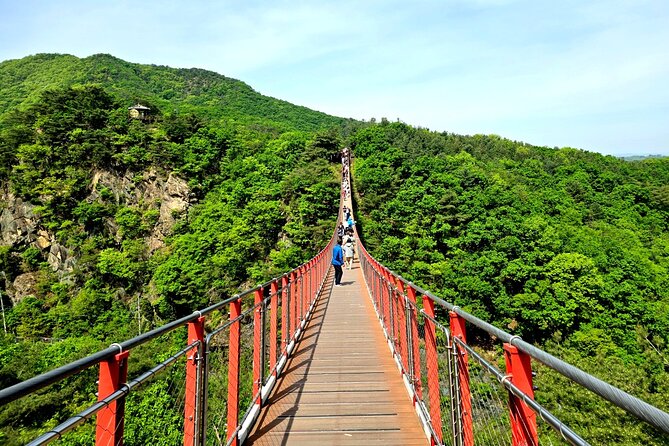
If you’ve read about the Korean War and the divided peninsula, this trip is where the subject becomes physical. You’re not just learning dates. You’re seeing how the DMZ area is organized, memorialized, and controlled.
The tour keeps things structured: you move in one direction, hit the major checkpoints, and finish back in Seoul. That matters because the DMZ is not a place where you’ll want to freestyle your day. Even if you’re comfortable navigating cities, this area runs on tight rules, timing, and military oversight.
Also, I like that this tour avoids the usual tourist detours. It’s aimed at the border story, not shopping. And the group size cap of 40 helps the day stay readable, especially when you’re waiting at controlled sites.
You can also read our reviews of more tours and experiences in Seoul.

Imjingak Pyeonghoa-Nuri Park: your unification-themed first stop
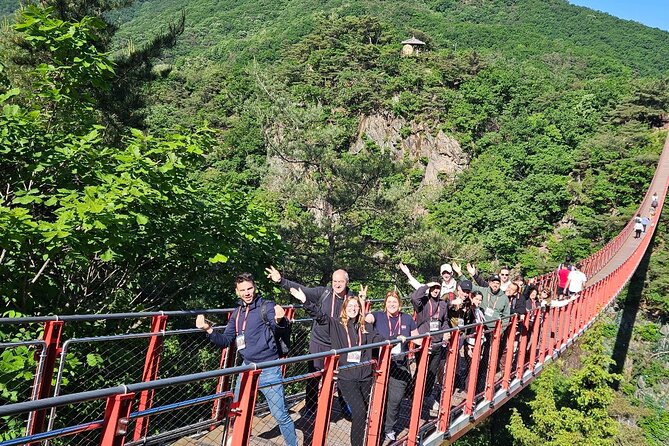
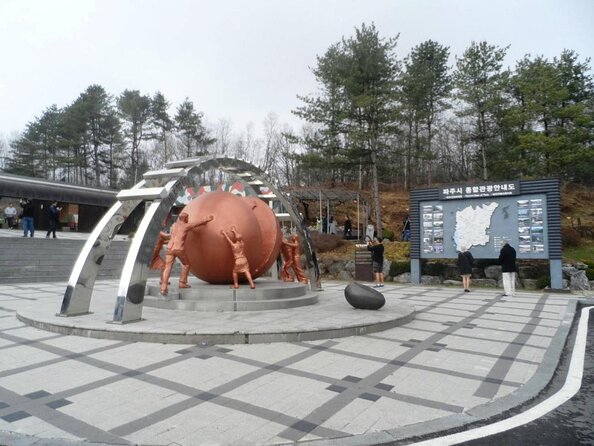
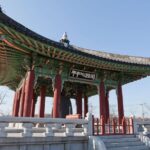
Your day typically begins at Imjingak Pyeonghoa-Nuri Park, about 7 km from the Military Demarcation Line. This is a strong opening because it frames the DMZ not only as a border, but as a site of hope, loss, and reunion possibilities.
Imjingak was built in 1972, with unification in mind. That timeline matters. This isn’t a modern tourist set. It’s a long-standing public space shaped by decades of division.
What you’ll likely see here:
- A three-storied Imjingak area
- Monuments tied to the Korean War and its aftermath
- Unification Park and the North Korea Center
Admission at this stop is listed as free, which is a nice bonus early in the day. And it’s a useful warm-up before you go underground into the Third Tunnel. You’re essentially moving from public memory to military reality.
One practical note: since your itinerary can shift, your time here may still stay early, but don’t assume every detail will match perfectly day to day. Road conditions and government or military decisions can alter what happens.
Third Tunnel: the engineering of a possible invasion
Next comes the stop that most people remember: the Third Tunnel.
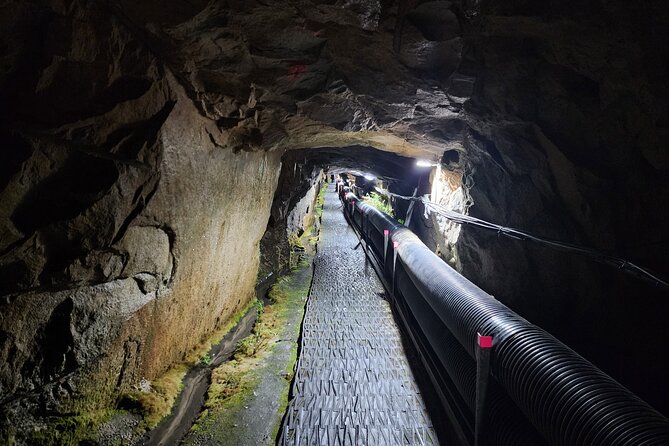
This tunnel was discovered by South Korea in 1978. It runs about 1,635 meters long, with extremely tight dimensions: roughly 2 meters wide and 2 meters high. The scale is hard to picture until you’re facing the idea that thousands of soldiers could have moved through if the situation had called for it.
The tunnel is estimated to allow movement on the order of 30,000 soldiers per hour. Even if you treat that number as a planning estimate rather than a literal guarantee, it’s still chilling. You’re looking at a piece of war planning, built to exploit geography and secrecy.
You get about 40 minutes here, and admission is included. That timing usually works well because the tunnel experience tends to require more attention than a quick photo stop. There’s a reason people describe this as a highlight: it’s sensory and it makes the border feel engineered, not abstract.
If you’re someone who does better with structured pacing, this is where the tour really delivers. The guide keeps it from becoming only an eerie hallway moment.
Dora Observatory: telescope views depend on the sky
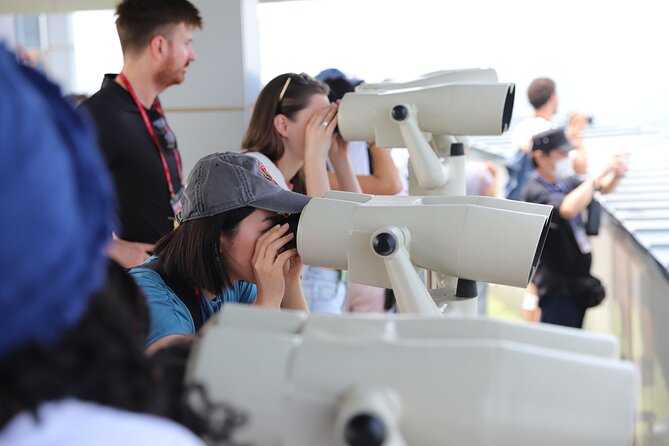
The tour then moves to Dora Observatory, one of the most talked-about DMZ sights for a simple reason: from here, you can look toward North Korea.
You get about 30 minutes at Dora Observatory, with admission included. The big “maybe” is the telescope. The highlights specify that on a clear day, you can look through a telescope into North Korea.
That one line matters more than it seems. Weather changes quickly, and in colder months fog and low visibility can make even the best viewpoint feel like you’re staring at distance without the satisfying detail. Still, Dora Observatory is useful even when visibility isn’t perfect, because you can understand what’s being shown from that position.
From this observatory, the tour information lists views toward places such as:
- Gaeseong
- Songaksan
- Kim Il-Sung Statue
- Cooperation Farm (Geumamgol)
- and general North Korea views through the telescope
If you’re a “maps in my head” person, this is where the geography locks in. It’s one thing to learn the peninsula shape; it’s another to stand where lines of sight matter to military planning and daily life.
Dorasan Station closure: why your route may quietly change
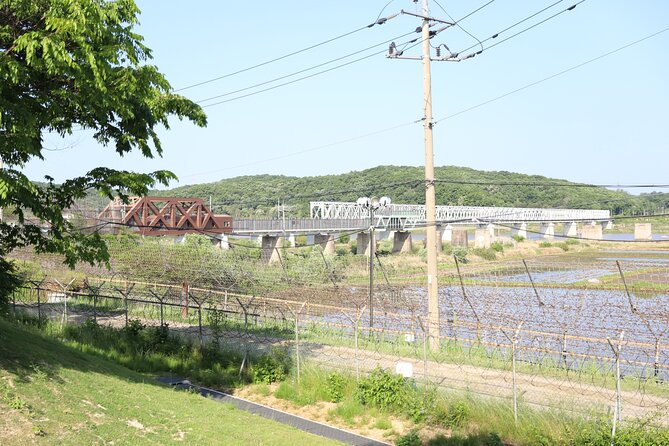
Your itinerary may also include Dorasan Station, described as the northernmost stop on South Korea’s railway line, located 56 km from Seoul. There’s also a note that it’s 205 km from Pyeongyang.
But here’s the key reality: Dorasan Station is closed due to military reasons. So even if the itinerary mentions it, expect that you might not see it as planned.
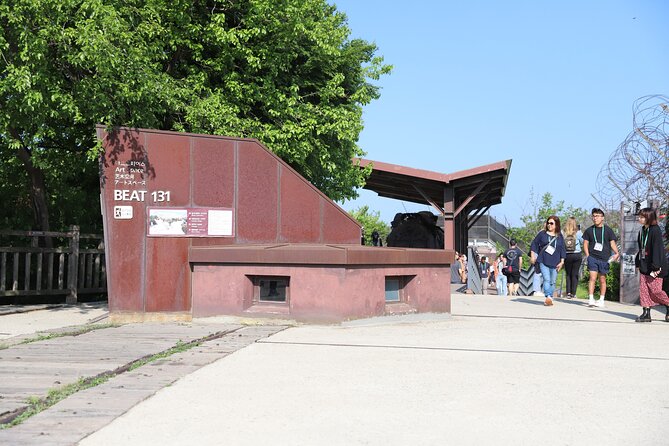
The tour includes an alternative itinerary option if stops change. In that case, you may see a different sequence such as:
- Imjingak Park
- Art Space BEAT 131
- Odusan Unification Observatory
- The war memorial of Korea
- then drop back in City Hall or Myeongdong
This flexibility is not a guarantee that you’ll get any specific alternative stop. It’s a heads-up: the DMZ operates under military control and schedules can shift due to road conditions, weather, government decisions, or training/visits by higher-level personnel.
Also, schedule changes can happen without much notice, and refunds aren’t offered if parts of the day get altered due to military or operational reasons. That’s just the nature of doing the DMZ as an organized activity.



Price and logistics: what $27.50 really buys you
At $27.50 per person, this tour is positioned as a value option for a DMZ day trip from Seoul. The biggest reason it feels reasonable: round-trip transport from central Seoul is included, and admission is included for both the Third Tunnel and Dora Observatory.
What’s not included:
- Lunch
- Hotel pick-up and drop-off in the strict sense (though pickup is offered for many centrally-located hotels)
The fine print says you can arrange pickup for central areas like Gangnam, Myeongdong, Gwanghwamun, Itaewon, and Dongdaemun. If you’re staying outside Seoul (example given: Incheon), you may choose to make your own way to Seoul or pay an extra charge based on distance traveled, on the day of your tour.
Drop-off is listed as City Hall or Myeongdong, not a return to every individual hotel. That matters for planning your afternoon: you’ll likely need to walk a bit or take one more transit connection.
Other details that affect your day:
- Tour duration is listed as about 7 hours, but some days can run longer depending on traffic and group volume.
- Your end time can vary based on the number of tourists and traffic.
- The tour notes a moderate physical fitness level is required. That makes sense for tunnel walking and long standing/waiting.
One more perk: this tour explicitly says it doesn’t stop at shopping centers like ginseng or amethyst shops. So if you’re the type who hates the sales-floor detour, this is a win.
Guide + group size: how the day stays on track
This is where the experience can feel either smooth or stressful, and the operator seems to understand that.
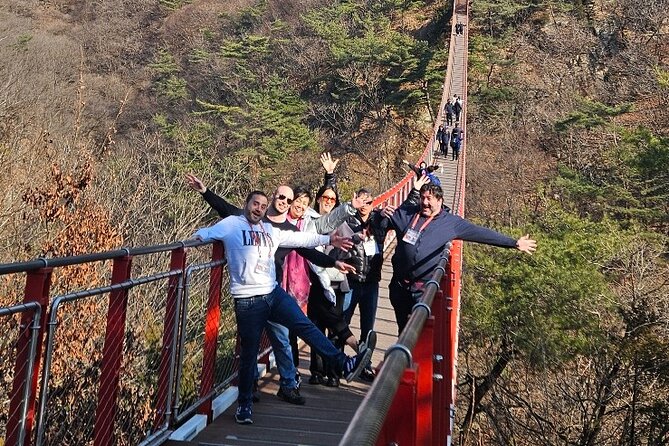
The tour includes a professional local guide and runs with a maximum of 40 travelers. In real terms, that means the group is big enough that you may hear others talking, but small enough that you’re not lost in a stadium crowd.
The reviews you provided emphasize guides who communicate clearly and handle questions well, with names like Stella, Kenny, Leo, Chloe, Jun, Jung, and Chong appearing repeatedly in that feedback. I can’t promise you’ll get any specific guide, but I do like that the program’s reputation is built around guides who explain what you’re looking at, not just reading off a script.
There’s also a note that pick-up timing needs confirmation. If you don’t get a pick-up time email, contact them. That’s not glamorous advice, but it prevents the classic end-of-day headache.
Finally, the tour can be canceled without prior notice because the DMZ is operated by the military. If you’re visiting with tight travel connections, keep a little flexibility in your schedule.
The optional pistol shooting add-on: fun, but it’s conditional
This tour lists pistol shooting as included if you select that option. It also says participants must be over age 14.
So think of it as an add-on, not a core guarantee. If it’s available on your date and you choose it, it becomes a memorable action component alongside the history-heavy sights.
If you’re traveling with teenagers, double-check the age requirement early. If you’re not comfortable with it, you can just skip the add-on and still get the full DMZ viewpoint experience at Imjingak, the Third Tunnel, and Dora Observatory.
Who should book this DMZ half-day tour
I think this tour is a strong fit if you:
- Want a structured DMZ visit without wrestling with transport and checkpoints
- Like history that connects to real places (tunnels, observatories, memorial parks)
- Prefer a day that’s long enough to matter but short enough to keep your Seoul plans intact
- Want a group capped at 40 with a guide who explains the sites
You might want a different option if you:
- Need guaranteed access to every planned stop (for example, Dorasan Station is listed as closed)
- Are sensitive to schedule disruptions, since the DMZ can alter the itinerary due to military reasons
- Are hoping for lots of free time and wandering. This is a guided route with specific stops and controlled timings.
Should you book this DMZ half-day tour from Seoul?
I’d book it if you want the DMZ in a practical, half-day format with key admissions handled and transport organized. The Third Tunnel and Dora Observatory are the headline pair, and the route’s design makes it easier to absorb what you’re seeing without turning the day into logistics roulette.
Skip it only if your schedule is so tight that any military-driven change would wreck your plans, or if you’re looking for a more free-form experience. For most first-time Seoul visitors, though, this is a smart way to turn the divided peninsula from a concept into something you can stand next to and understand.
FAQ
Is passport required for the DMZ tour?
Yes. You need a current valid passport on the day of travel.
How long is the tour?
The duration is listed as about 7 hours (approx.). The end time can vary based on the number of tourists and traffic.
What stops are included?
The core stops are Imjingak Pyeonghoa-Nuri Park, the Third Tunnel, and Dora Observatory. Dorasan Station is mentioned but is listed as closed due to military reasons.
Do I get telescope views into North Korea?
The tour says that on a clear day, you can look through a telescope into North Korea at Dora Observatory.
Is lunch included?
No. Lunch is not included.
Is pickup from my hotel included?
Pickup is available for centrally-located Seoul hotels (example areas include Gangnam, Myeongdong, Gwanghwamun, Itaewon, and Dongdaemun). If your accommodation is outside Seoul (example given: Incheon), you may go on your own or pay an extra charge based on distance. Drop-off is listed at City Hall or Myeongdong.
Can the tour be canceled?
Yes. Since the DMZ is operated by the military, the trip may be canceled without prior notice. In this case, refunds aren’t offered.
Is pistol shooting included?
Pistol shooting is included if you select the option, and participants must be over age 14.
Does the tour stop at shopping centers?
No. The tour states it does not stop at shopping centers like ginseng or amethyst factories.
Can I cancel and get a full refund?
Yes. You can cancel up to 24 hours in advance for a full refund. If you cancel less than 24 hours before the start time, the amount paid is not refunded.