REVIEW · SEOUL
DMZ Tour Seoul to North Korea’s 3rd Tunnel & Majang Lake Crossing
Book on Viator →Operated by VIP TRAVEL Co.Ltd · Bookable on Viator
A tunnel under the border changes your breathing.
This DMZ day trip takes you from Seoul to the 3rd Tunnel and on to Dora Observatory for a telescope view toward North Korea, wrapped in guided history stops most people skip.
I particularly like the way the tour is built around convenience and clarity. Hotel pickup helps you avoid Seoul routing headaches, and the schedule targets the big moments so you can actually enjoy them instead of just rushing through.
One thing to consider: this is a physical day. You’ll handle stairs and slopes, and you’ll also want your passport/ID ready for military checkpoint checks.
In This Review
- Key things that make this DMZ + 3rd Tunnel + Majang Lake day work
- DMZ day in an 8-hour package: what you’re really buying
- Getting on the bus: Myeongdong, City Hall, and Hongdae meet points
- Imjingak: Peace Park stops that most first-timers miss
- Imjingak Tourist Information Center: getting cleared
- Imjingak Park: Bell Tower, reunification hope
- Bridge of Freedom: built to replace a broken rail bridge
- Peace memorials and old rail: the human-scale stops between major sights
- Optional Paju Imjingak Peace Gondola: aerial views over the DMZ edge
- Mangbaedan Memorial Altar: honoring relatives in North Korea
- Jangdan Station steam locomotive on the Gyeongui Line
- Peace Bell (Pyeonghwauijong): the 21-ton sound of unity
- Crossing the civilian control line: the Unification Bridge checkpoint moment
- Third Tunnel (of Aggression): what to expect underground
- A key safety/comfort tip from real tunnel experience
- How the tunnel changes the story
- Dora Observatory: telescope time toward North Korea
- Tongilchon-gil and the “past the line” village stop
- Majang Lake Suspension Bridge crossing: the scenic “finish line”
- Optional extras you may add at checkout
- Guides can make the day feel fast—or flat
- Price and logistics: does $35 feel fair?
- Who should book this (and who might think twice)
- Should you book the DMZ + 3rd Tunnel + Majang Lake tour?
- FAQ
- How long is the DMZ tour?
- Where are the pickup meeting points in Seoul?
- Is hotel pickup included?
- What major DMZ sites are included?
- Can I view North Korea from South Korea?
- Is the Majang Lake suspension bridge included?
- Is the Paju Imjingak Peace Gondola included?
- Do I need a passport or ID?
- Is lunch included?
- How big is the group?
Key things that make this DMZ + 3rd Tunnel + Majang Lake day work
- Guides who keep the day human: you’ll hear strong storytelling, and many guides focus on both Korean War history and personal context (names people commonly mention include Nancy, Alex, Kelly, Crystal, Lina, Emily, Hana, Ray, Moon, and GoGo).
- Dora Observatory telescope time: you can look toward North Korea through a telescope and also browse/snag North Korean products sold on site.
- Third Tunnel of Aggression reality check: the tunnel is long (1,635 meters) and steeped in the DMZ’s built-for-denial mindset; go prepared for the enclosed setting.
- Imjingak Peace Park sites that add meaning: you’ll see the Bell Tower, the peace-focused monuments, and cross the Bridge of Freedom with the return-of-POWs history in view.
- Optional gondola + bridges add wow factor: Paju Imjingak Peace Gondola (if selected) and the Majang Lake Suspension Bridge (opened in 2020) turn the day from history-only into full sensory travel.
- Schedule flexibility when conditions change: if weather or visibility is off, the route can be adjusted to keep your best viewing chances strong.
DMZ day in an 8-hour package: what you’re really buying
For about 8 hours, you’re paying for more than entry fees. At this price point (around $35 per person), the value is the whole system: group transport, a guide who ties events together, and access to specific DMZ-related stops that would be harder to coordinate on your own.
The tour runs with a mobile ticket and a hard cap of up to 150 people, so you’re not stuck with a tiny group—but you also shouldn’t feel like you’re lost in a crowd. You’ll move site to site with enough structure that you can spend your mental energy on what you’re seeing.
You’re also buying context. This isn’t just a list of monuments. The day is organized around the emotional arc of the Cold War and the very practical reality of where civilians can and cannot go.
You can also read our reviews of more tours and experiences in Seoul.

Getting on the bus: Myeongdong, City Hall, and Hongdae meet points
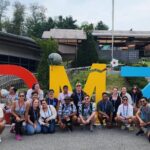
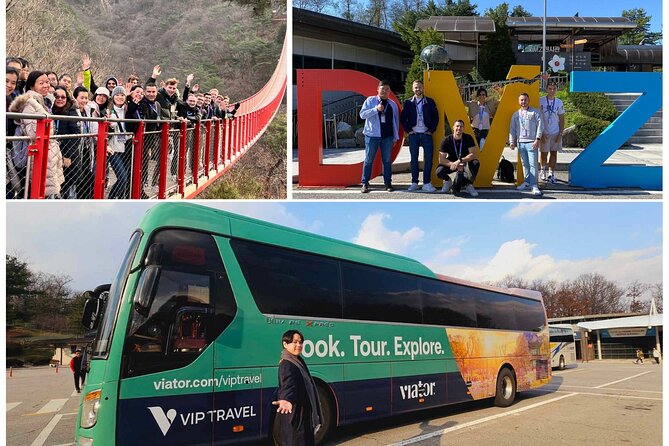
You’ll meet your group at one of three Seoul subway exits:
- Myeongdong Subway Station Exit 9
- Seoul City Hall Subway Station Exit 6
- Hongdae Subway Station Exit 3
Plan to arrive 10–15 minutes early. That small cushion matters because several coaches can be leaving from the same general area, and you don’t want to be the person sprinting to the wrong bus.
This tour includes complimentary hotel pickup (mainly from subway areas in downtown), and drop-off is offered at Myeongdong, Hongik Univ Subway Station, or City Hall. That’s a big part of the value: you avoid the “where exactly do I go next?” stress that comes with DMZ logistics.
Imjingak: Peace Park stops that most first-timers miss
Your DMZ day doesn’t start with the fence line. It starts with Imjingak, a pocket of remembrance and relief where the Cold War feels less abstract.
Imjingak Tourist Information Center: getting cleared
Before you reach civilian-controlled areas, there’s a brief stop for your guide to collect entrance clearance/tickets for the areas you’re allowed to enter. This is the kind of “behind-the-scenes” part you usually don’t see on DIY trips, and it’s exactly why a guided day works.
Imjingak Park: Bell Tower, reunification hope
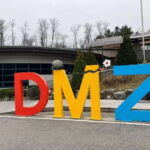
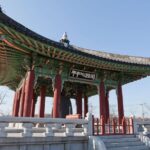
You’ll spend about 30 minutes at Imjingak Resort/Park. Here you’re not just taking photos—you’re reading the landscape of longing: the Bell Tower and the overall message of reunification. It helps to think of this as the tour’s emotional warm-up.
A useful tip: treat this as your time to slow down. The day ramps up later with checkpoint procedures and underground walking.


Bridge of Freedom: built to replace a broken rail bridge
Next you’ll cross the Bridge of Freedom, a wooden span built in 1953 as a replacement for a war-damaged railroad bridge over the Imjin River. The guide commentary usually emphasizes what the bridge symbolized in the return of 12,773 prisoners of war to South Korea.
It’s only about 20 minutes here, but it’s powerful because you’re physically doing the thing the story is about: moving from separation toward repatriation.
Peace memorials and old rail: the human-scale stops between major sights
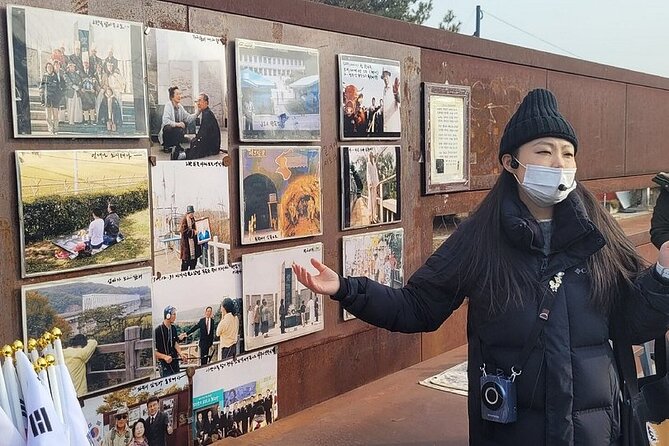
This tour threads several short stops into the day. They’re brief, but each one adds a different angle.
Optional Paju Imjingak Peace Gondola: aerial views over the DMZ edge
If you selected it, you’ll get the Paju Imjingak Peace Gondola ride (launched in 2020). It rises about 20 meters above the Imjin River for views toward the DMZ boundary.
This can be a real mood-changer on a hot day, because instead of just standing still at memorials, you get movement and broad sight lines.
Mangbaedan Memorial Altar: honoring relatives in North Korea
You’ll visit Mangbaedan (built 1987). Families pay tribute to relatives in North Korea during traditional holidays. It’s one of those places where the guide’s explanation matters, because the meaning isn’t always obvious at a glance.
Jangdan Station steam locomotive on the Gyeongui Line
At Jangdan Station, you’ll see a preserved steam locomotive tied to the Gyeongui Line, which stopped running in the Korean War. Even if you’re not a rail nerd, it helps you visualize how the war interrupted ordinary travel and routines.
Peace Bell (Pyeonghwauijong): the 21-ton sound of unity
You’ll also encounter the Peace Bell in Imjingak Park, a 21-ton bronze bell cast in 2002. The message is unity, and the sheer mass of it makes the idea feel less like a slogan.
Crossing the civilian control line: the Unification Bridge checkpoint moment
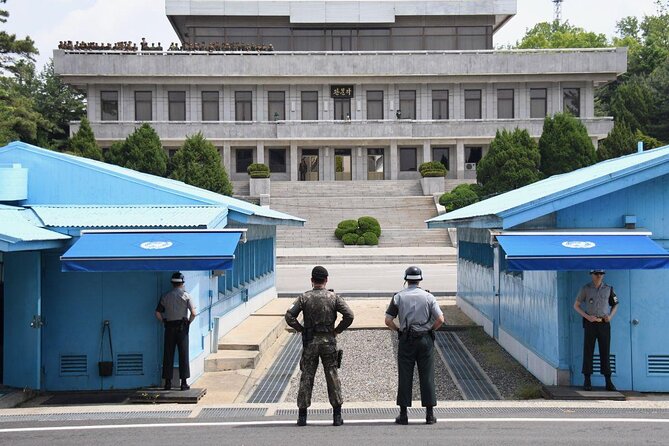
Right after these Imjingak-area stops, the itinerary includes a brief stop at the Unification Bridge. This is a military checkpoint where soldiers inspect the bus and perform ID checks.
This is not the moment to realize you forgot your documents. Bring your passport, Military ID Card, or a South Korea-issued ID (whatever your situation matches). You’ll lose time if you don’t have the right form ready.
After the checkpoint, your bus passes over the Imjin River. You may be able to spot wildlife and birds that have had room to exist since the armistice. It’s a small, calming pause between heavy stops.
Third Tunnel (of Aggression): what to expect underground
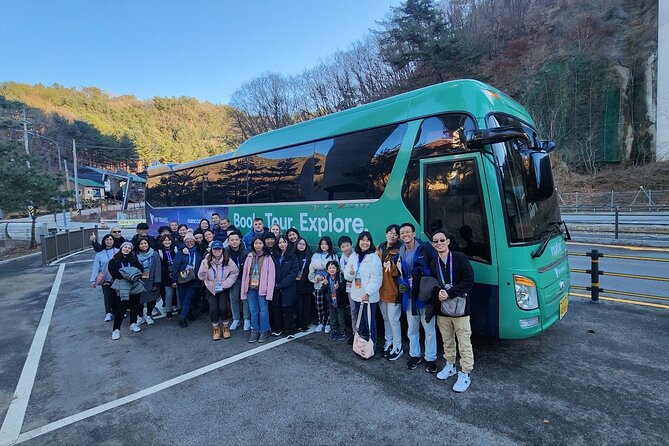
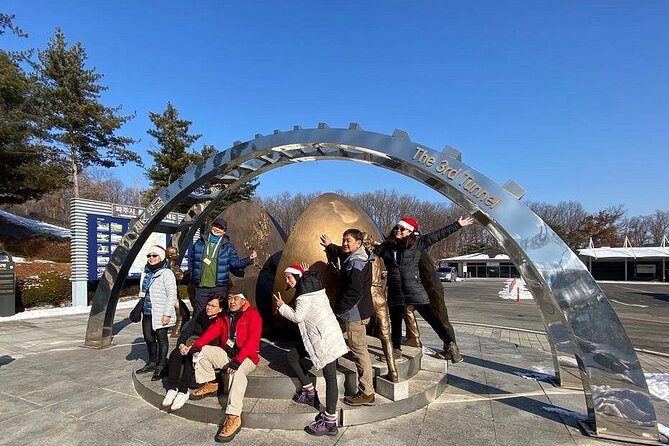
The tour’s title moment is the Third Tunnel of Aggression, also called the 3rd Infiltration Tunnel. It was discovered in 1978 and runs 1,635 meters.
You’ll spend around 1 hour here. Be ready for a physical environment: tight spaces, heat, and the need to keep your footing when you’re walking while looking down and forward.
A key safety/comfort tip from real tunnel experience
In the tunnel, you should expect hard-hat use, and it matters that it’s secured properly. If you’re tall, you might find you need to pay attention to your head clearance too—people often get bumped at least once if they relax their posture.
How the tunnel changes the story
This is the part where history stops being text and starts being sensation. The length and confinement make the Cold War feel engineered, planned, and methodical—like fear with a blueprint.
If you’re claustrophobic, go slowly at entry and keep breathing steady.
Dora Observatory: telescope time toward North Korea
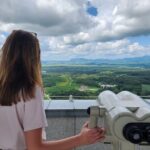
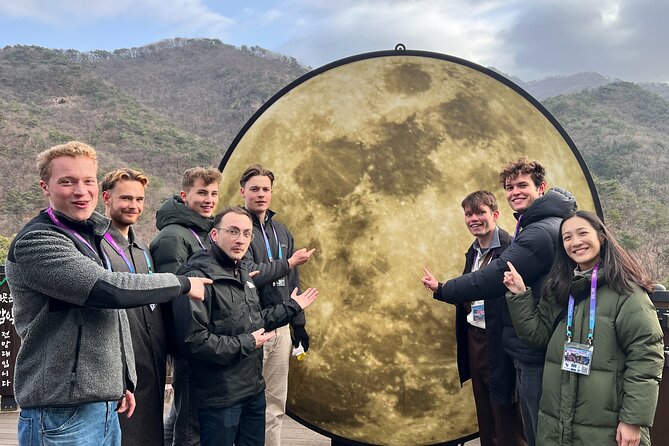
Dora Observatory is a major highlight and often the payoff for the whole day. It was established in 1986 and revamped in 2018, and it’s positioned for the closest view of North Korea from South Korea.
You’ll have about 40 minutes here, including:
- Telescope viewing toward North Korea
- A chance to buy North Korean products available at/near the observatory area
This is where the tour becomes both practical and personal. People often come expecting a single view; what they end up remembering is the act of looking—using optics, listening to the guide’s framing, and seeing how close and distant the border feels at the same time.
If the weather is unclear earlier in the day, that’s one reason tours sometimes adjust the route so better visibility comes at Dora.
Tongilchon-gil and the “past the line” village stop
After Dora, you’ll pause at Tongilchon-gil (described as a tranquil village past the Civilian Control Line). It’s tied to Jangdan soybeans, and you’ll have some time to snack or shop based on what’s available there.
This stop is usually short—about 20 minutes—so don’t count on it for a long meal plan. Think of it as a chance to pick up something small and understand what daily life looks like on the South Korean side of the DMZ boundary.
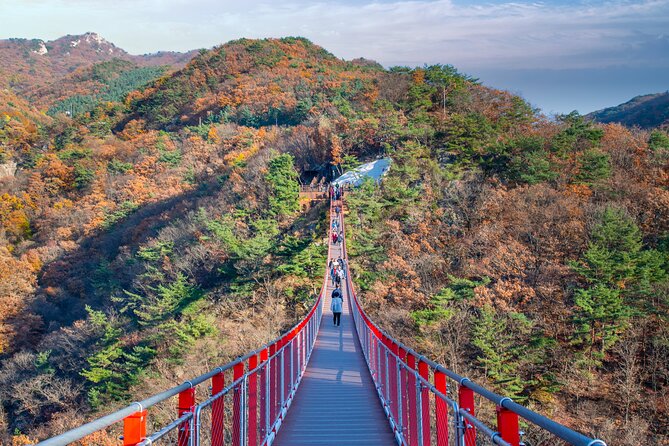
Majang Lake Suspension Bridge crossing: the scenic “finish line”
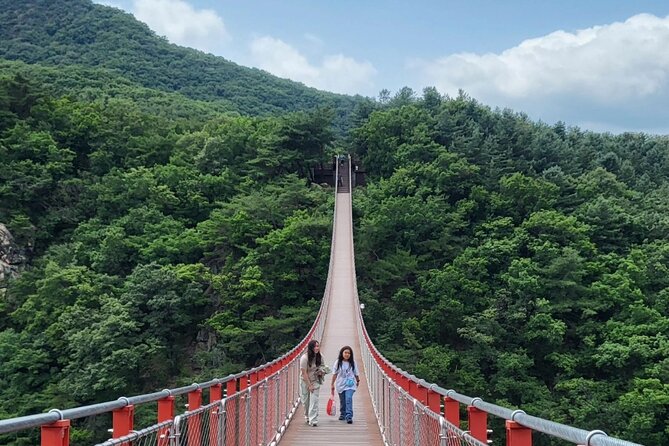
If you selected the Majang Lake option, your day ends with a crossing over the Majang Reservoir Suspension Bridge, opened in 2020.
Details that help you picture it:
- 262 meters long
- About 25 meters above Majang Lake
- Around 1 hour at/near the crossing and surrounding time
This works well as a finale. After hours of fences, tunnels, checkpoints, and memorials, the bridge gives you wide-open sky and a different kind of perspective—still tied to the DMZ’s geography, but less psychologically heavy.
Optional extras you may add at checkout
Depending on what you choose, the tour can include extras beyond the DMZ core:
- Gamaksan Red Suspension Bridge (optional)
- Strawberry picking (optional)
- Paju Imjingak Peace Gondola (optional)
One important distinction: an option labeled as only a DMZ tour may not include the bridge add-ons like the Gamaksan Red Suspension Bridge and the Majang Lake crossing, so check what’s actually included in your selection.
Guides can make the day feel fast—or flat
A big reason this tour earns strong marks is how guides run the day. Across the guide names people commonly mention—Nancy, Alex, Kelly, Crystal, Lina, Emily, Hana, K, Ray, Moon, and GoGo—the theme is the same: energy, practical pacing, and stories that make the sites feel connected.
Here’s what to look for as a rider:
- Clear introductions at each stop so you know what matters before you walk in
- Enough time to take photos and not feel constantly herded
- Personality that keeps the day moving, especially during the longer transit and the tunnel
Even on days when conditions are less cooperative, good guides adjust the flow to protect the best viewing chances.
Price and logistics: does $35 feel fair?
At roughly $35 for an about-8-hour day, you’re getting:
- A professional guide (English or Chinese)
- Hotel pickup from nearby subway/downtown areas
- DMZ ticketed entries for major stops like the Third Tunnel and Dora Observatory
- Optional bridge add-ons if you select them during checkout
What you won’t get:
- Lunch is listed as not included
- No hotel drop-off at every hotel address—drop-off is at set subway-area points
So here’s my practical take: this is a good value if you want the DMZ experience without the hassle of piecing together clearances, transport timing, and site access. It’s less of a value if you’re the type who wants total freedom of schedule, since checkpoints and admission timing drive the day.
Who should book this (and who might think twice)
This DMZ day tour is a strong fit if you:
- Want the 3rd Tunnel and Dora Observatory in one day
- Like history that’s explained with real examples, not just dates
- Prefer a guided day to independent planning
It might be harder if:
- You dislike physical days with stairs and slopes
- You’re sensitive to enclosed spaces in tunnels
- You hate working around ID checks and timed admissions
If you’re traveling with kids, it can still work, but I’d treat it as an educational day that requires stamina and patience.
Should you book the DMZ + 3rd Tunnel + Majang Lake tour?
I’d book it if you want a structured DMZ overview that still leaves room for big sensory moments: tunnel walking, telescope viewing, and a final bridge crossing.
Just go prepared. Bring the right ID/passport for checkpoints, wear comfortable shoes, and expect a day that’s more active than most sightseeing loops. If you do that, you’ll come away with more than photos—you’ll understand why this place is so emotionally heavy, and why people keep returning to look, listen, and remember.
FAQ
How long is the DMZ tour?
It runs for about 8 hours.
Where are the pickup meeting points in Seoul?
You can meet at Myeongdong Subway Station Exit 9, Seoul City Hall Subway Station Exit 6, or Hongdae Subway Station Exit 3.
Is hotel pickup included?
Yes. Complimentary pickup is included from main subway stations near hotels or in the downtown area.
What major DMZ sites are included?
The tour includes Imjingak stops, the Bridge of Freedom, the Third Tunnel, and Dora Observatory (plus other memorial and historical stops along the way).
Can I view North Korea from South Korea?
Yes. At Dora Observatory you can view North Korea through a telescope.
Is the Majang Lake suspension bridge included?
Majang Lake is listed as optional, and it’s included if selected during checkout.
Is the Paju Imjingak Peace Gondola included?
It’s optional. It’s included if selected during checkout.
Do I need a passport or ID?
You will have ID checks at a military checkpoint near Unification Bridge, so bring your passport, Military ID Card, or a South Korea-issued ID.
Is lunch included?
No. Lunch is not included.
How big is the group?
The tour has a maximum of 150 travelers.