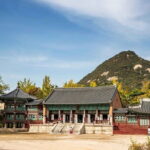
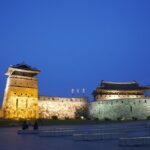
North Korea views without crossing the border. This DMZ-edge day trip to Aegibong pairs river-side watching with a stop at the closest Starbucks to North Korea.
I love that you’re not just driving past history—you’re guided to several purpose-built viewing spots right near the Jogang River.
One possible drawback: it doesn’t technically enter the DMZ, so if you’re hunting for a full-border access day, you’ll need to set expectations.
The best part for me is the way the guide brings the story into focus while you’re actually standing in front of it. I’ve seen departures led by guides like Gogo, Judy, Alex, Hana, and Juno, and the common thread is clear, practical explanations plus lots of room for questions.
In This Review
- Quick hits: why this Aegibong DMZ-edge tour gets booked fast
- Aegibong and the Jogang River: the DMZ view you can actually plan
- Meeting points in Seoul: how to start without stress
- The Aegibong ticket office and passport check
- Marine Corps Memorial: the history lands with less “museum energy”
- Peace Eco Park and Peace Ecological Park: walking toward the border edge
- The 150m swing bridge and the bridge-shot reality check
- Outdoor performance area, Peace Bell, and the 2018 altar stops
- Starbucks at Aegibong: the latte with the border in the background
- 조강전망대 (Jogeong Observatory): what binoculars show you
- Price and value: how $49 makes sense for a 5-hour DMZ-edge day
- Who should book this, and who should think twice
- Should you book the Best North Korea View & Closest Starbucks to DMZ tour?
- FAQ
- How long is the tour?
- What time does the tour start?
- Does this tour enter the DMZ?
- Do I need a passport?
- Where are the pickup locations in Seoul?
- Where does the tour end?
- What’s included in the ticket price?
- Is coffee included at Starbucks?
- What group size should I expect?
Quick hits: why this Aegibong DMZ-edge tour gets booked fast
- Closest North Korea views from South Korea at 조강전망대 (Jogeong/ Jogang observatory), with binocular help toward villages around 1.4 km away
- Passport checkpoint included right at Aegibong ticket office security, handled as part of the route
- More than one “look”: Marine Corps Memorial, two peace parks, a 150m swing bridge photo stop, and the Peace Bell ritual
- Aegibong Starbucks stop with North Korea views while you grab a latte (coffee not included)
- A tight 5-hour format that fits a Seoul schedule, with round-trip transportation and entrance fees covered
Aegibong and the Jogang River: the DMZ view you can actually plan
This tour is built around one simple idea: you can see North Korea from South Korea, but the best sightlines are earned by going to the right place at the right time. Here, that place is the Aegibong area near the DMZ edge along the Jogang River, where the border tension is visible in the geography itself.
You’re not crossing into the DMZ, and you shouldn’t treat this as a replacement for the more restricted, inside-the-zone access some people hope for. Still, you can get a serious sense of the border from multiple viewpoints in one day. That matters because the DMZ is not one single “photo spot.” It’s a line, a river corridor, and a set of monitoring distances—and this route is designed to move you through those perspectives.
Also, the pacing works. Around 5 hours means you’re not spending an entire day locked into logistics. It’s a straightforward day plan with short stops and one longer block where the sights do the talking.
You can also read our reviews of more tours and experiences in Seoul.
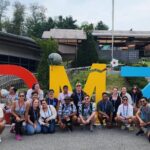

Meeting points in Seoul: how to start without stress
You’ll pick up at one of three subway-friendly locations in central Seoul, which is great if you want to avoid complicated transfers:
- Myeongdong Subway Station (Exit 9)
- Seoul City Hall Subway Station (Exit 6)
- Hongdae Subway Station (Exit 3)
The tour starts at 9:00 am, and the end point is Hongdae as a convenient downtown drop-off. If you’re staying near Hongdae or the Hongik Univ area, the return stop is especially handy because you can keep your day moving right after the tour.
One small practical tip: arrive at your pickup exit a bit early. With checkpoint-based days, every minute counts, and your group will need time to get everyone counted and ready before the security portion.
The Aegibong ticket office and passport check
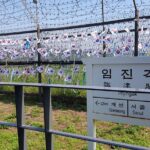
The first major “real-world border moment” is the Aegibong ticket office stop. It’s brief (about 10 minutes), but it’s not just for paperwork. This is a checkpoint area where you’ll need to show your passport to pass through the security zone.
That’s the one non-negotiable item for this tour. If you forget it, you’re not going in. I’d treat your passport like your tour ticket and keep it on you (not buried in a bag you’ll dig into ten minutes later).
Because it’s early in the itinerary, this stop also helps explain the rest of the day. Once you’ve gone through that first barrier checkpoint, everything after feels more grounded: you’re walking within the controlled access perimeter that frames the view toward North Korea.
Marine Corps Memorial: the history lands with less “museum energy”
Next up is the Marine Corps Memorial, with about 20 minutes to take it in. The site references the 15,000 Marines who fought in the Korean War, and it’s one of those places where the meaning sticks better because you’re not scrolling through timelines. You’re standing in the physical setting connected to the war geography.
For many people, this stop is the emotional anchor of the day. The later viewpoints can feel surreal or almost postcard-like. This memorial brings you back to why the area is treated so seriously in the first place.
If you’re short on time and can only “do” a few things thoughtfully, don’t skip this one. It’s the clearest moment where the border stops being an idea and becomes a consequence.
Peace Eco Park and Peace Ecological Park: walking toward the border edge
Then the tour shifts into the landscape of Aegibong’s peace-themed spaces. You’ll spend:
- About 1 hour at Aegibong Peace Eco Park
- About 30 minutes at Aegibong Peace Ecological Park
These parks are built as a corridor of views and symbols. The Eco Park portion is described with trails and war relic elements, and it’s presented as a major eco-peace hub. The second park section includes themed gardens and the Sky Forest canopy concept, with mention of 80+ rare bird species.
Now, you don’t need bird-spotting skills to enjoy this. Even if you’re not chasing species lists, the value here is movement. You get multiple angles on the direction of North Korea, and the parks provide structured spots to stop, look, and learn without feeling like you’re wandering randomly near a sensitive border zone.
Practical note: bring comfy shoes. You’ll be walking between stops in a planned route, and the “photo moments” are not all flat ground.



The 150m swing bridge and the bridge-shot reality check
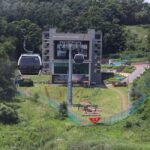
One of the most memorable stops is the 애기봉 평화생태공원 흔들다리 (the swing bridge). The itinerary gives 30 minutes, and the focus is both thrill and views.
The bridge is described as a 150m crossing, and it’s specifically called out as the place for heart-pounding photo ops looking toward North Korea. If you’re the type who likes action to break up “standing and staring,” this is the moment.
One reality check: conditions can affect whether you can cross or how you move. In at least some departures, there can be weather-related changes, which may mean extra walking up a hill. So if you’re going with older knees or tight ankles, plan for the possibility of some stairs and slope even if the rest of the day is smooth.
Outdoor performance area, Peace Bell, and the 2018 altar stops
After the swing bridge, you get a bit of decompression and ritual in the sequence:
- Outdoor performance stage seating: about 20 minutes
- Peace Bell (애기봉 평화의종): about 15 minutes
- Peace altar: about 10 minutes, built in 2018
At the stage area, you may catch a performance if your timing lines up with what’s scheduled. The itinerary frames this as modern or traditional, so you might get a show—or you might just get the seating plus the views. Either way, it’s a good spot to sit for a moment and regroup.
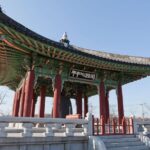
The Peace Bell stop is more structured. The bell is cast in 2000 and is presented as a ritual tied to hope for reunification. I like these short ritual stops because they’re quick, meaningful, and easy to participate in without overthinking it.
Then the altar provides another reflective pause, and it’s one of the places where the day stops feeling like sightseeing and starts feeling like a memory you’ll carry.
Starbucks at Aegibong: the latte with the border in the background
Here’s the headline feature for many people: the Starbucks stop at Aegibong, described as the closest Starbucks to North Korea. It’s about 1 hour.
Two important things to know before you go:
- Coffee and/or tea is not included. Expect to pay for your drink.
- This is a high-interest photo and view stop, so go in with a plan: order first, then find a spot to look out and enjoy the moment.
You’re basically mixing two worlds on purpose. One is global branding. The other is a border that defines the modern era for both Koreas. That contrast is exactly why this stop gets attention.
Also, because it’s scheduled after the parks and ritual points, you’ll be ready for something familiar. It’s the small human reward that makes the rest of the day easier to take in.
조강전망대 (Jogeong Observatory): what binoculars show you
The final highlight is 조강전망대 (Jogeong/Jogang observatory), with about 30 minutes.
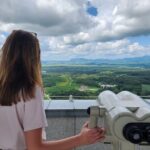
This is positioned as Korea’s closest observatory to the DMZ, and it’s where you get the most “this is real” view. The itinerary notes that binoculars can reveal villages just 1.4 km away.
A quick tip: don’t treat this as a one-second look. Give yourself time. Focus on the direction, scan, and compare what you see from the ground to what your guide says about the geography. The value of a binocular-equipped observatory is that you can actually work the view instead of just taking a single photo and moving on.
You’ll probably finish this stop with that strange mix of feelings that comes from watching a place you can’t reach. That’s normal. It’s also why these viewing stops are arranged across the day: the meaning builds as your eyes adjust.
Price and value: how $49 makes sense for a 5-hour DMZ-edge day
The price is listed at $49.00 per person, and the tour includes:
- Tour guide (English or Chinese)
- Round-trip transportation
- Entrance fees
Coffee is not included, and meals are not included—so your total day cost will rise if you buy drinks or snacks at Starbucks. But the structure still adds up.
Here’s why the value feels strong for many people:
- You’re getting a multi-stop route (memorial, parks, bridge, bell, observatory), not just one long bus ride to a single viewpoint.
- The major “gotcha” item—passport required for security access—is handled inside the itinerary rather than left to guesswork.
- The tour is time-efficient. About 5 hours is a real asset in Seoul, where travel days can disappear if you’re not careful.
If you’re trying to fit a DMZ-related day into a tight schedule, this is one of the easier ways to do it without committing to a longer, more complex itinerary.
Who should book this, and who should think twice
This tour is a great fit if you want:
- The closest North Korea viewing experience available from Seoul without entering the DMZ
- A structured, guided day that includes several border-adjacent stops
- A chance to mix serious history with a simple break at Aegibong Starbucks
- A straightforward schedule starting at 9:00 am with a downtown drop-off in Hongdae
Think twice if:
- You specifically want inside-the-DMZ access and aren’t okay with a border-edge day
- You hate checkpoints and need a low-friction day (you do have a passport check at the ticket office)
- You’re expecting the itinerary to be fully flexible. The route is structured by time at each stop.
Should you book the Best North Korea View & Closest Starbucks to DMZ tour?
If your main goal is to see North Korea from South Korea with the best shotlines near Aegibong, I think this is a smart buy. The combination of security access at the Aegibong ticket office, multiple peace-site stops, and the final 조강전망대 observatory gives you more than one moment of impact.
I’d book it if you like your history hands-on (memorials, rituals, viewing points) and you appreciate a tour that doesn’t waste your day. And if you’re counting on the Starbucks as the main event, plan on using that hour well: order fast, then slow down and actually look.
If you want, tell me your travel dates and whether you’ll be starting from Myeongdong, City Hall area, or Hongdae, and I’ll suggest which pickup makes the most sense for your day flow.
FAQ
How long is the tour?
It’s listed at about 5 hours.
What time does the tour start?
The start time is 9:00 am.
Does this tour enter the DMZ?
No. It doesn’t technically enter the DMZ, but it takes you to the edge along the Jogang River near Aegibong.
Do I need a passport?
Yes. You’ll need your passport to pass through the security area at the Aegibong ticket office, and you cannot enter without it.
Where are the pickup locations in Seoul?
Pickups include Myeongdong Subway Station (Exit 9), Seoul City Hall Subway Station (Exit 6), and Hongdae Subway Station (Exit 3).
Where does the tour end?
The bus drops you off in Hongdae.
What’s included in the ticket price?
The tour includes a tour guide, round-trip transportation, and entrance fees.
Is coffee included at Starbucks?
No. Coffee and/or tea is not included.
What group size should I expect?
The maximum group size is 100 travelers.