REVIEW · SEOUL
Seoul: Deoksugung Palace Night Tour
Book on GetYourGuide →Operated by Korea Guide Tour · Bookable on GetYourGuide
Night in Seoul makes history feel close. Deoksugung Palace at night is a very human way to learn the story of the Daehan Empire, with a guided walk through the rooms that mattered to the last push for sovereignty under Japanese colonial rule.
Two things I really liked: first, the tour connects the buildings you see with the emotional weight of Emperor Gojong’s struggle, without turning it into a lecture. Second, the stop-by-stop route takes you through key palace structures in a logical sequence, so you leave understanding what each place was for—throne hall, royal residence rooms, and even the spot associated with coffee time.
One consideration: weekend and holiday reservations can’t always be confirmed, and if the group has fewer than 4 participants, the tour may be canceled. That’s not a deal-breaker, but it’s smart to book when your schedule is flexible.
In This Review
- Key highlights you’ll feel right away
- Deoksugung Palace After Dark: The calm, eerie kind of interesting
- City Hall Station to Daehanmun Gate: start where your feet are already happy
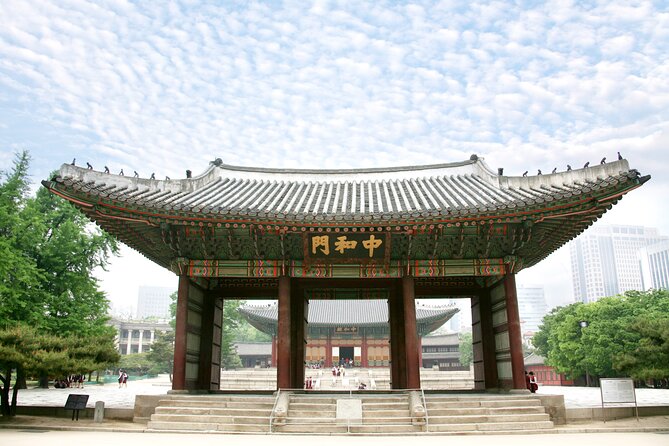
- Junghwajeon throne hall: where ceremony becomes a story
- Seokeodang: why Emperor Gojong’s beloved building matters
- Hamnyeongjeon and the king’s bed chamber: the room where power rests
- Jungkwanheon and the coffee-cafeteria twist: yes, there’s a pause built in
- The Daehan Empire under Japanese Colonialism: how the guide makes meaning stick
- Morning or night departures: pick what matches your Seoul rhythm
- After the tour: stay and take photos at your own pace
- Price and value: $38 for a guide plus palace entry
- Who this suits best (and who might want to skip it)
- My honest takeaway: a night tour with real emotional direction
- Should you book the Deoksugung Palace Night Tour?
- FAQ
- Where is the meeting point for this tour?
- How long is the Deoksugung Palace night tour?
- What is included in the price?
- What does the tour language support?
- What should I bring?
- Is the tour wheelchair accessible?
- Where does the tour start inside the palace?
- Which palace buildings are visited?
- Can I stay after the tour to explore and take photos?
- What is the cancellation policy?
Key highlights you’ll feel right away
- Daehanmun Gate to Junghwajeon: a clear walk from the main entrance into the throne-hall core
- Gojong-focused rooms: Seokeodang and Hamnyeongjeon in the same route so the story lands
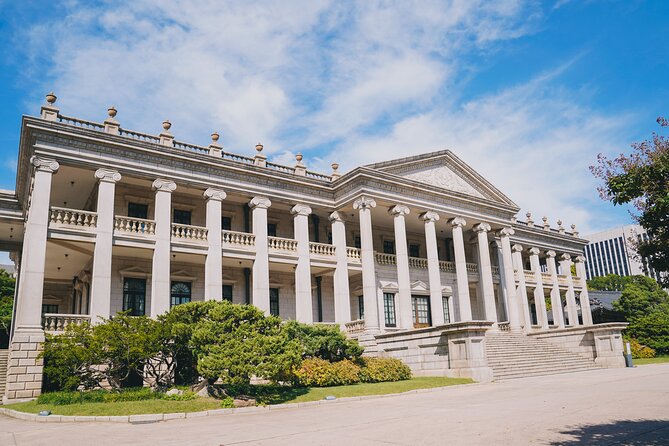
- Oriental meets Western: see how palace architecture reflects Korea’s modernizing era
- English guide with sharp answers: guides like Sally Sung, Joy, and Alan are praised for detail and patience
- After the tour, stay for photos: you can continue exploring at your own pace once the guided portion ends
- Short and doable: a 2-hour format that fits real Seoul sightseeing days
Deoksugung Palace After Dark: The calm, eerie kind of interesting
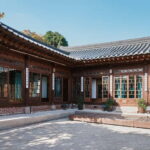
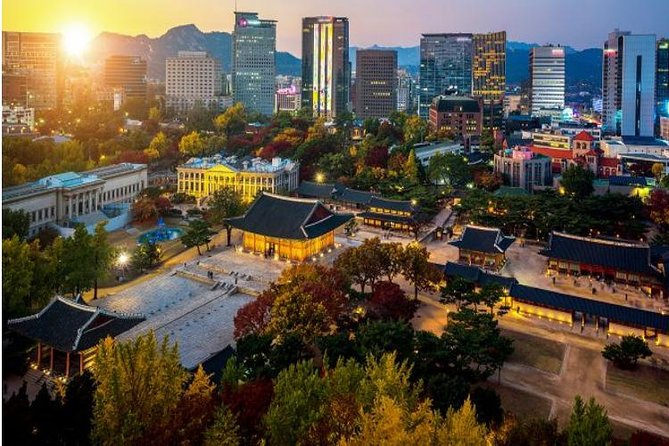
A night palace walk has a different tone than daytime sightseeing. Daytime gives you scale. Night gives you mood. At Deoksugung Palace, the changing light helps you pay attention to details you’d normally rush past—roof lines, doorways, and the sense that these spaces were lived in, not just toured.
What makes this tour especially compelling is how it ties place to pressure. You’re not only looking at old walls; you’re following the arc of modern Korean history during a period when the Daehan Empire fought to protect sovereignty. Emperor Gojong, both the first and last of his imperial role, is part of the through-line, and that gives the route meaning even if you’re not a history nerd.
Also, the setting makes the pace feel gentle. It’s only 2 hours, so you’re not committing your entire evening to standing in queues. If you like guided tours that still leave room for wandering, this fits.
You can also read our reviews of more evening experiences in Seoul
City Hall Station to Daehanmun Gate: start where your feet are already happy
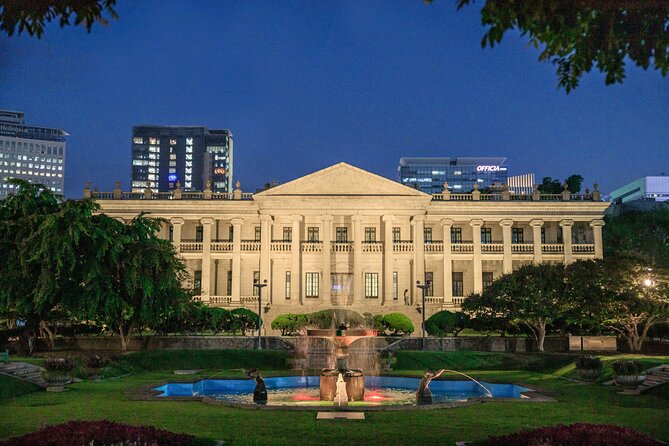
You meet outside Exit 1 of City Hall Station. That’s helpful because City Hall is well-connected, and it avoids the stress of trying to decode a neighborhood map after dark.
From there, you go through the main gate, Daehanmun Gate, which is a smart way to start because it frames what the palace is: a royal space with clear entry symbolism. You’ll walk in with a guide in front of you, so you’re not guessing which courtyard is the important one.
Practical tip: wear comfortable shoes. Even with a short duration, you’ll cover palace paths and you’ll want to move without thinking about your feet every five minutes.
Junghwajeon throne hall: where ceremony becomes a story
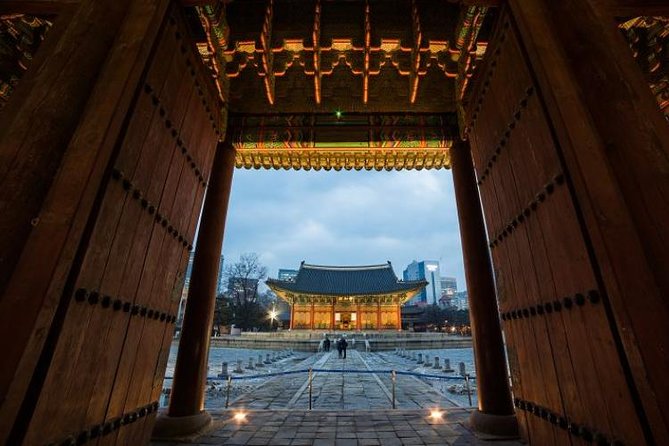
Next is Junghwajeon, the main throne hall. In a palace, the throne hall is the headline—but on this tour, it’s not just a photo stop. Your guide explains what made the hall central to authority and governance, which helps you see why the Daehan Empire’s crisis mattered on a daily, physical level.
When you’re walking at night, the hall’s role can feel sharper. You can sense the hierarchy of movement: approach, pause, look up, and understand that power was organized through architecture and ritual.
A small drawback of any palace throne hall is that you might feel like the main moment is behind glass at times. But the benefit here is that you won’t just look. You’ll connect the meaning to the rest of the buildings you visit right afterward, so the story doesn’t stop at one room.
Seokeodang: why Emperor Gojong’s beloved building matters
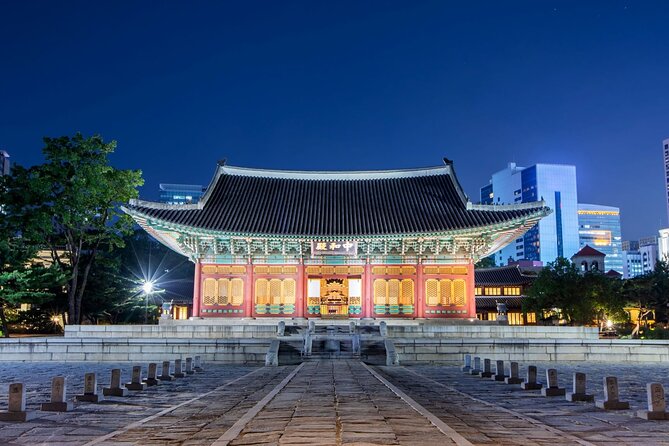
Seokeodang is described as the most beloved building of King Gojong. That detail is more than trivia. It gives you a clue about how royal life wasn’t only formal ceremony. Even inside a palace under heavy political pressure, there were preferences, comfort, and personal routines.
On this tour, Seokeodang sits in the middle of the sequence for a reason. After Junghwajeon, you shift from public authority toward the emperor’s inner world. That shift is one of the reasons the tour feels emotionally coherent, instead of like a checklist.
If you enjoy architecture with a human angle, you’ll probably like this stop most after the throne hall. You’re looking at the same palace, but the mood changes from official to personal.
Hamnyeongjeon and the king’s bed chamber: the room where power rests
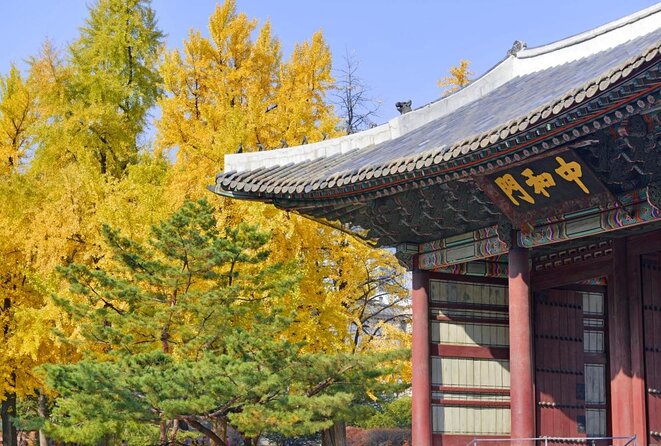
Then you move to Hamnyeongjeon, the king’s bed chamber. This is one of those stops that can quietly change how you see the whole palace.
You might think of a palace as a place of display. But a bed chamber is different. It’s where the body is vulnerable. It’s where the mind tries to rest. In the context of the Daehan Empire struggling during Japanese occupation, the idea lands harder: this wasn’t a stage set; it was someone’s life under historic stress.
Night tours also tend to make intimate spaces feel even more intimate. You’re not just touring; you’re being guided through what these rooms meant and how the palace functioned as royal quarters for about 13 years.


Jungkwanheon and the coffee-cafeteria twist: yes, there’s a pause built in
One of the most fun (and oddly memorable) stops is Jungkwanheon, described as a cafeteria where the emperor enjoyed his coffees. It’s easy to forget that rulers had downtime, habits, and ordinary pleasures—even when the political situation was not ordinary.
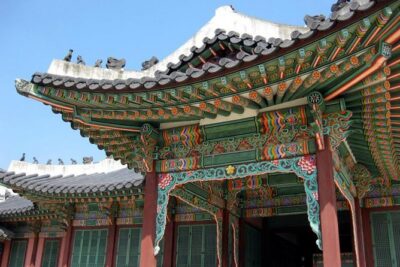
This room also connects nicely to the tour’s larger theme of architecture where Korean and Western influences meet. When you’re shown how the palace environment reflects modernizing pressures, those details become more than style. They become evidence of a shifting era.
If you’re traveling with friends who get bored by straight history, Jungkwanheon is the moment that often brings people back around. It’s historical context you can actually picture.
The Daehan Empire under Japanese Colonialism: how the guide makes meaning stick
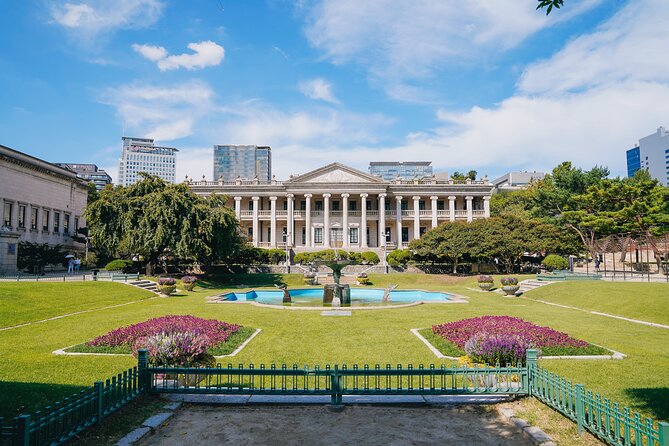
The tour doesn’t treat the colonial-era story as a separate museum topic. It weaves it into the route by focusing on the royal quarters and the struggle over the palace itself.
Here’s the core idea you’ll take away: the palace served as the royal quarters for 13 years, and Emperor Gojong struggled to regain sovereignty over the palace under Japanese occupation. That struggle is the emotional spine behind why these specific buildings are highlighted.
That matters for you because it changes how you read what you see. Instead of asking, What building is this? you’ll also ask, What did it represent, and what happened here during a time when political control was contested?
It’s also one of the reasons the tour is worth doing in the morning or evening. The lighting and calmer atmosphere help you focus. You’re not being shoved along by big crowds, and the guide’s explanations can actually land.
Morning or night departures: pick what matches your Seoul rhythm
The tour is described as a morning/night experience, with starting times depending on availability. That flexibility is useful. If you like soft light and slower streets, you might prefer an earlier slot. If you want a moody, quieter atmosphere, pick the night option.
Either way, the route is the same logic: gate entrance, throne hall, royal-favorite building, bed chamber, then a lighter, human touch at Jungkwanheon. The order gives the story a rhythm: official to personal, public to private.
If you’re planning your day, think of it as a 2-hour anchor. Do it after a few hours of casual walking in the city so you’ve built momentum, then let the guide give you structure.
After the tour: stay and take photos at your own pace
Once the guided portion ends, you’re welcome to stay behind and explore on your own. That’s a practical perk. Sometimes the best palace photos come after you understand where to stand, and this gives you the chance to experiment without holding up the group.
Bring your patience and your camera, but also bring your eyes. Night photography can be unforgiving, so don’t get fixated on settings. Instead, watch how the light touches door frames and courtyard edges.
If you want a simple strategy: after you learn the palace sequence, walk it again slowly and look for the architectural mix—where Oriental lines and Western-influenced forms show up together.
Price and value: $38 for a guide plus palace entry
At $38 per person for about 2 hours, this tour feels like solid value if you care about context rather than just access. The price includes a local tour guide and an entrance fee, so you’re not paying separately for entry and interpretation.
You’re also buying time efficiency. A palace visit alone can be a bit like wandering in a book without the index. With the guide, you get a guided reading of the rooms: Junghwajeon’s role, Seokeodang’s personal significance, Hamnyeongjeon’s meaning, and Jungkwanheon’s coffee-room detail.
If you’re on a tight schedule in Seoul, the short duration matters. You get a concentrated experience without sacrificing the rest of your evening.
Who this suits best (and who might want to skip it)
This is a great fit if you:
- Want a guided palace walk focused on Emperor Gojong and the Daehan Empire story
- Like seeing architecture as evidence of historical change
- Prefer a 2-hour tour that doesn’t swallow your whole day
- Appreciate an English guide who can answer questions clearly (people have praised guides like Sally Sung and Joy for being precise and attentive)
You might think twice if you:
- Want a long, unhurried self-guided palace day with no structure
- Are only interested in postcard sights and not the sovereignty struggle context
My honest takeaway: a night tour with real emotional direction
If you want Deoksugung Palace to feel like a living place instead of a set of landmarks, this tour does a good job. The sequence of buildings makes sense, the story is tied to specific rooms, and the architecture theme gives you something visual to hold onto while the guide explains the political pressure around the palace.
Most importantly, it’s short enough that you can still do Seoul your way afterward. The tour gives you a strong base layer of understanding, and then you get to choose what you want to see next.
Should you book the Deoksugung Palace Night Tour?
Yes, if you want a focused, story-led palace experience in 2 hours, with an English guide and included entrance. It’s especially worth booking if you like history that comes with names (like Emperor Gojong), specific room functions, and an architectural mix you can actually spot.
Book with a little flexibility: weekend/holiday confirmation can be tricky, and tours may cancel if there aren’t enough participants. If your schedule can handle that, you’ll likely love the way this walk turns a palace visit into a clear narrative.
FAQ
Where is the meeting point for this tour?
You meet outside Exit 1 of City Hall Station.
How long is the Deoksugung Palace night tour?
The duration is 2 hours.
What is included in the price?
The tour includes a local tour guide and an entrance fee.
What does the tour language support?
The live tour guide is English.
What should I bring?
Wear comfortable shoes.
Is the tour wheelchair accessible?
Yes, the tour is wheelchair accessible.
Where does the tour start inside the palace?
The route begins by entering through Daehanmun Gate.
Which palace buildings are visited?
The tour includes Junghwajeon, Seokeodang, Hamnyeongjeon, and Jungkwanheon.
Can I stay after the tour to explore and take photos?
Yes, you can stay behind after the guided portion to explore at your own pace and take photos.
What is the cancellation policy?
You can cancel up to 24 hours in advance for a full refund. No refund is issued for a no-show or same-day cancellation.