REVIEW · SEOUL
Traditional Korean Bookbinding Experience in Seoul, Hongdae
Book on Viator →Operated by Danchoodan · Bookable on Viator
Paper, silk, and knots in one class. This Seoul (Hongdae-area) bookbinding session is a rare chance to learn traditional Korean bookbinding hands-on with Hanji paper, then leave with a gift-ready notebook you made yourself. I love the choices you get—like picking from silk covers with traditional patterns—and I love the cultural payoff of tying a Norigae knot as the final touch. One thing to consider: you’ll be sitting and working your hands for about two hours, so it’s not the best pick if you want a fast, low-effort activity.
You’ll leave this class with something more meaningful than a typical souvenir. The materials are real and the process is paced so you can follow along without feeling rushed, and you end up with a notebook that’s designed to last. Still, it’s a small group studio experience, so you’ll want to arrive on time and be ready to focus while you make your book.
In This Review
- Key highlights
- Why Seoul’s Hanji bookbinding feels like time travel
- What you’ll build: silk cover, Hanji pages, and a Norigae knot
- The Hanji lesson: paper tied to Joseon-era writing
- Picking your silk cover and thread colors like a designer
- How the binding works in real time (and what to expect)
- Hongdae-area timing: a 10:30 am class with take-home payoff
- Price and value: what $49 covers in Seoul
- Who this class suits best (and who might skip it)
- Should you book this Korean bookbinding class?
- FAQ
- How long is the traditional Korean bookbinding experience?
- How much does it cost?
- What is included in the class?
- Is an air-conditioned vehicle included?
- Where do I meet for the class?
- What time does the class start?
- What should I know about group size and entry?
- Can I get a full refund if my plans change?
- Is there an age requirement?
Key highlights
- Hanji tied to Joseon-era writing and UNESCO Memory of the World
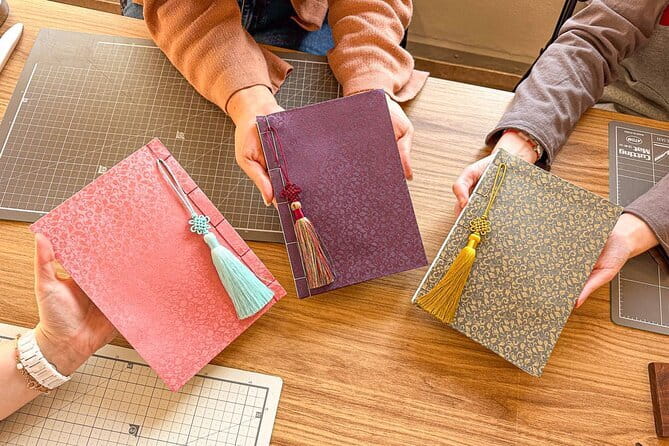
- Choose your silk cover from 22 traditional-pattern options
- Pick a Norigae ornament and thread color
- Learn the traditional method of binding silk and Hanji
- Finish with a Norigae knot you can take home
- A max group size of 12 makes it feel hands-on
Why Seoul’s Hanji bookbinding feels like time travel
If you like learning by doing, this class hits a sweet spot. It’s not just a craft demo. You actually create a small book the way Korean artisans and scholars once approached paper, writing, and care for materials.
The big draw is Hanji—traditional Korean paper. This paper isn’t treated like “just craft paper.” It’s tied to serious historical writing: Hanji was used to make the Annals of the Joseon Dynasty, and that record is listed on UNESCO’s Memory of the World. When you learn how Hanji behaves and why it matters, the whole workshop starts to feel like you’re handling a piece of cultural infrastructure, not just making something cute.
My favorite part is how the craft choices aren’t random. You don’t simply get handed a notebook and told to decorate it. You select the silk cover, then choose a Norigae ornament and thread color, so the final look matches your taste and your trip story.
The only potential drawback is that the experience is clearly structured. You’ll get a lot of guidance, but you won’t have total freedom to invent something outside the taught method. If you want experimentation for its own sake, you may feel constrained. If you want a guided, satisfying build, it’s a great fit.
You can also read our reviews of more tours and experiences in Seoul.


What you’ll build: silk cover, Hanji pages, and a Norigae knot
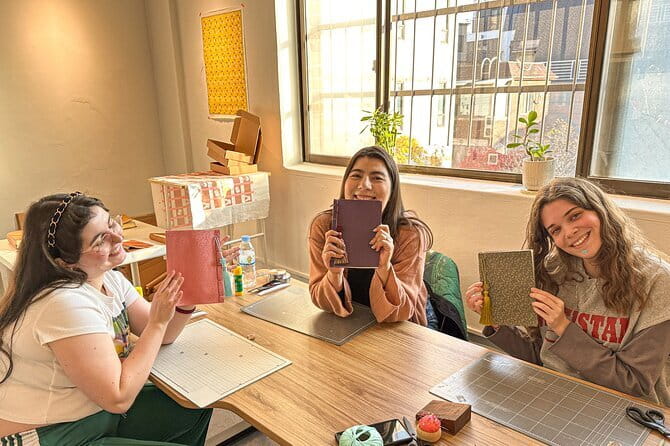
Your end product is a traditional-style Korean notebook, built from Hanji paper and finished with silk elements and a decorative knot. The workshop is designed so you start with raw choices (silk, Norigae, thread), then move into construction, then styling, and finally packaging.
Here’s the structure in plain terms:
- You choose a silk cover with a traditional Korean pattern.
- You select your Norigae ornament and a thread color.
- You learn the basic background of Hanji—why it’s special.
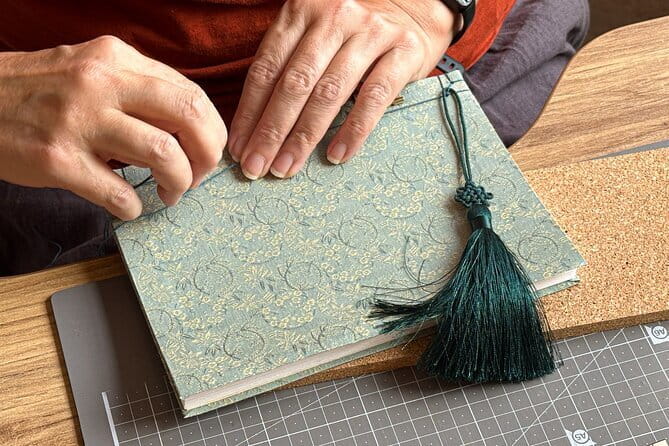
- You bind the notebook using a traditional approach that combines silk and Hanji.
- You add the Norigae knot as the finishing detail.
- You pack your notebook in a gift-ready way so it’s easy to bring home.
This matters because it turns a “class” into a portable keepsake. Many crafts in Seoul look great, but they’re mostly decorative. This one is designed around paper and binding—so it’s genuinely useful as a journal or scrapbook, not just a display piece.
Also, that final knot step gives you a satisfying sense of completion. It’s the moment where your choices start to look like a coordinated design rather than separate parts of a craft kit.
The Hanji lesson: paper tied to Joseon-era writing
Before you start binding, you’ll learn the “why” behind Hanji. That background changes how you handle the material.
The class frames Hanji as the paper used for writing diaries and notes, including historically significant records. You also hear the practical old saying about longevity: silk lasts about 500 years, while Hanji can last about 1,000 years. That’s not just romantic folklore—it’s a way of explaining why people treated these materials with care and why the craft is worth learning.
In a workshop like this, the lesson usually helps you understand two things:
- Hanji isn’t fragile like some thin papers.
- The binding method matters because you’re building with the material’s natural strengths.
If you care about “making things that mean something,” this is where the experience earns its place. You’re not only assembling a notebook; you’re understanding the role of paper in Korean intellectual life—Joseon royal family and Confucian scholars writing notes, diaries, and records.
And yes, you’ll still leave with something beautiful. But the real value is that the beauty has context.
Picking your silk cover and thread colors like a designer
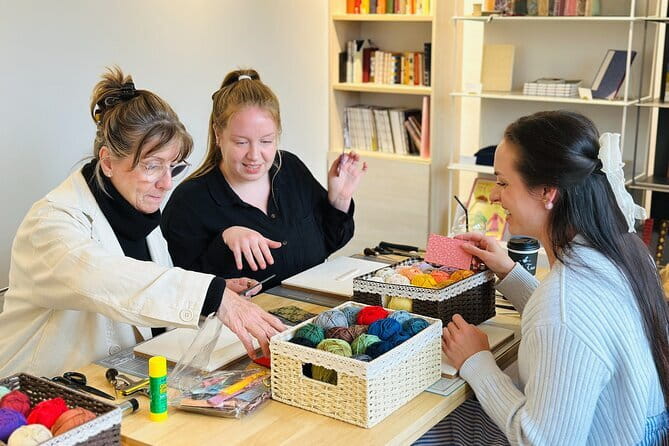
One of the most enjoyable parts is the selection process. You’re given a set of options, then you make decisions that influence the whole look of the finished notebook.
You’ll start by choosing from 22 silk covers featuring Korean traditional patterns. That’s a big enough range that you can actually think about your style—classic and elegant, or more playful and colorful—without feeling like you’re picking from three choices.
Then you move to your Norigae and thread. Norigae are traditional Korean ornaments, and here they’re used as a design accent with a meaning that goes beyond decoration. You also pick the thread color, which helps tie the visible elements together.
This selection stage is also good for non-experts. You’re not expected to know technical terms or craft jargon. Just pick what you like, and the guide supports you as you go.
From an overall-value perspective, this matters because you’re paying for materials and instruction—not just for the act of binding. The options make your final notebook feel like yours, not a generic product.
How the binding works in real time (and what to expect)

The build is the heart of the workshop. You’ll learn the traditional approach to binding silk and Hanji, and you’ll make the notebook step by step.
The pacing is important. It’s set up to keep you moving through the process without losing your place. In my view, that’s a big difference between a fun craft evening and a workshop that actually teaches you something. If binding methods aren’t explained clearly, you end up with a “pretty object” but no real understanding. Here, the structure is meant to help you learn the method while you’re doing it.
When you’re working with binding, small details affect the outcome. Getting the order right matters. Handling the materials gently matters. And taking your time during assembly leads to a cleaner, more satisfying final shape.
Once the binding is set, you decorate with the Norigae knot. This is usually where the notebook stops looking like a craft project and starts looking like a Korean-inspired artifact. It also gives you a final “signature move”—the part you remember because you finished it yourself.
You’ll also get your creation packed in a gift-ready package. That sounds like a small thing, but it helps if you’re touring after the class. You won’t have to worry about protecting delicate elements in your bag on the way back to your hotel.





Hongdae-area timing: a 10:30 am class with take-home payoff

This experience starts at 10:30 am and runs about two hours. It’s scheduled as a focused session, not a half-day production. That’s one reason it works well during a Seoul itinerary: you can do it in the morning, then head out to Hongdae after without feeling like you lost your whole day.
The meeting point is at danchoodan, in Mapo-gu, Daeheung-dong, Daeheung-ro 100 (3rd floor). The activity ends back at the same meeting point, so you don’t need to plan a second transfer just to wrap up.
One practical note: only the number of people who reserved can enter the studio. So if you’re traveling with friends and buying separately, make sure reservations line up. Also, it’s near public transportation, which helps. Since an air-conditioned vehicle is not included, you’ll want to rely on your own route planning and get yourself there comfortably.
Group size is limited to a maximum of 12, which is the sweet spot for a hands-on class. You’re not stuck waiting behind a huge crowd, and you’re more likely to get the kind of help that makes a difference when you’re learning a binding method.
Price and value: what $49 covers in Seoul
At $49 per person, this isn’t a “cheap souvenir stop.” But it also isn’t priced like a premium private workshop. The value comes from what’s included.
You get:
- Binding tools and materials
- A licensed guide
- A completed notebook you take home
- A gift-ready package
That combination is the real reason the price feels fair. You’re paying for instruction plus actual craft materials—especially Hanji and silk elements—plus the guide time to help you select, bind correctly, and finish with the Norigae knot.
If you’ve ever bought handmade paper crafts in Seoul, you’ll know how quickly “small paper goods” can get overpriced once you’re just buying the final item. Here, you’re making the item during the workshop, and the included materials help justify the cost.
For comparison in your head: this class is closer to paying for a guided art session than paying for a retail product. The result is a notebook you can use as a journal or scrapbook, and the process gives you the story you can’t buy.
Who this class suits best (and who might skip it)
This is a strong match if you:
- Want a hands-on cultural activity in Seoul, not another photo-and-walk stop
- Like bookish souvenirs—journals, scrapbooks, and paper crafts
- Appreciate learning about materials, not just decorating
- Enjoy thoughtful, small decisions like choosing silk patterns and thread colors
It’s also ideal if you want something that fits into a gift-giving mindset. The final packaging is made so you can bring it home without needing extra wrapping, and the Norigae detail makes it feel special.
You might skip it if:
- You’re short on time and only want a quick stop under an hour
- You don’t want to sit and work with your hands at all
- You expect a purely lecture-based history talk. This is mostly making, with learning woven in.
If you’re the type who likes learning Korean culture through a craft process, this workshop makes sense.
Should you book this Korean bookbinding class?
Book it if you want a real Seoul craft experience with Hanji, silk, and a finishing touch that you’ll remember. The small group size helps, the class is paced well, and the final notebook is designed to be taken home right away in a gift-ready package.
If you’re on the fence, my quick decision rule is simple: if you’d enjoy choosing patterns, tying knots, and learning how a traditional binding works, you’ll get your money’s worth from the process—not just the finished product. If you only want a casual souvenir, you may find other activities more efficient for your day.
FAQ
How long is the traditional Korean bookbinding experience?
It runs for about 2 hours.
How much does it cost?
The price is $49.00 per person.
What is included in the class?
You’ll get binding tools and materials, plus a licensed guide.
Is an air-conditioned vehicle included?
No. An air-conditioned vehicle is not included.
Where do I meet for the class?
The start point is danchoodan, Mapo-gu, Daeheung-dong, Daeheung-ro 100, 3rd floor. The activity ends back at the meeting point.
What time does the class start?
The start time is 10:30 am.
What should I know about group size and entry?
The class has a maximum of 12 travelers, and only the number of people who made a reservation can enter the studio.
Can I get a full refund if my plans change?
Yes. You can cancel up to 24 hours in advance for a full refund.
Is there an age requirement?
Yes. Reservation is possible only if you are 17 years old or older.