REVIEW · SEOUL
Afternoon E-bike tour and “Happy Hour” food and drinks
Book on Viator →Operated by We Ride Korea Bicycle Tours · Bookable on Viator
Three hours on an e-bike, and Seoul clicks. This afternoon e-bike tour is built for first-timers, pairing major sights with calmer lanes so you see more with less effort. You’ll also get a guided structure that helps you understand what you’re looking at, from city history to palace-era clues.
Two things I like a lot: the group is capped at 10, which keeps the pace comfortable and the safety checks real, with guides like Hagar, Taejin, and Vincent described as attentive and on top of the ride. Second, it ends with a true Happy Hour style stop for local soul food and drinks, including seasonal favorites like makgeolli, kimchi soup, and pancakes in winter, or Korean fried chicken in summer.
One thing to consider: this is a good-weather kind of plan, and you’ll need to arrive 20–30 minutes early for bike fitting and safety education. If you’re counting on a rain-or-shine afternoon, you may want a backup day.
In This Review
- Key highlights in plain terms
- Why an afternoon e-bike tour works so well in Seoul
- Getting started at Le Meiller Jongno Town: the part people skip
- The Cheonggyecheon section: Berlin Square to the stream calm-down
- Cheonggyecheon Berlin Square
- Cheonggyecheon Stream
- Gwanghwamun Square: a classic center point, plus a rest break
- House of Baek Inje and Ikseon-dong: seeing old Seoul without getting lost
- House of Baek Inje
- Ikseon-dong
- Daehanmun Gate and Changdeokgung: palace atmosphere, short and useful
- Daehanmun Gate (Deoksugung Palace main gate)
- Changdeokgung Palace
- Happy Hour Seoul: the food and drinks stop you’ll remember
- Winter menu style
- Summer menu style
- Price and value: why $105 can make sense here
- Guide style: how safety and storytelling stay practical
- Weather, pace, and what to expect during the ride
- Who this Seoul e-bike tour is for (and who should skip it)
- Should you book this afternoon e-bike intro to Seoul?
Key highlights in plain terms
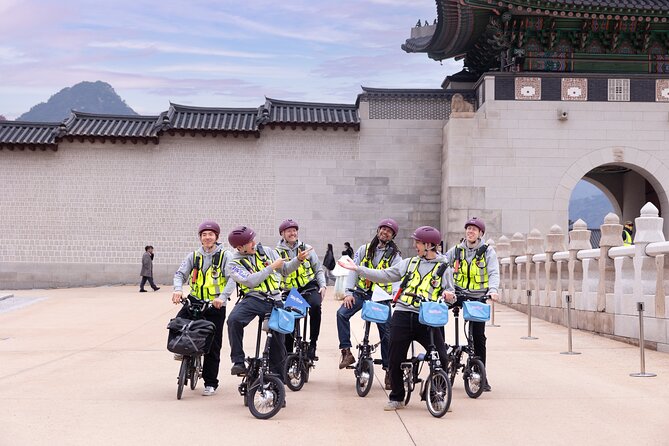
- Max 10 people for a calmer ride and easier conversations with your guide
- E-bike, helmet, and insurance included, plus a proper bike fitting before you head out
- Cheonggyecheon Stream and Gwanghwamun area to orient you fast around central Seoul
- Traditional stops like House of Baek Inje, Ikseon-dong, and Deoksugung’s Daehanmun Gate
- A full 1-hour food and drinks break at the end, with winter and summer menu changes
- Changdeokgung Palace as a final cultural highlight, timed as a quick but meaningful look
Why an afternoon e-bike tour works so well in Seoul
Seoul can feel like a lot on day one. Streets are busy, distances add up, and you spend energy figuring out routes instead of looking at the city. This 3-hour afternoon e-bike format solves that problem by compressing the highlights into a short window without turning it into a marathon.
The sweet spot is the blend of big landmarks and the quieter connectors between them. You’ll start in central Seoul near Jongno, then move through areas you’ll likely want to revisit later. Along the way, you’re not just passing by photos on a phone. You get brief context that helps you connect the dots, especially around the Cheonggyecheon area and the cultural/political meaning of the palace district.
If you have limited time, this tour also helps you set priorities for the rest of your trip. Finishing with food and drinks means you’re not ending the day hungry or stuck hunting for a meal. It’s a practical way to get oriented and then decide what you want to do next.
You can also read our reviews of more food & drink experiences in Seoul
Getting started at Le Meiller Jongno Town: the part people skip
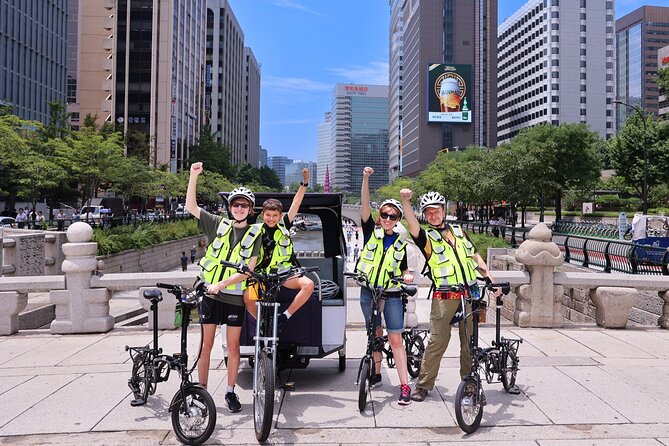
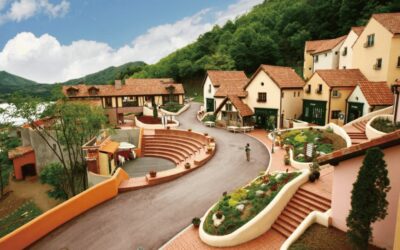
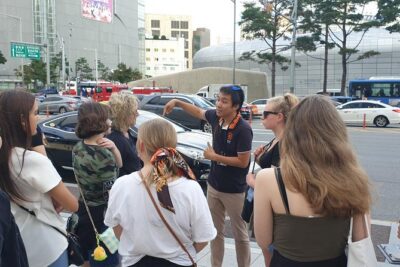
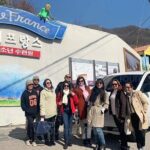
Your ride begins at Le Meiller Jongno Town, 19 Jong-ro, Jongno District. The start time is 2:30 pm, and you’re expected to arrive 20–30 minutes early. That early window isn’t wasted time. It’s for bike fitting, safety education, and making sure the e-bike feels right before you join traffic.
In a city like Seoul, bike comfort matters. If your handlebar height or seat position is off, you’ll feel it by the second main road crossing. This setup period reduces that problem. You also get a safety briefing tailored to how the tour moves as a group.
This stop also clarifies what you’re paying for. Admission isn’t the point at the rental location. You’re paying for the guided e-bike experience: bike, helmet, and insurance are included, so you’re not scrambling to find those extras separately.
The Cheonggyecheon section: Berlin Square to the stream calm-down
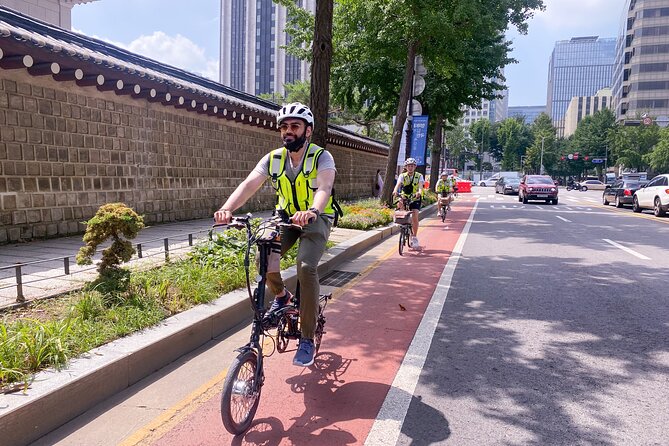
One of the smartest choices on this route is starting with Cheonggyecheon. It gives you an immediate change of pace from the usual street noise, and it’s a landmark you can still picture later when you read about Seoul.
Cheonggyecheon Berlin Square
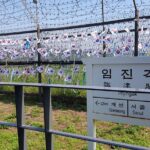
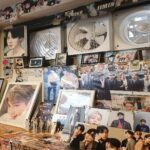
You’ll begin to understand how Korea became a divided nation by seeing why this area matters. It’s not a long stop, but it’s one of those moments where a name on a map suddenly makes sense in context.
Drawback to know: because the time here is short, you won’t have time for a long museum-style read. Think of it as orientation and a quick context hit, not a full history lesson.
Cheonggyecheon Stream
After Berlin Square, you’ll explore the stream area briefly. This is where Cheonggyecheon shines. You get a “walk and look” pause along the waterway that’s picturesque even in normal city light. It’s also a nice breather before you head back into the heavier central-core feel.
Tip for your photos: this stop is short, so pick your angles quickly. If you want a clean skyline shot, move a few steps along the edge rather than trying to shoot from the same spot for everything.
You can also read our reviews of more tours and experiences in Seoul
Gwanghwamun Square: a classic center point, plus a rest break
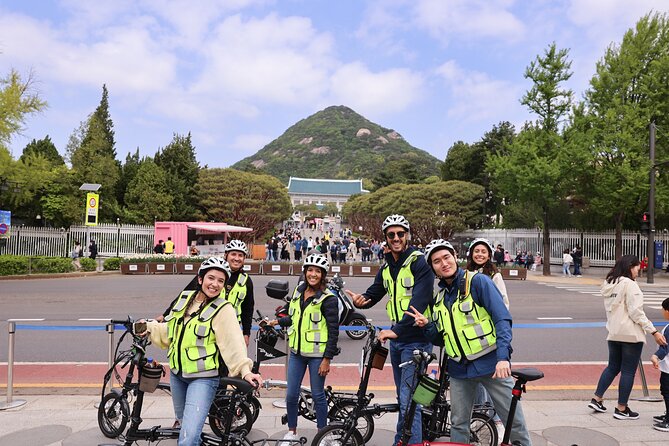
Next comes Gwanghwamun Square, in the heart of the city. This is one of Seoul’s central gathering points, with statues of symbolic figures from Korean history. For first-timers, it helps you “get the map” in your head fast.
You’ll also get a small break here. When you’re on an e-bike, that matters. Short pause times are easier to tolerate than long gaps, and the route timing keeps the ride smooth rather than dragging.
House of Baek Inje and Ikseon-dong: seeing old Seoul without getting lost
After Gwanghwamun, the tour shifts into traditional neighborhood mode.
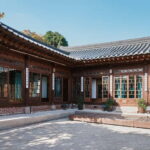
House of Baek Inje
You’ll learn about the key features of a Korean traditional home and how those elements are still used today. The best part about a stop like this on a bike tour is that it gives you a concrete object to connect to what you might see in other older districts later.
Consideration: it’s brief, so don’t expect a full guided walkthrough like you would at a standalone museum. Still, it’s enough to give you terms and ideas to look for when you wander on your own afterward.
Ikseon-dong
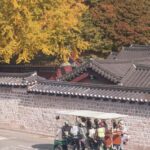
Then comes Ikseon-dong, a traditional housing district where the past and present mix in a way that’s easy to recognize just by walking a few lanes. This is a practical stop on an e-bike route because you’re close to the kind of streets you’ll likely want to explore again.
I like that this area feels like a bridge. It’s not only “history,” and it’s not only “shopping.” It’s everyday life in an older setting. You get a sense of what to seek later if you want calmer streets and character instead of only main-artery sights.
Daehanmun Gate and Changdeokgung: palace atmosphere, short and useful
Daehanmun Gate (Deoksugung Palace main gate)
You’ll stop at Daehanmun Gate, the current main gate of Deoksugung Palace. It was built in the late 19th century and is described as a symbol of the transition into a more modern Korean period. That’s a big concept, packed into a small roadside moment.
This is a good time to slow down mentally. Even if your schedule feels tight, palace gates are where you can notice how the city’s power history and street layout connect.
Changdeokgung Palace
At the end, you’ll get a quick look at Changdeokgung Palace, described as the seat of power of Joseon Dynasty kings, still majestic and relevant today. Time here is limited, so I’d treat it like a guided “first glance,” not a full palace day.
If you’re the type who wants to see palaces properly, you’ll probably add a longer standalone visit later. But as an introduction wrapped into an afternoon ride, it works.
Happy Hour Seoul: the food and drinks stop you’ll remember
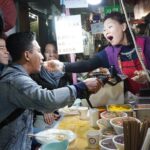
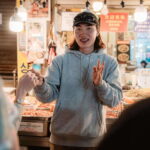
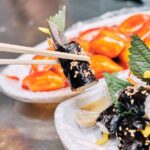
This is the heart of the tour for many people, and it’s also where the tour earns its value. You drop off the bikes and head to favorite Korean soul food restaurants for local treats and drinks. The food break is built into the schedule for about an hour, which means you’re not squeezing dinner plans into something rushed.
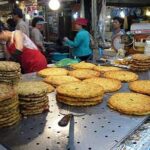
You’ll also have snacks from a local market included. That matters because it gives you a broader taste of what’s around you, not just one restaurant meal.
Winter menu style
In winter, expect comforting picks such as kimchi soup, Korean pancakes, and makgeolli rice wine. This is the kind of lineup that works with the time of year. You’re riding in cooler temperatures, then you’re getting warm food and a drink that matches the vibe.
Summer menu style
In summer, the menu shifts toward lighter energy. You’ll get K-fried chicken, along with other seasonal local treats and drinks. It’s a smart adjustment because fried and saucy food is great after a ride, and drinks keep the mood relaxed.
One more practical note: since the meal is part of the plan, you don’t have to waste your limited Seoul time trying to figure out what’s open nearby, what’s good, and what’s not a tourist trap.
Price and value: why $105 can make sense here
At $105 per person for about 3 hours, this tour isn’t a bargain snack stop. But it is a bundle deal, and the bundle is real.
Here’s what you’re getting that you’d otherwise pay for or organize yourself:
- E-bike use for the full tour period
- A safety helmet
- Insurance
- A guide-led route that covers multiple central areas
- Included market snacks
- A dedicated Happy Hour food and drinks stop (about 1 hour), with seasonal menu items
When you price bike rental plus a guide plus food and drinks, the math starts looking less like a luxury and more like a convenient package. And the max 10-person size is part of the value too. You’re not fighting a crowd, so you get more personal attention and fewer delays.
One more sign it’s a popular format: on average, people book about 38 days in advance. If you’re traveling at a busy time or want a specific day, you’ll do yourself a favor by booking earlier.
Guide style: how safety and storytelling stay practical
The guides make a difference on an e-bike tour. You’re moving through real streets, and you need the group to stay coordinated. This tour includes safety education up front and then relies on the guide during the ride.
I like that the guides named in people’s experiences—Hagar, Taejin, and Vincent—are described as attentive to safety and pace. That’s exactly what you want on a first Seoul e-bike day: clear instructions, smooth regrouping, and quick answers when you have questions.
There’s also a “beyond the ride” payoff. If you’re on your first day, the tour can help you decide what to do later because you understand where everything sits. That kind of orientation is hard to buy separately.
Weather, pace, and what to expect during the ride
This experience requires good weather. If the forecast turns ugly, you should expect a change of plans or a different date. That’s not a deal breaker, just a reality in a city where rain changes how comfortable it is to ride.
Pace-wise, the schedule is designed with short stops: 5 to 15 minutes at many points, plus the longer 1-hour Happy Hour break. That timing works well when your goal is to see a lot without turning the day into constant standing.
Also, riding time is as advertised, but the overall event time includes your setup window and stops. If you’re the type who hates being late, this is a good tour for you because the structure is clear: arrive early, get fitted, and then the tour runs on the plan.
Who this Seoul e-bike tour is for (and who should skip it)
This tour fits best if:
- You’re a first-time visitor and you want an organized orientation fast
- You have limited time and want a guided route through central Seoul
- You like eating real Korean food as part of the day, not treating dinner as a separate project
- You prefer a smaller group over big bus-style sightseeing
It may be less ideal if:
- You want long, slow museum-style visits at palaces or historic sites
- You’re sensitive to rain and want a completely weather-proof plan
- You hate the idea of riding in city traffic, even with an e-bike and helmet
If you do want traditional sights more deeply, treat this as the kickoff. It’s designed to help you figure out what you’ll want to see again on foot later.
Should you book this afternoon e-bike intro to Seoul?
If you’re wondering whether this is a good match, I’d make the call based on two questions.
First: do you want Seoul organized for you in about 3 hours? If yes, this tour’s mix of Cheonggyecheon, Gwanghwamun, traditional districts, and a palace finish is built for quick orientation.
Second: do you like food included in the plan? The Happy Hour stop is a big part of the experience, with seasonal choices like makgeolli and warm soup in winter or Korean fried chicken in summer. That alone can make the price feel fair.
If you’re flexible with dates and can show up early for fitting, this is a strong way to get your bearings fast and eat well at the same time.