REVIEW · SEOUL
Seoul History Walking Tour
Book on Viator →Operated by CompassTour · Bookable on Viator
Seoul history is best on foot. In just 3 hours 30 minutes, this small-group walk strings together 630 years of change, from Joseon-era power to modern democracy, with an Australian guide named Eric who keeps the story moving street by street.
I love two things right away: the tour keeps pace with a tight group size (max 8), which makes it easier to ask questions instead of just hearing facts, and the stops are practical to see because admission is noted as free at each listed site. You also get traditional Korean snacks plus a handy memento that helps you remember what you just learned.
One consideration: there’s no bottled water included, so plan to bring your own, especially if you tend to get thirsty on longer walks. Also, this route is timed for an afternoon start, so wear comfortable shoes and be ready to cover a fair bit of ground.
In This Review
- Key highlights you will feel on this walk
- A 3.5-Hour Timeline Walk Through Central Seoul
- Bosingak Bell Pavilion: Why the City Chimed
- Cheonggyecheon Stream: Water Through Joseon, War, and Now
- Seoul City Hall and Seoul Plaza: How Daily Power Shows Up
- Jeongdong Observatory and Deoksugung Doldam-gil: Views and a Relationship Warning
- Jungmyeongjeon Hall and the Surrender Question
- Ewha Museum: Korea’s First School for Girls and Social Change
- Former Russian Legation: The Night Flight and a Year of Hiding
- Admiral Yi Sun-sin and King Sejong: Two Statues, Two Big Ideas
- Gwanghwamun Square, the Protest Culture, and the Embassy of Japan Site
- The National Museum Rooftop and Jogyesa Temple Bells
- Price and what makes $26.60 feel like good value
- Logistics that actually matter on walking tours
- Who this tour is best for
- Should you book the Seoul History Walking Tour?
- FAQ
- FAQ
- How long is the Seoul History Walking Tour?
- How much does the tour cost?
- What time does the tour start?
- Where does the tour start and end?
- Are admissions included for the stops?
- What’s included in the tour price?
- Is bottled water included?
- How big is the group?
- Is there free cancellation?
- Can I use a mobile ticket?
Key highlights you will feel on this walk
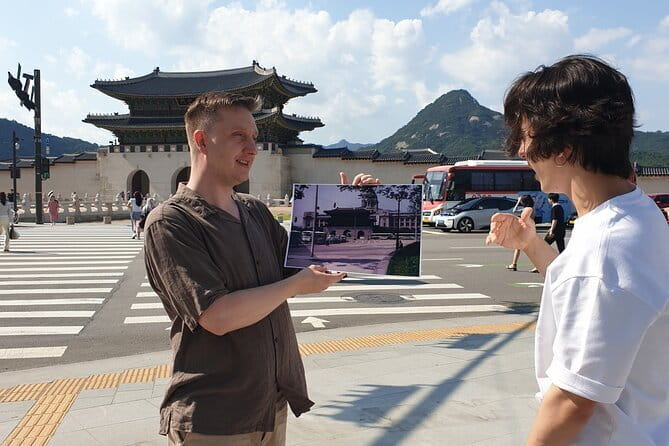
- A small group (up to 8) with Q&A time instead of a lecture-and-walk setup
- All the listed stops are admission-free (per the tour notes), which keeps the day’s cost simple
- Big historical themes in a tight loop: Joseon, occupation, women’s education, and democracy
- Real-world protest history at Gwanghwamun area and the Embassy of Japan site
- Iconic figures you can point to in person: Admiral Yi Sun-sin and King Sejong statues
- Comfort perks like snacks and a memento to slow the day down and help it stick
A 3.5-Hour Timeline Walk Through Central Seoul
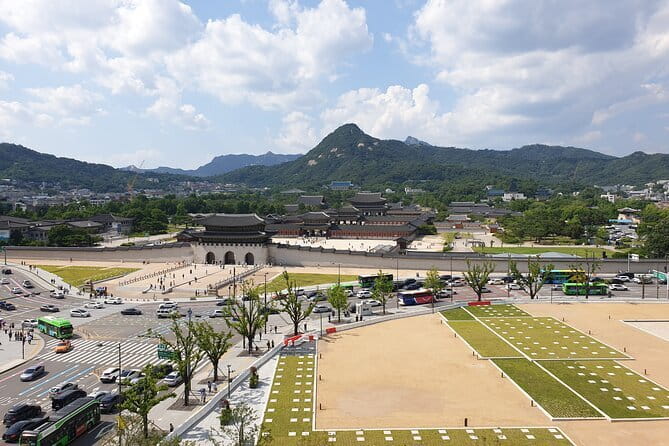
This tour is built like a history timeline you can actually walk. The route concentrates on central Seoul where the past is still visible in buildings, courtyards, and street corners. You’re not bouncing around the city, which helps you connect the dots between eras.
Because it runs about 3 hours 30 minutes, you get enough time to understand themes without getting worn out by constant rushing. And with a max of 8 people, you’ll likely get more than the standard quick answers. When I look for value, I like that the tour design avoids “drive-by sightseeing” and instead sends you into the logic of each place.
You can also read our reviews of more walking tours in Seoul
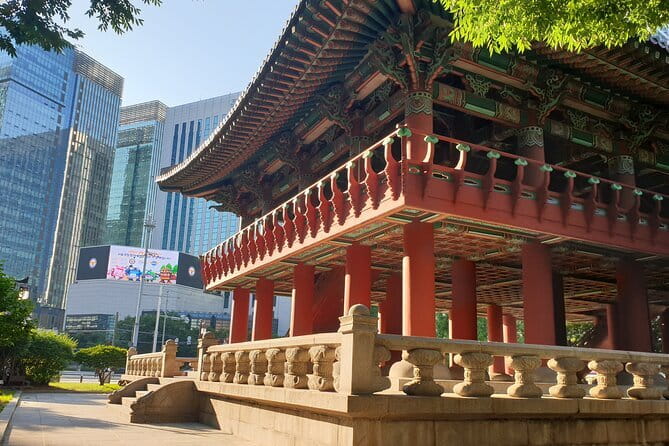
Bosingak Bell Pavilion: Why the City Chimed
You start at Bosingak Bell Pavilion (54 Jong-ro). The whole meeting point is a clue that this tour won’t treat history as something dusty. The big question here is simple and memorable: why did the city bells ring 28 times at night and 33 times in the morning?
That question does two useful things. First, it tells you these bells weren’t just decoration—they were tied to city rhythms and public life. Second, it sets your brain up to look for signals in every stop: who set rules, who benefited from them, and how ordinary people experienced them.
Tip: the bell pavilion area is compact, so use the first minutes to get your orientation, then settle into the story.
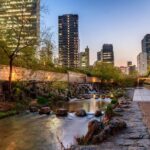
Cheonggyecheon Stream: Water Through Joseon, War, and Now
Next you head to Cheonggyecheon Stream and focus on one big idea: what did this stream provide Seoul throughout the Joseon Dynasty, Korean War, and modern times?
Streams like this are easy to walk past if you treat them as only scenery. This stop makes you look at water as infrastructure—something political and practical. The tour frames it as a thread that ties multiple eras together, which is exactly how history becomes easier to understand.
You’ll likely enjoy this segment even if you’re not a museum person. It’s visual, it’s central, and it lets you connect “daily life” with major historical events.
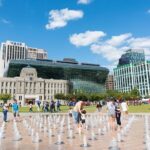
Seoul City Hall and Seoul Plaza: How Daily Power Shows Up
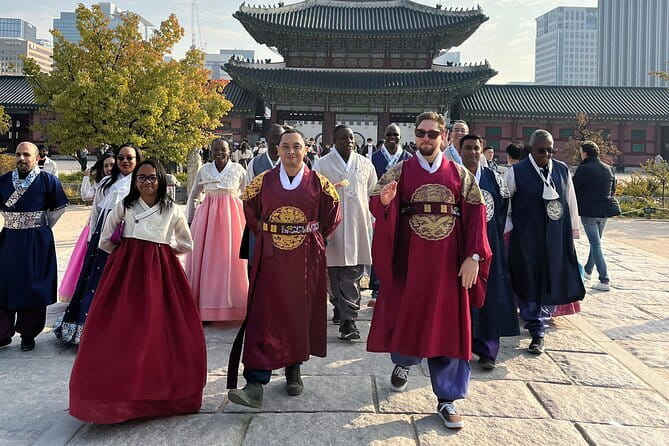
At Seoul City Hall, the guide points out how the building is an architectural gem inside and out—a reminder that government isn’t only policy. It’s also design and visibility.
Then you move to Seoul Plaza with another human question: how does this plaza reflect the hearts of modern citizens?
This pair of stops is smart because it shifts the focus from kings and generals to the way civic life feels. You get to see how public space becomes a place where people gather, complain, celebrate, and organize—often without realizing they’re stepping into history.
If you like modern culture mixed with old roots, this is one of the easier-to-feel sections of the walk.
Jeongdong Observatory and Deoksugung Doldam-gil: Views and a Relationship Warning
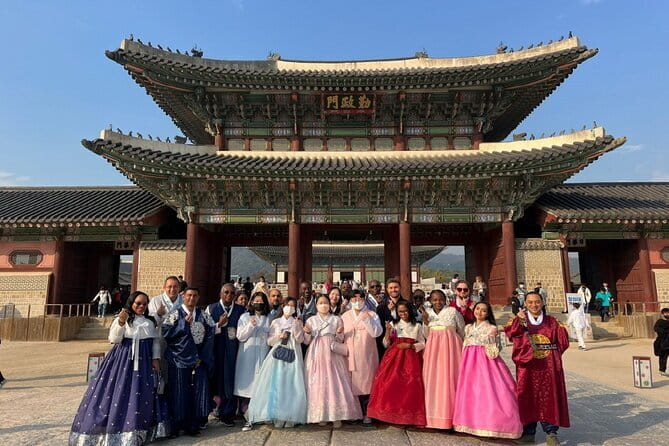
You’ll head to Jeongdong Observatory next, where the key question is what you can see of the palace and cityscape from that perch. Even without turning it into a lecture, this stop helps you understand geography—how Seoul’s layout shapes power and daily movement.
Then you walk over to Deoksugung Doldam-gil, and the guide shares a famous folk belief: Koreans say that if you walk along this stone wall with your spouse, you’ll soon be divorced. Whether you treat it as superstition or a playful tradition, it’s still useful because it shows how meaning gets attached to physical spaces.
Here’s how to use this stop well: look at the wall as both a design element and a story machine. A place like this holds cultural signals that don’t require you to read a single pamphlet.
You can also read our reviews of more historical tours in Seoul

Jungmyeongjeon Hall and the Surrender Question
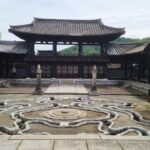
At Jungmyeongjeon Hall, the tour pivots into a heavier topic: how did Imperial Japan force Korea to surrender its independence?
This is one of the stops where you’ll want to let the guide’s framing do the work. The hall is a real setting for a real turning point, so it’s harder to reduce to a one-sentence fact. You’ll likely come away with a clearer sense that occupation and political control weren’t abstract—they changed Korea’s choices and timelines.
If history makes you curious but also a bit frustrated, this stop can be an emotional one. It’s okay to take a few minutes and absorb what the place is signaling.
Ewha Museum: Korea’s First School for Girls and Social Change
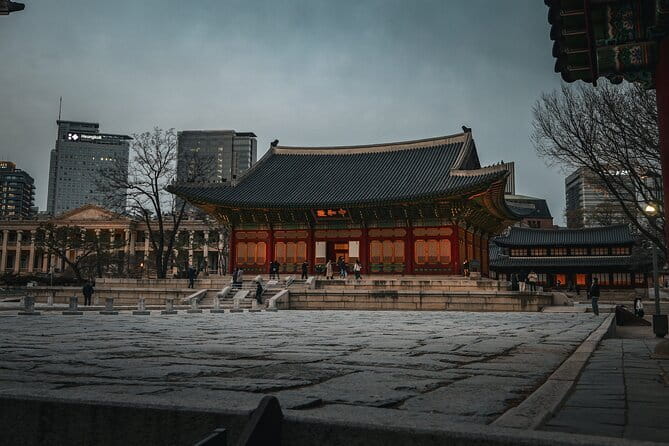
You’ll then reach Ewha Museum, focusing on how Korea’s first school for girls changed societal views on women’s roles.
This stop matters because it moves beyond kings and battles into something that affects families and futures. Education is a power tool, and the tour’s framing helps you understand why a school isn’t just a building—it’s a shift in what society expects from women.
This is also a stop that tends to work well for mixed groups—people who love cultural history, people who prefer social change themes, and people who just want a break from pure political storylines.
Former Russian Legation: The Night Flight and a Year of Hiding
Next is the Former Russian Legation, where you’ll ask why Korea’s penultimate monarch fled his palace in the middle of the night and stayed here for a year.
The question alone gives the stop tension. You’re not walking through something calm and pretty—you’re looking at the shadow side of royal decisions, surrounded by the practical question of where someone goes when the political ground shifts under their feet.
This is a strong stop for anyone who likes cause-and-effect history. It also helps you connect later themes: how foreign powers, threats, and alliances shape internal choices.
Admiral Yi Sun-sin and King Sejong: Two Statues, Two Big Ideas
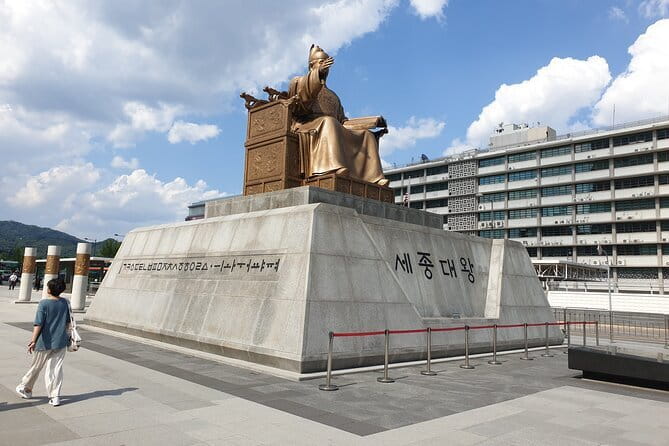
You’ll see two statues that anchor the Joseon story in people you can remember: Admiral Yi Sun-sin and Sejong the Great.
For Admiral Yi, the question is blunt and direct: how did this general save Korea and change the course of world history? That framing matters because it positions him beyond local legend. You’re encouraged to think about strategic leadership rather than only hero worship.
Then the statue of King Sejong the Great poses the question of why Sejong is considered the greatest king of the Joseon Dynasty.
This pair is useful because it gives you a way to organize what you’ve learned. Yi Sun-sin helps you understand defense and crisis management. Sejong helps you understand governance and long-term development. Seeing both in one run helps the timeline click.
Gwanghwamun Square, the Protest Culture, and the Embassy of Japan Site
At Gwanghwamun Square, you’ll get the tour’s democracy question: how many protests does it take to change a democracy?
That’s a great line of inquiry because it connects history to present behavior. It also makes you pay attention to what public spaces are for. People don’t gather only for events; they gather to push for decisions.
Then you move to the Embassy of Japan, where the question is why it’s the site of the world’s longest running protest. This part of the walk is a reminder that history doesn’t only live in old palaces. It also lives in ongoing demands for justice and attention.
If you’re the type who likes to understand modern politics without reading 40 pages, this segment helps.
The National Museum Rooftop and Jogyesa Temple Bells
After the civic-protest stops, you head to the National Museum of Korean Contemporary History, where the highlight is how much history you can see from the rooftop.
Even when you don’t spend a long time inside, rooftops have a special value: they help you understand scale. You can look outward, then mentally return to the stories you just heard and connect past and present spatially.
Finally, you end at Jogyesa Temple, with a question about how the ringing of bells connects us with the universe.
Ending with a temple is a thoughtful contrast. It gives your brain a reset. You’ve been tracking political pressure, cultural change, and social movements, and now you shift to ritual and meaning—something quieter but still part of Korea’s lived history.
Price and what makes $26.60 feel like good value
At $26.60 per person, this tour is priced like a solid afternoon activity, especially when you factor in what you get for that money. You’re paying for:
- A guided storytelling route through central Seoul over about 3.5 hours
- Traditional Korean snacks included
- An informative memento to help memory
- A mobile ticket option
- A small group cap of 8 travelers, which often means better interaction
- Listed stops with free admission noted across the itinerary
What you don’t get is bottled water. So for value, treat the price as including guidance and access, not as a convenience package for hydration. Bring a bottle or plan to buy water nearby.
Also, the tour is often booked about 81 days in advance on average, so if you’re traveling in a busy season, I’d consider booking early so you can get the afternoon time slot.
Logistics that actually matter on walking tours
This walk starts at Bosingak Bell Pavilion in Jongno District and ends at Jogyesa Temple, with the guide assisting you for directions at the end. It’s also listed as near public transportation, which helps if you want to pair it with other sights on the same day.
A few practical notes:
- Wear comfortable shoes. This is a walking-history experience, not a sit-and-watch show.
- Plan for an afternoon start at 2:30 pm.
- Bring your own water since it’s not included.
- If you’re traveling with a service animal, service animals are allowed.
The maximum of 8 travelers is a big deal. It usually means you get more personal attention, and your questions are less likely to get lost.
Who this tour is best for
This is a strong choice if you want history that feels human. You get military leaders, kings, political conflict, women’s education, and protest culture, all in one loop. It’s not only about old structures; it’s about how people lived, argued, studied, and resisted.
I think you’ll especially enjoy it if:
- You like walking routes that connect sites into a narrative
- You prefer a guide who answers questions rather than one-way sightseeing
- You want an approachable length that doesn’t swallow your whole day
If you only care about one narrow theme—like purely war history or purely palaces—this might feel broad. But if you want a wide, organized story of Seoul, it’s a good fit.
Should you book the Seoul History Walking Tour?
Yes, if you want a well-shaped history walk that stays practical. The combination of a small group, free-site stops, snacks, and a guide who answers questions makes it feel like more than a basic tour price.
I’d say skip it only if you hate walking, you dislike being outdoors for a few hours, or you don’t want any political or historical heaviness. Otherwise, this is the kind of afternoon that makes you look at Seoul differently for the rest of your trip.
FAQ
FAQ
How long is the Seoul History Walking Tour?
It runs for about 3 hours 30 minutes.
How much does the tour cost?
The price is $26.60 per person.
What time does the tour start?
The start time is 2:30 pm.
Where does the tour start and end?
It starts at Bosingak Bell Pavilion, 54 Jong-ro, Jongno District, Seoul, and ends at Jogyesa Temple. The guide helps with directions, and the tour ends directly up the street where it began.
Are admissions included for the stops?
The stops listed in the tour notes show admission ticket free for each site.
What’s included in the tour price?
Snacks (traditional Korean snacks) and an informative memento are included.
Is bottled water included?
No bottled water is not included.
How big is the group?
The maximum group size is 8 travelers.
Is there free cancellation?
Yes, you can cancel for a full refund up to 24 hours before the experience’s start time.
Can I use a mobile ticket?
Yes, the tour offers a mobile ticket. Confirmation is received at the time of booking.