REVIEW · SEOUL
Discover Seoul: Local Life and History
Book on Viator →Operated by MORTOUR GUIDED TOURS · Bookable on Viator
Seoul history moves fast here. This 3.5-hour guided loop in Jongno pairs major Joseon-era landmarks with everyday neighborhood streets, so you get context and atmosphere at the same time. Gyeongbokgung Palace anchors the walk, with Gwanghwamun Avenue and Hanok neighborhoods doing the connecting.
I like how the tour keeps things efficient: a small group (max 20) and a route that’s easy to follow without bouncing across the city. I also like the local-life flavor, from tea houses and craft shops around Insadong to the kind of food guidance that helps you actually eat well in Seoul.
The main drawback is simple: expect walking on uneven streets and a bit of uphill energy in Bukchon, and plan around weather. The experience requires good weather, and Seoul City Hall may be closed on some Tuesdays.
In This Review
- Key things to know before you go
- A 3.5-hour loop through Seoul’s palace belt (Gwanghwamun to Bukchon)
- Starting at Seoul City Hall: a quick history reset
- Gwanghwamun Square and the Joseon heroes in front
- Gyeongbokgung Palace: guard change with real context
- Insadong’s tea houses and craft streets for local flavor
- Bukchon Hanok Village: finishing where alleys feel older
- Price and logistics: is $96.75 good value?
- Use this tour to plan the rest of your Seoul days
- When to book and what could disrupt your day
- Should you book this Discover Seoul walk?
- FAQ
- How long is the Discover Seoul tour?
- What does the tour cost?
- Where do I meet and where does it end?
- Is the ticket mobile?
- Do you pay for entry fees at the stops?
- What’s the group size limit?
- What happens if weather is bad?
Key things to know before you go
- Gyeongbokgung + guard change gives you a clear “royal Seoul” starting point.
- Gwanghwamun statues for King Sejong and Admiral Yi Sun-sin add story without extra effort.
- Insadong time is for tea houses, galleries, bars, and craft shops in a Hanok-heavy zone.
- Bukchon ends the route in a traditional alley area between major landmarks.
- Free entry for listed stops helps you avoid surprise costs while you learn.
- Mobile ticket keeps check-in straightforward.
A 3.5-hour loop through Seoul’s palace belt (Gwanghwamun to Bukchon)
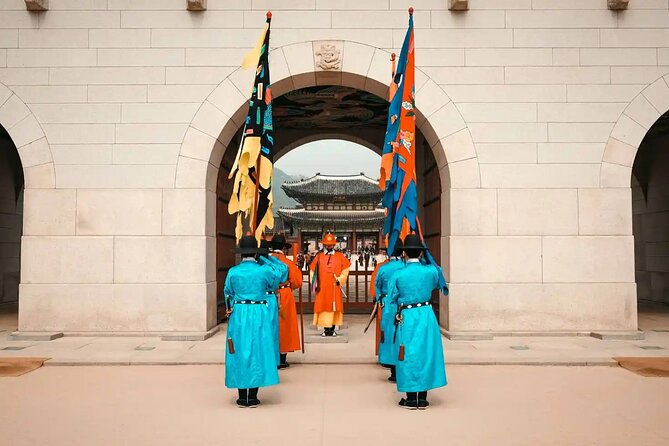
This is the kind of tour that helps you get your bearings quickly. You start in the broad, civic energy of Seoul Plaza, then move into the Joseon “power corridor” of Gwanghwamun, and finally wind your way through older residential lanes in Bukchon. It’s not a long day, but it covers enough ground that you’ll understand how Seoul’s history and modern city planning fit together.
Because the group is capped at 20, the guide can slow down where people have questions and keep the pace friendly. You’ll also get a gentle blend of sights and street-level culture, which is where “local life” shows up most clearly in Seoul.
One practical note: this route is compact, but it’s still a walking tour. If your knee doesn’t like stairs or uneven stones, plan for breaks and bring comfortable shoes from the start.
You can also read our reviews of more historical tours in Seoul
Starting at Seoul City Hall: a quick history reset
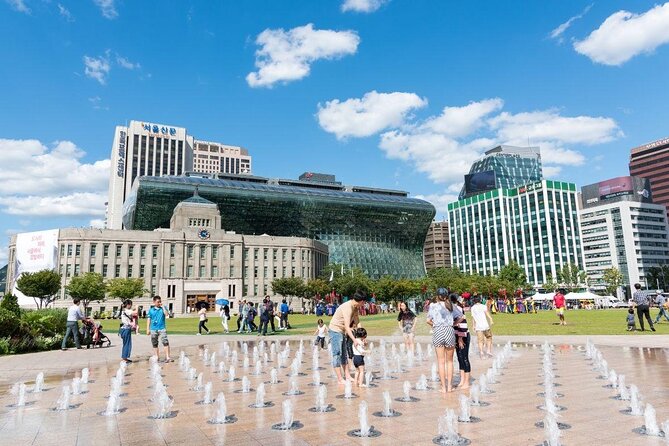
You begin at Seoul Plaza (110 Sejong-daero, Jung District), and that first stop is more than a landmark photo. Seoul City Hall is used as a history orientation point, giving you a base layer for what comes next along the Gwanghwamun axis.
Admission here is free, so you’re not spending time paying fees before the tour even starts to feel worthwhile. The one thing to watch: Seoul City Hall might be closed on some Tuesdays. If you’re booking around a Tuesday, it’s smart to check whether your chosen date is affected.
Gwanghwamun Square and the Joseon heroes in front
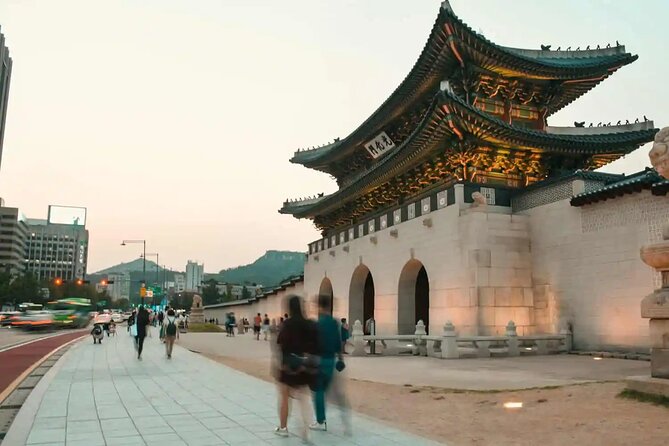
Next you hit Gwanghwamun Square, with time to walk the main avenue and understand why this area is Seoul’s symbolic center. The scale of the space makes it easier to see how grand government-era design shaped daily movement.
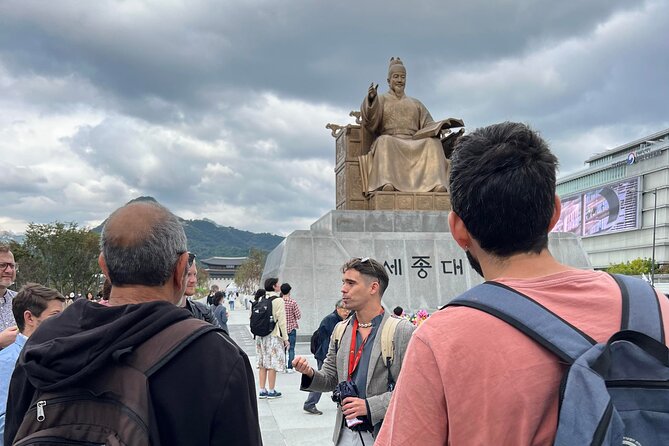
Just in front of Gwanghwamun Gate, you’ll also spend a short stop at the public open space featuring statues of King Sejong and Admiral Yi Sun-sin. It’s brief, but it matters. Instead of just naming famous figures, you get a simple way to connect their roles to what you’re standing in front of.
Admission at these stops is free, so you’re paying with your time, not your wallet. That’s a good trade if you’d rather spend money on meals than entrance fees.
Gyeongbokgung Palace: guard change with real context
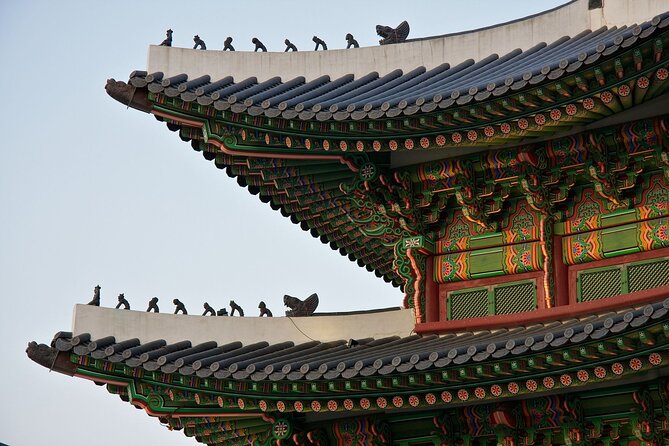
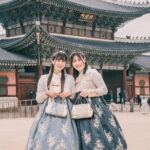
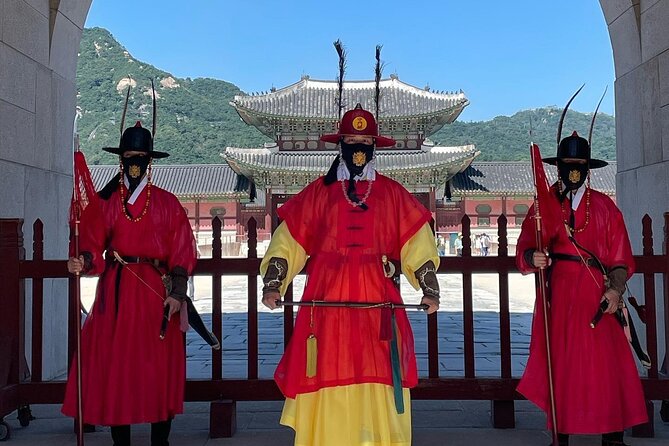
Gyeongbokgung Palace is the star of this route. You get an introduction to the main palace and time to see the change of the guards, which is one of those moments that makes history feel physical instead of just textbook.
Admission at the palace stop is listed as free for this experience, which is a big part of the value equation. Of course, Gyeongbokgung is a major site, so you’ll still want to manage expectations: this tour is designed as a highlight-and-context walk, not an hours-long deep ticket tour.
What you should aim to notice is the way the palace and its ceremonial role connects to the statues and avenues you saw earlier. When you connect the names (Sejong, Yi Sun-sin) to the setting (royal Seoul), the whole city starts making more sense.
Practical tip: arrive with an easy mindset. Even with a guide, popular palace areas can mean crowds and lines around ceremonial moments.
Insadong’s tea houses and craft streets for local flavor
After the big palace energy, the tour shifts into calmer, older neighborhood life in Insadong. This stop is about the “in-between” streets—lanes where Hanoks cluster and where you can peek into local routines through tea houses, galleries, bars, and craft shops.
The value here is that you’re not just walking past storefronts. A good guide helps you understand what to look for and where the rhythm of the neighborhood changes: what feels more touristy, what feels more lived-in, and where you can slow down for a drink.
A standout detail from the experience descriptions is that you’ll get practical suggestions for where to eat and drink—plus guidance that includes famous Korean comfort food like Korean beer chicken. That’s the kind of info that’s hard to guess on your own, especially if you’re new to the area.
If you’re hungry, Insadong is the place to let that appetite steer you. If you’re not hungry yet, it still works as a planning zone for later meals, because you’ll see what’s around and which streets feel most comfortable to revisit.



Bukchon Hanok Village: finishing where alleys feel older
The tour ends in Bukchon Hanok Village, finished near Cafe Onion Anguk (5 Gyedong-gil, Jongno District). You’ll be positioned on a hill between Gyeongbok Palace and Bukchon, which is why this stop feels like a different world from the wide avenues you started with.
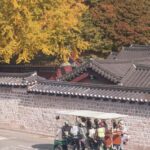
This area is known for preserved traditional alleys and hanok architecture, with the tour framing it as a living window into what’s been preserved for centuries. Even if you don’t spend hours wandering, you’ll get a meaningful snapshot of the residential side of historic Seoul.
The main caution is physical. Bukchon can mean uphill routes and uneven walking surfaces. If you’re doing this early in your trip, treat it as a settling-in walk. If you’re doing it late in the day, you may want to cut your exploration short and save energy for dinner.
Price and logistics: is $96.75 good value?
At $96.75 per person for about 3 hours 30 minutes, the best way to judge value is what you avoid and what you gain. You’re paying for route planning, timing, and context—plus the convenience of a guide who can connect sites and steer you toward food and drink options that fit the neighborhood.
A big value point is that listed stops show free admission for this experience. That reduces “hidden costs” and makes the price feel more like you’re paying for interpretation and local guidance, not just access.
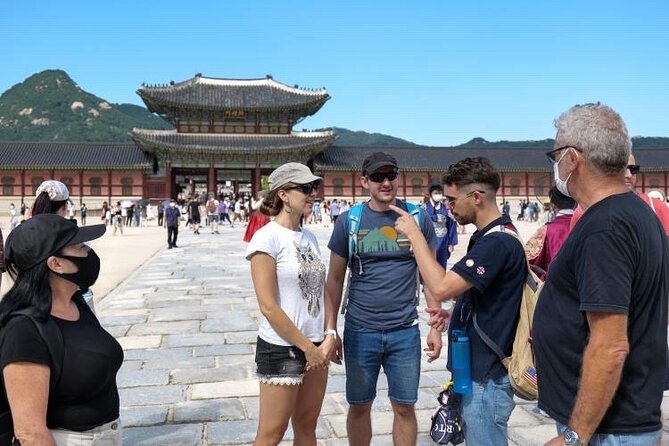
Group size also matters. With a maximum of 20, you get the benefits of a guided walk without the churn of a massive crowd. And you get a mobile ticket, which keeps check-in simple.
One more practical angle: this tour is popular enough that it’s often booked about 24 days in advance, which is a hint that it slots well into short schedules. If you’re working with a layover or a tight first day, this kind of “big sights + local streets” routing can help you make the city feel less overwhelming.
Use this tour to plan the rest of your Seoul days
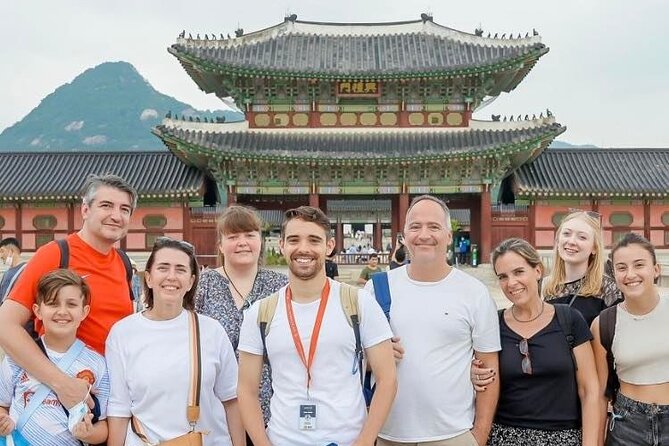
I like tours that do more than show monuments. This one gives you a foundation: royal Seoul (Gyeongbokgung), civic/avenue structure (Gwanghwamun), and neighborhood character (Insadong and Bukchon). After that, you’ll have a mental map for where to go next—whether you want more palaces, more shopping, or a calmer dinner route.
You’ll also come away with practical food guidance. Descriptions of the guide’s approach emphasize finding authentic street food and making choices that match what you’re interested in (not forcing one-size-fits-all meals). If you’re the type who likes to eat while sightseeing, this is a strong pairing.
If you’re planning your day around photos, use this tour as your “orientation shoot.” Then come back later for slower walking once you know which streets feel easiest for you.
When to book and what could disrupt your day
This experience requires good weather. If conditions aren’t right, you’ll be offered a different date or a full refund. That matters in Seoul because weather can change your walking comfort fast.
Also keep in mind the note about Seoul City Hall potentially being closed on some Tuesdays. If you’re set on a Tuesday, double-check the date you’re booking.
Finally, the simplest success trick: confirm your start time and give yourself buffer time at the meeting point (Seoul Plaza). The route is short, so missing a chunk at the beginning can throw off the rest of the experience.
Should you book this Discover Seoul walk?
Book it if you want a first-time Seoul plan that mixes major landmarks with neighborhood texture. It’s a smart choice early in your trip because it helps you understand the layout and gives you immediate guidance on where to eat and what kind of streets to linger in.
Skip it (or at least reconsider) if you’re not up for walking on hills and uneven surfaces, or if you’re traveling during a stretch of uncertain weather. The palace and Bukchon portions are worth it, but this isn’t the tour for people who want to stay mostly on flat ground.
If your ideal Seoul day is a guided path through Gyeongbokgung, then streets in Insadong, and ending in hanok alleys at Bukchon, this one fits that goal cleanly.
FAQ
How long is the Discover Seoul tour?
It runs for about 3 hours 30 minutes.
What does the tour cost?
The price is listed as $96.75 per person.
Where do I meet and where does it end?
You start at Seoul Plaza, 110 Sejong-daero, Jung District. The tour ends at Cafe Onion Anguk, 5 Gyedong-gil, Jongno District (near Bukchon Hanok Village).
Is the ticket mobile?
Yes. The experience features a mobile ticket.
Do you pay for entry fees at the stops?
Admission is listed as free for the stops included in the tour.
What’s the group size limit?
The tour has a maximum of 20 travelers.
What happens if weather is bad?
The experience requires good weather. If it’s canceled due to poor weather, you’ll be offered a different date or a full refund.