REVIEW · SEOUL
Korean History & Heritage Tour
Book on Viator →Operated by KoreanTourGuide · Bookable on Viator
Seoul’s old stories show up fast. This private Gangbuk day stitches together palace power, everyday Joseon-era life, and classic food streets so you don’t just look at landmarks—you understand what they meant. With a personal guide (I’ve seen guides like Michael and Judy praised for making connections easy to follow), you get a full route without the guesswork.
I especially like two parts: first, the Changing of the Guard at Gyeongbokgung Palace, where the focus is on architecture and how royal spaces worked. Second, the 600-year-old Kwangjang Market, which has shifted from linen trades to go-to comfort street food you can actually taste and watch being prepared.
One consideration: the day is packed into short visits, and Gyeongbokgung admission isn’t included (plus lunch isn’t included). If you hate fast pacing or you want long stays in one place, plan to use this tour as your “high-impact heritage overview.”
In This Review
- Key highlights that make this tour worth your time
- Gangbuk In One Day: How This 7-Hour Route Really Feels
- Gyeongbokgung Palace and the Changing of the Guard
- National Folk Museum of Korea: Birth, Life, Death, and the Afterlife Story
- Bukchon Hanok Village: Seeing Tradition Where People Still Live
- Insadong’s Art Streets: Guild Power and Antique Alley Finds
- Jogyesa Temple and Cheonggyecheon Stream: A Calm Break in the Middle
- Kwangjang Market: From Linens to Street Food You’ll Actually Want
- Price and Value: What $475 Per Group Really Buys
- Guide Quality and Pacing: The One Risk You Can Manage
- Who This Tour Is For (and Who Might Prefer Something Else)
- Should You Book This Korean History & Heritage Tour?
- FAQ
- What time does the tour start?
- How long is the Korean History & Heritage Tour in Seoul?
- Is this a private tour or shared group?
- How many people can be in a group?
- Is pickup and drop-off included?
- Are any admissions included?
- Is lunch included?
- Do I pay extra if I’m staying outside Seoul?
- Do I need to bring a ticket?
- Can I cancel for a full refund?
Key highlights that make this tour worth your time
- Private group route through Gangbuk: your own guide, your own pace within the day’s timing.
- Palace + guard ceremony focus: Gyeongbokgung is treated as a living architecture lesson, not just a photo stop.
- National Folk Museum with a life-cycle theme: birth, life, death, and even afterlife as a coherent storyline.
- Hanok village that still has residents: you see tradition where people live now, not only as a set.
- Cheonggyecheon and temples for atmosphere: a calmer break between palace and market.
- Kwangjang Market’s long arc: from linens to street snacks, with the route ending where you can linger over food.
Gangbuk In One Day: How This 7-Hour Route Really Feels
This is built like a “heritage sampler” across north Seoul, in and around Gangbuk. You’ll move by air-conditioned vehicle between stops, with hotel pickup and drop-off included from anywhere in Seoul. For most people, that’s the big win: you spend energy on sights, not on navigating trains, buses, and walking transfers.
The schedule is tight but not chaotic. You’re getting seven stops, each designed for a specific angle: power (palace), society (folk museum), lived tradition (Hanok village), art and trade (Insadong), religion and local spirituality (Jogyesa), city water stories (Cheonggyecheon), then food and everyday culture (Kwangjang Market). This is a great format if you want a “whole picture” day rather than hunting one neighborhood for hours.
If you’re someone who loves photos, you’ll get plenty. If you’re more of a “why does this place matter” person, you’ll also feel taken care of, because the tour explicitly frames what you’re seeing in terms of Joseon-era life and the way Korean culture shows up in daily routines.
You can also read our reviews of more historical tours in Seoul
Gyeongbokgung Palace and the Changing of the Guard
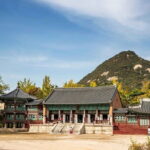
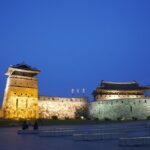
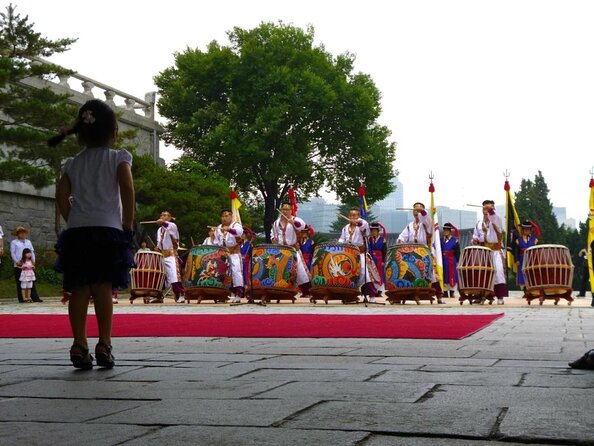
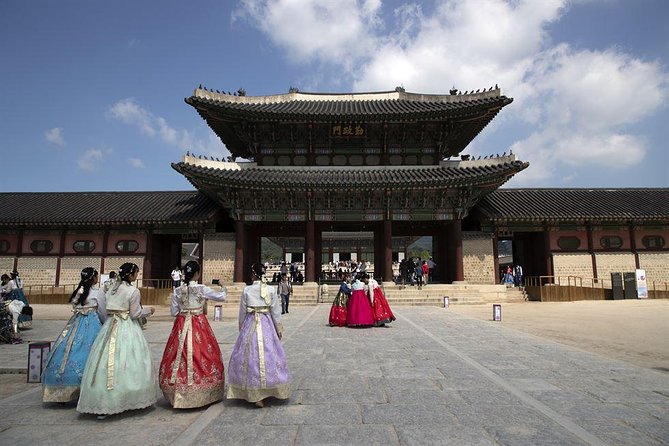
Gyeongbokgung Palace is the showpiece, and the tour treats it that way. You’ll start here and catch the Changing of the Guard Ceremony, then go farther into the palace grounds to appreciate how the buildings were designed and how royal life worked inside that layout.
A practical note: you get about 45 minutes for this stop, and the palace admission ticket is not included. That means you should budget for entry fees and keep your timing flexible for any lines or access checks. If you arrive expecting the tour to cover every ticket, you’ll be surprised.
What I like about this stop is the angle. It’s not only ceremonial watching; it’s architecture and function—how space shaped authority, daily routines, and movement. Even if you know basic palace facts, this structure helps you connect the dots between the ceremonial parts and the palace as a working environment.
Tip: If you’re sensitive to weather, dress for comfort early. You’ll be outside for parts of the ceremony and walks.
National Folk Museum of Korea: Birth, Life, Death, and the Afterlife Story
After the palace, you shift gears to the human side of history. The National Folk Museum of Korea is framed as a life-cycle story: birth, life, death, and even what comes after. That theme matters because it stops history from feeling like separate trivia and turns it into one continuous worldview.
This stop is about 30 minutes, and admission is free. You won’t have time to read every label in a slow museum style, but you’ll get the key narrative the guide is using to explain the collection. For a first-time visitor, that’s a smart trade: you leave knowing what to look for if you return later on your own.
The drawback here is also the same thing that makes it efficient: the museum visit is short. If museums are your thing and you want to linger, you might wish you had more time. But as a part of a day plan, it works because you’re not waiting for the tour to catch up—you’re using the museum stop as a concept reset between outdoors sights.
Bukchon Hanok Village: Seeing Tradition Where People Still Live
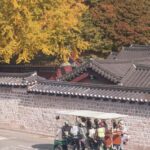
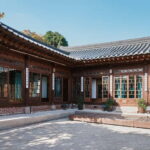
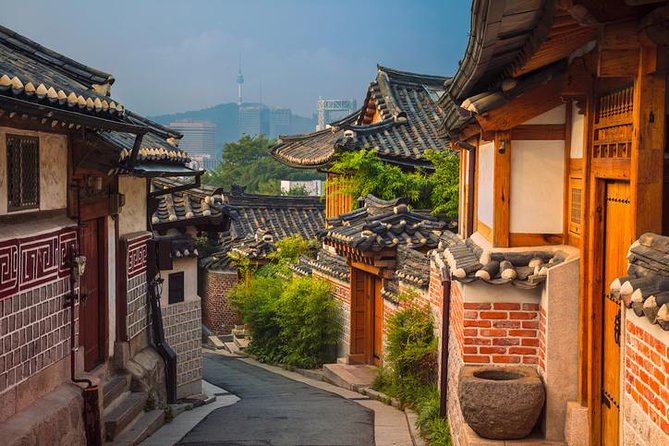
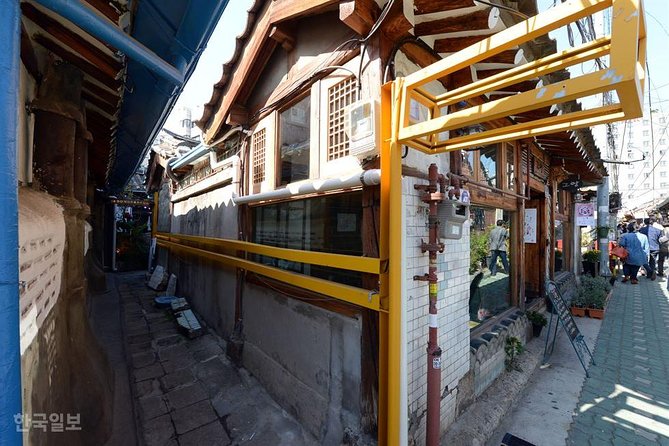
Next is Bukchon Hanok Village, and this is one of the stops that makes the day feel real. You’ll see a traditional Korean village where people still live. That changes the experience. It’s not just a scenic district. It’s an ongoing community, shaped by daily life around old architecture.
The time here is about 40 minutes, and admission is free. The practical value is that it’s a short enough window to get your bearings and notice building styles, street patterns, and how spaces fit together—without getting trapped into a long wandering loop.
One consideration: because residents live there, you should act like a considerate visitor. Keep your pace steady, be mindful of doors and narrow lanes, and don’t assume every angle is a free-for-all photo spot.
If you want a souvenir-free kind of authenticity, this is where it shows. It also connects well to the museum theme: you can compare how everyday life and belief systems show up in architecture.
Insadong’s Art Streets: Guild Power and Antique Alley Finds
Insadong comes in as the cultural marketplace layer of the day. You’ll walk through what’s described as the king’s guild area, where artists and designers were commissioned for royal work. Today, that historical role translates into the antique alleyway feel—shops and stalls selling souvenirs and Korean art pieces.
This stop lasts about 45 minutes, and admission is free. The downside is that Insadong is also where you’ll feel the most pressure to buy, because it’s built for browsing. If shopping isn’t your priority, treat it like a walking cultural map: focus on one or two item types (paper crafts, small ceramics, traditional goods) and then stop before you drift into overspending.
What’s useful is that the guide’s framing gives you context. You’ll walk faster when you understand why a street feels the way it does. That’s the difference between visiting Insadong and using it as part of a story about Korean arts and court patronage.
Practical tip: If you plan to buy anything delicate, keep it protected. You’ll likely be carrying it across the rest of the day to the market.



Jogyesa Temple and Cheonggyecheon Stream: A Calm Break in the Middle
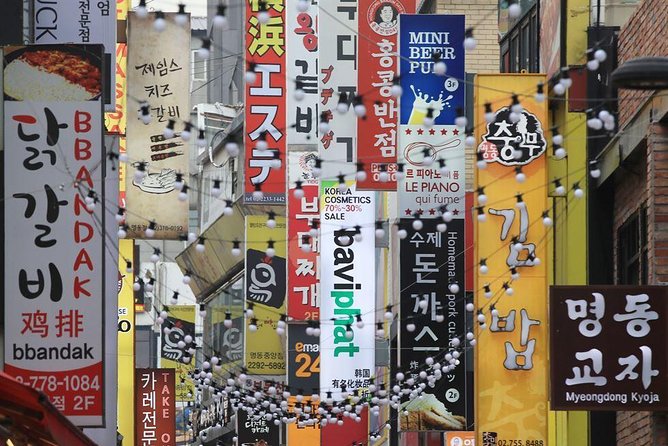
The tour then slows down in two different ways.
First is Jogyesa Temple, about 20 minutes. It’s presented as a Buddhist temple tied to the country’s historical religion. This kind of stop works well mid-day because your brain needs a reset after palaces and markets. Even if you don’t read much religious detail, you’ll feel the shift in pace and focus.
Admission is free here, so you can spend your mental energy on atmosphere and symbols rather than logistics.
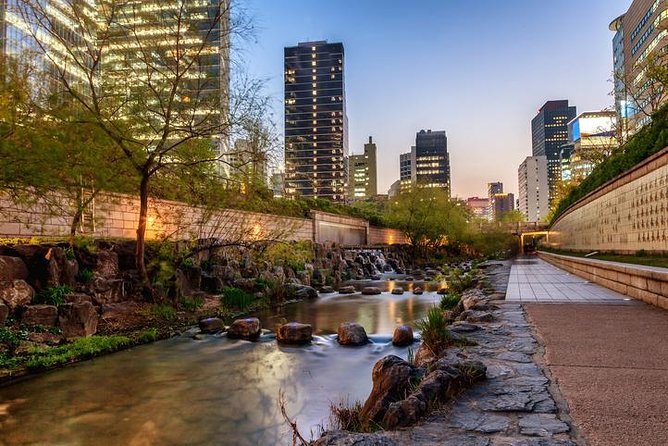
Then you walk Cheonggyecheon Stream for about 30 minutes, also free. The guide explains stories behind the waterway, and that narrative angle matters. A stream can sound like a “nice walk” on paper, but when you get the story, it becomes part of Seoul’s identity—how the city remembers and shapes itself around water.
This is a good time to take a breather and check your energy. If you’re wearing uncomfortable shoes, you’ll notice it here. If you’re comfortable, it feels like the day finally breathes.
Kwangjang Market: From Linens to Street Food You’ll Actually Want
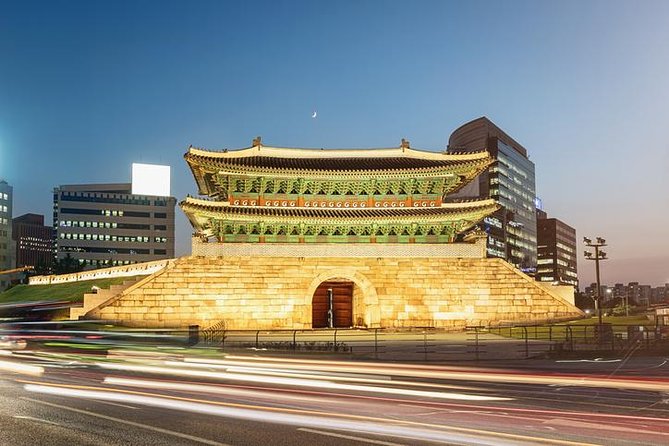
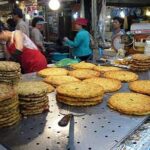
You end with Kwangjang Market, and it’s designed for the payoff. This market is described as around 600 years old and originally tied to linen sales for special occasions. Over time, it reinvented itself into one of the go-to places for Korean comfort street food carts.
Your time is about 30 minutes, and admission is free. That’s not long for a market, so approach it like a mission: decide what you want to try before you arrive. If you’re traveling with a small group, you can split items so everyone gets variety without committing to a full meal for one person.
This is also where the guide quality can show up in a big way. In the feedback I’ve seen tied to guides like Michael, the tour experience included suggestions for a favorite restaurant stop for Ginseng Black Chicken, which signals a guide who knows how to translate history into food you can taste. Whether or not you go for a sit-down option, that kind of recommendation style is what elevates the market from browsing to real eating.
One more practical thought: markets mean smells, crowds, and heat. Plan for that and keep cash or card options handy if you’re buying snacks.
Price and Value: What $475 Per Group Really Buys
The price is $475 per group, up to 6 people, and it’s typically booked about 46 days in advance. On a per-person basis, that can be excellent value if you fill the group: for 6 people, it works out to roughly $79 per person for a 7-hour private day with pickup and an air-conditioned vehicle.
What you’re paying for isn’t just transport. You’re paying for reduced friction:
- Free hotel pickup and drop-off from anywhere in Seoul
- Air-conditioned vehicle between a palace, museum, neighborhood, temple, stream, and a major market
- A guide who connects each stop to the Joseon-era and everyday life theme
Tickets are a mixed bag. Only Gyeongbokgung Palace admission isn’t included. Most other stops listed are free, which helps keep the day predictable. Lunch isn’t included, so you’ll still need to budget for that part.
So is it worth it? For couples, it can still make sense if you value privacy and guided context more than free wandering time. For solo travelers, the math can be less friendly, since the price is set per group.
If your priority is seeing these exact sights without coordinating transport and timing yourself, the pricing starts to look pretty fair.
Guide Quality and Pacing: The One Risk You Can Manage
Private tours are only as good as the execution, and one outlier review pointed to unprofessional behavior, parking far away, and a car-tour experience turned into more walking than expected while still charging the private-car fee. That’s not the norm in the overall rating, but it’s a useful reminder: you should set expectations early and speak up if something feels off.
Here’s how you manage it without drama:
- Confirm at pickup where the vehicle will park and how you’ll move between stops.
- If you notice the day turning into a mostly-walking tour, ask directly about the plan while you’re still at stop 1 or stop 2.
- Keep an eye on time. With a 9:00 am start and seven stops, the schedule depends on transport behaving like transport.
On the positive side, the high recommendation rate and guide praise like Michael for making Korean life history click, and Judy for being patient and kind, suggest that when things go well, the guide truly shapes the day.
In plain terms: you’re buying continuity. Protect that by communicating early.
Who This Tour Is For (and Who Might Prefer Something Else)
This fits best if you want:
- A first-time Seoul heritage overview with a story connecting multiple sites
- A day that mixes royal, religious, neighborhood, and food culture
- Comfort between stops without the stress of transit
It may be less ideal if:
- You want long, slow museum time or deep reading at one site
- You dislike shopping streets and markets (even though browsing time is limited)
- You’re very price-sensitive and don’t plan to split costs in a group
For families or mixed-age groups, the vehicle plus short stops can be a strength, as long as everyone can handle walking segments in between.
If you’re the kind of traveler who likes to go home with a clear mental map of what each area means, this is a solid choice.
Should You Book This Korean History & Heritage Tour?
Yes, if you want a high-impact, guided Gangbuk day that blends palace ceremony, museum storytelling, traditional neighborhoods, temple atmosphere, stream history, and Kwangjang Market food—all in about seven hours with hotel pickup included.
I’d book with extra care if your top priority is a super relaxed pace or if you strongly dislike any chance of added walking. Because the day is structured, it runs on smooth transportation and good guide management. If you’re the type who will tolerate a tight schedule and appreciates context, you’ll likely feel like this tour gives you more than just sightseeing.
If you’re unsure, consider your group size. With up to 6 people sharing the cost, the value improves a lot.
FAQ
What time does the tour start?
The tour starts at 9:00 am.
How long is the Korean History & Heritage Tour in Seoul?
It runs for about 7 hours.
Is this a private tour or shared group?
It’s a private tour/activity, and only your group participates.
How many people can be in a group?
The price is per group (up to 6).
Is pickup and drop-off included?
Yes. Hotel pickup and drop-off are provided free of charge from anywhere in Seoul.
Are any admissions included?
Gyeongbokgung Palace admission is not included, while the other listed stops (National Folk Museum of Korea, Bukchon Hanok Village, Insadong, Jogyesa Temple, Cheonggyecheon Stream, and Kwangjang Market) are listed as free.
Is lunch included?
No, lunch is not included.
Do I pay extra if I’m staying outside Seoul?
If you want pickups outside Seoul but within Gyeongi Province, there is a $50 surcharge.
Do I need to bring a ticket?
You’ll use a mobile ticket.
Can I cancel for a full refund?
Yes. Free cancellation is available, and you can cancel up to 24 hours in advance for a full refund.