REVIEW · SEOUL
From Seoul: Aegibong Starbucks Observatory & DMZ View
Book on GetYourGuide →Operated by VIP Travel · Bookable on GetYourGuide
Coffee with a North Korea view sounds unreal. This short trip from Seoul brings you to Aegibong Peace Park, where you can drink Starbucks with a wide view of the Jogang River and sights toward North Korea. It also mixes gardens, a big suspension bridge, and an observatory stop that feels much closer than the usual half-day add-on.
What I like most: the Starbucks location is genuinely part of the experience, sitting on the top floor so the coffee break comes with context and big windows. I also love how the tour uses real places for perspective, especially the Jogang Observatory area where you can take photos and use telescopes for a long look across the border direction.
One thing to consider: food and drinks aren’t included, so plan on buying your own at Starbucks or bringing snacks if you prefer. And if the weather is gloomy, your view may feel less crisp—still worth it, but don’t expect perfect clarity every day.
In This Review
- Key moments you won’t forget
- Aegibong Peace Park: the DMZ-adjacent setting for your Starbucks break
- How the 5-hour flow works from Seoul (and where your time goes)
- Aegibong Peace Eco Park: walkways, bridges, and the pace you want
- Inside the Exhibition Hall: front-window views and video context
- Starbucks at the top floor: coffee with a view that feels part of the exhibit
- Jogang Observatory: telescopes, the 1.4 km promise, and what to watch for
- The Jogang River story: why the view is more than scenery
- Hill 154 at Aegibong: myth, war, and a name that hints at daisies
- Price and logistics: is $45 a good deal for this day?
- Who should book this, and who should skip it
- Tips for getting the most out of the Starbucks-and-view combo
- Should you book this tour?
- FAQ
- How long is the tour?
- How much does it cost?
- Is there an English-speaking guide?
- What’s included in the price?
- Do I need to bring anything?
- Are meals included?
- What are the pickup options in Seoul?
Key moments you won’t forget
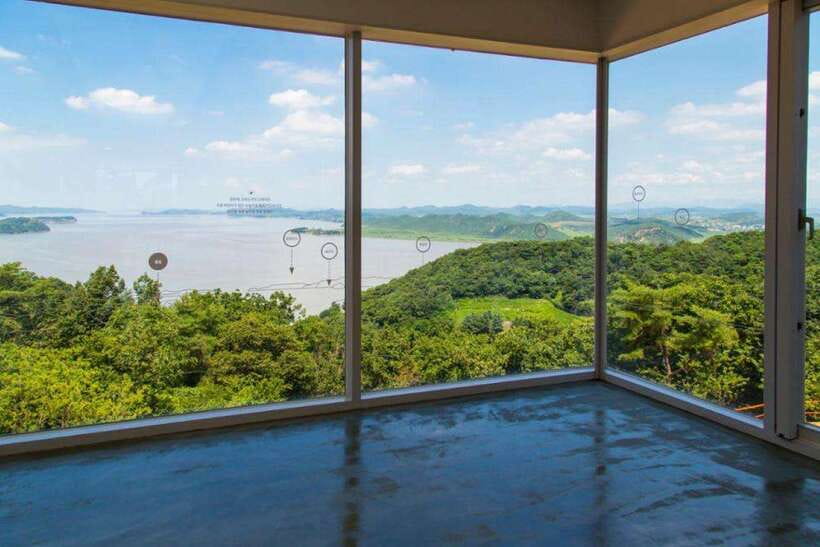
- Starbucks on the top floor of Aegibong Peace Park, built for a wide, window-and-view coffee break
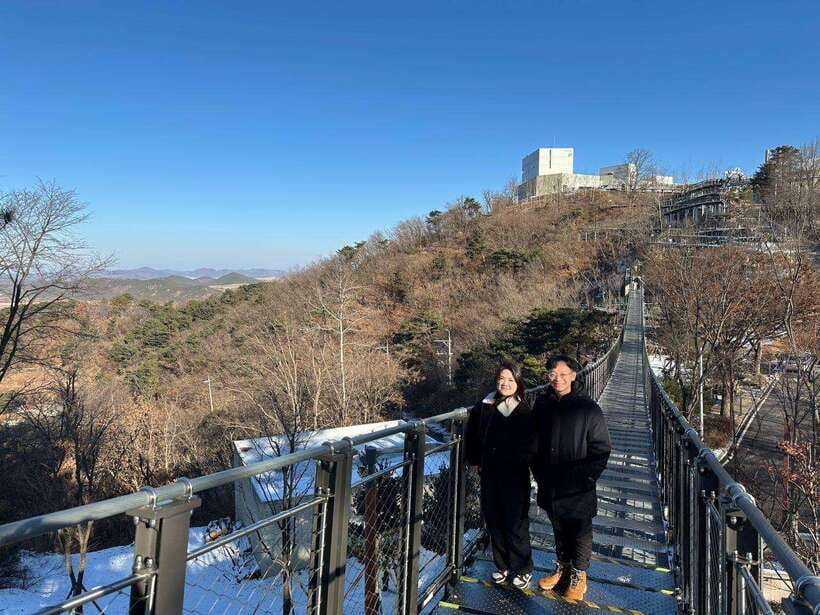
- A 112-meter suspension bridge linking the themed gardens and the Sky Forest Garden
- Exhibition Hall viewpoints with a large front window over the Jogang River area and video content
- Jogang Observatory outdoor stop with a claimed 1.4 km distance view and telescopes available
- English live guide who turns the setting into clear history and place names you can remember
- Pickup and return in Seoul with a 5-hour day that doesn’t swallow your whole itinerary
Aegibong Peace Park: the DMZ-adjacent setting for your Starbucks break
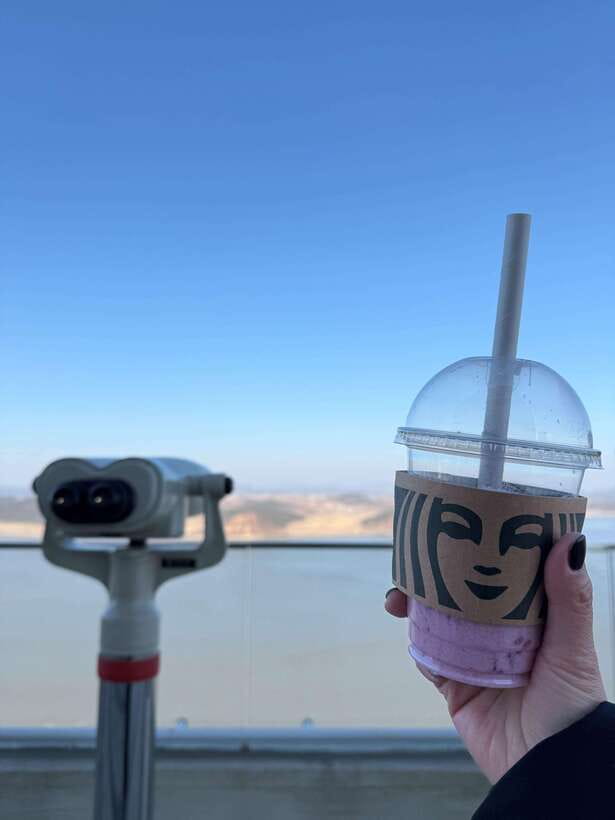
This is the kind of tour that changes how you think about a normal sightseeing day. Yes, you’re getting a coffee stop, but it’s not just coffee. At Aegibong Peace Park, the whole place is built to frame what you see beyond the glass, with exhibitions and viewing areas that connect the modern border to older stories.
The core appeal is simple: you’re up at Aegibong, and the view direction matters. From the exhibition side you can look out over the Jogang River area, and from there the top-floor Starbucks becomes a break with a purpose. I like tours where the “attraction” isn’t separate from the “meaning.”
A second big plus is the guide-led context. Past groups have praised guides such as Hana, Eva, Crystal, Gogo, and Alex for making the Korean War and today’s situation feel understandable, not like a memorization test. If you want history that clicks into real geography, this format helps.
You can also read our reviews of more tours and experiences in Seoul.

How the 5-hour flow works from Seoul (and where your time goes)
This experience is designed to be short, not rushed by sightseeing standards but compact by full-day DMZ tours. The total time is about 5 hours, with round-trip transportation from central Seoul areas.
Your day is built around two main site blocks, each with a guided component and time to walk and photograph. You’ll start with a pick-up that can be one of several Seoul options (including Myeong-dong, Hongik Univ. Station Exit 3, or THE PLAZA, Autograph Collection). Then you head out to Gyeonggi Province for the peace park and observatory areas, and the tour ends back near Hongik University Station Exit 4.
Transport quality is consistently a highlight. One reason people seem to enjoy this day is the ride itself: reviews mention comfortable vehicles like a minivan and even a Mercedes-style bus, and they commonly say the drive is smooth. For a sensitive subject like this, it’s nice when logistics are calm.
Aegibong Peace Eco Park: walkways, bridges, and the pace you want

The first stop is the Aegibong Peace Eco Park, and you’ll spend around 1.5 hours there. Expect guided time plus walking and scenic pauses on the way. This is the part of the day that gives you movement and fresh air before you settle into the more “serious” viewing spots.
Even if you’re not a garden person, this stop has one practical perk: it gets you to the right elevation and viewing rhythm. You’re moving through themed spaces so that the later observatory viewing feels like a continuation, not a random jump.
The centerpiece of this park zone is a 112-meter suspension bridge connecting the Themed Gardens to the Sky Forest Garden. It’s a quick adrenaline hit in the middle of a peaceful setting. The contrast is the point: gentle surroundings, but a real physical stretch that makes the walk memorable.
Inside the Exhibition Hall: front-window views and video context
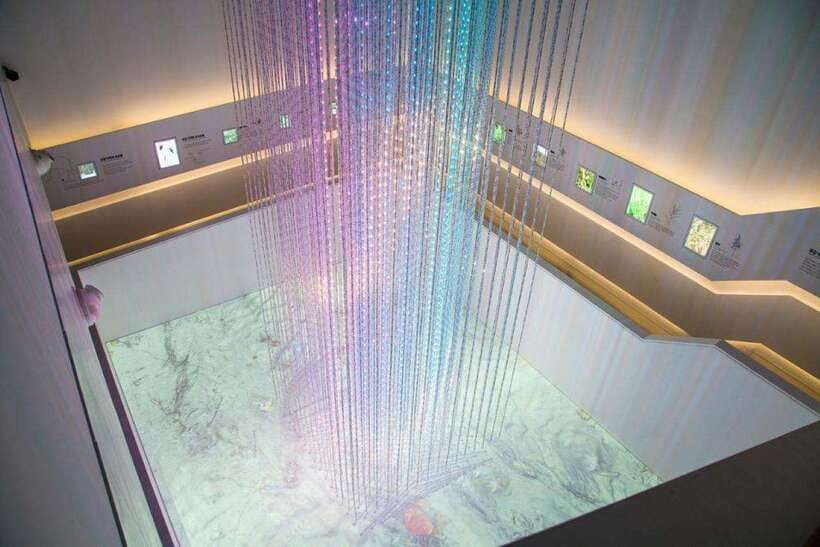
At Aegibong, you’ll also hit the Exhibition Hall area. From the second floor, there’s a large front window looking out toward the Jogang River region. That matters because you’re not just guessing where things are—you’re looking from a designed viewing point.
There are also videos shown in the exhibition area that help you understand what you’re seeing from the surrounding spaces. The goal isn’t to overload you. It’s to give you the kind of background that makes the outdoor photos make sense later, including how the Jogang River region connects to broader river systems and wartime changes.
If you like to take photos, this is where you get your orientation. I’d treat this as the “get your bearings fast” stop, then let the scenery afterward land harder.
Starbucks at the top floor: coffee with a view that feels part of the exhibit
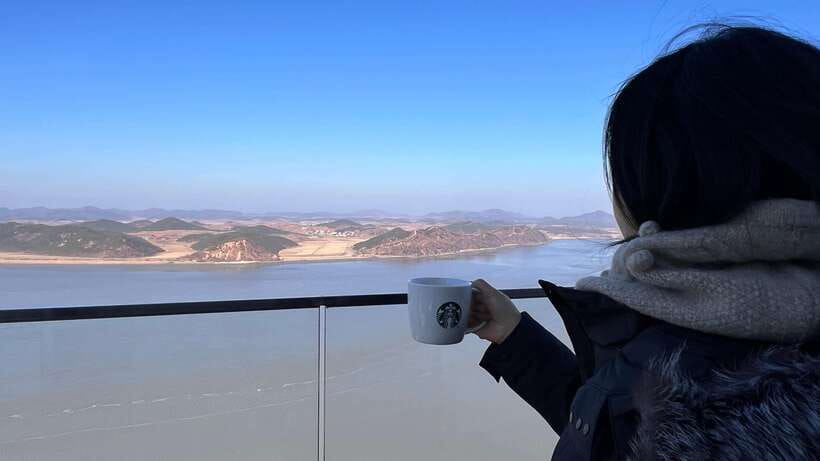
Now the fun part: Starbucks. The Starbucks cafes at this site are located on the top floor of the Aegibong Peace Park. That placement changes the coffee stop from a tourist habit into a timed pause, because your drink is happening in the same building designed for viewing.
You’ll want to plan your coffee moment intentionally. I’d do it after you’ve seen the exhibition hall or once you’ve walked up enough to feel the height and the angles. Then the panorama feels more than decorative—it feels like evidence.
Since food and drinks aren’t included, treat Starbucks here as a buy-when-you’re-ready option. If you’re budgeting, this is still often one of the best-value “treats” of the day because the view turns a simple drink into an experience component.



Jogang Observatory: telescopes, the 1.4 km promise, and what to watch for
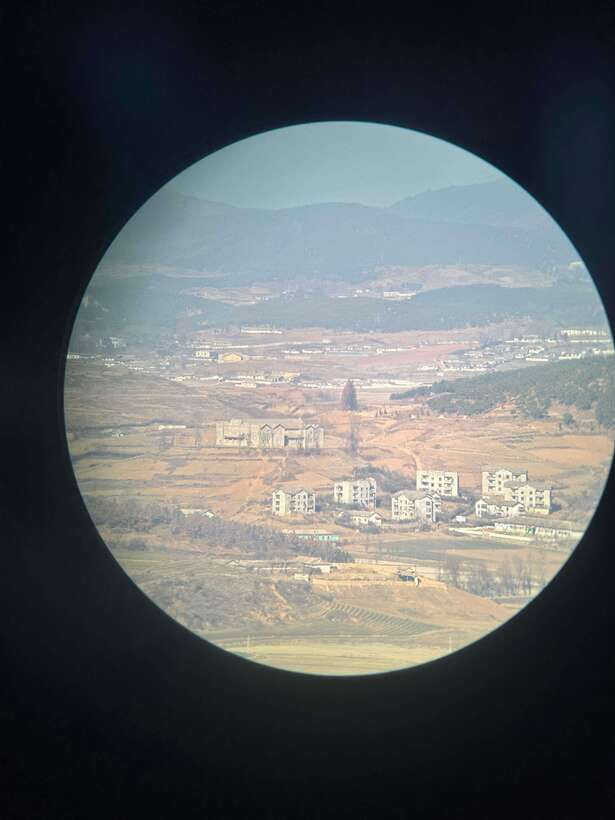
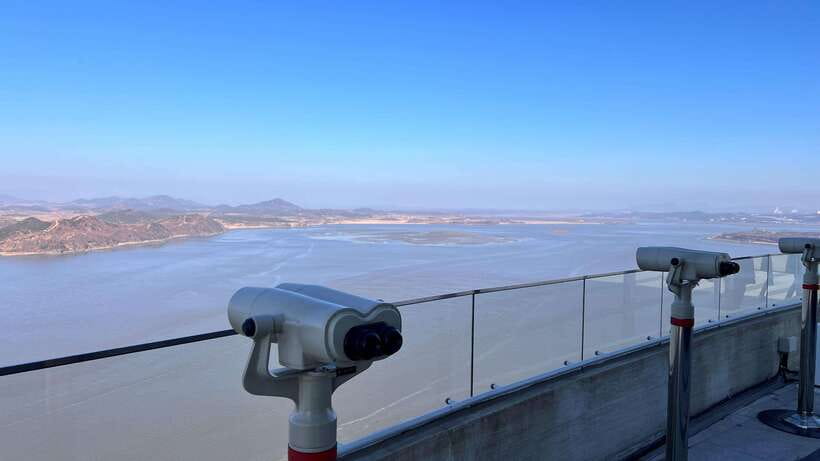
Next comes Jogang Observatory, another main block of about 1.5 hours. This stop is outdoor-focused and centered on a far-reaching look toward Gaepung-gun in North Korea, described as being visible from a distance of just 1.4 kilometers—not the exact same as stepping into a border zone, but positioned as the closest observatory in this setup.
Here’s how you’ll likely experience it: you’ll get a guided walk through the key points, then a photo stop and time to look longer. Reviews specifically mention telescopes available, which is huge if you like details—people walking, village shapes, and small movement in the distance.
What I like about this observatory format is that it doesn’t demand you pretend you’re on the other side. You’re there to observe, ask questions, and connect what you see to what you learned inside. If you’re the type who always wants the “why” behind the view, you’ll get it here from the live guide.
One practical note: your view clarity can change with weather. Even when conditions are less than perfect, this observatory stop is still described as worth it, because the structure of the day keeps you engaged even without a postcard sky.
The Jogang River story: why the view is more than scenery
A big reason this tour sticks in your head is that it gives you a working mental map of the Jogang River. The Jogang River is downstream of the Hangang system, where rivers including the Imjingang, Hangang, and Yeseonggang meet and flow into the West Sea. The name Jogang is tied to meaning like large river, or grand river.
Then you get the human pivot. Before the Korean War, the area around this river had a village community. After the 1953 ceasefire agreement designated it as Neutral Waters at the Hangang River Estuary, the villagers lost their homes and were scattered. The basin that people stopped visiting became a place where ecosystems could recover, including endangered and protected species.
This matters for your eyes when you’re outside. If you treat the observatory as just a look across distance, you miss the point. If you understand the neutral-waters history, the same view becomes a lesson about displacement, policy, and nature’s ability to rebound in strange ways.
Hill 154 at Aegibong: myth, war, and a name that hints at daisies
Aegibong Peace Park sits on a small mountain at Hill 154 on the boundary between regions in Gimpo-si. Its original name, Ssukgatmeori Mountain, comes from a shape resemblance to a daisy crown. That’s the kind of detail that turns a place from a dot on a map into a grounded stop.
There’s also a myth tied to the area, described as the heartwrenching story about the governor of Pyeongan Province and Aegi during the Qing invasion of Joseon. It’s been passed down through generations, so it functions like cultural glue, not random folklore.
And then it’s also a strategic military point where a fierce battle happened during the Korean War. That mix—myth, daily life traditions, and wartime purpose—is part of why this tour isn’t just about seeing North Korea directionally. It’s about seeing how one hill can carry different layers of meaning.
Price and logistics: is $45 a good deal for this day?
At $45 per person for a 5-hour tour, the value here comes from what’s included. You get round-trip transportation, a tour guide, and all entrance fees. For many people, that’s the difference between a smooth day and a scramble of tickets, directions, and waiting.
The trade-off is straightforward: food and drinks aren’t included. So your out-of-pocket cost is basically what you choose to eat, plus any souvenirs. But since Starbucks is part of the visit, you’re not left hunting for a place to sit.
I’d say it’s best value if you want a DMZ-adjacent day without committing to a whole long itinerary. You also get the “guided meaning” component, which is the real value driver for sensitive historical sites.
Who should book this, and who should skip it
This fits best if you want:
- a short day from Seoul that still includes serious context
- a strong view component paired with an exhibition and guide explanation
- a walk with variety, including the 112-meter suspension bridge
- an English-speaking guide who can connect history to the place names you’ll see
You might want to skip it or adjust expectations if:
- you’re expecting a full DMZ access experience beyond observatory-style viewing (this is a peace park and observatory format, not a long border-zone day)
- you don’t like walking outdoors, since both the eco park and observatory sections include walking time
- you strongly rely on included meals, since you’ll need to budget for food and drinks yourself
Tips for getting the most out of the Starbucks-and-view combo
If you like making the most of limited time, here are a few practical moves:
- Bring your passport as requested.
- Plan your Starbucks moment around the views, not just convenience.
- Bring your questions to the guide early. The information about Jogang River, the neutral waters context, and the hill’s background makes your later looking more satisfying.
- If skies are cloudy or foggy, still take your time at the observatory. The telescopes and the longer viewing window can help you make the most of imperfect conditions.
Should you book this tour?
If you want a “real place, real context, short day” kind of outing, I think this is a smart booking. The combination of Starbucks at the top floor, a structured exhibition, and an observatory stop with telescopes gives you both a pause and a purpose. At $45, with entrance fees and transportation handled, it’s also priced like something that respects your time.
Book it if you’re curious about the Korean War legacy and you like seeing how history sits inside today’s geography. Skip it if you need a full-day DMZ itinerary or you’re only interested in shopping and don’t care about the viewing-and-explanation flow.
FAQ
How long is the tour?
The duration is 5 hours.
How much does it cost?
It’s listed at $45 per person.
Is there an English-speaking guide?
Yes. The tour includes a live tour guide in English.
What’s included in the price?
Round-trip transportation, a tour guide, and all entrance fees are included.
Do I need to bring anything?
You should bring your passport.
Are meals included?
No. Food and drinks aren’t included.
What are the pickup options in Seoul?
Pickup options may include Myeong-dong, Hongik Univ. Station Exit 3, or THE PLAZA, Autograph Collection, depending on the option you book.