REVIEW · SEOUL
Seoul: War Memorial of Korea Private Guided Museum Tour
Book on GetYourGuide →Operated by Gangwon Peace Tours · Bookable on GetYourGuide
Korean War context clicks fast here. I love how this private guide format keeps the story straight and personal, and I love the balanced framing of events that helps you connect the Korean War to modern life on the peninsula. It’s a 2-hour walking tour inside Seoul’s War Memorial of Korea, aimed at turning what looks like “just exhibits” into a clear timeline.
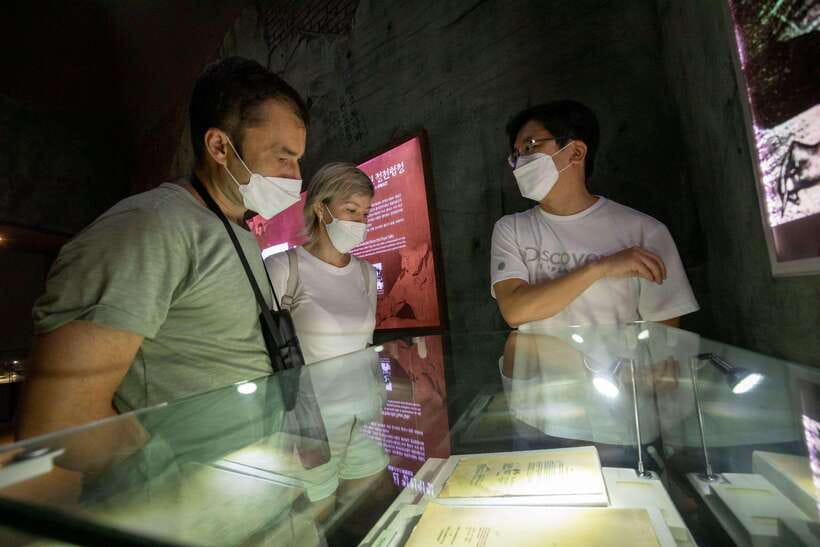
You’ll spend that time in the Korean War Room I–III spaces, with an English-speaking guide who brings history and peace studies into the conversation. Names you might hear along the way include guides such as Kichan Lee, who’s praised for answering follow-up questions with an objective tone, and for connecting details to the bigger civilian and international picture. You’ll also get complementary materials like pictures and document copies, which is handy when you want something to reread later.
One thing to keep in mind: two hours in a large memorial can feel a bit tight if you stop often to read everything or want long pauses in every room. The tour is well structured, but it’s still a lot of ground, and you may finish with the sense you could spend more time on your favorite corners.
In This Review
- Key highlights worth planning around
- Why the War Memorial of Korea matters before the DMZ
- Meeting under the Statue of Brothers: easy start, clear route
- Korean War Room I–III: what your guide makes you notice
- Guides with peace and history backgrounds (and how it shows)
- Pacing and comfort: two hours can be full speed
- Price and value for small private groups
- Who should book this tour, and who might skip it
- Should you book the Seoul War Memorial of Korea private guided tour?
- FAQ
- How much does the Seoul War Memorial private guided museum tour cost?
- How long is the tour, and is it private?
- Where do we meet the guide?
- Which parts of the War Memorial will we visit?
- Is the tour in English, and is it wheelchair accessible?
- Is food included?
Key highlights worth planning around
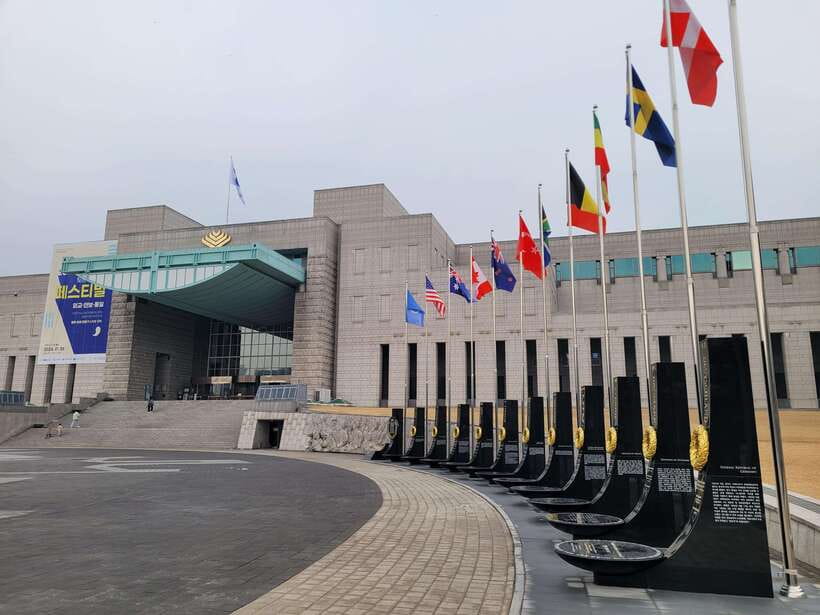
- Small-group private tour (up to 5) so questions don’t get stuck waiting their turn
- Korean War Room I–III focus so you don’t wander without a route or purpose
- Neutral, balanced perspective that includes what happened on multiple sides
- Document and photo handouts that help you remember specifics after you leave
- Peace-and-history trained guides with backgrounds that connect war to peace work
- A strong warm-up for the DMZ since the Korean War is the needed backstory
Why the War Memorial of Korea matters before the DMZ
The Korean War is the hinge. It’s the conflict that reshaped borders, politics, and the way both Koreas became what they are today. If you plan to go to the DMZ later, this tour acts like a fast but solid primer—so you’re not standing at the front gate thinking, I should probably understand why this matters.
What I like about this format is that it doesn’t treat the memorial like a one-note “war museum.” The guide frames the Korean War as a lived event for civilians and as a conflict that drew in wider international forces. That’s why the tour is described as neutral and well-balanced: you’re pushed to see causes, consequences, and context rather than only one storyline.
This kind of understanding pays off even if you never step onto the DMZ tour bus. You’ll read modern political signals differently, and you’ll notice how war-time choices echo forward.
You can also read our reviews of more guided tours in Seoul


Meeting under the Statue of Brothers: easy start, clear route
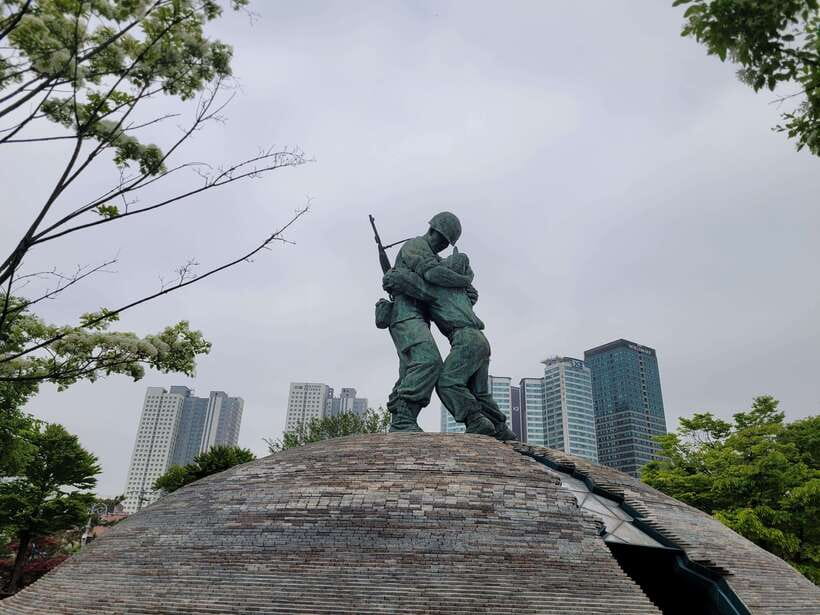
Your meetup is under the Statue of Brothers, in the south-west corner of the exterior exhibit area of the War Memorial of Korea. It’s easy to find if you come in from Samgakji Station—take exit No. 12. (This is handy because Samgakji Station serves Seoul Subway Line 4 and Line 6, which makes it simple to plug into your day.)
You’ll look for a guide holding a sign for the tour title: Korean War Memorial Guided Tour by Gangwon Peace Tours. The start matters here because the museum is big. A quick, guided beginning helps you avoid doing the first “what am I looking at?” loop that soaks up time.
The tour ends at the War Memorial site, at 전쟁기념관 (War Memorial of Korea). Translation: you’re not dragged across the city at the end—you’re done right where your next stop can start.
Korean War Room I–III: what your guide makes you notice
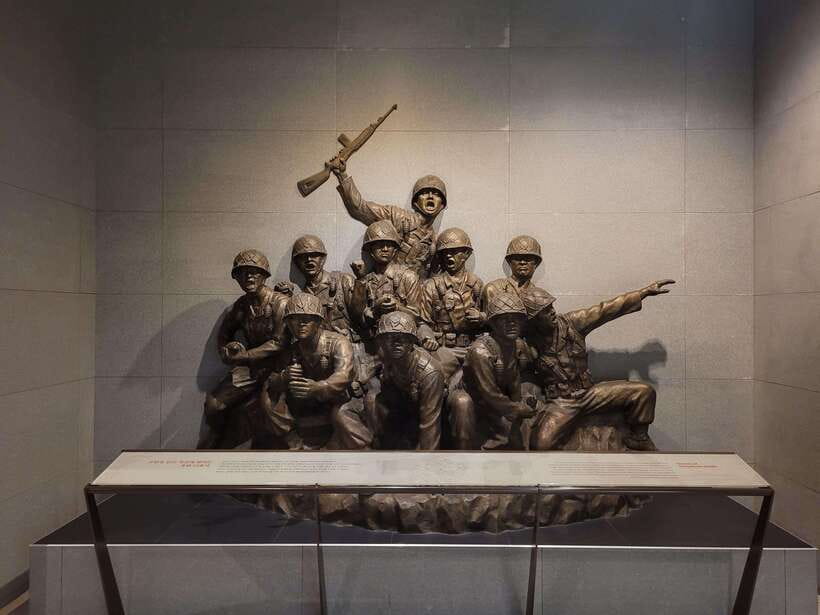
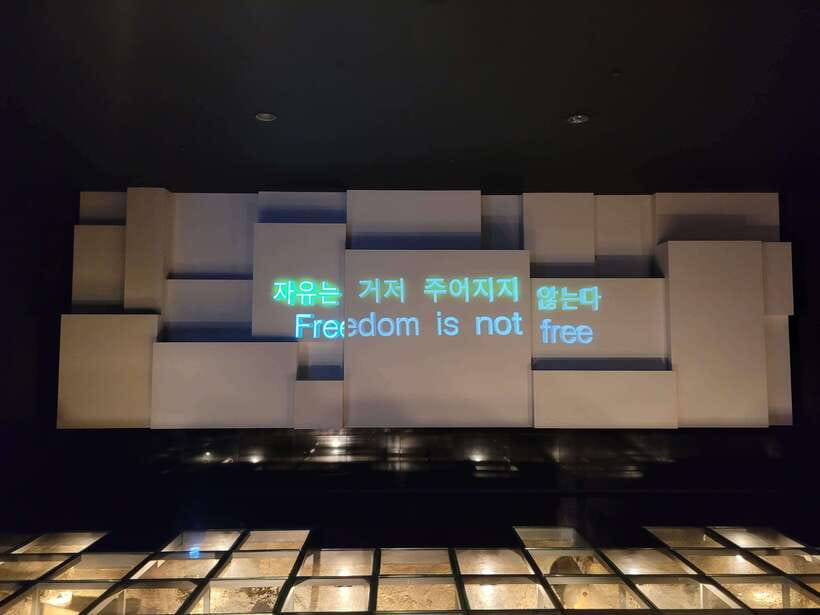
This is the core of the experience: a 2-hour walking tour through the Korean War Room I–III. Without a guide, you can absolutely walk the memorial. But you’ll likely miss the invisible thread—the way one exhibit connects to the next, and the way the rooms build a narrative.
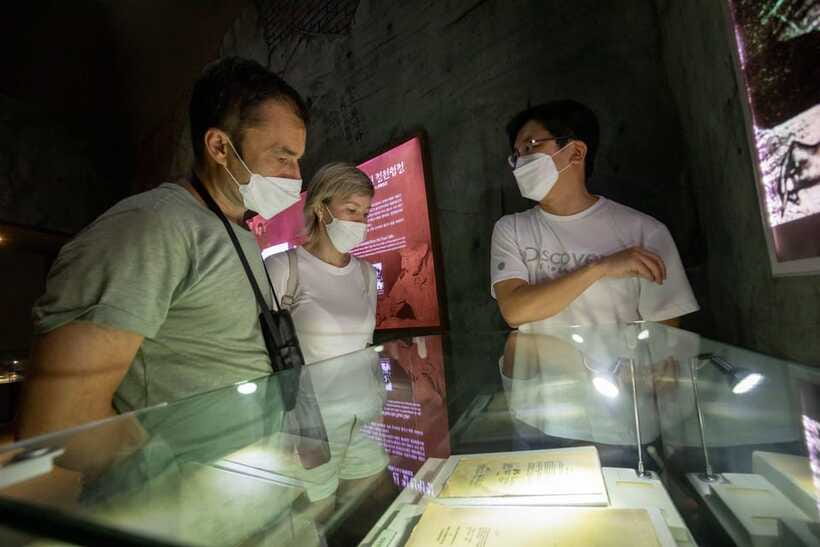
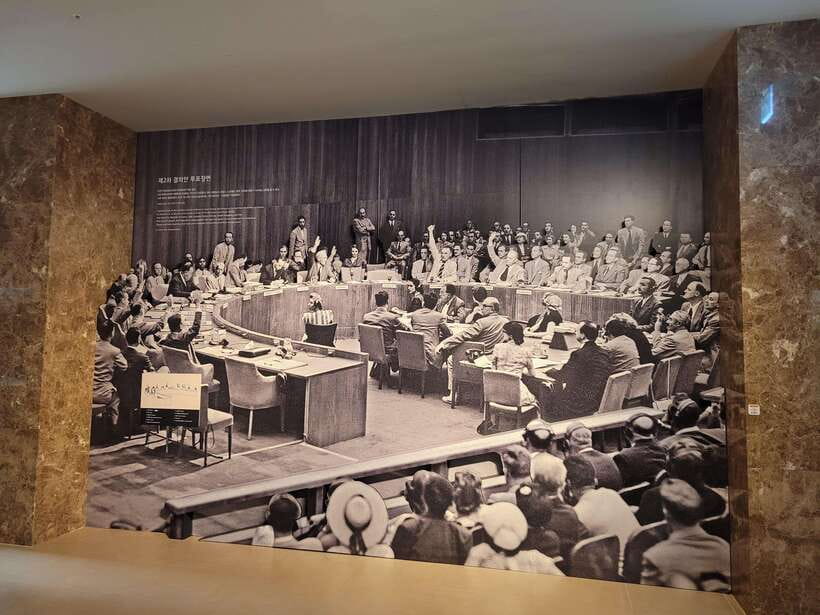
With a guide, you get a structured route and a reason to look closely. Expect the guide to point out major historical facts about how the Korean War started, then connect those facts to how the war unfolded and what it meant for ordinary people. The tone stays even-handed, with attention to civilian impacts and the roles of outside forces.
One detail I really appreciate is the “hidden stories” angle. That doesn’t mean the tour is about sensational claims. It means you’ll hear about aspects that aren’t always obvious just from display text. For example, the tour includes complementary materials—pictures and copies of documents—that give you something to reference when you want to remember a name, date, or concept after you walk out.
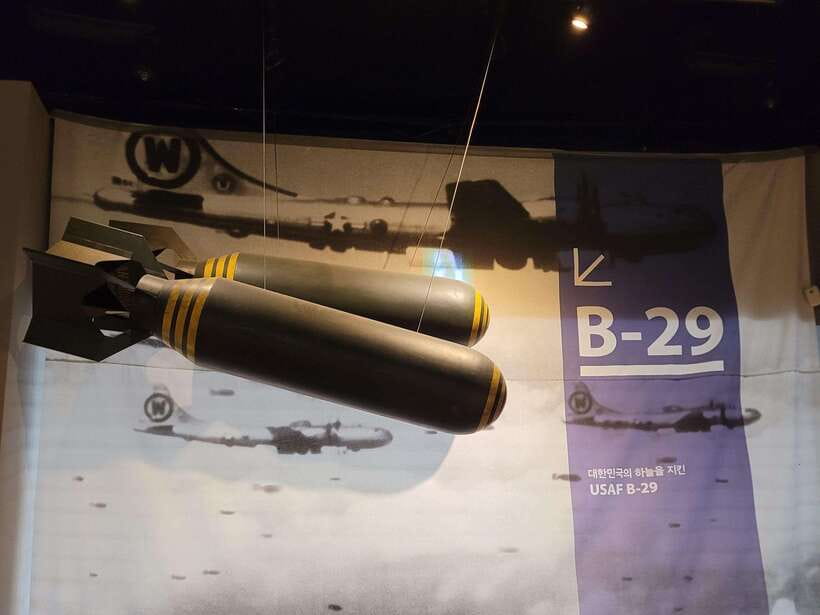
If you like museums for the small specifics—maps, timelines, and cause-and-effect logic—this is the right place. The guide is there to help you connect the dots quickly, instead of playing museum roulette.
Guides with peace and history backgrounds (and how it shows)
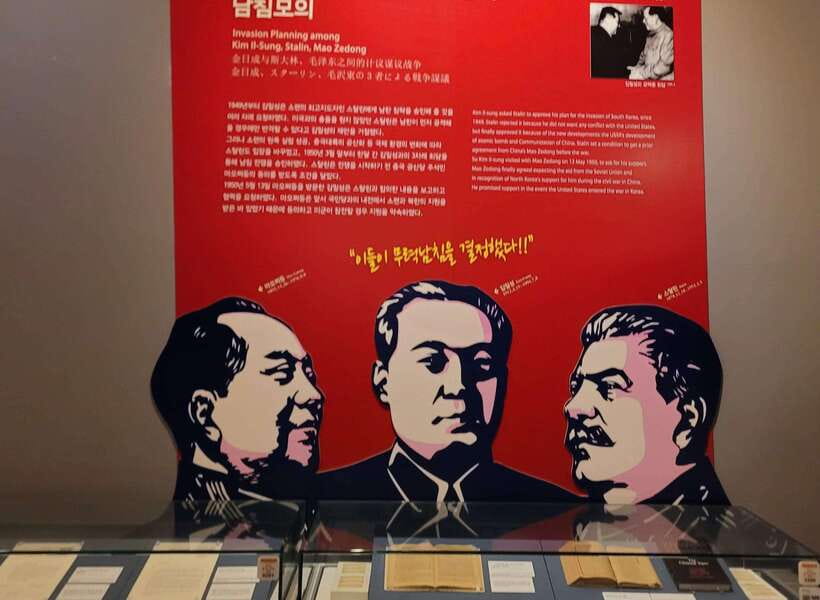
The tour’s guides aren’t presented as generic “museum explainers.” The described backgrounds are specifically tied to history, politics, peace activism/studies, and DMZ tours. That combination matters. War museums can sometimes fall into either pure dates and facts or pure emotion. Here, the guide’s training aims for something in between: clarity plus context.
In practice, that means you should expect an objective presentation—often highlighted by guests in the way they mention the guide covering incidents and facts from different sides of Korea, not only what the museum signage emphasizes. In other words, you’ll get help forming your own view, rather than being handed a single interpretation.
English is supported by a live guide. People also specifically mention the guide answering follow-up questions well, including when the group had more queries after certain exhibits. Names you may encounter in recent tours include Kichan Lee, Kichan, and T, and the recurring theme is a serious approach to history paired with an accessible teaching style.
Also, you’re not just listening. You’re walking, and you’re reading in motion. That helps you keep momentum in a memorial where there’s a lot to take in.
Pacing and comfort: two hours can be full speed
Two hours inside the War Memorial of Korea is a realistic time window, but it’s not “wander and stop whenever you want” territory. The museum itself is large, and the tour is structured to cover the Korean War Room I–III with enough explanation to make it meaningful.
So here’s my practical advice: wear comfortable shoes and decide ahead of time what kind of visitor you are. If you’re the type who wants to read every plaque slowly and stand still for long stretches, you may feel a bit rushed. If you’re the type who likes to move through, absorb the story, and then circle back later on your own, the pacing will feel right.
Food and drink aren’t included, so plan a snack stop either before you start or after you finish. Since the tour ends at the memorial, you’ll have the option to grab something nearby and keep the rest of your day flowing.
You can also read our reviews of more private tours in Seoul




Price and value for small private groups
The price is $100 per group (up to 5 people) for a 2-hour private walking tour. That’s important: you’re paying for a guide’s time for your group size, not per person.
Do the simple math. If you fill all five spots, you’re at about $20 per person. Even if you’re only a couple, you’re still paying for a private, English-speaking guide focused on the Korean War Rooms I–III rather than a generic overview.
Is it “worth it”? For me, the value comes from three things:
- You get a tight route through the most relevant rooms, instead of guessing where to go first.
- You get a balanced framing and Q&A, which is hard to reproduce with self-guided walking.
- You receive complementary materials (pictures and copies of documents) that deepen memory after the visit.
Also, the tour includes free cancellation up to 24 hours in advance for a full refund, and it uses a reserve now & pay later approach. That lowers the risk if your schedule is still fluid.
Who should book this tour, and who might skip it
This is a great fit if:
- You want a guided, structured introduction to the Korean War inside the War Memorial of Korea.
- You’re planning a later DMZ visit and want the backstory that makes it click.
- You prefer a neutral, balanced narrative rather than a one-sided retelling.
- You appreciate small-group pacing where questions are actually welcome.
It’s also practical in terms of timing and access:
- The tour is wheelchair accessible.
- It’s a private group of up to 5.
- It’s led in English by a live guide.
However, it’s not suitable for visually impaired people or hearing-impaired people, based on the provided info. Also, alcohol and drugs aren’t allowed.
If you’re traveling in a group that already has strong background knowledge and you want total freedom to wander at your own speed, you might not need this. But if you want the museum to make sense fast, this is one of the better uses of a couple hours in Seoul.
Should you book the Seoul War Memorial of Korea private guided tour?
I’d book it if you want your visit to do more than “look.” This tour is built around context—how the Korean War shaped modern Korea—and it uses expert guides with peace and history backgrounds to keep the story clear and even-handed. The high rating (4.9 across 29 reviews) aligns with what you’d want from a guide here: strong English, organized structure, and answers that stay objective even when you ask follow-up questions.
Skip it only if you know you’ll need a different accessibility setup, or if you strongly prefer to read everything on your own without a guided route or handouts.
If you’re even slightly on the fence, use this rule: when a museum is big and the subject is complex, a good guide usually saves you time and improves your understanding. This is that kind of tour.
FAQ
How much does the Seoul War Memorial private guided museum tour cost?
It costs $100 per group, up to 5 people, for the 2-hour guided walking tour.
How long is the tour, and is it private?
The tour lasts 2 hours and is a private group experience (one group up to 5 people).
Where do we meet the guide?
Meet under the Statue of Brothers at the south-west corner of the exterior exhibit area of the War Memorial of Korea. It’s also described as easy to reach from Samgakji Station exit No. 12 (Subway Line 4 & 6).
Which parts of the War Memorial will we visit?
The guided portion focuses on the Korean War Room I–III.
Is the tour in English, and is it wheelchair accessible?
Yes. The tour provides a live English guide, and it is wheelchair accessible.
Is food included?
No. Food and drink are not included.