REVIEW · SEOUL
Seoul: Korea Dark History Tour at Seodaemun Prison
Book on GetYourGuide →Operated by Mutual Trip · Bookable on GetYourGuide
Dark history hits harder when it is close. This Seoul tour walks you from Independence Gate to Seodaemun Prison, with stories that explain how Korea’s identity was shaped through struggle.
I especially like the way the route uses real landmarks—the symbolism outside, then the preserved prison spaces inside. And I also like the small group format and the guide’s teaching style; Bae Jung-hui is singled out for clear, detailed explanations and the kind of warm welcome that makes you ask questions without feeling rushed.
One consideration: this is emotionally intense. You’ll see the preserved reality of detention and political oppression, so it’s not the right choice if you prefer light, casual sightseeing, and it is not suitable for wheelchair users.
In This Review
- Key highlights at a glance
- Seodaemun Prison and Independence Gate: what this 2-hour walk teaches
- Price and group size: good value if you want real guidance
- Stop 1: Dongnimmun Gate (Independence Gate) and its symbolism
- Stop 2: Seodaemun Prison History Hall walkthrough (100 minutes)
- Yu Gwan-sun and the human thread through modern Korea
- The guide matters: Bae Jung-hui’s clear storytelling and warmth
- What to watch for: emotional intensity, shoes, and the pace
- Who this tour suits best (and who should skip it)
- Should you book? A simple value check
- FAQ
- How long is the Seoul: Korea Dark History Tour at Seodaemun Prison?
- What languages are available on the tour?
- What is included in the price?
- Is this tour suitable for wheelchair users?
- Are alcohol or drugs allowed?
- How many people are in the group?
Key highlights at a glance
- Independence Gate first, then the cells for a story that builds as you walk
- Seodaemun Prison History Hall with guided time so you are not just looking at walls
- Small group limited to 10 participants for space to ask questions
- Yu Gwan-sun’s courage is part of the tour’s national story thread
- English tour with Japanese available (Japanese is optional)
- Admission to Seodaemun Prison included in the price
Seodaemun Prison and Independence Gate: what this 2-hour walk teaches
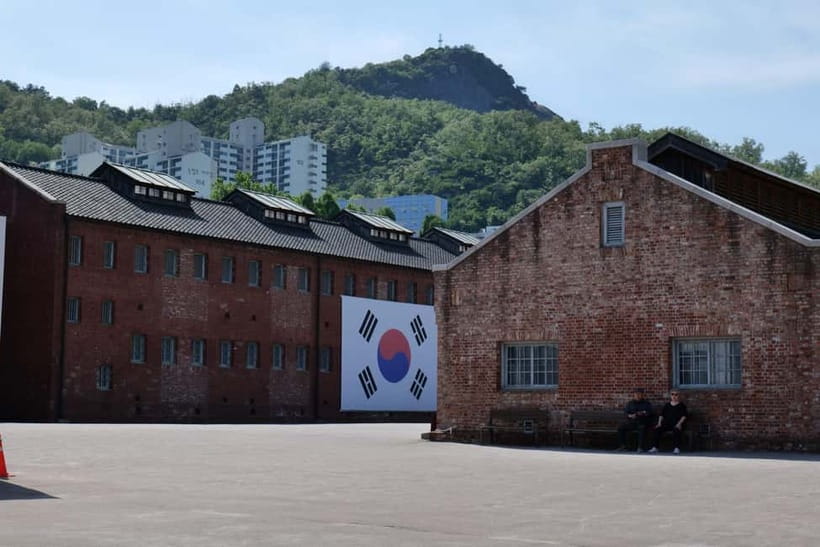
This isn’t a “pretty-photo” kind of tour. It is a straight, human-scale walk through Korea’s modern identity—independence, resistance, and the long road toward democracy. You start with a monument tied to self-determination, then you move into a prison space where independence activists were held. The contrast is the point, and it helps you understand why these places matter beyond dates and names.
What you gain is perspective. Korea’s story here is not told as a distant textbook lesson. Instead, you’re guided to connect architecture, layout, and the lived experiences of people who resisted. That makes the history feel specific and concrete, not abstract.
You should also be ready for emotion. The tour includes accounts of arrests and detention, and even with a thoughtful guide, you can’t fully “shake off” the subject matter. Bring a calm mindset. If you can handle a serious museum visit, you’ll be fine. If you want something upbeat, skip it.
You can also read our reviews of more historical tours in Seoul
Price and group size: good value if you want real guidance
At $31 per person for a 2-hour guided experience, this can be a strong value—especially because admission to Seodaemun Prison is included. You are paying for more than entry. You’re paying for someone to help you read the place: what you’re looking at, why it was built that way, and how people’s lives fit into the larger independence story.
The small group limit of 10 is a big practical win. In a small setting, the guide can slow down when questions come up, and you’re less likely to get lost behind a crowd. One review notes that a guide made visitors feel like family, and when your group is tiny, that personal attention is easier to achieve.
If you are the type who likes to look at information panels alone, you can still visit on your own. But the whole point here is interpretation. A guided route makes it much harder to skim past the meaning.
Stop 1: Dongnimmun Gate (Independence Gate) and its symbolism
The tour begins at one of two starting points (the address options are 102-55 or 102-6, depending on what you book), then you head to Dongnimmun Gate, also known as the Independence Gate.
You’ll spend about 20 minutes here, and that matters. This first stop is not just a photo break. It is the “why” before the “how.” The guide explains the symbolism behind Korea’s first monument to self-determination, which helps you frame what comes next at Seodaemun Prison. When you understand the meaning of the gate, the prison visit stops feeling like a random detour.
Think of this as your mental warm-up. You’ll be primed to notice how the tour connects national identity to real people. Even if the historical language feels heavy, this gate introduction helps you keep your bearings.
Practical tip: since it’s a walking tour, wear comfortable shoes. You’re on foot, and the total time is only 2 hours—so there isn’t room for slow wandering.
Stop 2: Seodaemun Prison History Hall walkthrough (100 minutes)
Next is the main event: Seodaemun Prison History Hall, where you get around 100 minutes of guided time. This is where the tour earns its reputation for making the place understandable.
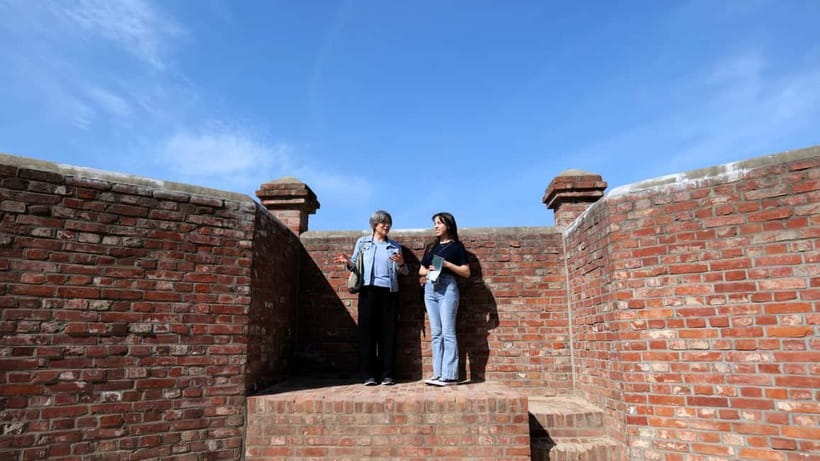
The prison spaces are preserved, and the architecture does a lot of the storytelling. But without a guide, many visitors would miss the meaning behind what they see. A guide turns the building into a narrative—helping you connect cell spaces, prison functions, and the broader independence movement.
The emotional tone is serious. Expect to hear accounts tied to independence activists being held there, and you may find yourself quiet for parts of the visit. That’s normal. If you’re sensitive to dark historical material, it can still be worth seeing—just go in with the right expectation.
A subtle benefit: this stop is long enough that you can actually follow the story. The guide’s pacing is built for comprehension, not speed. One review praised the guide’s ability to explain in an understandable order, which is exactly what you need in a place with lots of details.
Yu Gwan-sun and the human thread through modern Korea
One of the most powerful things about this tour is how it uses specific people to represent bigger themes. A central story is Yu Gwan-sun, described as a 17-year-old student who became a national symbol of courage.
The guide doesn’t just drop her name. The story is used to show what resistance could look like at youth scale—what courage can mean when choices are made under extreme pressure. When you hear this kind of story in the physical space where activists were detained, it stops being a distant biography and becomes part of the place’s gravity.
This is also where the tour’s value becomes personal. You start thinking less in terms of “what happened” and more in terms of “what it cost.” That is a hard shift, but it’s the one that makes history matter.
And because it’s a guided experience with time for questions, you can often get clearer on details you might miss through panels. One review highlighted how much the Q&A mattered, and that tracks with how small-group tours work best—your curiosity can shape the flow.




The guide matters: Bae Jung-hui’s clear storytelling and warmth
A standout detail from the feedback is the guide experience itself. One reviewer specifically named Bae Jung-hui, describing her as outstanding—welcoming from the first smile and making visitors feel like family. Another review emphasized that the guide was very kind and gave detailed, structured explanations that made it easier to understand.
That kind of guiding is not a small thing here. In a prison setting, the danger is that tours become either too cold (just facts) or too vague (just emotion). A strong guide keeps balance: respect for what happened, clarity about what you are seeing, and enough context that you leave with understanding rather than just a heavy feeling.
There’s also a practical kindness element that shows how guides think about comfort. One review mentioned the guide sharing a UV umbrella, which is the kind of real-world help you remember—especially in Seoul weather when sun or rain can change your day fast.
Bottom line: if you care about the difference between looking at a site and actually understanding it, this tour is designed for that.
What to watch for: emotional intensity, shoes, and the pace
This tour is short—2 hours total—but it is emotionally dense. The guidance is to be prepared for an emotionally intense experience, and that advice is spot-on. You should plan to protect your mood afterward. Don’t schedule something that requires high energy right away unless you know how you handle heavy history.
Here’s how I’d plan your day:
- Start the tour earlier rather than stacking it at the end.
- After, give yourself quiet time to process. Your brain will keep replaying what you heard.
- Keep expectations realistic: you are visiting preserved spaces, not acting like you are on a casual city walk.
Wear comfortable shoes. The tour is a walking route between landmarks, and the total time window is tight, so you’ll want your legs to cooperate.
One more note: alcohol and drugs are not allowed. It’s a rule that fits the seriousness of the site, and it keeps the experience respectful.
Who this tour suits best (and who should skip it)
This is a good match if you:
- want an expert local storyteller guiding you through Seoul’s resistance and independence narrative
- like history that connects people, places, and choices
- enjoy structured explanations with time for questions
- prefer small groups (this one caps at 10)
You might want to skip it if:
- you’re looking for light entertainment
- dark historical sites make you shut down mentally
- you need wheelchair accessibility (this tour is not suitable for wheelchair users)
If you’re visiting Seoul for the first time and you already did the big, bright highlights, this can be a meaningful counterbalance. It gives you a deeper understanding of identity—one built by struggle, not slogans.
Should you book? A simple value check
Book this tour if you want more than sightseeing and you’re ready for a serious, guided experience. For $31, with prison admission included, a small-group limit, and bilingual guiding options (English and Japanese optional), it offers strong value if you care about context and clarity.
Don’t book it if you want something casual, upbeat, or physically accessible by wheelchair. This is not designed for that mood.
My practical advice: treat it like a real museum visit with a guide who helps you interpret. If you go in prepared—comfortable shoes, open mind, and emotional readiness—you’ll likely leave with understanding that stays with you longer than any photo.
FAQ
How long is the Seoul: Korea Dark History Tour at Seodaemun Prison?
The tour duration is 2 hours.
What languages are available on the tour?
The tour is conducted in English and Japanese (Japanese is optional).
What is included in the price?
You get a guided tour and admission to Seodaemun Prison.
Is this tour suitable for wheelchair users?
No. It is not suitable for wheelchair users.
Are alcohol or drugs allowed?
No. Alcohol and drugs are not allowed.
How many people are in the group?
The group is limited to 10 participants.