REVIEW · SEOUL
Small-Group Seoul Tour with Gyeongbokgung Palace (hotel pick-up)
Book on Viator →Operated by Seoul N Tour · Bookable on Viator
Royal Seoul, in one smooth morning.
I love the hotel pickup and the small-group pace (max 15), which keeps things organized and helps you get in the right spots for the ceremonial moments. The one thing to watch is the ginseng stop feeling a bit like a sales push, plus weather or Tuesday rules can change what you see at the main palace.
In about 3.5 hours, you’ll hit Jogyesa Temple, the photo area outside Cheong Wa Dae (Blue House), and Gyeongbokgung Palace, plus the National Folk Museum. You also get entrance fees, a professional guide, bottled water, and a mobile ticket, ending around Insadong or City Hall.
In This Review
- Key Highlights That Make This Tour Worth It
- Getting Oriented in Seoul: Pickup, Timing, and the Real Scope
- The Morning Drive from Your Hotel: Easy Transportation, Clear Flow
- Jogyesa Temple: Zen Buddhism Right in the City Noise
- Cheong Wa Dae (Blue House) Photo Stop: What You Can See and What You Can’t
- Gwanghwamun Gate: Watch the Royal Guard Changing Ceremony
- Gyeongbokgung Palace in One Hour: Court Life, Palace Scale, and the Tuesday Switch
- Tuesday changes (important)
- National Folk Museum of Korea: From Goryeo to Joseon in a Short Stop
- Cheongha Korea Ginseng Museum: Cultural Stop or Sales Pressure?
- Price and Value: Why Around $39.73 Can Make Sense
- Guide Style: The Difference Between a Tour and a Good Morning
- Who Should Book This Tour (and Who Might Skip It)
- Should You Book? My Practical Verdict
- FAQ
- How long is the tour?
- What time does the tour start?
- Does the tour include hotel pickup?
- Where do you get dropped off?
- Are entrance fees included?
- Do I need a printed ticket?
- What sites do you visit?
- What happens on Tuesdays?
- Is food included?
- How long is the ginseng stop?
- Who is this tour best for?
- What’s the group size?
Key Highlights That Make This Tour Worth It
- Hotel pickup + drop-off convenience around Insadong or City Hall
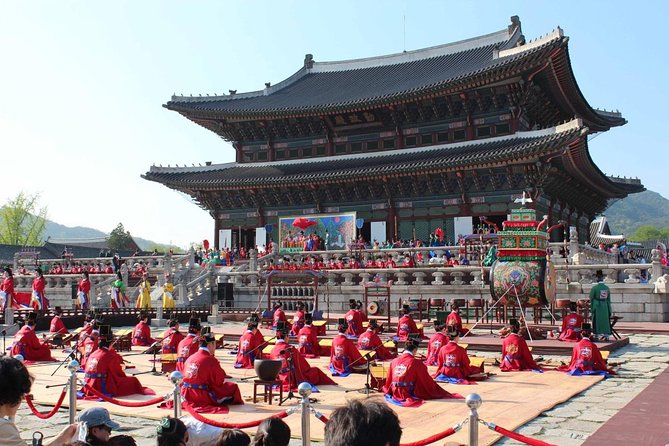
- Gwanghwamun Gate guard changing ceremony timed for photos
- Gyeongbokgung Palace court-life focus in a tight 1-hour visit
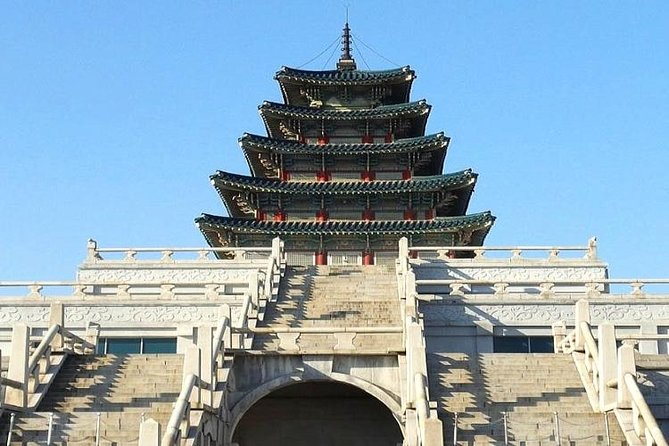
- National Folk Museum as a quick primer on daily life in Goryeo and Joseon Korea
- Jogyesa Temple for clear context on Korean Buddhism
- Ginseng center stop: tasting is fine, buying is optional (and you should plan accordingly)
Getting Oriented in Seoul: Pickup, Timing, and the Real Scope
This tour is built for mornings—starting at 9:00 am—and it’s designed to get you out of hotel-zone Seoul and into the main sights fast. You’ll be picked up from centrally located hotels in a climate-controlled vehicle, then dropped off later at City Hall or Insadong (no hotel drop-off at the end).
The total time is about 3 hours 30 minutes, and it feels like a sampler menu: temple + palace + ceremony + cultural museum. That can be a win if you’re short on time, but it also means each stop is intentionally compact.
Good news for planning: entrance fees and the guide are included, and you’ll be using a mobile ticket. You don’t have to solve Seoul ticket booths before you’ve had your first cup of coffee.
You can also read our reviews of more tours and experiences in Seoul.

The Morning Drive from Your Hotel: Easy Transportation, Clear Flow
Once you’re picked up, your guide handles the transitions. That matters in Seoul. The sights in this route cluster around Jongno—so instead of hopping between subway lines or negotiating taxis, you can ride and listen while you go.
A small-group format helps here. With up to 15 people, the guide can keep an eye on timing, get everyone pointed the same way, and reduce the usual chaos of “everyone wander off and meet later” group energy. In practice, this kind of pace is what lets you actually see the moving parts—especially the ceremonial moments.
Jogyesa Temple: Zen Buddhism Right in the City Noise
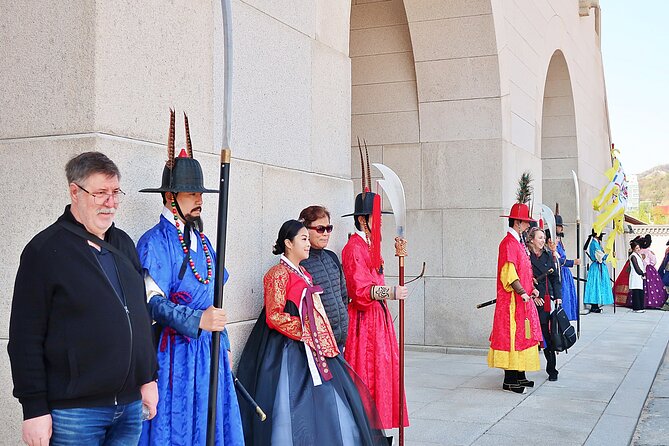
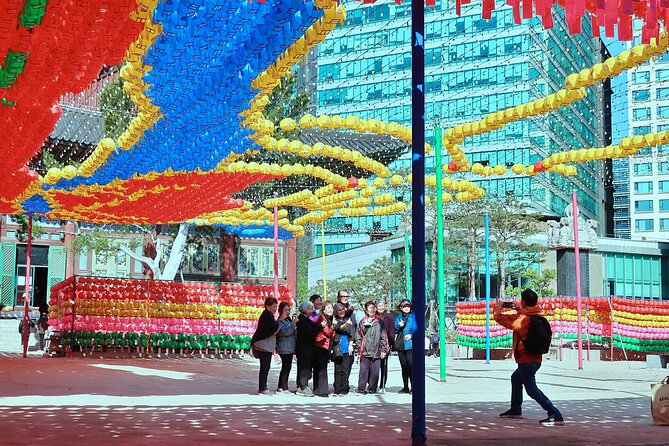
Your first stop is Jogyesa Temple, typically around 30 minutes on the clock. This is the kind of place that makes Seoul feel like more than just skyscrapers and shopping streets. Even with loud city life nearby, the temple compound gives you a calmer rhythm.
You’ll get an explanation of Zen Buddhism in Korea and a guided stroll through key areas. This is not a long, slow meditation retreat. It’s a focused orientation—what the space is, what the practices mean, and how Korean Buddhism fits into everyday life.
One practical note: temple access can shift depending on worship times. You might find that parts of the temple are restricted when services are happening, and the tour may feel a little different depending on exactly when you arrive.
If you want the best photos, look for a few minutes to step slightly back from the busiest lanes inside the compound. Give your camera a moment to breathe before you zoom in.
Cheong Wa Dae (Blue House) Photo Stop: What You Can See and What You Can’t
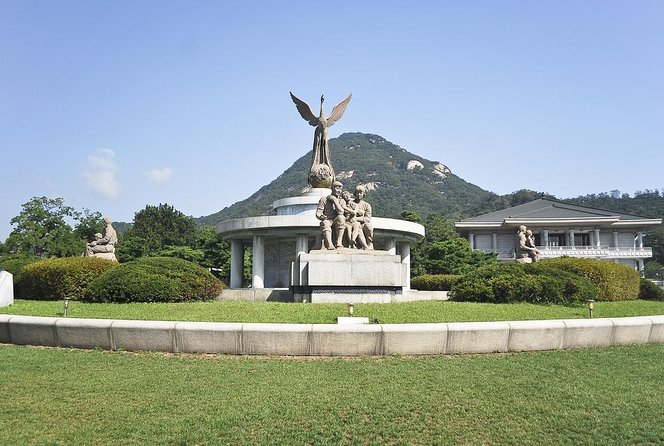
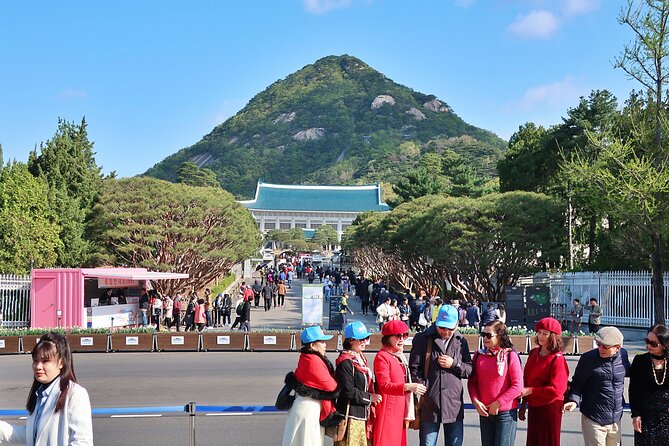
Next comes a photo stop area connected with Cheong Wa Dae, the Presidential House of Korea (often called the Blue House). You’ll be outside—your access is along the front road for photos, and you can’t visit inside.
This is a simple but smart add-on. It gives you a sense of modern Korea’s political center, and on clear days, the view can include Mt Bukak in the background. For first-time visitors, it’s a quick “I’m really in Seoul” moment without adding a long stop.
Bring your usual photo caveats: sun glare can be strong and lines can form. If your guide suggests an angle, take the hint and move—these photo moments are short by design.
Gwanghwamun Gate: Watch the Royal Guard Changing Ceremony
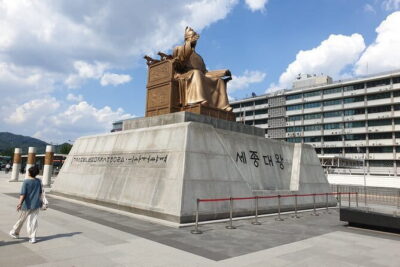
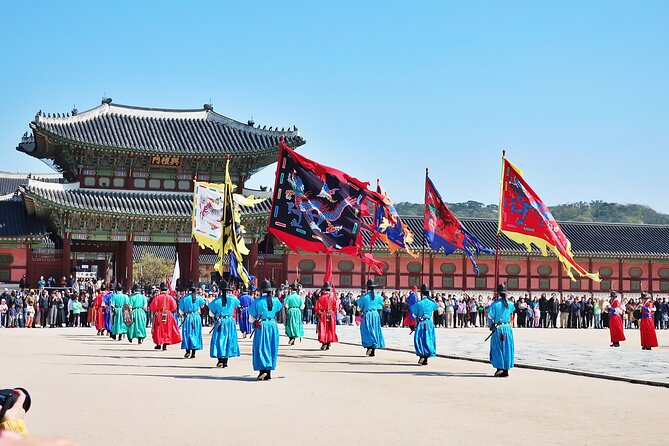
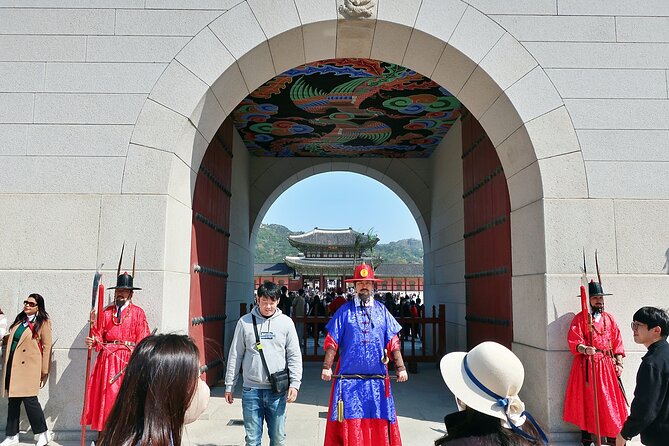
At Gwanghwamun Gate, the tour shifts into “watch mode.” The changing of the guards happens here, and it’s one of the most photogenic time markers in the city center.
You’ll typically have about 20 minutes at this stop, so you want to arrive ready. Camera out, phone charged, and eyes on your guide for where to stand. The ceremony draws crowds, and timing is everything.
Weather can also affect how things go. If it’s raining or conditions aren’t ideal, you may see ceremony timing change. The guide will do what they can with the schedule you’re on, but this is one reason the ceremony is worth treating as a bonus rather than a guaranteed “must-see” in every situation.
Even when you’ve seen photos before, there’s something different about being there in person—especially hearing the rhythm of the ceremony rather than just watching clips online.


Gyeongbokgung Palace in One Hour: Court Life, Palace Scale, and the Tuesday Switch
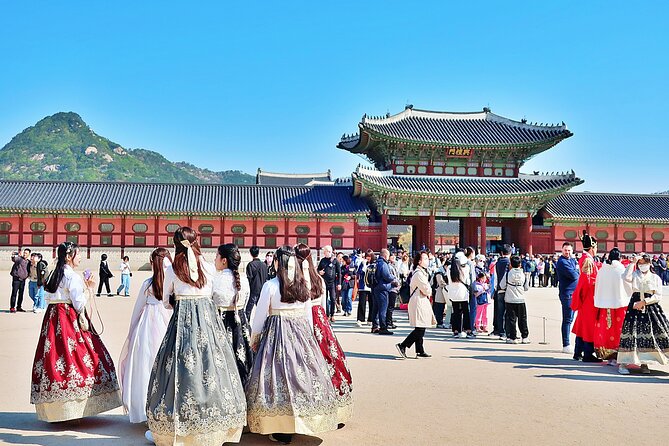
Gyeongbokgung Palace is the main event, with about 1 hour on site during this tour. This visit is guided with a focus on how royal families and court attendants lived—so you’re not just wandering a huge complex and hoping you picked the right path.
Here’s the reality check: Gyeongbokgung is big. In one hour, you’re seeing highlights, not every hall and courtyard. The value is the context your guide provides so the architecture and rooms make sense, instead of feeling like a blur of gates and stone.
Tuesday changes (important)
There’s a major operational rule: Gyeongbokgung Palace is closed on Tuesdays. On Tuesdays, the tour takes you to Changdeokgung Palace and the Secret Garden (Huwon) instead.
That swap matters because it changes the look and feel of the “palace” experience. The Secret Garden is specifically called out for being meaningful to many visitors, and it can feel like the tour’s best version on that day.
If your visit dates include a Tuesday, don’t panic. Just align your expectations: you’ll still get a palace-focused morning, but it won’t be the same palace.
National Folk Museum of Korea: From Goryeo to Joseon in a Short Stop
After the palace area, you’ll head to the National Folk Museum of Korea, usually about 20 minutes with admission included.
The museum’s purpose in this tour is to act like a bridge between royalty and regular life. You’ll learn how people lived in Korea across major periods—specifically spanning the Goryeo (918–1392) and Joseon (1392–1910) dynasties.
In 20 minutes, you won’t read every placard. You’ll do better if you pick a couple themes—clothing, household life, tools, or social roles—and let the guide point you toward the most meaningful displays first. This stop works best as a “now I get it” refresher rather than a deep museum day.
Cheongha Korea Ginseng Museum: Cultural Stop or Sales Pressure?
The last main stop is at the Cheongha Korea Ginseng Museum, about 30 minutes. Admission is free, and the idea is to introduce Korean ginseng as a representative product of Korea.
Here’s where you should be smart: multiple people note that this stop can feel like it leans heavily into selling premium ginseng products. Your guide and staff can be friendly, and you may still enjoy the tasting experience. But if you’re not interested in buying, treat this as a quick cultural pause.
My practical advice:
- Sample what’s offered, if you want, but don’t let it eat your timing.
- If you feel pressured, calmly decline. You’re in charge of your wallet.
- If you do buy, decide before you get caught in the “closing time” mood.
This is the one spot where the tour’s value question becomes personal. You’re not paying extra just for the palace and museum—you’re also paying for this scheduled experience, whether you love the ginseng side or treat it as a time-to-walk-and-breathe moment.
Price and Value: Why Around $39.73 Can Make Sense
At about $39.73 per person, this tour can be a strong deal if you value structure. The price includes:
- Professional guide
- Hotel pickup from central areas
- Transportation during the morning
- Entrance fees for the included sites
- Bottled water
What isn’t included is food, and that’s normal for a morning tour. You’ll likely want to eat after the drop-off—Insadong is a convenient place to do that if you end there.
The tradeoff is time. You get a highlight circuit, not a full exploration day. If you want to linger for long stretches in the palace museum halls, or if you want to move at a slower pace through the Folk Museum, you might later wish you had booked a more extended palace visit.
Still, for many first-timers, this is exactly what they want: a guided overview that makes Seoul’s biggest royal and cultural landmarks understandable quickly.
Guide Style: The Difference Between a Tour and a Good Morning
The biggest variable in any small-group tour is the guide, and this one tends to deliver clear explanations. You may have a guide such as Sookhee, Young, Junie, Lua, Brian, or Joo Ee (names vary by date), and the common thread is that they work to keep people on track and help with photos.
One useful skill that shows up in how this tour runs: positioning. At Gwanghwamun, the guide typically gets you into a good spot for the changing of the guards, so you’re not guessing where to stand while the ceremony begins.
Another common pattern: flexibility when conditions shift. If it’s very hot, rainy, or crowds get rough, a good guide will slow down where they can and keep you from sprinting between stops like you’re in a race.
Who Should Book This Tour (and Who Might Skip It)
This tour suits you if:
- You want a first-timer Seoul morning with major landmarks
- You like guided context more than self-exploring
- You want hotel pickup and a drop-off that lands you in useful neighborhoods
- You prefer short stops that still feel informative
It’s less ideal if:
- You struggle with walking over uneven surfaces or steps. Even when the tour is well paced, palaces and old streets involve real ground changes.
- You have back problems, heart complaints, or other serious medical conditions, since the guidance is to avoid this type of walking-heavy route.
- You want long, quiet time in each site. This is a “see the highlights and understand them” format.
Group size also matters. It’s capped at 15 travelers, and it requires a minimum of 4 people to run. If your travel dates are tight, it’s worth booking early so you have options if schedules change.
Should You Book? My Practical Verdict
Yes, I’d book it if you’re trying to get a smart overview of Seoul’s religious roots and royal core without spending a full day. The combination of Jogyesa Temple, Gwanghwamun Gate, and a guided hit at Gyeongbokgung Palace (or the Tuesday swap to Changdeokgung and Huwon) is exactly the kind of morning that helps you plan the rest of your trip.
Before you book, decide how you feel about a scheduled ginseng stop. If you hate shopping detours, you can still go—just mentally file it as a tasting/cultural stop and don’t let it steer your budget.
If you want more time inside the palace or you want a deeper museum day, pair this tour with a return visit later on your own. For one guided morning, though, this is strong value.
FAQ
How long is the tour?
It runs about 3 hours 30 minutes.
What time does the tour start?
The start time is 9:00 am.
Does the tour include hotel pickup?
Yes. Hotel pickup is included from central Seoul hotels. The tour does not include hotel drop-off at the end.
Where do you get dropped off?
You’ll be dropped off at either City Hall or Insadong, depending on the group.
Are entrance fees included?
Yes. Entrance fees are included for the stops listed on the tour.
Do I need a printed ticket?
No. You’ll use a mobile ticket.
What sites do you visit?
You’ll visit Jogyesa Temple, Cheong Wa Dae photo area, Gwanghwamun Gate (changing of the guards), Gyeongbokgung Palace (or the Tuesday alternative), the National Folk Museum of Korea, and a Korean ginseng center.
What happens on Tuesdays?
Because Gyeongbokgung Palace is closed on Tuesdays, the tour goes to Changdeokgung Palace and the Secret Garden (Huwon) instead.
Is food included?
No. Food is not included.
How long is the ginseng stop?
The Korean ginseng museum stop is about 30 minutes.
Who is this tour best for?
The tour is intended for people with moderate physical fitness. It is not recommended for participants with back problems, heart complaints, or other serious medical conditions.
What’s the group size?
The tour has a maximum of 15 travelers, and it requires at least 4 people to run.