REVIEW · SEOUL
Soju Tasting at Distillery – story of 3 pigs
Book on Viator →Operated by Sam LEE · Bookable on Viator
Soju has a secret side. In Mapo-gu, this Seoul experience takes you inside a working distillery that’s not open to the public, with stories tied to the spirit’s long Korean roots. You’ll also get a host-led lesson that turns a pour into a real sense of place, from rice to distillation.
The other big win for me is the 7+ soju lineup, including premium bottles at 45% or above (90 proof+). One consideration: you’ll taste enough to feel it, so plan to pace yourself and eat beforehand.
In This Review
- Key points before you go
- Why Samhae Soju feels like a behind-the-scenes Seoul stop
- The spirit basics: tak-ju, cheong-ju, and why soju isn’t just one thing
- The Joseon-era story and the 3 pigs theme
- Meeting the master distiller’s legacy: Hyeonjong Kim and Taeksang Kim
- Inside the distillery: what you’ll actually do in 90 minutes
- Step one: arrive and get oriented inside Samhae Soju
- Step two: process and production talk you can picture
- Step three: tasting with conversation, not a lecture
- The tasting lineup: 7+ soju styles and why proof level matters
- Expect high-proof soju
- Taste like a judge: what to look for as you sample
- You’ll likely want food before this
- Group size, pacing, and the host-hosted style
- Price and value: $43.83 for 90 minutes of distillery learning
- Logistics that matter: meeting point, timing, and weather
- Who should book this soju tasting (and who might skip it)
- Should you book the Samhae Soju distillery tasting?
- FAQ
- Where is the soju tasting meeting point?
- How long is the tasting experience?
- How much does the tour cost?
- What will I taste during the tour?
- Does the tasting include high-proof soju?
- Is this tour inside a public distillery?
- How large is the group?
- What ticket type do I need?
- Who hosts the experience?
- What happens if the tour is canceled due to weather?
- Can I book a private group?
Key points before you go
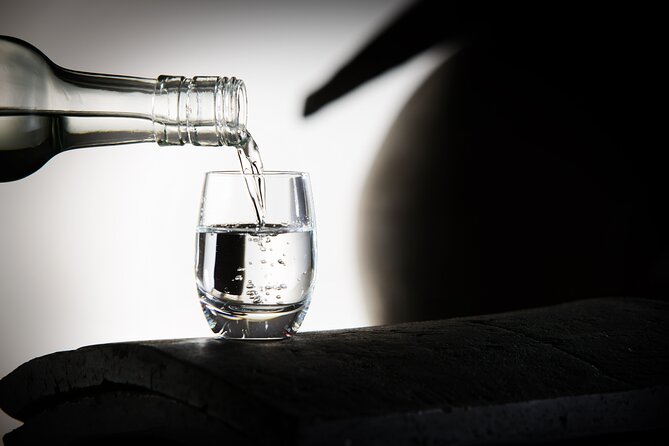
- A distillery visit, not just a bar stop: you’re inside Samhae Soju’s space, which makes the learning feel practical.
- 7+ different soju styles: you’ll compare flavors and strengths instead of doing one safe pour.
- Premium proof included: soju tastings can reach 45%+ (90 proof+).
- Stories built around tradition and the 3 pigs theme: you learn why this spirit mattered, and why it sometimes disappeared.
- Small-group vibe: maximum of 10 travelers (the experience also notes groups up to 12), so conversation stays part of the point.
Why Samhae Soju feels like a behind-the-scenes Seoul stop
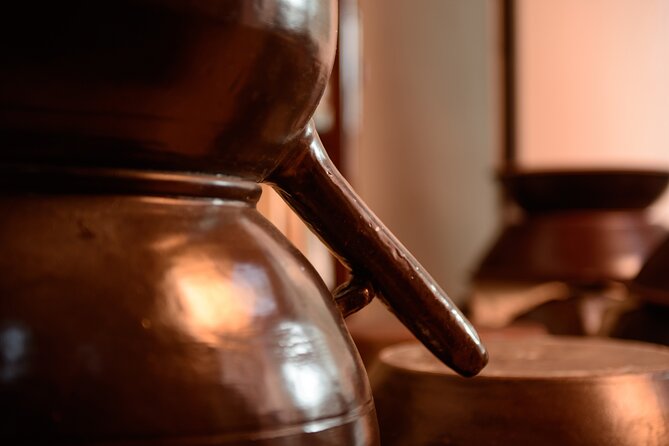
If you only know soju from the familiar green bottles around Seoul, this tour changes the picture fast. The setting matters: you meet at Samhae Soju (World Cup buk-ro 109, 지하 1호 in Mapo-gu) and spend your time inside a distillery environment, not on a sidewalk outside some souvenir counter. That alone makes it feel more grounded. You’re learning how the spirit is made, right where it’s made.
I also like the way the host keeps the experience human. Sam LEE doesn’t just rattle off production facts. He’s there to talk with your group, answer questions, and keep the session light enough that you’ll actually remember what you’re tasting. Several people noted how relaxed it feels, like a conversation with a friend who happens to run the tasting.
One more thing that helps: the session is 1 hour 30 minutes. That’s long enough to notice differences across multiple styles, but not so long that the whole thing blurs into a single “drank a lot” event. Still, with the strength they include, you’ll want to treat it like a real tasting schedule, not casual drinking.
You can also read our reviews of more food & drink experiences in Seoul

The spirit basics: tak-ju, cheong-ju, and why soju isn’t just one thing
Korean alcohol isn’t one product with one flavor. It’s a family. This tasting frames that quickly, then focuses on soju as the main character. In plain terms, you’ll hear how Korean alcohol categories break down into:
- Tak-ju (unfiltered rice wine)
- Cheong-ju (filtered clear rice wine)
- So-ju (distilled spirit)
That matters because it explains why soju can taste different across styles. When you understand the starting point (rice wine) and the transformation (distillation), your tongue becomes a better tool. You stop asking, Is this good? and start noticing, Is this smoother, cleaner, higher proof, more aroma-forward, or simply built differently?
A nice bonus is that the experience says you can also taste other types beyond soju. Even if soju stays the focus, you’ll get context for how the world of Korean alcohol leads into distilled spirits. In reviews, people also pointed out learning about earlier production steps such as how yakju and takju fit into the chain before soju shows up.
If you’re a first-timer, this is a smart approach. You don’t need to become a fermentation nerd. You just need a map—and then you get to sample your way across it.
The Joseon-era story and the 3 pigs theme
This tasting doesn’t treat soju like a trendy drink. It ties it to time and hardship. One key story centers on soju (specifically Samhae soju) being beloved among the Joseon dynasty noble class (1392–1894). The big idea: it was luxurious, but it also relied on resources like rice. During famines, that resource load became a problem, and production had to stop.
That background does two useful things for you:
- It explains why soju carries more cultural weight than many people assume.
- It makes the modern tasting feel like a living continuation, not a novelty.
Then there’s the 3 pigs angle. The experience is described as a story of 3 pigs, and multiple people mention that theme as part of the fun. You’ll hear it woven into the distillery narrative, not tacked on like a cartoon character. The goal is to keep the lesson memorable while still tied to production and tradition.
Meeting the master distiller’s legacy: Hyeonjong Kim and Taeksang Kim
Here’s where the tour gets real in a way you can’t fake with a bottle lineup. You’re not just tasting something off a shelf—you’re tasting a recipe and craft passed through people.
The current master distiller, Hyeonjong Kim, learned and practiced for more than 10 years under master Taeksang Kim, who inherited and kept the recipe in the family. There’s also a somber but important note: Taeksang Kim passed away in 2021.
Why this matters for you: it gives the tasting a clear point of view. Higher-proof soju isn’t just a gimmick. The process and recipe lineage are part of why the spirit can taste as it does. When someone’s been training for 10+ years, the flavor differences you’re tasting don’t feel random. They feel intentional.
And since you’re inside the distillery setting, you can connect the story to the physical space. That’s a big part of why the experience gets such consistently high marks.
Inside the distillery: what you’ll actually do in 90 minutes
You should expect a structured flow, even if the vibe stays relaxed.





Step one: arrive and get oriented inside Samhae Soju
You start at Samhae Soju and the tour ends back at the same meeting point. Since it’s a mobile ticket experience, you’ll have your entry ready on your phone. The location is also listed as near public transportation, so you won’t feel trapped by car-only logistics.
Step two: process and production talk you can picture
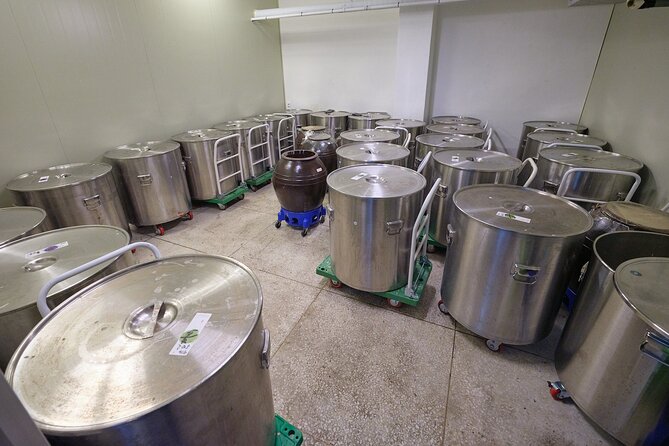
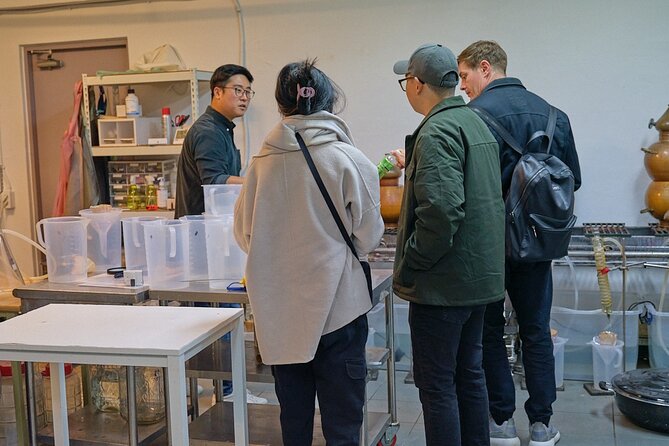
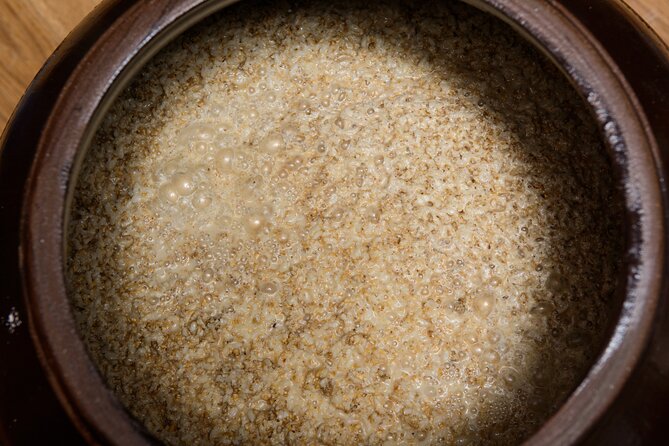
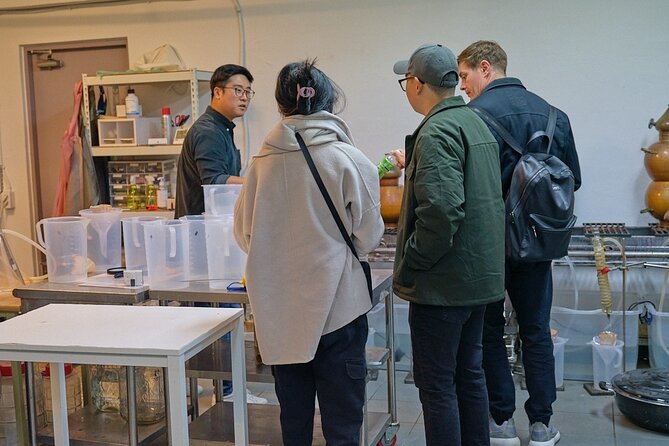
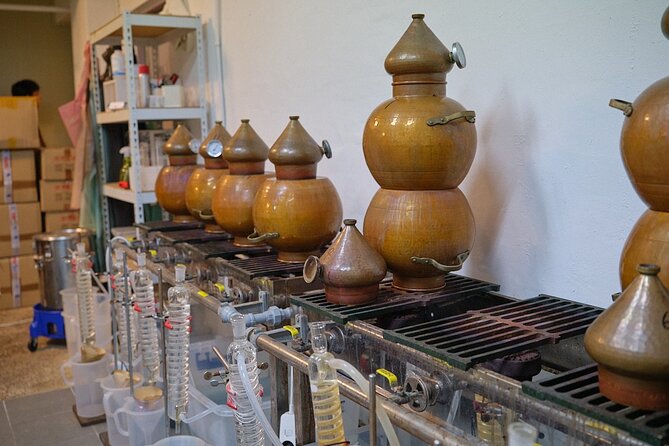
The tour promises you’ll be inside a distillery not open to the public. Reviews back that up with people describing walking around and seeing production in progress. One person specifically mentioned seeing fermentation progress, and others highlighted learning how soju differs from what they see in regular grocery-bottle versions.
Even without getting lost in technical jargon, the “show me” part is huge. If you’re the kind of person who wants to understand how something turns from raw rice into a spirit, this format works. You don’t have to guess. You can watch the process being explained in the setting where it happens.
Step three: tasting with conversation, not a lecture
The tasting part is set up to be social. Reviews mention the conversation flowing between Sam and the group, with a patient approach to questions. That’s valuable because soju tasting is subjective. Aroma, burn, sweetness perception, dryness—your group’s questions become the extra learning layer.
Also, this is a “spirit lovers” style experience. The tasting includes premium soju at 45% or above (90 proof+). That means you’ll taste more intensity than the casual 16–20% bottles people expect. It changes how you should approach the session.
The tasting lineup: 7+ soju styles and why proof level matters
The tour says you’ll taste at least 7 different types of Korean alcohols made by a master distiller, with a focus on soju. Multiple reviews mention seven soju varieties specifically, often with added aroma notes. So you should plan on comparisons—different strengths, different flavor profiles, and different aromatic characters.
Expect high-proof soju
If you want a benchmark, the tour calls out premium soju at 45%+ (90 proof+). That’s strong. With that kind of proof, texture changes on your palate fast: a higher-proof spirit often feels warmer, more direct, and sometimes more aromatic. If you’re used to mild soju, this can feel like someone turned the dial up.
One review also contrasted it with the green bottle soju many people associate with Seoul, saying the experience tasted notably different and higher proof than those common bottles. Translation for you: don’t treat it like the same drink, just a better brand.
Taste like a judge: what to look for as you sample
You’ll get the most out of the tasting if you pay attention to a few simple things:
- Aroma first: does it smell clean, sweet, grainy, or sharp?
- Mouthfeel: does it coat your tongue or feel thinner and crisp?
- Heat/burn: does it hit immediately, then fade, or linger?
- Finish: does it go dry and crisp, or leave a bit of sweetness?
Because this tour is comparison-based, your notes don’t need to be fancy. Even mental notes help you remember which style surprised you most.
You’ll likely want food before this
Several reviews gave one clear tip: eat beforehand. Not eating doesn’t just affect enjoyment—it affects how alcohol lands in your body. If you plan to be out afterward, start the evening fueled.
Group size, pacing, and the host-hosted style
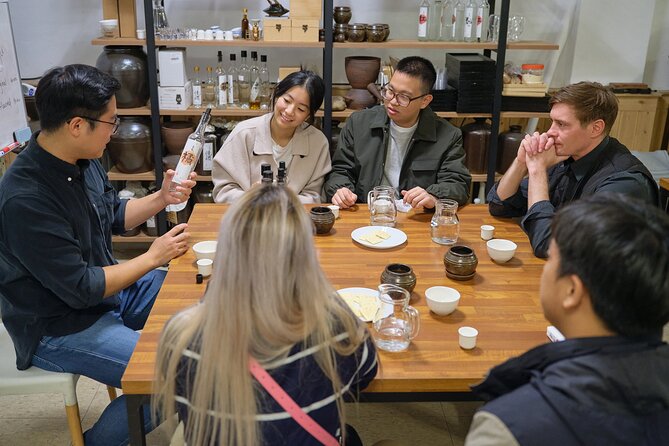
The experience lists a maximum of 10 travelers, and it also says groups can be up to 12. Either way, it’s small, which keeps the vibe from becoming a factory line of sip-and-swap. Reviews also mention groups of around five having a particularly relaxed feel, with lots of talking during tastings.
Sam LEE comes up again and again in reviews for being:
- welcoming and funny
- patient with questions
- careful about explaining the soju process
- conversational throughout the tasting
That last point is underrated. A distillery visit can become overly formal if the guide treats it like a checklist. Here, the best part seems to be the back-and-forth: you’re tasting while learning, asking questions while tasting, and leaving with clearer ideas about what you liked and why.
One more practical note: because the tour includes higher proof soju, pacing really matters. If you’re the type who wants slow sips, ask for it. If you want to keep things lively, do that too—but keep your body in mind.
Price and value: $43.83 for 90 minutes of distillery learning
Let’s talk value without pretending it’s a cheap thrill. The price is $43.83 per person for about 1 hour 30 minutes and includes a serious tasting session of multiple soju styles. You’re paying for three things you can’t easily DIY at home:
- A distillery setting not open to the public
You’re not just buying drinks. You’re getting access to the place and the story around it.
- A crafted tasting lineup
At least 7 different styles is not a sample flight of two or three. You’ll compare strengths and flavor choices made by a master distiller.
- A focused guide experience
Reviews consistently highlight Sam’s ability to explain history and process clearly, while also keeping the group conversation moving.
If you enjoy spirits, this feels like a good deal. If you only want one drink and a quick photo, the price can feel steep. But if you care about how something is made, and you’re excited to taste multiple kinds, $43.83 for that access and instruction feels fair.
Logistics that matter: meeting point, timing, and weather
You meet at Samhae Soju in Mapo-gu, at World Cup buk-ro 109, 지하 1호, and the tour ends back there. The experience is near public transportation, and it uses a mobile ticket, so you’ll want your phone charged and your confirmation handy.
One practical detail: the experience states it requires good weather. If it’s canceled due to poor weather, you’ll be offered a different date or a full refund. Plan for that if your Seoul schedule is packed.
Cancellation is non-refundable and can’t be changed. If you’re the type who books only when your schedule is set, this is important to keep in mind.
Who should book this soju tasting (and who might skip it)
This fits best if you:
- like spirits and want to compare multiple styles
- enjoy cultural stories tied to real production
- want a small-group experience with conversation
- are curious about how traditional rice-based alcohol becomes distilled soju
Skip it (or book it only if you’re comfortable with strength) if you:
- avoid higher-proof alcohol or get affected quickly
- want a lightweight drink-only hang without tasting comparisons
- prefer totally silent, drop-in experiences
If you do book, do yourself a favor and eat before. It makes the whole session more enjoyable and easier to remember.
Should you book the Samhae Soju distillery tasting?
I think you should book if you want an authentic soju tasting in Seoul that goes beyond the usual bottle knowledge. The mix of a private-access distillery setting, a master-recipe story tied to Joseon history, and a structured tasting of 7+ soju styles—including 45%+ premium soju—is exactly the kind of experience that earns its reputation.
If you’re nervous about the alcohol strength, it’s still doable. Just pace yourself from the start, and don’t show up on an empty stomach. This tour gives you the chance to learn what soju can taste like when it’s treated as craft, not just a bar pour.
FAQ
Where is the soju tasting meeting point?
You’ll meet at Samhae Soju in Seoul, Mapo-gu: World Cup buk-ro 109 지하 1호. The experience ends back at the same meeting point.
How long is the tasting experience?
It runs about 1 hour 30 minutes.
How much does the tour cost?
The price is $43.83 per person.
What will I taste during the tour?
You’ll taste at least 7 different types of Korean alcohols made by a master distiller, with a strong focus on soju. The experience also notes you may taste other types beyond soju.
Does the tasting include high-proof soju?
Yes. The experience is described as premium soju at 45% or above (90 proof or above).
Is this tour inside a public distillery?
No. It’s described as being inside a distillery that is not open to the public.
How large is the group?
The tour lists a maximum of 10 travelers. It also notes that groups can be up to 12 in size.
What ticket type do I need?
You get a mobile ticket.
Who hosts the experience?
The experience provider listed is Sam LEE.
What happens if the tour is canceled due to weather?
The experience requires good weather. If it’s canceled due to poor weather, you’ll be offered a different date or a full refund.
Can I book a private group?
For private groups, the host says to make a private group reservation or message for changes based on group needs.