REVIEW · SEOUL
Best 2 Days Guided DMZ and Seoul City Tours from Seoul
Book on Viator →Operated by VIP TRAVEL Co.Ltd · Bookable on Viator
The DMZ is closer than you think. This two-day guided tour pairs the emotional pull of the DMZ with a classic Seoul day of palaces, temples, and markets. I love the chance to walk through the 3rd Infiltration Tunnel and then use the binoculars at Dorasan Observatory for a rare line-of-sight view. I also like how Day 2 strings together big-name sights (Jogyesa Temple and Gyeongbokgung Palace) with very practical shopping stops (Insadong and Namdaemun). One drawback to plan for: parts of your time at each site can feel a bit rushed, and some signage may not help you as much as you’d hope if you rely on English text.
For $110 per person, you’re getting a guided experience that’s meant to reduce the usual South Korea travel friction: pickup is offered, you ride in an air-conditioned vehicle, and admission fees are included for multiple stops (with one free add-on at the ginseng museum). From what I’ve seen in the guide quality, this tour earns praise for people like Kelly on the DMZ side and Wendy keeping things on schedule while pointing out what matters.
This is a 2-day plan that starts at 9:00 am and ends back at the meeting point. If you dislike tight spaces, the tunnel is the one moment to think through carefully, and since lunch is not included, you’ll want a plan for eating on your own.
In This Review
- Key things to know before you go
- Two days from Seoul: DMZ emotion plus Joseon-era Seoul
- Day 1 at Imjingak Park: the Iron Horse, unification symbolism, and ritual space
- Bridge of Freedom: walking in 1953 footsteps
- The 3rd Infiltration Tunnel: the moment that feels real in your body
- DMZ Theater: the short video that ties the day together
- Dorasan Observatory: binocular views and the thrill of a clear day
- Day 2 in Seoul: Jogyesa Temple first for a calm start
- Gyeongbokgung Palace: Joseon court scale and restoration scars
- National Folk Museum of Korea: royal life without the guesswork
- Insadong arts street: handmade crafts, snack stops, and easy browsing
- Namdaemun Market: big variety in one chaotic block
- Ginseng museum stop: a short, free historical detour
- Price and logistics: what $110 buys in real comfort and value
- Who should book this DMZ and Seoul city combo
- Should you book? My practical verdict
- FAQ
- What time does the tour start?
- How long is the experience?
- What’s included in the price?
- Is lunch included?
- Do I need to buy admission tickets?
- Can I cancel for a full refund?
Key things to know before you go
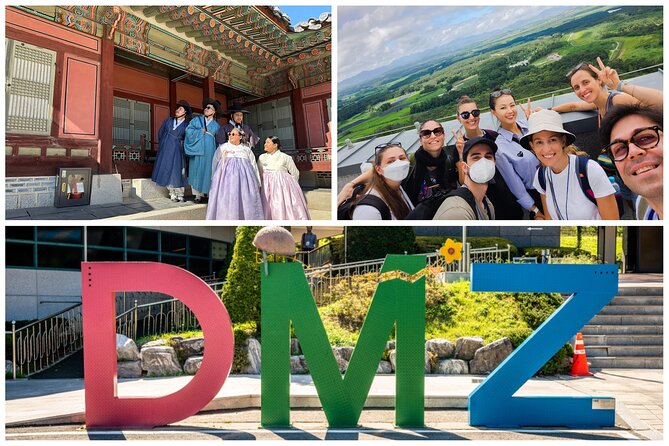
- DMZ stops are packed with context: Imjingak Park, Bridge of Freedom, DMZ Theater, tunnel, and Dorasan Observatory are sequenced to make sense.
- The 3rd Infiltration Tunnel walk is the standout moment: it’s long, narrow, and a real physical experience (not just a viewpoint).
- Dorasan Observatory is built for sightlines: you get binocular access plus the chance to spot key areas on clear days.
- Day 2 mixes old Seoul and shopping: temples and Joseon-era palace history, then Insadong and Namdaemun for hands-on souvenirs.
- Guide skill matters here: people like Kelly and Wendy are specifically praised for keeping the group moving and explaining what you’re seeing.
- Lunch is on your own: bring money and be ready to grab food nearby between stops.
Two days from Seoul: DMZ emotion plus Joseon-era Seoul
This tour is designed for travelers who want both sides of South Korea: the big historical story you can’t get anywhere else, and then the everyday beauty of Seoul’s heritage neighborhoods. Day 1 centers on the Korean conflict through a series of carefully chosen stops, moving from memorial spaces into the controlled-view DMZ experience.
Day 2 changes gears. You go temple-first, then palace, then museum, then markets. The point is not just to check boxes, but to see how Korean Buddhism and Joseon court culture live inside a modern city that still has lanes full of crafts, snacks, and bargain-hungry shoppers.
You can also read our reviews of more guided tours in Seoul

Day 1 at Imjingak Park: the Iron Horse, unification symbolism, and ritual space
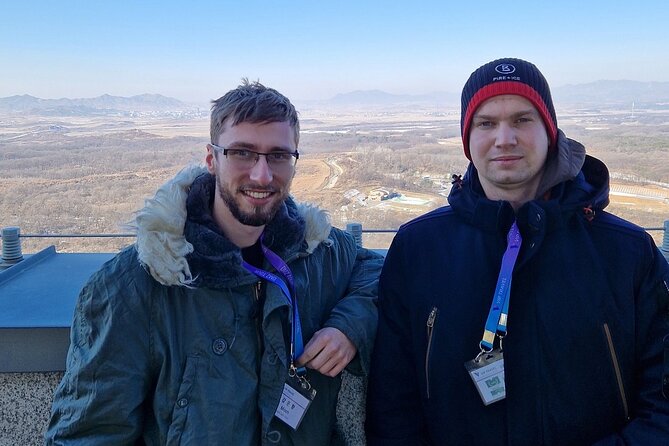
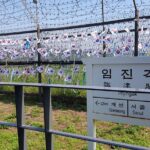
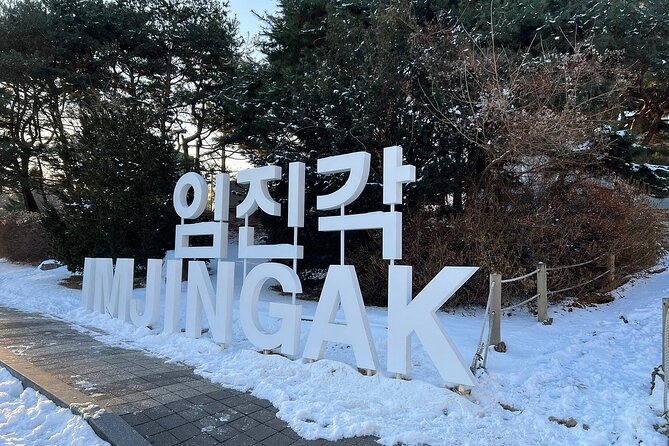
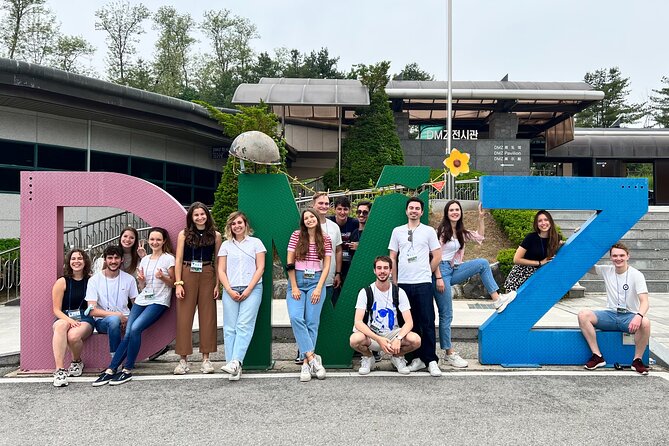
Your DMZ day begins at Imjingak Pyeonghoa-Nuri Park, a place built as a kind of emotional waiting room for people displaced by the Korean War. It’s not just a scenic park. It’s a memorial space with specific objects tied to refugee memory and family tradition.
You’ll see the Iron Horse train inside the park, a visual reminder of rail connections that once connected the two Koreas. Nearby, look for the Mangbaedan altar, where refugees bow toward ancestors as it looks in the direction of the graveyard—an act tied to Chuseok, Korean Thanksgiving.
Then there’s the Unification Pond shaped like the Korean peninsula. It’s a simple idea, but it helps your brain hold the bigger picture: this conflict isn’t abstract; it’s tied to the geography people still map in their heads. The Peace Bell is part of that same mood. If you like taking your time with photos, this is a decent start point because it’s outdoors and easy to wander a bit in the time you have.
Bridge of Freedom: walking in 1953 footsteps
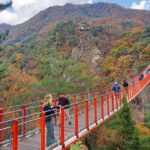
Next comes the Bridge of Freedom at Imjingak. This is where the tour turns more personal and more historical. The bridge was built to help liberate prisoners—12,773 South Korean prisoners in 1953—so your walk is literally the movement of people returning home.
It’s set against a natural backdrop, which makes the photos easy, but it also adds a strange contrast. You’re capturing scenery while standing in a corridor of history that’s about captivity, return, and separation. I find that’s where a good guide makes the difference: you get more out of the bridge if you understand what you’re walking through.
You’ll have a set amount of time here, so if you want the best pictures, aim to do your main photos early and save a second round for later when the light changes.
The 3rd Infiltration Tunnel: the moment that feels real in your body
The 3rd Infiltration Tunnel is the stop that many people remember long after the rest of the itinerary blends together. The details here are specific: it was discovered in 1978, and the tunnel was built for invasion purposes. It’s 1,635 meters long, with about a 2-meter height and 2-meter width.
Walking through is not like a museum hall. It’s a physical reminder of how infrastructure can turn into a threat. The width and height make you aware of space immediately. If you’re even mildly uncomfortable in enclosed areas, plan for that. The tour notes that you can wait by the exit if needed, which is a rare bit of reassurance on a high-stakes stop like this.
There’s also an important historical angle: when the tunnel was discovered, North Korea claimed South Korea built it for a surprise attack, but evidence points the other way. A guide’s explanation helps you understand why you’re hearing the story the way you are.
DMZ Theater: the short video that ties the day together
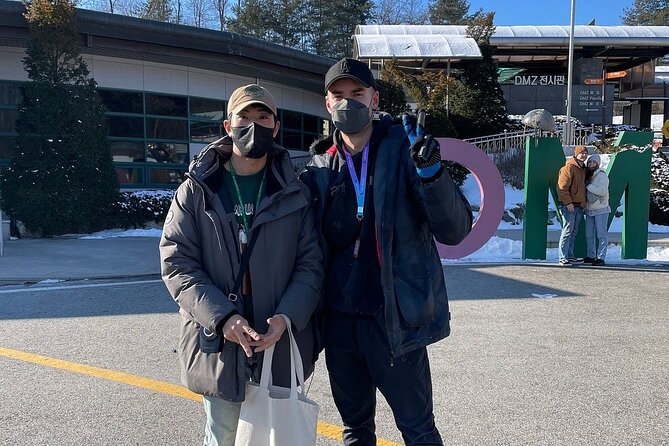
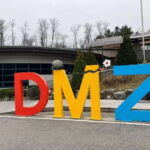
After the tunnel, you’ll head to the DMZ Theater for a short 7–8 minute video. This matters because it gives you a South Korean perspective on how the DMZ came about and the conflict timeline that surrounds it.
This is the kind of stop that can feel optional—until you realize it’s the bridge between what you already walked through and what you’ll see at the observatory. You’re also shown background on the infiltration tunnels. Since you’ve just experienced the 3rd Tunnel, the video tends to stick.
If you don’t enjoy seated viewing, this one is brief enough that it usually doesn’t derail your day.
You can also read our reviews of more city tours in Seoul
Dorasan Observatory: binocular views and the thrill of a clear day
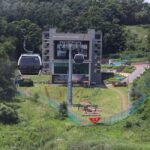
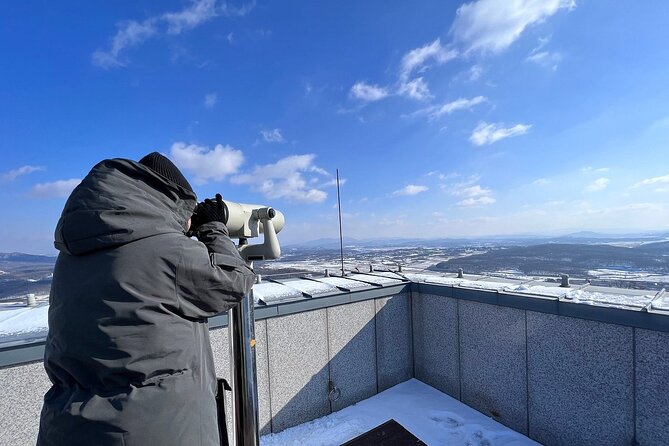
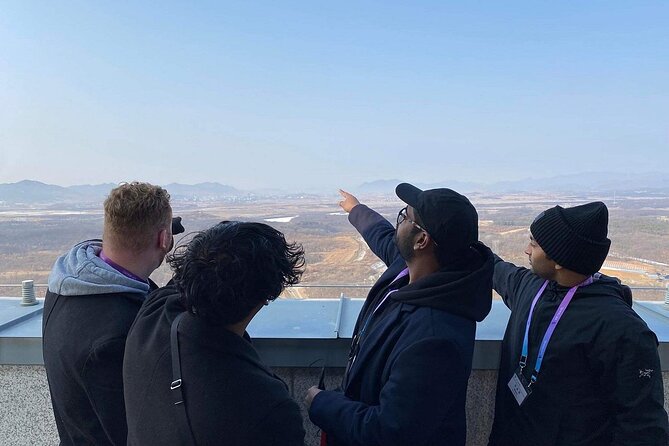
Your final DMZ highlight is Dora Observatory (at Dorasan). This is positioned for looking across the border. The tower layout gives you a practical reason to care about timing and weather: on clear days, you can see farther, and the tour encourages using the high powered binoculars on the third floor.
From here, you may be able to spot the propaganda village located inside the DMZ and see as far as Gaesong, described as North Korea’s ninth-largest city. The tour also notes that on the right day, you might see a bronze statue of Kim Il-sung.
I like this stop because it turns the DMZ from a story into a view. It’s still limited and controlled, but it’s the closest you’ll get to visualizing what’s on the other side.
If you’re a photo person, treat Dorasan like a real viewpoint: bring patience, check the conditions, and don’t waste all your time taking shots before you’ve tested the binocular focus.
Day 2 in Seoul: Jogyesa Temple first for a calm start
Day 2 starts with Jogyesa Temple, one of the important landmarks of Korean Buddhism. It’s in downtown Seoul, which means the temple feels like a pause button in the middle of city noise.
The tour describes key entry details. You go through a pillar gate called “Iljum,” or “Iljumun.” It symbolizes the division between the world of everyday life and the world of the Buddha. For me, that’s an easy mental trick. You’re not just walking into a building. You’re stepping into a different rhythm.
Inside, there are golden statues and an ancient white pine tree that anchors the scene. Jogyesa was first established in 1935, and that date helps you place it in modern Korean history rather than imagining Buddhism here as purely ancient ruins.
40 minutes is enough time to see the major areas without feeling rushed, as long as you don’t get stuck too long trying to translate every carved detail.
Gyeongbokgung Palace: Joseon court scale and restoration scars
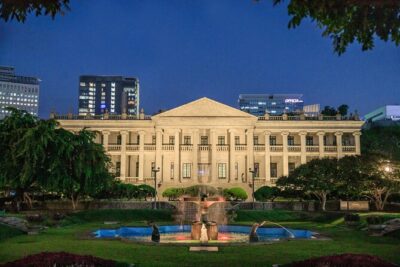
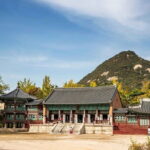
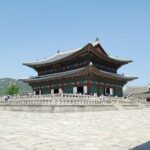
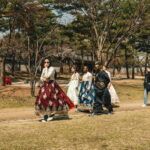
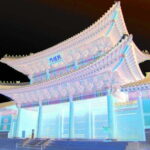
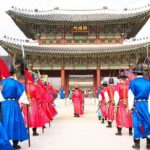
Next is Gyeongbokgung Palace, the main home of the Joseon Dynasty. The tour points out the scale: about 7,700 rooms. That number is hard to picture until you’re on site. You feel how court life required serious architecture and serious organization.
This palace also carries visible reminders that history didn’t treat it gently. It was destroyed during the Imjin War (1592–1598). Later, Imperial Japan damaged a large portion of it in the 20th century. Restoration has brought it back again, so you’re seeing a rebuilt landmark with scars that explain why it looks the way it does today.
If you only have one palace in Seoul, Gyeongbokgung is the one that delivers the full “this is what royalty actually required” feeling.
The tour runs long enough to walk the grounds, but it’s still timed, so keep moving between major photo points and save the slow strolling for the quieter corners.
National Folk Museum of Korea: royal life without the guesswork
After the palace, you’ll visit the National Folk Museum of Korea. The museum’s story starts as the Korean Imperial Museum in 1908, and it moved and changed names over time before becoming what you see now.
The collection is described as holding about 45,000 artifacts and royal treasures from Joseon palaces and the Korean Empire, plus 14 national treasures. For a short stop, it gives you something useful: a sense of daily life and court culture, not just walls and costumes.
The tour highlights that you’ll get a sense of what it was like to live as a Joseon king and queen. Even if you don’t read every label, the structure of the museum helps you connect artifacts you might have seen at Gyeongbokgung with real rooms, objects, and routines.
This is one of those stops where a guide helps most—because you’ll understand what you’re looking at faster and with less guesswork.
Insadong arts street: handmade crafts, snack stops, and easy browsing
Now you’re in shopping mode with Insadong. This area is known for arts and crafts, and the tour emphasizes that many goods are hand-crafted. That matters because it changes what you should buy. You’re not just collecting souvenirs. You’re buying items that were made by local makers or at least selected to look traditional.
You’ll walk a long main street with stalls and shops, then have time to explore alleys with ceramics shops and food vendors. The tour even notes small details like a poo-themed café at the top of the street, plus snack ideas such as waffle bars made with matcha and plum tea.
Insadong is a good place to slow down. You can talk with shopkeepers, compare materials, and look for things that feel personal—like a small art piece rather than a generic magnet.
If you’re traveling with kids or you like street snacks, this stop often lands well because it’s active and varied.
Namdaemun Market: big variety in one chaotic block
The day ends with Namdaemun Market, described as one of the oldest and largest markets in South Korea. It’s also in the heart of Seoul, so it feels like a concentrated slice of what locals do when they want variety.
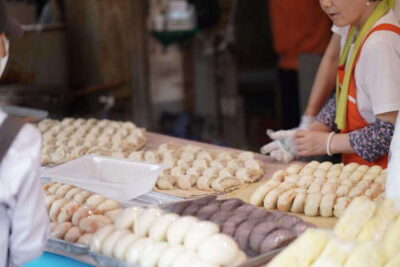
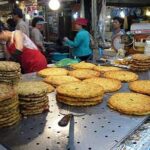
This market is known for everything from traditional Korean crafts and clothing to electronics and fashion. That mix is useful if you don’t want to spend half a day deciding where to shop. You can browse multiple categories in one area.
The tour gives you about 50 minutes, which is enough for a focused souvenir hunt and some casual street browsing. If you like bargaining, you’ll find plenty of opportunities for conversation—just keep your time realistic.
Ginseng museum stop: a short, free historical detour
Before you wrap up, there’s a stop at a Ginseng Museum (청하고려인삼(주)), scheduled for 30 minutes and noted as free. The details of what you’ll see aren’t spelled out here, but the timing suggests it’s a quick, educational stop rather than a long museum visit.
This is the kind of add-on that can either be a pleasant break or a mild extra, depending on your interests. If you like traditional remedies and Korean food culture, it’s an easy way to get a little more context without spending extra.
Price and logistics: what $110 buys in real comfort and value
At $110 per person for about two days, the value comes from three things working together.
First, you’re paying for guidance in two very different settings: controlled DMZ access and full-day Seoul sightseeing. That guidance reduces decision fatigue. You’re not figuring out routes, buying multiple admission tickets, or trying to understand what you’re looking at alone at the DMZ.
Second, the tour includes an air-conditioned vehicle and states that pickup is offered. In Seoul, where summer heat and winter chill can change your mood fast, that comfort matters more than it sounds.
Third, admission tickets are included for multiple DMZ and sightseeing stops, and all fees and taxes are included. Lunch is not included, but you’ll get a guide’s restaurant recommendations, which is helpful when you don’t want to waste your limited time hunting for a decent meal.
One practical consideration: the group size limit is listed as a maximum of 100. That’s large enough that you may not feel like a private tour, but it still keeps the experience structured.
Who should book this DMZ and Seoul city combo
I’d book this if you’re on a first Seoul trip and you want:
- DMZ access with a sequence that makes sense, not random stops
- A guided Seoul day that mixes culture (temples, palace, museum) with real shopping time (Insadong and Namdaemun)
- A plan that saves you from coordinating transportation and admissions
I might skip it if:
- You need lunch fully included and want no meal planning at all
- You’re very sensitive to tight spaces (the tunnel is the key test)
- You want total freedom to linger at every photo spot for an unlimited time
Should you book? My practical verdict
If your goal is a high-impact South Korea experience that covers both the extraordinary (the DMZ) and the everyday Seoul experience (palaces and markets), this tour is a strong bet for the price. The standout reason is the pairing: tunnel and observatory on Day 1, then Joseon culture plus hands-on market time on Day 2.
If you go, do one thing for yourself: be ready for the tunnel’s physical reality and keep your expectations flexible. You’ll get a lot out of the guided explanations—especially if your guide is the type to keep you on time and focused, like Kelly and Wendy were noted for doing.
FAQ
What time does the tour start?
The start time is 9:00 am.
How long is the experience?
It runs for 2 days (approx.).
What’s included in the price?
The price is listed as $110.00 per person, and the tour includes a best tour guide, an air-conditioned vehicle, and all fees and taxes.
Is lunch included?
No. Lunch is not included, and the tour guide will recommend restaurants and menus.
Do I need to buy admission tickets?
Admission tickets are listed as included for multiple stops, and the ginseng museum stop is free.
Can I cancel for a full refund?
Yes. You can cancel up to 24 hours in advance for a full refund. If you cancel less than 24 hours before the start time, the amount paid is not refunded.