REVIEW · SEOUL
Best Seoul City Tour (Gyeongbokgung Palace,Insadong,Namsan Tower)
Book on Viator →Operated by VIP TRAVEL Co.Ltd · Bookable on Viator
Seoul hits hard in a single day. This Seoul city tour is built for first-timers who want history, markets, and skyline views without building a route from scratch. I like that it strings together big-ticket sights like Gyeongbokgung Palace with neighborhoods that feel real, not staged.
My favorite part is the pacing-by-choices: you get guided time at major landmarks, plus free time in places like Insadong and Kwangjang Market where you can snack and browse on your own. It’s also a relief that you travel in an air-conditioned vehicle with a guide in English or Chinese.
One thing to consider: it’s a lot of stops in about 7.5 hours, so it can feel a bit rushed, especially if rain, crowds, or city disruptions slow buses down.
In This Review
- Key points worth knowing before you go
- What you pay ($58.65) and what that buys you in real value
- Getting started at 9:00 am: pickup near City Hall or Myeongdong
- Morning calm at Jogyesa Temple and Cheonggyecheon’s restored stream
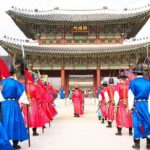
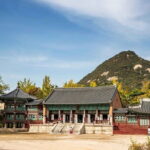
- Gwanghwamun Gate and Gyeongbokgung Palace: the best palace stop of the day
- Tuesday rule: Changdeokgung Palace and Bukchon Hanok Village take over
- National Folk Museum vs. Hanok Village: choosing atmosphere over checklists
- Cheongha Korea Ginseng Museum: useful context, but don’t let shopping run the show
- Insadong crafts street: where to slow down and actually browse
- Kwangjang Market: snacks, textiles, and Seoul’s long-running market energy
- Namsangol Hanok Village: a gentler hanok stop before the mountain view
- Namsan Cable Car and N Seoul Tower: your included ride to the skyline
- Where you end the day: Myeongdong, Namdaemun, or Seoul City Hall area
- How to get the best version of this tour (instead of the rushed version)
- Who this Seoul tour fits best
- Should you book this Seoul city tour?
- FAQ
- What time does this tour start and how long is it?
- Do I get hotel pickup?
- Which palace do you visit on Tuesdays?
- What happens to the National Folk Museum stop on Tuesdays?
- Is Namsan Tower included?
- How big is the group?
- Can I cancel for a full refund?
Key points worth knowing before you go
- Hotel pickup plus central meeting points help you start without wrestling subway transfers
- Gyeongbokgung Palace (non-Tuesday) often includes the changing-of-the-guard moment
- Tuesday swaps to Changdeokgung Palace and Bukchon Hanok Village, since Gyeongbokgung and the National Folk Museum close
- Markets and craft streets are built in, with time at Insadong and Kwangjang Market
- N Seoul Tower ends the day with the included round-trip cable car ride up Namsan
- Guide-led structure keeps the day moving when Seoul gets crowded or weather turns
What you pay ($58.65) and what that buys you in real value
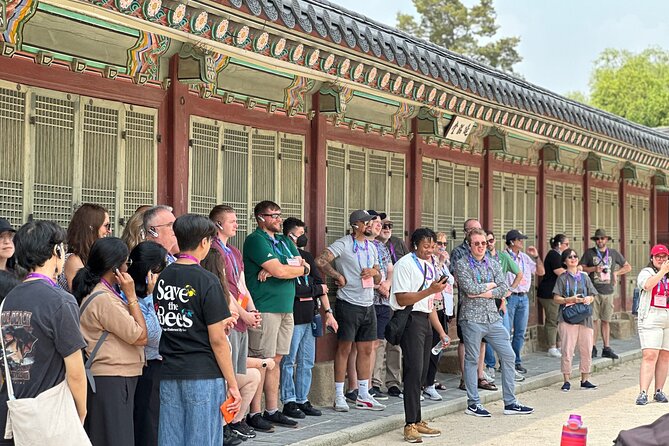
For $58.65 per person, you’re paying for more than entry tickets. You’re buying a guided route that links multiple paid stops (palaces, museum time, and the Namsan cable car round trip) with included pickup and transport around central Seoul.
Here’s the value math I use: if you tried to replicate this on your own, you’d spend time coordinating transit, buying tickets, and figuring out which palaces are open on your day. This tour basically trades money for time and reduces decision fatigue when your days are limited.
You can also read our reviews of more city tours in Seoul
Getting started at 9:00 am: pickup near City Hall or Myeongdong
The day begins at 9:00 am with free hotel pickup from selected downtown hotels, or with two downtown meeting points: Myeongdong Subway Station (Exit 9) and Seoul City Hall Subway Station.
That matters more than it sounds. Seoul is big, and a packed day goes smoother when you don’t lose the first hour to finding your bus, re-checking directions, or waiting in the wrong station entrance. The tour also caps groups at 45 travelers, which usually keeps things manageable compared with larger coach tours.
Expect an air-conditioned vehicle and a professional guide (English or Chinese). You’ll also use a mobile ticket, which is handy when you’re bouncing between locations.
Morning calm at Jogyesa Temple and Cheonggyecheon’s restored stream
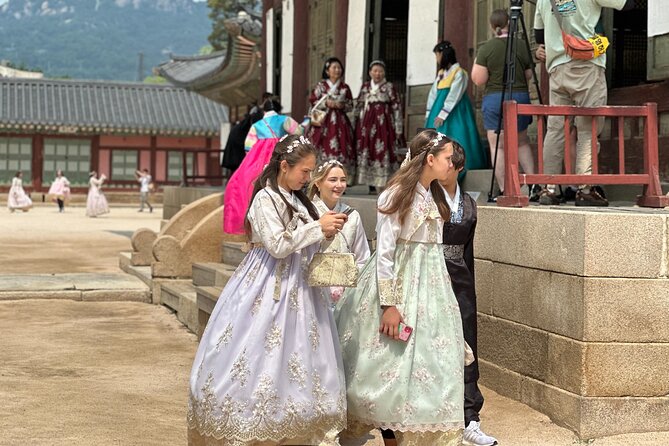
Before palaces and markets take over, you start with a quieter slice of Seoul.
At Jogyesa Temple (about 30 minutes), you get a close-up look at Korean Zen Buddhism. The temple has been the heart of Zen Buddhism since 1395, so even a short visit gives context for why Seoul’s religion and daily life stay connected.
Next you pass Cheonggyecheon, the restored urban stream running through central Seoul. This is a great “reset” stop after the morning rush because it gives you a walkable break. It was restored in 2005 after being buried under concrete, so it’s also a quick lesson in how Seoul modernized without erasing everything old.
Gwanghwamun Gate and Gyeongbokgung Palace: the best palace stop of the day
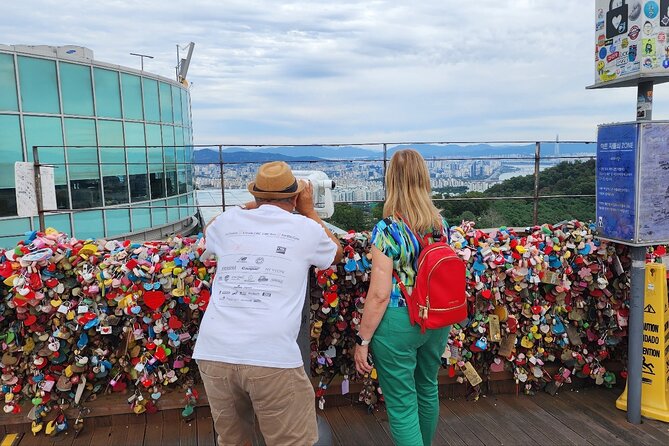
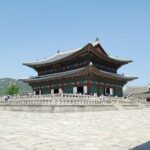
You’ll step through Gwanghwamun Gate, the main entrance to Gyeongbokgung Palace. The gate was rebuilt in 2010, and it’s the kind of structure that helps you orient your mind before you start exploring inside.
From there, the core palace visit is Gyeongbokgung Palace, typically around 1 hour with admission included. It’s Seoul’s grand Joseon Dynasty palace, founded in 1395. If you’re there on a non-Tuesday day, this is also where the changing of the guard ceremony fits into the experience.
Two practical tips for this part:
- Wear shoes you can walk in for uneven palace paths and stairs.
- If it’s cold or rainy, you may find the palace time feels longer than you expect, because you can’t “escape” weather the way you can in a market street.
Tuesday rule: Changdeokgung Palace and Bukchon Hanok Village take over
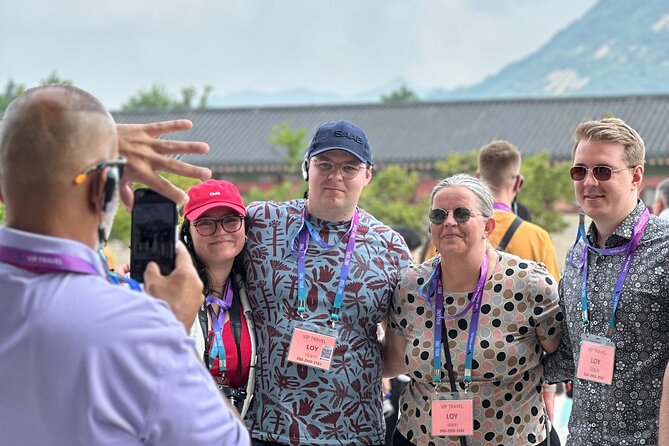
This tour is smart about closure days, because it builds in substitutions instead of leaving you with empty plans.
Every Tuesday, Gyeongbokgung Palace is closed, and the changing of the guard ceremony isn’t running. On those days, the tour swaps in Changdeokgung Palace (about 1 hour, admission included), a UNESCO World Heritage site built in 1405. If you like palaces but want a different mood than Gyeongbokgung, this swap is worth planning around.
Also on Tuesdays, the National Folk Museum of Korea is closed, so the tour replaces that museum time with Bukchon Hanok Village (about 30 minutes, admission free). Bukchon is a living area of traditional hanoks, so you’re not just looking at old buildings. You’re seeing a neighborhood texture that still feels residential.


National Folk Museum vs. Hanok Village: choosing atmosphere over checklists
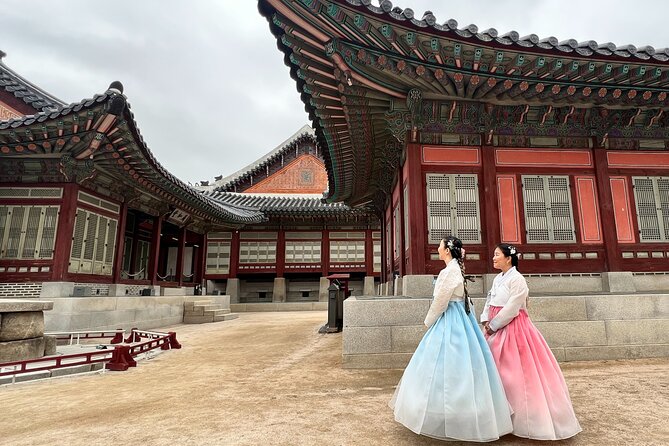
On non-Tuesday days, you’ll visit the National Folk Museum of Korea instead of Bukchon. It runs about 20 minutes and admission is included. The museum opened in 1945 and focuses on Korea’s cultural heritage, which gives you a strong “why” behind what you’re seeing around palaces and markets.
On Tuesday, you trade that museum context for the Bukchon on-the-ground experience. Both choices are useful, but they do different jobs:
- Museum time gives you background you can carry into the rest of the day.
- Hanok time gives you texture you can feel immediately in the streets.
Cheongha Korea Ginseng Museum: useful context, but don’t let shopping run the show
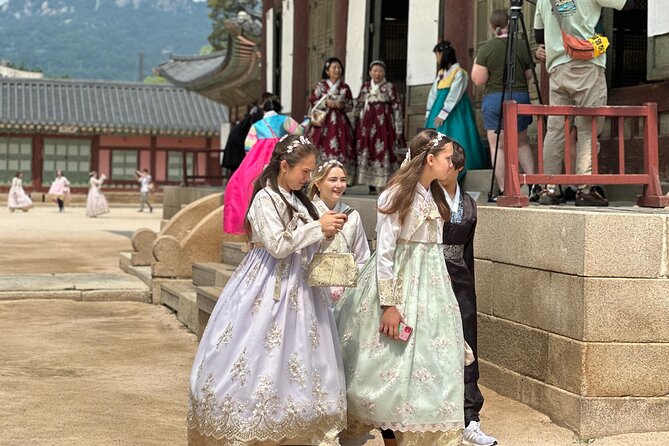
The stop at Cheongha Korea Ginseng Museum is about 20 minutes and free. The topic is Korea’s prized ginseng root and its long history in Korean medicine and culture—information that can make the rest of your Seoul “food and health culture” encounters make more sense.
That said, this is where you should keep your eyes open. One common issue with this kind of museum stop is that it can drift into product sales mode. If you’re the type who wants the educational part only, treat it as a short learn-and-look stop, and don’t feel pressured to buy.
Insadong crafts street: where to slow down and actually browse
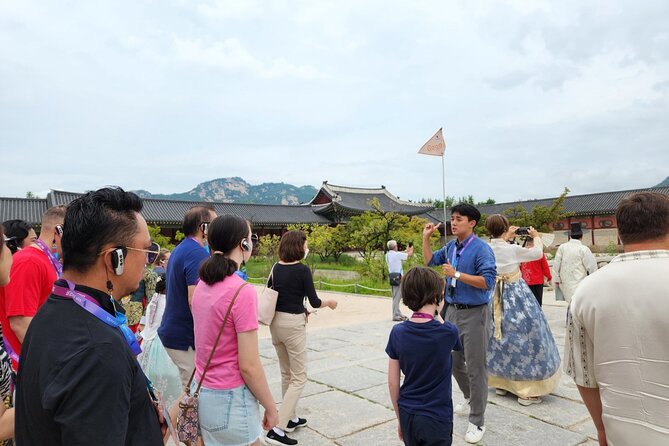
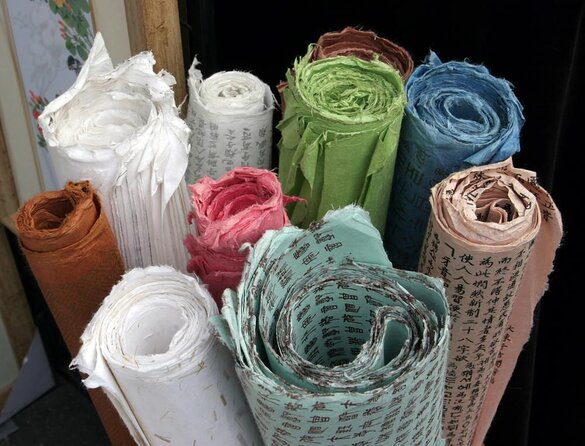
You’ll get about 1 hour in Insadong, one of Seoul’s best-known arts-and-crafts areas. This is where you’ll see handmade pottery, calligraphy brushes, and hanji paper crafts sold in street-level stalls.
Insadong is valuable on a tour like this for one reason: it gives you freedom inside a structured day. You can pause for photos, read labels, and pick up small gifts without needing the guide to translate every interaction.
If you plan to shop, bring a plan. Set aside money for souvenirs, but also keep room for snacks—because markets later in the day can tempt you into spending before you even finish the craft streets.
Kwangjang Market: snacks, textiles, and Seoul’s long-running market energy
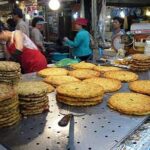
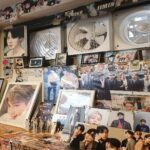
Lunch is on your own, but the tour feeds you toward one of the city’s most classic food stops: Kwangjang Market (about 30 minutes). This is one of Seoul’s oldest traditional markets, operating since 1905, and it’s known for a dense cluster of food stalls and older-style shopping.
You’ll also see textile-related stalls, which makes it more than just a food walk. For value, this stop is good because:
- You can snack your way through instead of committing to a full restaurant meal.
- Prices tend to be flexible depending on what you pick.
If you’re sensitive to long lines, go in ready to accept that market time can be crowded. That’s part of the “real Seoul” feeling, but you should budget your patience.
Namsangol Hanok Village: a gentler hanok stop before the mountain view
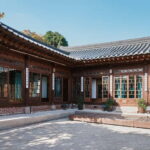
Before you ride up toward Seoul’s skyline, you’ll visit Namsangol Hanok Village (about 40 minutes, free). It’s a preserved enclave at the foot of Namsan Mountain featuring five restored Joseon-era hanok homes from the 19th century.
This stop works well if you want hanok atmosphere without spending all your time in one of the busiest photo zones. It’s also a good reset before you head onto the cable car ride where you’ll be moving again.
Namsan Cable Car and N Seoul Tower: your included ride to the skyline
The tour includes Namsan Cable Car (about 30 minutes, admission included). The ride runs since 1962, and it’s one of the simplest ways to get up the mountain and out of street-level congestion.
From there, you reach N Seoul Tower (about 1 hour, included). The tower sits on Namsan Mountain and is 236 meters tall, first opened to the public in 1971, and it’s one of Seoul’s most recognized skyline markers.
Important detail: the tour notes that it includes the round-trip cable car to N Seoul Tower. If you’re hoping to spend lots of time at the top, you’ll want to use your hour wisely—queues and photo stops can take longer than you plan.
Where you end the day: Myeongdong, Namdaemun, or Seoul City Hall area
This tour finishes in a different location rather than at your original hotel. Your drop-off can be at:
- Myeongdong for beauty shops, fashion, and street food, plus the nearby Myeongdong Cathedral
- Namdaemun Market for Seoul’s oldest and largest open-air market area (active since 1414)
- Seoul City Hall area, with historic-modern contrast and nearby Deoksugung Palace, plus the photo spot featuring I SEOUL U
This is great for extending the day on foot. Just plan a little so you’re not stuck at the far end of central Seoul when you’re tired. The tour helps, but it doesn’t guarantee you’ll finish directly at your lodging.
How to get the best version of this tour (instead of the rushed version)
Because the day packs a lot in, a few choices can make it feel smooth instead of hectic.
Go light on extra activities. The tour already covers major palace ground, a temple, a restored stream area, craft street time, market snacks time, and the Namsan skyline finale. If you add more, you’ll start cutting into sight time.
Be ready for weather and crowds. One of the trade-offs of palace time is that you can’t “shorten” it easily when plans change with rain or cold. Market streets also attract people fast.
Know that route changes can happen. City-wide issues like protests can affect traffic, and in those cases, you may see stops adjusted. If you’re arriving with very strict must-see timing, build in flexibility for that day.
Pick your priorities for buying. The ginseng stop can feel like a sales-focused stop to some people, while Insadong and Namdaemun are more naturally aligned with shopping. Decide what you’re willing to spend time on ahead of time.
Who this Seoul tour fits best
This one-day plan is a strong match if:
- You’re visiting Seoul for the first time and want a fast orientation.
- You want palace + markets + skyline without building a route.
- You prefer a guided structure while still getting some free browsing time.
- Your group includes different interests: temples and palaces for some, shopping and food for others.
It may be less ideal if you:
- Want a slow, deep historical experience at fewer locations.
- Hate crowds or don’t handle weather well.
- Need a tour that always follows the exact same route no matter what (city conditions can shift).
Should you book this Seoul city tour?
If you’re trying to make the most out of a short visit, I think this tour is a smart buy. For around $58.65, you’re getting pickup, a language guide, palace and museum time where relevant, a full market-and-crafts day slice, and the Namsan cable car to finish with Seoul’s skyline.
Book it if your goal is: see the highlights, learn the basics, eat your way through a couple famous stops, and go to bed with your bearings set. Skip it if you want a quiet, unhurried, one-neighborhood-at-a-time experience.
FAQ
What time does this tour start and how long is it?
It starts at 9:00 am and runs about 7 hours 30 minutes.
Do I get hotel pickup?
Yes. There is free pickup from selected downtown hotels and also meeting points at Myeongdong Subway Station (Exit 9) and Seoul City Hall Subway Station.
Which palace do you visit on Tuesdays?
On Tuesdays, Gyeongbokgung Palace is closed, so the tour visits Changdeokgung Palace instead.
What happens to the National Folk Museum stop on Tuesdays?
On Tuesdays, the National Folk Museum of Korea is closed, so the tour replaces it with Bukchon Hanok Village.
Is Namsan Tower included?
You get the round-trip cable car to N Seoul Tower as part of the tour. The tour notes that the tower inclusion is specifically tied to the cable car ride.
How big is the group?
The tour has a maximum size of 45 travelers.
Can I cancel for a full refund?
Yes, you can cancel for a full refund if you cancel at least 24 hours before the experience’s start time.