REVIEW · SEOUL
Best Walking Tour to Gyeongbok Palace Bukchon Hanok Village
Book on Viator →Operated by Korealinx Corporation · Bookable on Viator
Seoul history feels real when you walk it. This 3-hour Gyeongbokgung Palace + Bukchon Hanok Village tour is a fast, friendly way to understand Joseon-era life without getting lost in the details, and it includes entrance fees so you can focus on the sights. I especially like the small-group feel (max 8) and the way strong guides such as Jay Kim and Stella connect palace architecture to everyday stories, even for first-timers—just know there’s meaningful walking and Bukchon involves steps and uphills.
You start near downtown and end in Insadong, which is a smart plan. You’ll hit the royal guard changing ceremony at Gyeongbokgung, then transition toward Bukchon’s traditional houses with a museum stop that frames what you’re seeing. The one drawback is physical effort: comfortable shoes are non-negotiable, and the Bukchon hillside terrain can slow you down if your legs are limited.
What makes this tour work well is the pacing. With only about an hour in the palace complex and a shorter, focused visit in Bukchon, it’s designed for getting context fast—without turning your day into a marathon.
In This Review
- Key highlights that make this tour worth your time
- Why Gyeongbokgung and Bukchon is the best first-history combo
- Price and what you actually get for $88
- Route and timing: from Taepyeongno to Insadong
- The pre-palace context: King Sejong Statue and the past-to-present setup
- Entering Gyeongbokgung Palace: the royal guard changing ceremony moment
- National Folk Museum of Korea: seeing over 98,000 artifacts with a purpose
- Between palaces and into Bukchon: the walk that connects spaces
- Bukchon Hanok Village: hidden looks, hanok houses, and uphill reality
- Small group energy: why guides matter most on this route
- Who should book this tour (and who should choose another plan)
- How to make the most of it on the day
- Should you book this Best Walking Tour to Gyeongbok Palace and Bukchon Hanok Village?
- FAQ
- How long is the Gyeongbok Palace and Bukchon Hanok Village walking tour?
- What is the price per person?
- Is an entrance ticket included?
- How many people are in the group?
- Where does the tour start and end?
- Do I need a printed ticket?
- Is this tour suitable for people with limited mobility?
- What happens if the weather is bad?
- What is the cancellation window?
Key highlights that make this tour worth your time
- Small group (max 8) keeps the experience personal and question-friendly
- Entrance fees included means less ticket wrangling and more time at the gates
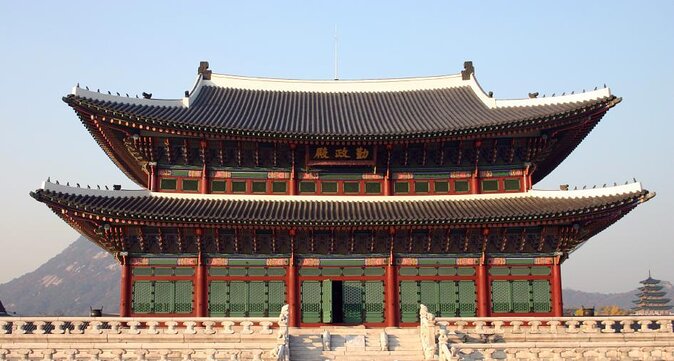
- Gyeongbokgung royal guard changing ceremony is built into the main stop
- National Folk Museum of Korea stop adds context with over 98,000 artifacts
- Bukchon Hanok Village with ticket-free walking gives you a close look at traditional houses
- Insadong finish makes it easy to keep exploring right after the tour
Why Gyeongbokgung and Bukchon is the best first-history combo
If you only do one history walk in Seoul, this pairing makes a lot of sense. Gyeongbokgung Palace shows you political power and palace design, while Bukchon Hanok Village shows what life looked like around that world—much more than a photo-only stop.
I like that the tour doesn’t treat the sites like separate tourist checkboxes. It frames what you’re seeing as part of one story: Joseon Dynasty life, royal spaces, and then the traditional neighborhood landscape between palaces.
Also, the tour is built for first-timers. You get a guided explanation that helps you decode things you’d otherwise only recognize as “big gates” and “pretty roofs.” It’s a practical way to get your bearings fast.
You can also read our reviews of more walking tours in Seoul


Price and what you actually get for $88
At $88 per person for about 3 hours, this is not the cheapest Seoul walking tour—but the value is in what’s included. Entrance fees are covered, and the itinerary is structured around major stops that can eat up time when you’re doing it solo.
Here’s the practical part: when entrance costs and time are bundled into one plan, you spend less mental energy on logistics. You can stay focused on the “why” behind the palace layouts and the daily-life details you’ll notice in Bukchon’s hanok houses.
The tour also runs with a mobile ticket, which is useful in Seoul where apps and queues can be the difference between smooth and stressful. And because it’s capped at 8 travelers, the experience stays closer to a guided walk than a crowded cattle-move through landmarks.
Route and timing: from Taepyeongno to Insadong
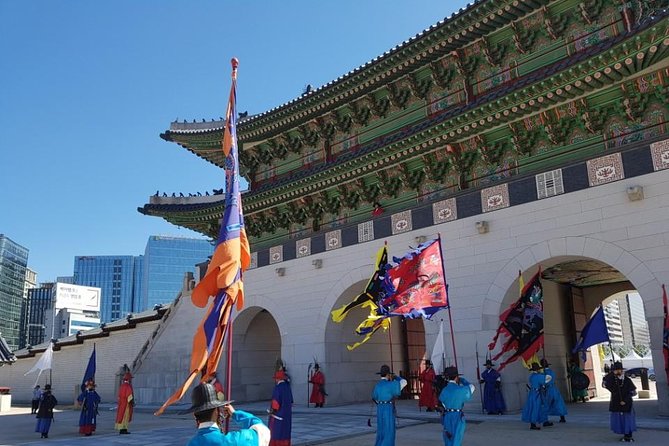
The tour starts at 24-1 Taepyeongno 2(i)-ga, Jung District and ends in the Insadong area at 75-5 Insa-dong, Jongno District. That end location is a smart bonus—you’re right where many people want to wander for snacks, crafts, and last-minute souvenirs.
You should expect a steady walk day, not a stop-and-stroll. The palace portion is about 1 hour, and Bukchon is about 30 minutes, but the route between places means your legs still do the work.
It’s also timed like a proper sightseeing arc. There’s a setup stop that frames the past and present, plus a stop at the King Sejong Statue before you enter the palace complex. That early “context” helps later, when you’re inside Gyeongbokgung and everything starts to click.
Finally, note the weather requirement. This experience requires good weather, and if it’s canceled due to poor weather, you’ll be offered a different date or a full refund.
The pre-palace context: King Sejong Statue and the past-to-present setup
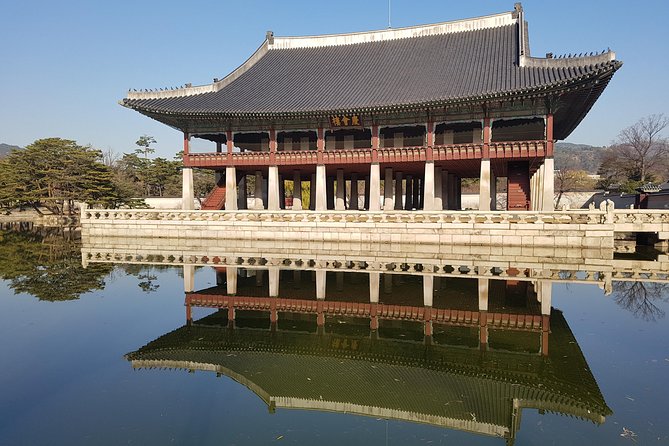
Before you hit the main palace gates, the tour gives you a short path of meaning. You’ll begin with a framing stop (labeled as the past and the present) and then visit the King Sejong Statue.
This matters more than you might think. When you understand why King Sejong is a key figure in Joseon-era identity, you’ll start noticing that the palace isn’t just architecture. It’s a message about how power, culture, and governance were expressed.
I also like that this section sets an easy pace for first-timers. You’re not shoved straight into crowds at the largest building; you get a warm-up understanding first, and then you step into the big spaces ready to look.
Entering Gyeongbokgung Palace: the royal guard changing ceremony moment
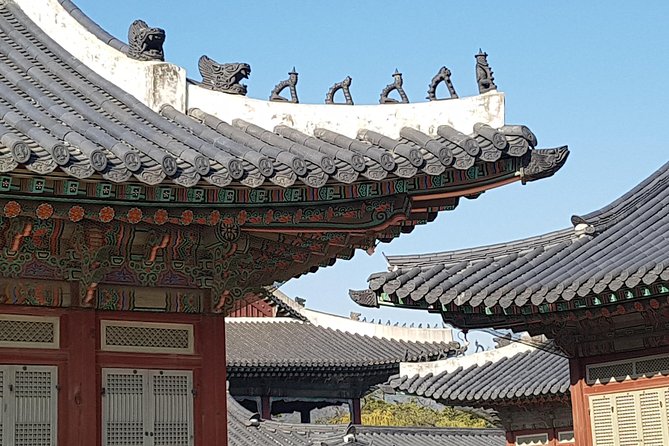
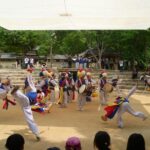
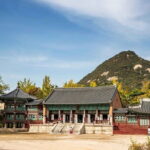
Gyeongbokgung Palace is the star stop, and the itinerary includes the royal guard changing ceremony. That’s a high-value target because ceremonies create a clear “now pay attention” moment. You’re seeing tradition performed in a setting that still looks like the original story.
During the palace portion (about 1 hour), you’ll move through key areas with your guide’s explanations focused on Joseon Dynasty history and traditional construction and design. The goal isn’t to recite dates. It’s to show you how the palace works as a system—where you are relative to authority and how design choices reinforced hierarchy.
A short, practical note: plan for standing and slow moving in popular areas. Even with a guide, palace courtyards can feel busy. Comfortable shoes help you stay patient, and a calm mindset helps you enjoy it instead of rushing.



National Folk Museum of Korea: seeing over 98,000 artifacts with a purpose
The tour includes a visit to the National Folk Museum of Korea, a stop that adds depth. The overview notes it houses over 98,000 artifacts, which is exactly the kind of big-number collection that can overwhelm you if you wander without context.
That’s where a good guide changes the whole experience. Instead of you trying to guess what matters, you’re given a guided lens—so you can connect museum objects to what you’re seeing outside the museum walls.
I love this kind of stop on a short tour. A palace alone can feel like “pretty buildings.” Adding the museum gives you everyday life context, so Bukchon doesn’t become just a photo walk. It becomes a neighborhood with meaning.
Between palaces and into Bukchon: the walk that connects spaces
After Gyeongbokgung, the route heads toward Bukchon Hanok Village, with a transition area mentioned between Gyeongbokgung Palace and Changdeokgung Palace. Even though Changdeokgung isn’t the main focus here, the connection helps you understand why Bukchon’s location matters.
This part of the walk is where your eyes start adjusting. You begin noticing the way Seoul’s geography supports layers of history: royal sites on one side, traditional residences nearby, and modern streets moving around them.
Keep an eye out for viewpoint moments. Bukchon areas can give you satisfying “you’re in the right neighborhood” angles, especially where rooftops stack and lanes funnel your gaze.
Bukchon Hanok Village: hidden looks, hanok houses, and uphill reality
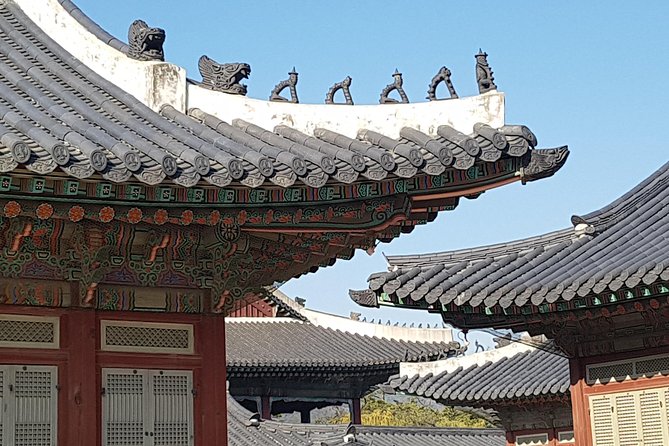
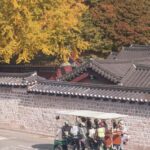
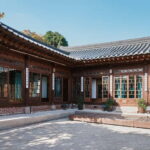
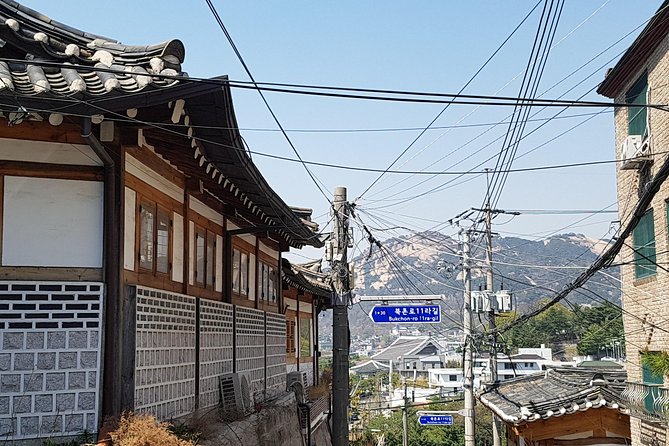
Bukchon Hanok Village is where the tour turns from power to people. You’ll get about 30 minutes to explore, including a ticket-free walking portion labeled as hidden looks.
This is also where the physical reality hits. Multiple remarks in the provided info point out that Bukchon involves hills, steps, and uphills, so it’s not a great fit if your walking is limited. If you’re generally okay with moderate walking but want to avoid knee-battering climbs, wear shoes with real grip and be ready for slow pacing.
The upside is worth it. In Bukchon, you can peer inside traditional houses and learn about Korean lifestyles from the past—exactly the kind of cultural context that makes a neighborhood feel alive rather than staged.
Think of this stop as a taste, not a long village immersion. You’ll see enough to understand the layout and character, then finish the tour in Insadong where you can continue at your own pace.
Small group energy: why guides matter most on this route
This tour’s reputation is strongly tied to guide quality. The names Jay Kim, Stella, Joe, Jack, and Paul appear in the guide mix, and what stands out in the feedback you’ll find here is style: friendly, engaging, and able to answer questions in real time.
That matters on a route like this. Palace and hanok spaces are full of details you can’t reliably spot from a brochure. When your guide explains what you’re looking at—ceremony purpose, building design logic, how daily life connected to the palace world—you get much more than sightseeing.
I also like the tone described here: professional but warm. On a short tour, that keeps you from feeling rushed or talked at. You still get structure, but you’re not stuck in one-way lectures.
Who should book this tour (and who should choose another plan)
This tour is best for you if:
- you’re visiting Seoul for the first time and want a guided history framework
- you want entrance fees included so your day stays simple
- you like short, focused stops with room to absorb rather than marathon wandering
- you’re curious about Joseon-era life through both palaces and traditional neighborhoods
You might want to skip or choose a lighter alternative if:
- steps and uphills are an issue for you
- you want more time for independent exploration inside large complexes
- you prefer a longer, deeper museum or neighborhood immersion (this one is time-smart, not time-heavy)
If you’re traveling with kids, this format also fits well because the tour is structured and varied—ceremony, palace buildings, museum artifacts, then hanok streets—so it doesn’t stay in one mode too long.
How to make the most of it on the day
A few practical tips will keep this tour enjoyable instead of tiring:
- Bring comfortable shoes for palace courtyards and Bukchon slopes
- Wear light layers if the weather shifts; Seoul days can change mood fast
- Have your phone charged for the mobile ticket and for quick map checks when you’re near the meeting point
- Use the Q&A time—this kind of tour rewards curiosity, especially when guides connect architecture to daily life
One more smart move: plan an Insadong wander right after. Since the tour ends there, you’ll already be in the neighborhood vibe people chase at the end of a first trip.
Should you book this Best Walking Tour to Gyeongbok Palace and Bukchon Hanok Village?
Yes—if you want the most efficient way to understand Seoul’s Joseon-era story. The combination of Gyeongbokgung’s ceremony, a museum stop with over 98,000 artifacts, and a short but meaningful walk in Bukchon Hanok Village is a strong match for limited time.
Book it especially if you like guided context. The included entrance fees and the capped group size help you spend time seeing instead of managing logistics.
I’d only hesitate if your legs need a gentler day. This route includes walking plus steps and uphills in Bukchon, and the experience is explicitly not recommended for travelers with walking difficulty on those parts.
FAQ
How long is the Gyeongbok Palace and Bukchon Hanok Village walking tour?
The tour lasts about 3 hours.
What is the price per person?
The price is $88.00 per person.
Is an entrance ticket included?
Yes. Admission fees are included, and the tour also includes a visit that involves the National Folk Museum of Korea.
How many people are in the group?
The tour has a maximum of 8 travelers.
Where does the tour start and end?
It starts at 24-1 Taepyeongno 2(i)-ga, Jung District, Seoul, South Korea, and ends in the Insadong area at 75-5 Insa-dong, Jongno District, Seoul, South Korea.
Do I need a printed ticket?
No. You receive a mobile ticket.
Is this tour suitable for people with limited mobility?
It requires moderate physical fitness. It is not recommended for travelers with walking difficulty on steps and uphills.
What happens if the weather is bad?
The experience requires good weather. If canceled due to poor weather, you’ll be offered a different date or a full refund.
What is the cancellation window?
Free cancellation is available up to 24 hours in advance for a full refund.
![Andong Hahoe Village [UNESCO site] Premium Private Tour from Seoul - Entering Andong Hahoe Folk Village: walking through traditional Korean daily life](https://2.letsgoseoul.com/wp-content/uploads/andong-hahoe-village-unesco-site-premium-private-tour-from-seoul-400x267.jpg)