REVIEW · SEOUL
Seoul: Korean Cooking Class at a Local Home and Market Tour
Book on GetYourGuide →Operated by HELLO K COOKING · Bookable on GetYourGuide
Market to meal. That’s the trick here.
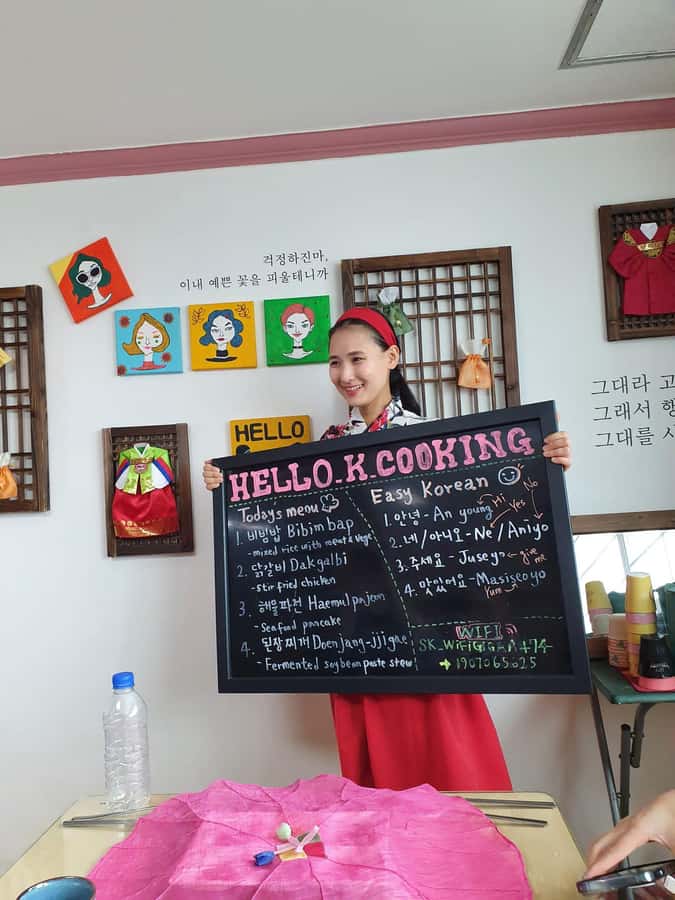
This Seoul cooking class pairs a hands-on food lesson with a true local-home vibe, led by English-speaking chef-guides like Sarah and Junghee. You’ll start in a less-touristy market, then cook Bibimbap, Dakgalbi, Haemul-Pajeon, and Doenjang-Jjigae, and finally sit down to a Hanjeongsik-style feast with more than 10 side dishes.
I especially love how the day begins with shopping for ingredients and tasting street food, not just watching from the sidelines. And I like that you leave with practical skills you can repeat—plus recipes and photo/video help for the memories.
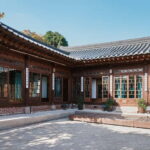
One thing to consider: the cooking happens in a local home with no elevator, so stairs are part of the experience. If mobility is an issue, plan accordingly.
In This Review
- Key things you’ll notice right away
- Mangwon Station to a local market: the day starts with real life
- The market you’ll actually enjoy: taste, not just browse
- Welcome tea and a few Korean phrases: small effort, big payoff
- Cooking class setup: hands-on stations and clear guidance
- Bibimbap: building a balanced bowl
- Dakgalbi: stir-fried flavor you can smell
- Haemul-Pajeon: the pancake that rewards attention
- Doenjang-jjigae: fermented soybean paste stew
- Hanjeongsik dinner: the meal format is the lesson
- Tal mask, Korean heritage festivals, and fun cultural moments
- Photo and video service plus recipes: leave with more than memories
- Price and logistics: does $98 feel fair for 3.5 hours?
- Who this tour fits best (and who should skip it)
- Should you book this Seoul cooking class?
- FAQ
- FAQ
- How long is the cooking class?
- How much does it cost?
- Where do I meet the guide?
- Is there hotel pickup or drop-off?
- What dishes will we cook?
- What is included with the meal at the end?
- Are there dietary options or allergy support?
Key things you’ll notice right away
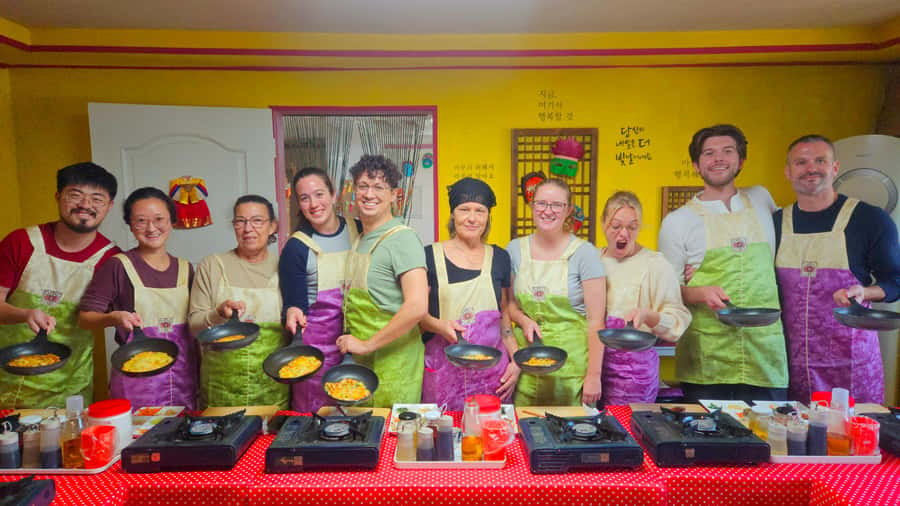
- A market walk that feels less touristy: you go look, choose, and taste, then translate those ingredients into real dishes.
- A small group (max 10): easier interaction, clearer guidance, more hands-on cooking.
- Four core dishes, not one gimmick: Bibimbap, Dakgalbi, Haemul-Pajeon, plus Doenjang-jjigae.
- Hands-on culture signals: a few Korean phrases and trying on a Tal mask tied to Korean heritage festivals.
- Hanjeongsik dining with 10+ sides: you’re not just eating your own food—you’re learning how a Korean meal is built.
- Built-in take-home support: recipes are included, and photo/video service helps you remember the steps.
Mangwon Station to a local market: the day starts with real life
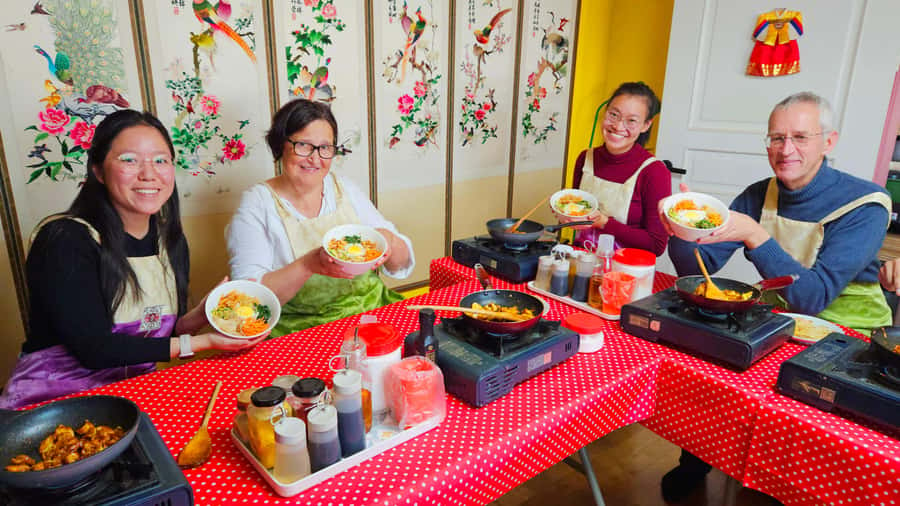
This tour starts at Mangwon Station, exit 2 (outside). It’s a simple meeting point, and that matters because it keeps the focus on the experience instead of a long hotel pickup ritual.
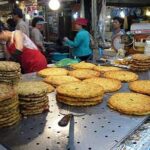
Once you’re with your group and guide, the momentum kicks in fast: you’re walking, scanning stalls, and learning what to buy and why. The market part isn’t a quick photo stop. You’re tasting street food samples along the way and using those flavors as a reference for what you’ll cook later.
From a value standpoint, the market is doing heavy lifting. You’re learning ingredient names, textures, and how Koreans build flavor day-to-day. For you, that means when you cook at home, you’re not just following steps—you understand the choices behind them.
You can also read our reviews of more shopping tours in Seoul
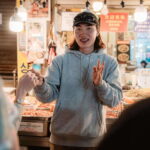
The market you’ll actually enjoy: taste, not just browse
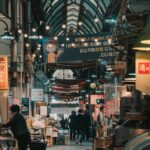
The best market experiences teach you how locals shop. This one follows that logic. You’ll move through a traditional market area around Mangwon/World Cup Market, where you can spot everyday ingredients you may not recognize in a grocery store.
Here’s what I think makes this market stop special: it’s paced for learning. You’re not sprinting through stalls. Your guide points out items you might walk past on your own, and you get samples so the ingredients make sense in your mouth, not only your head.
Also, markets in Seoul can be sensory overload. If you’ve ever stood in one and thought, I have no idea what I’m looking at, this part is the antidote. You get the context you need, and you leave with a mental map of what matters.
Welcome tea and a few Korean phrases: small effort, big payoff
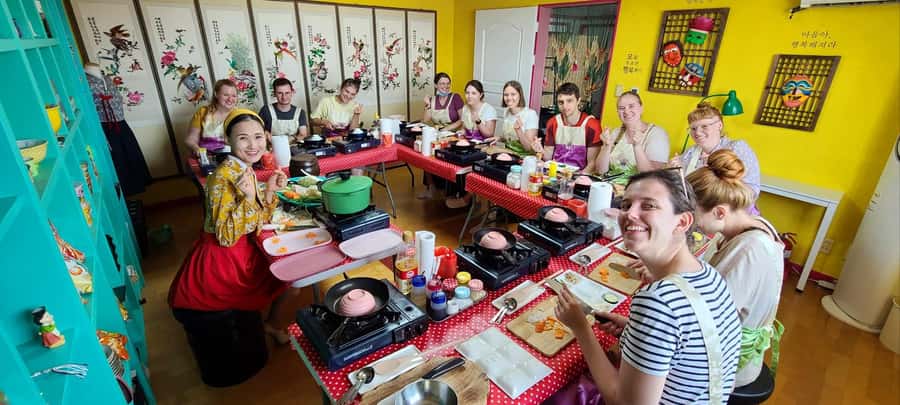
After the market, you head to the cooking venue. Before you start cooking, you get a welcome tea and a short phrase session—just enough Korean to help you follow along and interact without feeling lost.
This matters more than it sounds. When your guide explains steps, small language cues help you catch tone and timing—like when to add ingredients, how to adjust heat, or what consistency to aim for. You won’t need to become a language student. You just need the basics to stay confident.
And yes, you’ll probably hear and repeat a few phrases with your group. It’s one of those low-pressure parts that turns strangers into a team.
Cooking class setup: hands-on stations and clear guidance
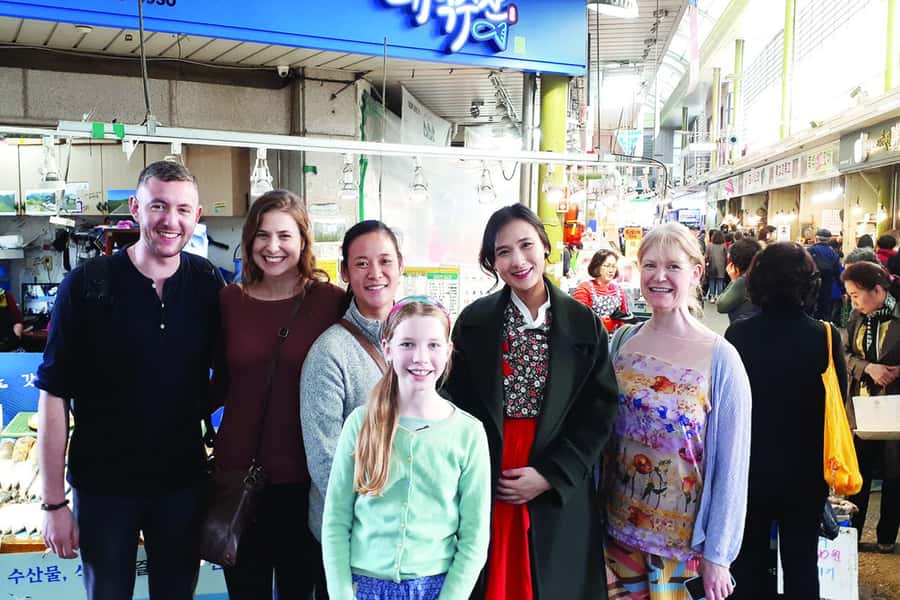
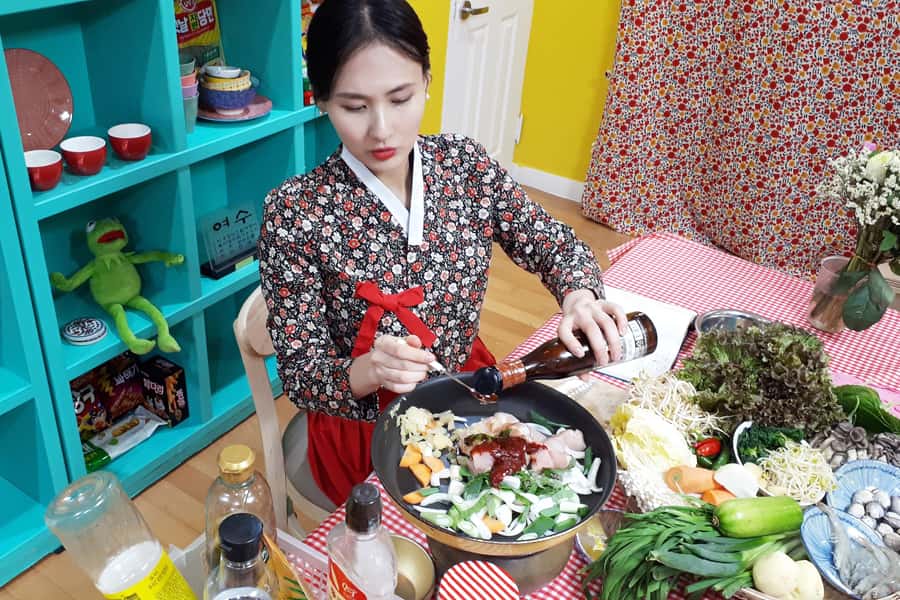
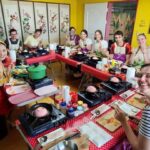
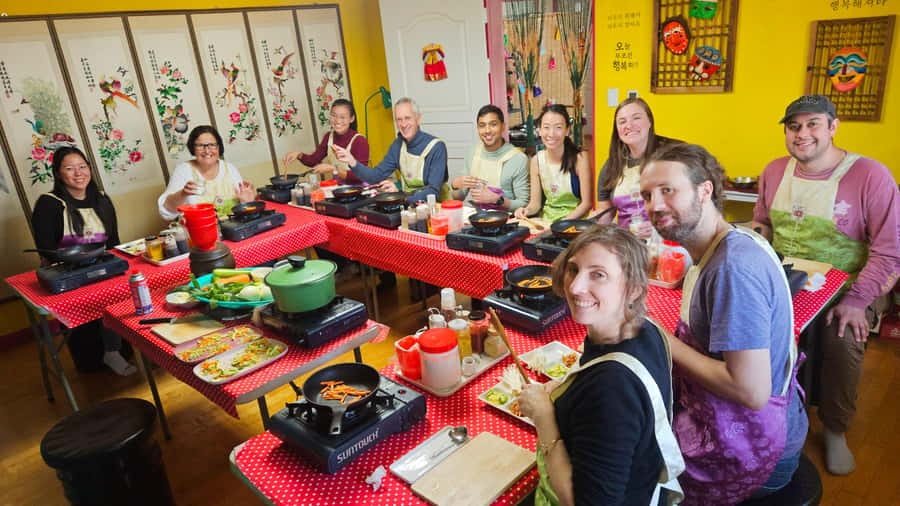
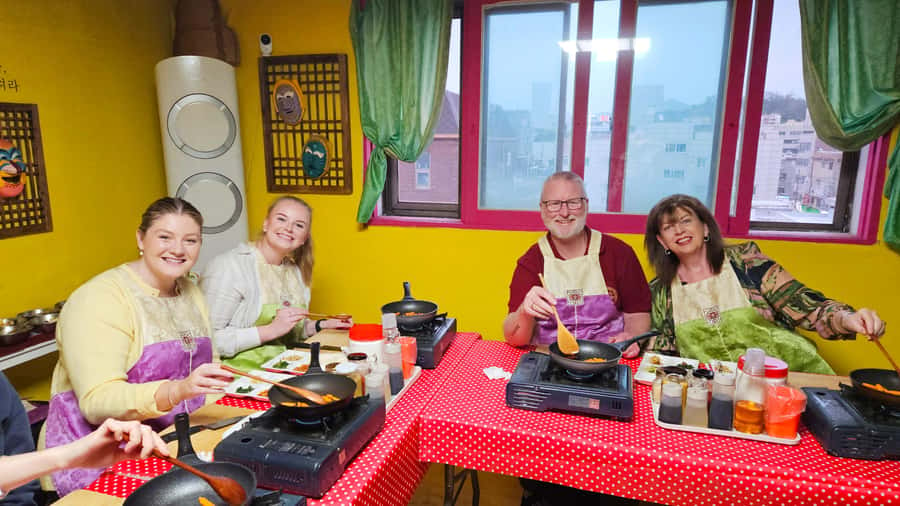
The cooking session is led by an experienced Korean chef-guide, and the group size is intentionally small—limited to 10 participants. That’s a big deal for learning. When there are fewer people, you get more direct help, and mistakes don’t snowball into chaos.
You’ll prepare four dishes total, each one teaching a different style of Korean cooking:
Bibimbap: building a balanced bowl
Bibimbap is the dish most people recognize, but that doesn’t mean it’s easy. The learning payoff here is understanding how components work together—rice plus toppings, arranged and seasoned so every bite has contrast.
If you want a dish that makes you feel capable fast, this is it. You can see structure. You can taste seasoning. And you can control the final assembly.
You can also read our reviews of more tours and experiences in Seoul
Dakgalbi: stir-fried flavor you can smell
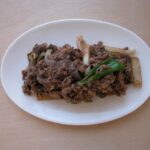
Dakgalbi is a stir-fry built on quick timing and bold seasoning. This dish is about managing heat and movement—keeping ingredients moving so you get flavor without turning everything into mush.
This is also a useful skill for you: once you understand how dakgalbi sauce behaves in the pan, you’ll start thinking about other stir-fries in the same way.
Haemul-Pajeon: the pancake that rewards attention
Haemul-Pajeon is a seafood and green onion pancake. The technique matters: you’re working with batter and distributing ingredients so the texture stays right.
This is where you’ll likely appreciate the chef-guide’s coaching. Pancakes are forgiving until they aren’t, and getting the balance right is the whole lesson.
Doenjang-jjigae: fermented soybean paste stew
Then you finish with Doenjang-Jjigae, a fermented soybean paste stew. This teaches you depth. Stews like this are less about chasing bright flavors and more about letting ingredients develop into something rounded.
For home cooking, this is valuable because doenjang-jjigae can become a go-to meal. You’ll learn how to approach it so it tastes like Korean comfort food, not just salty soup.
Hanjeongsik dinner: the meal format is the lesson
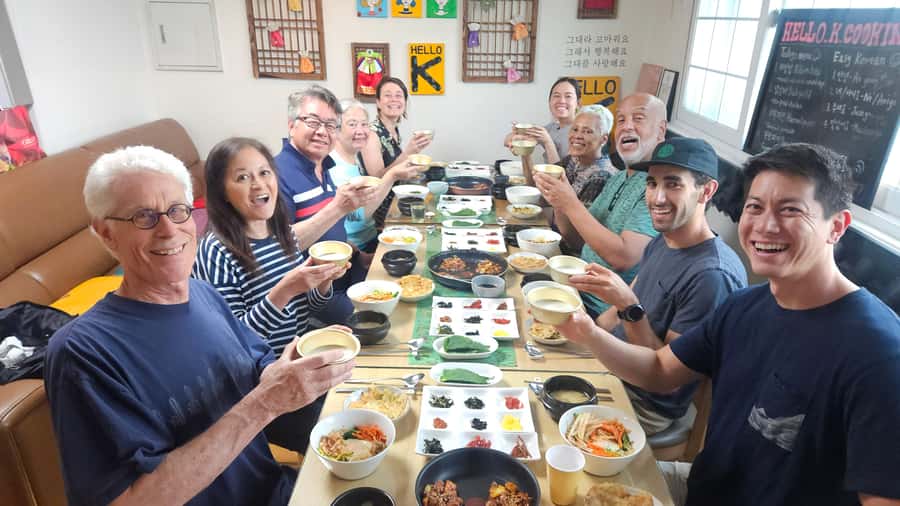
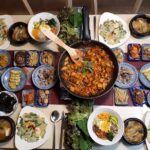
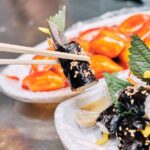
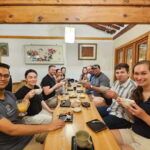
After cooking, you sit down to a traditional course meal known as Hanjeongsik. This isn’t just a buffet-style end-of-class snack. You’ll have more than 10 side dishes, plus seasonal fruits and rice wine provided by your local host.
The real learning here is how Korean meals are layered. You taste variety: salty, savory, fresh, fermented, maybe a little sweet. That variety isn’t random. It’s how the meal balances itself.
If you’ve only ever eaten Korean food as a single dish in a restaurant, Hanjeongsik reframes the experience. You start to see the meal as a system, not a solo act.
And for practical reasons, you’ll be able to copy the idea even if you never recreate every side dish. Learn the mindset, then build your own table when you get home.
Tal mask, Korean heritage festivals, and fun cultural moments
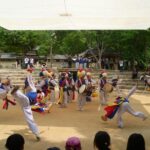
One of the highlights is trying on a Tal mask that’s worn at many Korean heritage festivals. This part is playful, but it also connects the food to the culture around it.
Food culture in Korea isn’t separate from costumes, stories, and traditions. Trying the mask helps you feel that continuity without turning the class into a lecture.
Add in the short phrase practice, and you get a day that’s educational without being heavy.
Photo and video service plus recipes: leave with more than memories
This class includes photo and video service, along with recipes. That combination helps you in two ways.
First, you can actually remember how things looked while they cooked—useful when a dish depends on a visual cue. Second, recipes make it easier to reproduce the dishes later without reinventing the process from memory.
In at least one case, groups received recipes through WhatsApp, which is handy because it means you can keep the instructions in your phone right where you’ll need them.
Price and logistics: does $98 feel fair for 3.5 hours?
At $98 per person for 3.5 hours, the price makes sense if you compare what’s included to what you’d pay separately.
You’re getting:
- A market tour plus street food samples
- Cooking with a professional chef and ingredients/equipment provided
- A full meal with Hanjeongsik-style sides
- Welcome tea, water, and rice wine
- Photo/video service and recipes
So you’re not just paying for chopping and stirring. You’re paying for the whole framework: local ingredients, expert guidance, and a full shared meal experience at the end.
The main logistics catch is that there’s no hotel pickup/drop-off. You’ll need to make your own way to Mangwon Station exit 2 and then return there when it ends.
Who this tour fits best (and who should skip it)
This class is a strong fit if you want more than a typical tourist meal. You’ll like it if you enjoy:
- hands-on cooking
- ingredient learning at a market
- eating a Korean meal in the way Koreans actually serve it (Hanjeongsik)
It’s also ideal for first-time cooks because the class is interactive and small, so you’re not stuck watching.
You might want to think twice if:
- stairs are difficult for you (no elevator to reach the home)
- you’re expecting long free time at major sights, since the whole flow is market + home cooking + meal
Should you book this Seoul cooking class?
I’d book it if you want a day that mixes three best parts of travel: local shopping, real technique, and a full-course meal. The fact that you cook four classic dishes and then get Hanjeongsik with 10+ sides makes it feel like value, not just a one-dish class.
Book it sooner rather than later if you’re traveling with a group of friends or you like small-group formats. You’ll get more personal attention, and the host energy is a huge part of the experience.
Just go in knowing it’s at a local home with stairs and that you’re using Mangwon Station as the start and end point.
FAQ
FAQ
How long is the cooking class?
The experience runs for about 3.5 hours.
How much does it cost?
It’s listed at $98 per person.
Where do I meet the guide?
Meet your guide at Mangwon Station, exit 2 (outside).
Is there hotel pickup or drop-off?
No. You’ll make your own way to and from the meeting point.
What dishes will we cook?
You’ll prepare Bibimbap, Dakgalbi, Haemul-Pajeon, and Doenjang-Jjigae.
What is included with the meal at the end?
You’ll enjoy a Hanjeongsik meal with more than 10 side dishes, plus seasonal fruits and rice wine.
Are there dietary options or allergy support?
If you have dietary restrictions or allergies, you need to contact the local host in advance.