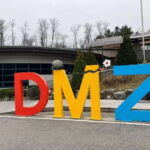
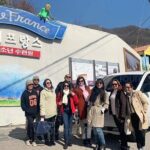
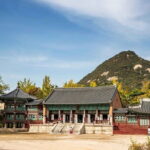
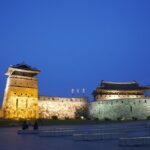
DMZ day can feel unreal, in a grounded way. This private outing from Seoul brings you to the DMZ sites that map out the Korean War’s lasting divide, guided by Kevin Lee with hotel pickup and drop-off. Expect history, yes, but also stories about families split by a border that never moved back.
Two things I really like: first, the way Kevin Lee connects the big political facts to what you’re actually seeing at each stop, so the sights feel understandable instead of distant. Second, the pacing has a built-in reset with Gamaksan Suspension Bridge, which gives you a breather after the heavier border sites. One thing to plan for: entrance fees and meals are not included, so you’ll want extra money and a simple food plan.
In This Review
- Key things to know before you go
- Why this DMZ + bridge day works (and feels manageable)
- Imjingak Pyeonghoa-Nuri Peace Park: where division becomes human
- The Third Tunnel: engineered history you can stand near
- Dora Observatory: the border viewpoint that changes the scale
- Tongilchon-gil (Unification Village): a place built for a certain kind of hope
- Gamaksan Suspension Bridge: a real break after the border sites
- War Memorial of Korea add-on: tying the story together
- Price and value: $410 per group plus entrance fees
- Timing, pacing, and how a 9-hour day really plays
- What to bring (and how to make it feel worth it)
- Should you book this DMZ tour with Gamaksan Bridge?
- FAQ
- How long is the tour?
- How much does the tour cost?
- Is hotel pickup and drop-off included?
- What’s included in the price?
- Are entrance fees included?
- Are meals included?
- What are the main stops on the itinerary?
- Does the tour include a mobile ticket?
- What days and hours does the tour operate?
- Is there a cancellation option?
Key things to know before you go
- Private, up to 7 people means you can move at a pace that fits your group rather than getting swept along.
- Kevin Lee is a top focus on English clarity and safe, smooth driving, which matters a lot on long DMZ days.
- You’ll see multiple DMZ-related sites in one run, including the Third Tunnel and Dora Observatory.
- Imjingak includes memory-focused areas such as Mangbaedan, tied to holidays when separated families gather.
- Gamaksan Suspension Bridge is part of the day for views and a physical break in the schedule.
- Entrance tickets cost extra (listed as $7 per person), and meals are on you.
Why this DMZ + bridge day works (and feels manageable)
If you’ve wondered what the DMZ is like beyond photos, this is a smart format: you get a full, structured day with private transportation and a guide who can explain what you’re looking at without turning it into a lecture. The tour runs about 9 hours, and the attractions’ time blocks don’t include all the driving. That’s normal on DMZ days, and it’s exactly why a guide matters.
The other practical win is the “tone shift” built into the route. You start with peace-focused spaces and heavy border-history viewpoints, then you end with the Gamaksan suspension bridge area for open air and wide views. It doesn’t erase the serious context. It just helps you process it instead of carrying it for 9 straight hours.
You can also read our reviews of more guided tours in Seoul

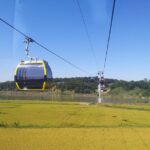

Imjingak Pyeonghoa-Nuri Peace Park: where division becomes human
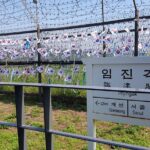
Imjingak Nuri Peace Park is where the DMZ stops being an abstract line and becomes a place tied to people’s lives. This park complex was developed soon after South Korea’s joint statement in 1972, and it’s also associated with the Global Peace Festival held in 2005. Even before you hit the border-facing sites, you’re getting context for why this area exists in the first place.
A big reason this stop hits is that it’s not only about what happened in war years. It also points at what happened afterward—families separated, generations living with that gap. You’ll spend time here at the beginning of the day and then return later in the itinerary, which helps you notice details the second time around instead of rushing through.
What to watch for: pay attention to the memorial-style sections and the holiday connection. There’s a place called Mangbaedan, where people who were separated and dispersed—especially those born in North Korea or tied to hometowns there—come during Chuseok (Korean Thanksgiving) and also around Lunar New Year. That holiday detail is the emotional hinge of the visit: the DMZ is not just geography, it’s recurring reality.
The Third Tunnel: engineered history you can stand near
The Third Tunnel is one of the most tangible parts of the DMZ experience because you’re looking at a literal piece of underground infrastructure. It was discovered in 1978, about 52 km (32 miles) from Seoul, in Paju. The tunnel is described as underground, with a depth of 73 m (about 240 feet) and a length of 1,635 m (about 1 mile). The opening and internal scale are part of the story: it’s not a mythic idea of invasion, it’s a measurable structure.
You’ll get about 1 hour 30 minutes at this stop. That time is useful because you’re likely to have questions: why tunnels matter, what “close to Seoul” means in real travel terms, and how the DMZ stays “frozen” while military planning stays active.
Possible drawback to consider: this stop can feel intense for anyone who gets uncomfortable with hard-edged military history. If your group is sensitive, tell the guide ahead of time so they can pace your explanations and give you breathing space before you move on.
Dora Observatory: the border viewpoint that changes the scale
Then comes Dora Observatory, located on Dora Mountain inside the DMZ area. It’s described as the northernmost observatory in the South, giving an up-close view toward North Korea. You’re basically doing what the name implies: you’re using a viewpoint to understand proximity, not just politics.
This stop is about 1 hour 10 minutes, and that’s enough time to take in the view and still have time for explanation. The value here is not only seeing, but learning what you’re seeing and what it means. With a guide like Kevin Lee, you’ll get interpretation that turns the view into a mental map: where the control lines sit, what distances imply, and why calm-looking terrain can still be tied to tension.
My practical advice: bring patience for the “long look.” If you treat the observatory like a quick photo stop, you’ll miss the point. Plan to spend a few minutes just watching, then let the guide’s context fill in the rest.
Tongilchon-gil (Unification Village): a place built for a certain kind of hope
Tongilchon-gil, also called Unification Village, is located within the boundaries of the Civilian Control Line. It was founded in 1973 and began with 40 households of veterans and 40 households of native families. That origin detail matters because it frames the village as something created with a purpose in mind: a human attempt at unification that still lives inside a controlled zone.
This part of the day is shorter—about 30 minutes—so it’s not where you go to soak in every detail. Instead, it works as a “bridge idea” between the heavy border infrastructure (like the tunnel) and the peace/family memory spaces at Imjingak.
Good to know: because it sits within a control line, the experience is still shaped by security and access rules. If you’re hoping for a relaxed walk-around, manage expectations: this is more about understanding the concept and the setting than wandering freely.
You can also read our reviews of more private tours in Seoul
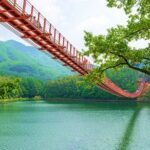


Gamaksan Suspension Bridge: a real break after the border sites
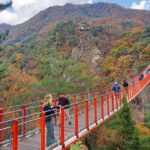
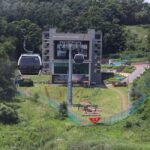
After the DMZ intensity, the Gamaksan Suspension Bridge is a noticeable change of pace. Gamaksan Mountain is listed at 675 m and is one of the five rocky mountains in Gyeonggi Province. The bridge spans a deep valley and is described as 150 m long and 45 m high.
This stop is about 1 hour. That’s a good length for taking photos, feeling the height, and letting your body reset after several viewpoints. It also helps you see that the DMZ region is not only conflict history; it’s also everyday geography where people live, work, and travel just like anywhere else.
Practical tip: if your group likes walking, wear shoes with grip. Suspension bridges can be a little slippery when weather changes. You’re not looking for a hike here. You’re looking for a short walk with dramatic views.
War Memorial of Korea add-on: tying the story together
The War Memorial of Korea is listed as an optional component tied to the Gamaksan area in this tour structure. The memorial is described as an exhibition and preservation site focused on materials related to the Korean War, and it’s also positioned as a national moral educational venue.
Even if you don’t love museums, this stop can be helpful because it gives you a broader timeline view that some DMZ stops assume you already know. The DMZ tells one chapter in intense, physical form. A memorial can round out why that chapter mattered in the first place.
Consideration: because it’s optional, think about your group’s energy. If your group is museum-leaning and likes context, this fits well. If you want to stay focused on outdoor viewpoints, you may prefer to keep the day lighter.
Price and value: $410 per group plus entrance fees
The price is $410 per group, up to 7 people. That structure is the main value play here: you’re paying for a guide and private transportation, not per-person sightseeing. If you have a small group, you can spread the cost in a way that often beats piecing together multiple public tours.
Entrance fees are not included. The tour data lists an entrance fee of $7 per person (you’ll need to budget for that on top of the base price). Meals also aren’t included, so you’ll likely want to plan lunch and snacks around the midday timing.
When the tour works best is when you care about interpretation. A DMZ day is full of “what am I looking at” moments. Paying for a real guide is what turns the day from a checklist into understanding.
Timing, pacing, and how a 9-hour day really plays
The tour runs about 9 hours. Each site has its own time allotment, but travel time fills in the gaps. That’s important: DMZ access and transfers can’t be rushed, and private transport is what keeps your schedule realistic.
Here’s the flow you should expect:
- You start at Imjingak Nuri Peace Park.
- You move to the Third Tunnel.
- Then to Dora Observatory.
- A quick stop at Tongilchon-gil.
- You return to Imjingak for additional park time.
- You finish with Gamaksan Suspension Bridge and possibly the War Memorial add-on.
What this means for you: by the time you hit the observatory and tunnel, your brain is already warmed up with context. And by the time you reach the bridge, you’ve earned the reset.
What to bring (and how to make it feel worth it)
Because the schedule includes multiple stops with outdoor elements, keep it simple:
- Bring a light layer (mountain areas can feel cooler, even in fair weather).
- Wear comfortable shoes with good grip for walking at parks and around the bridge.
- Bring some cash or card ready for entrance fees, since those aren’t included.
- Plan snacks or a lunch stop. Meals aren’t listed as included.
A final comfort note: one of the standout strengths of this tour is how smoothly it runs with safe driving and guide flexibility. That matters most when traffic patterns or timing shift, because you still want the day to feel controlled and not stressful.
Should you book this DMZ tour with Gamaksan Bridge?
I’d book it if you want one guided day that combines border reality with a visible reset. The most compelling parts are the combination of DMZ sites—Third Tunnel, Dora Observatory, Tongilchon-gil, and the Imjingak peace/family focus—plus the Gamaksan Suspension Bridge for a palate cleanser.
Skip it (or adjust expectations) if your group wants only light sightseeing. This is a serious day, tied to war history and family separation. Also plan for extra costs on the ground: entrance fees and meals are on you.
If you value clear explanations, smooth logistics, and the chance to see multiple key DMZ locations in a single run, this private format makes a lot of sense.
FAQ
How long is the tour?
The tour lasts about 9 hours.
How much does the tour cost?
It costs $410 per group, up to 7 people.
Is hotel pickup and drop-off included?
Yes. Hotel pickup and drop-off are included, along with private transportation.
What’s included in the price?
Included items are the guiding fee, private transportation, and hotel pickup and drop-off.
Are entrance fees included?
No. Entrance fees are listed as $7.00 per person, and tickets are not included for the stops.
Are meals included?
No. Meals are not included.
What are the main stops on the itinerary?
The stops include Imjingak Nuri Peace Park, the Third Tunnel, Dora Observatory, Tongilchon-gil (Unification Village), Gamaksan Suspension Bridge, and an optional War Memorial of Korea component.
Does the tour include a mobile ticket?
Yes, the tour includes a mobile ticket.
What days and hours does the tour operate?
It operates Tuesday through Sunday, 8:00 AM to 5:00 PM (for the listed date range).
Is there a cancellation option?
Yes. Free cancellation is available up to 24 hours in advance for a full refund.