REVIEW · SEOUL
Seoul: DMZ Tour with Japanese-Speaking Guide
Book on GetYourGuide →Operated by I LOVE SEOUL TOUR Co., Ltd. · Bookable on GetYourGuide
That line between two Koreas is eerie. This DMZ tour is one of the most unusual sightseeing days you can do from Seoul, with stops that turn history into something you can physically walk through and look across. I particularly like how the day builds step by step—from Imjingak to the Freedom Bridge—so you understand what you’re seeing, not just where you’re standing. You’ll also get a real ticket-to-the-border vibe at the Third Tunnel of Aggression, including time on foot inside the passage. One thing to consider: the tunnel route includes a steep slope and can be hard for kids or anyone with limited mobility.
I also like the guidance quality. This is a Japanese-speaking tour, and the experience hinges on a guide who can explain what matters without making it feel like a lecture. The names that show up in real-world accounts—like Hong Yuseon (홍유선) and Yoon (윤さん), plus references to a Park (パクさん)—point to a pattern: clear explanations and lots of on-the-spot context, even when the group includes non-Japanese speakers. Another plus is the viewpoint payoff at Dora Observatory: in good weather, you can sometimes see far enough toward North Korea even without using the telescope.
The main drawback is physical. The Third Tunnel has steep parts and takes about 30-40 minutes for a round trip on foot. If you’re traveling with older relatives, very young kids, or anyone who gets uncomfortable with uphill climbs, you may need to plan for the option to wait in front of the tunnel rather than going in.
In This Review
- Key things to know before you go
- Why this DMZ day feels different than normal sightseeing
- Price and what you actually get for $50 per person
- From Seoul’s station to Imjingak Park: the ride that sets the tone
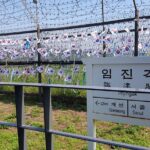
- Imjingak Park: where the peninsula story becomes visible
- Freedom Bridge: repatriation symbolism you can’t ignore
- The Third Tunnel of Aggression: steep, cool, and very real
- Dora Observatory: spotting toward North Korea when conditions cooperate
- Unification Village: peace-themed souvenirs with North-linked items
- Timing, comfort, and the rules that can change your day
- Who should book this tour (and who should skip it)
- Should you book this Seoul DMZ tour or not?
- FAQ
- Is JSA (Joint Security Area/Panmunjom) included on this tour?
- What language is the tour guide?
- How long is the DMZ tour?
- How much does it cost?
- What do I need to bring?
- Where does the tour end?
- Is the Third Tunnel visit walking required?
- Is this tour suitable for wheelchair users or people with heart problems?
Key things to know before you go
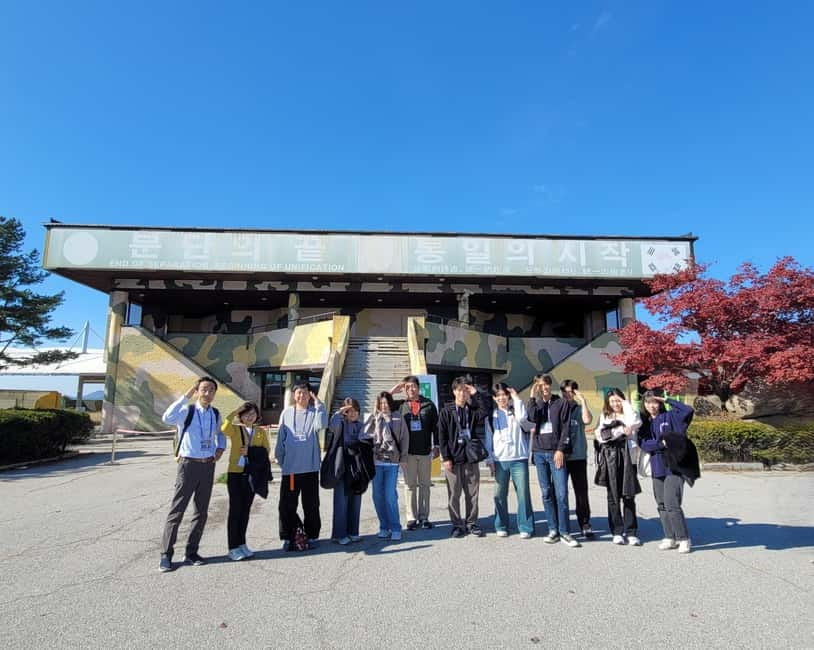
- DMZ focus, not a checklist: the stops connect into one story of separation, repatriation, and military tension
- Third Tunnel on foot: you actually go inside, and the route includes steep slope time
- Dora Observatory weather matters: visibility can change what you can spot across the border
- Peace-themed shopping nearby: Unification Village sells reconciliation souvenirs, often including items tied to North Korea
- Japanese-speaking guide: guidance is in Japanese, with some flexibility if someone in the group needs extra help
- Security-driven cancellations happen: the military can cancel the day without prior notice, and plans may shift
Why this DMZ day feels different than normal sightseeing
Most Seoul tours bring you to bright markets, palaces, and cafes. This one brings you to a working border zone concept. The Demilitarized Zone is only about 4 km (2.4 miles) wide, but it has shaped everything around it since 1953. That contrast—tiny distance, huge consequences—is what makes the day stick with you.
The tour is designed to help you read the site in the right order. You start near the DMZ with places like Imjingak, then you move to the symbolism of the Freedom Bridge and the realism of the Third Tunnel of Aggression. Finally, you end with a wide-angle view from Dora Observatory and a softer, human side at Unification Village where souvenirs are packaged around peace and reconciliation themes. It’s not just dramatic. It’s structured.
You can also read our reviews of more guided tours in Seoul


Price and what you actually get for $50 per person
At $50 per person for a 7-8 hour day, this can feel like strong value—if you’re okay with the format. What you get is basically the core of a DMZ field trip:
- entrance fees
- roundtrip shared transfer
- a licensed professional DMZ tour guide
- transportation by air-conditioned bus or minivan
What you should expect to pay separately:
- hotel pick-up/drop-off (you meet at a station starting point)
- food and drinks
- anything related to places not included (notably, JSA/Panmunjom is not part of this tour)
For many people, the “value” isn’t the admission itself—it’s the guided access and the tight, pre-planned routing through the regulated areas. If you try to self-organize, you’ll quickly hit time, permissions, and logistics friction. Here, the day is handled.
From Seoul’s station to Imjingak Park: the ride that sets the tone
You start from one of three starting options, including Myeongdong Station Exit 10. From there, you ride an air-conditioned bus/coach (about 1 hour) toward the DMZ area. This first stretch matters because it’s where the guide starts building the context you’ll need later. Getting explanations while you’re traveling reduces the “wait, what am I looking at?” problem once you reach each stop.
There’s also a detail worth knowing: transfer to the DMZ shuttle bus is required, especially when there are fewer than 30 people in the vehicle by government policy. Translation: even if your main transport is a bus/minivan, you should expect a second hop inside the controlled DMZ flow.
Wear your patience for timing. Return arrival time to Seoul can vary based on crowd levels and traffic.
Imjingak Park: where the peninsula story becomes visible
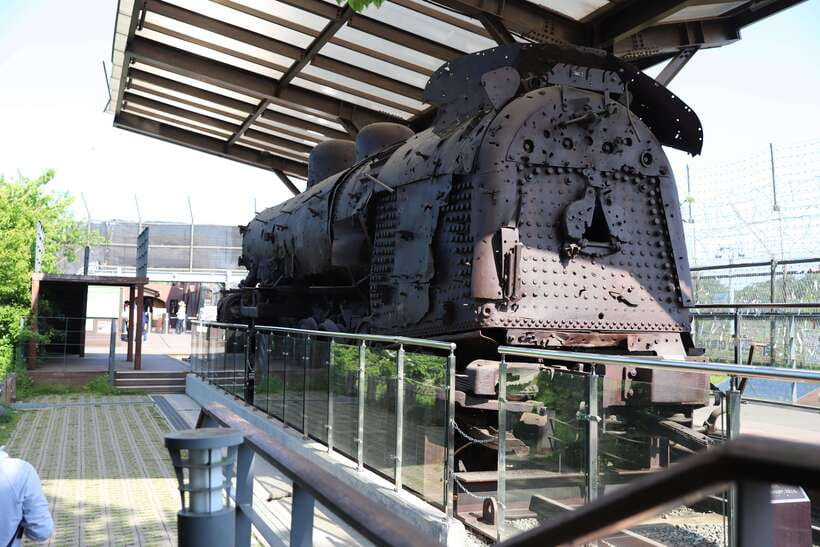
Imjingak Park is your first guided stop (about 1 hour). This is the part of the day that helps you orient—mentally and historically—before you move to the more intense sites.
What I’d focus on here is what the tour is trying to do: connect the border to lived human stories. The DMZ isn’t just a line on a map. It’s a system that shaped displacement, reunions, and the idea of reconciliation. Imjingak is positioned in that “beginning” role, so if you arrive tired, this is where you can reset your attention.
Because the tour is Japanese-speaking, you’ll want to listen closely here. Later stops (bridge, tunnel, observatory) build on those explanations.
Freedom Bridge: repatriation symbolism you can’t ignore
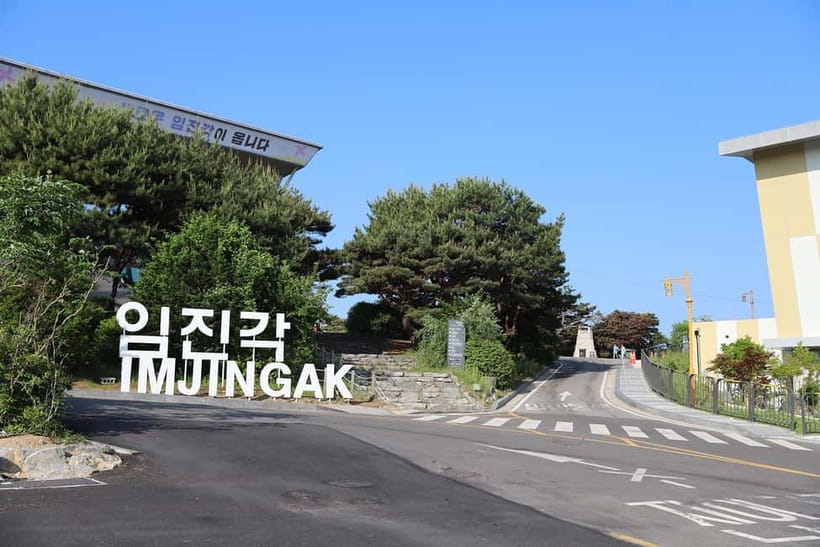
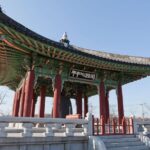
Next is the Freedom Bridge (about 30 minutes). This is one of the tour’s clearest “meaning” stops: it’s used by prisoners of war who were repatriated from the North.
The bridge feels small, but the symbolism is huge. This is where you stop thinking of the DMZ as abstract and start thinking of it as procedure and consequence. When a tour only does photos, you miss the point. Here, the guided time is brief but focused enough to make the moment land.
If you’re the type who likes a few quiet minutes, this is one of the places where you’ll likely want it. It’s not a long stop, so give it your attention instead of treating it like a quick photo stop.


The Third Tunnel of Aggression: steep, cool, and very real
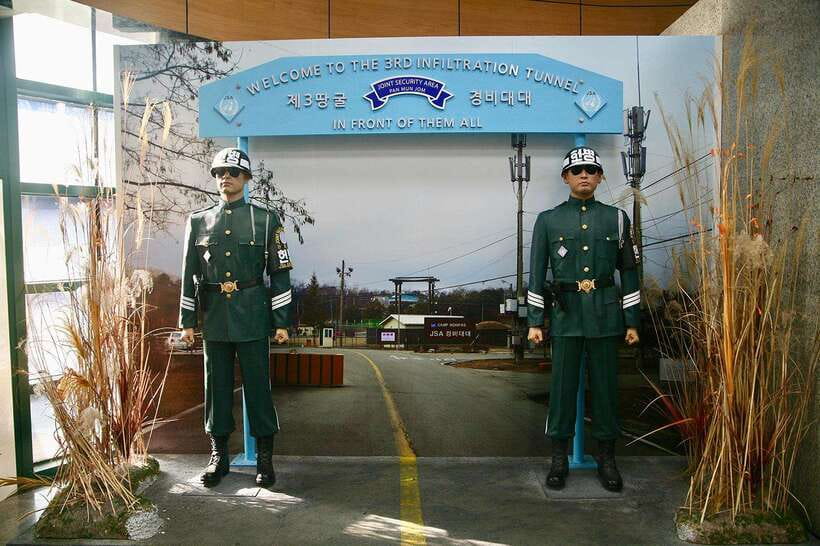
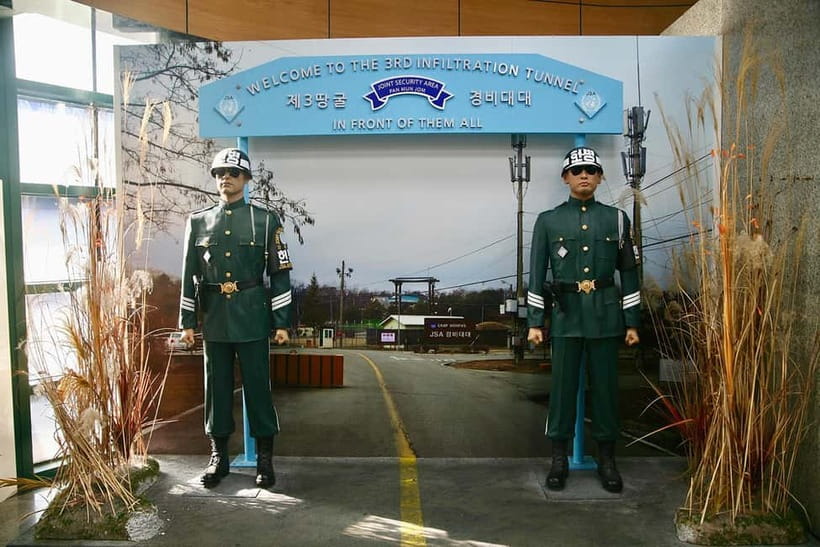
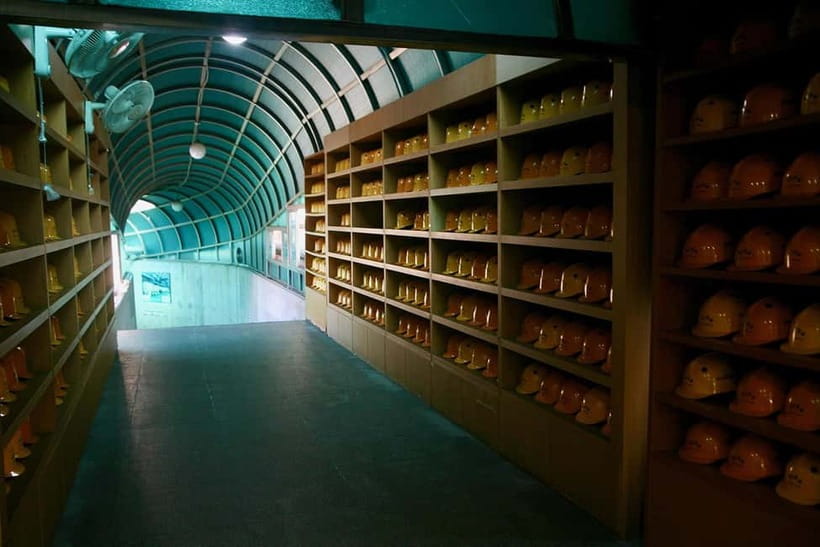
Then comes the highlight for many people: the Third Infiltration Tunnel (often referred to as the Third Tunnel of Aggression). The guided block is about 40 minutes, but the real time commitment is the on-foot visit inside the tunnel. It involves a steep slope and takes roughly 30-40 minutes round trip on foot.
This is the moment where you feel how the DMZ is engineered—not just fenced. The tunnel runs under the Demilitarized Zone and is an incomplete passage built by North Korea. Walking into it shifts the whole day from viewing to experiencing.
Two practical notes that matter:
- It can be challenging for children and the elderly. The tour notes it’s possible to wait in front of the tunnel if needed.
- Even in hot weather, the tunnel can feel cooler. One account specifically mentioned that the tunnel was cooler despite August heat.
Also keep in mind the safety/medical reality. The experience is not suitable for people with heart problems, and wheelchair users are not included. If you or someone in your group is on the edge physically, this is the stop to evaluate first.
Dora Observatory: spotting toward North Korea when conditions cooperate
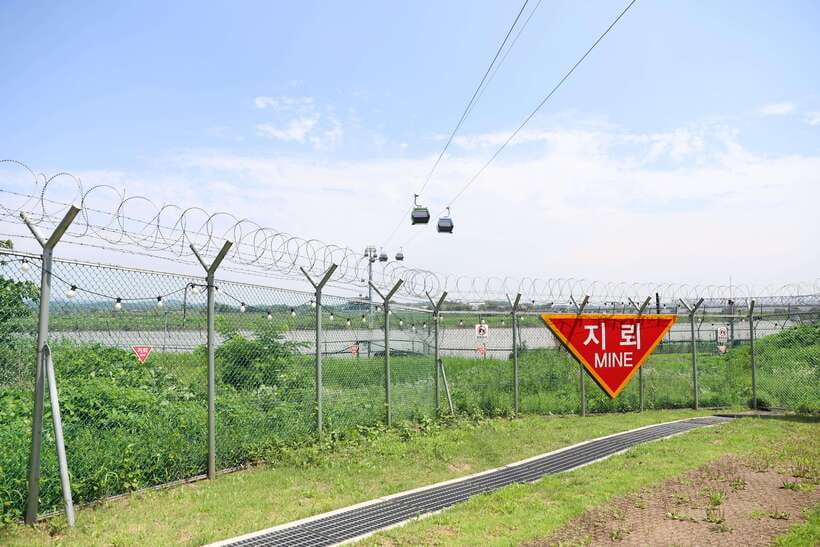
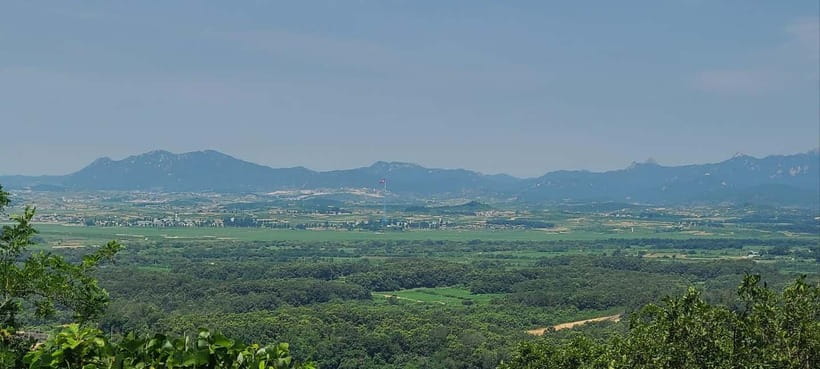
After the tunnel, you head up Mountain Dora (about 1 hour at Dora Observatory). This stop is all about viewpoint. From here, you look out at the DMZ area and across toward North Korea.
The guide framing is key. You’re not just admiring a view—you’re learning what you can and can’t see from a regulated vantage point. In good weather, you can see all the way to North Korea without using the observatory’s telescope. On a misty or hazy day, visibility will likely be reduced, so don’t treat the telescope as magic. Treat the day as weather-dependent.
If you’re doing this as a first-time DMZ visit, Dora Observatory is where the geography finally clicks: you see distance, direction, and how the border region sits in the wider Korean landscape.
Unification Village: peace-themed souvenirs with North-linked items
You finish with Unification Village (about 30 minutes). This part is less intense, and it gives you something hands-on at the end of a serious day.
You can browse souvenirs and items tied to themes of peace and reconciliation. The tour also notes that they often have goods from North Korea too. If you want snacks or small gifts, this is where you’ll pick them up—because after that you’re returning toward Seoul.
I like ending here for a simple reason: it keeps the day from feeling like nonstop tension. It adds a human layer, even if it’s expressed through shops.
Timing, comfort, and the rules that can change your day
This is a 7-8 hour experience, not a quick half-day. You’ll do travel time plus multiple guided stops, and the rhythm is tight.
Here are the practical pieces you should plan around:
- Bring a passport. It’s explicitly required.
- Footwear matters: it’s strongly recommended you don’t wear flip-flops, slippers, or shoes with heels. You’ll be walking and climbing, including steep terrain at the tunnel.
- No alcohol, drugs, or intoxication. If someone is intoxicated, they won’t be allowed to participate and won’t be entitled to a refund.
- No smoking in the vehicle.
- Infants under 24 months are free but no seat is provided.
One more factor that can affect your expectations: because the DMZ is operated by the military, the trip may be canceled without prior notice. If that happens, the tour notes that there won’t be a refund, and instead you’ll visit alternatives such as Art Space BEAT 131, Odusan Unification Observatory, War Memorial of Korea, and stops around City Hall or Myeongdong. In other words, it’s not a simple “DMZ or nothing” situation.
Also, note what this tour does not do: JSA (Joint Security Area/Panmunjom) is not included.
Who should book this tour (and who should skip it)
This DMZ tour makes the most sense if you:
- want a structured day with a licensed DMZ guide
- prefer guided explanations in Japanese (and you can follow along)
- are okay with walking and the tunnel’s steep route
- like the mix of serious sites (Freedom Bridge, tunnel, observatory) and a lighter ending (Unification Village shopping)
I’d be cautious—or skip—if you:
- have heart problems
- use a wheelchair (not suitable)
- have very limited mobility and aren’t comfortable with the tunnel’s steep slope
- are hoping for JSA/Panmunjom (it’s not part of this itinerary)
Language-wise, the guide is Japanese. Still, there are accounts of guides adding extra Korean support when someone needed it. That’s not a guarantee, but it’s a positive sign that the team understands mixed groups.
Should you book this Seoul DMZ tour or not?
Book it if you want a guided DMZ day that actually connects the stops into a single story: Imjingak for orientation, Freedom Bridge for repatriation symbolism, the Third Tunnel for on-foot realism, Dora Observatory for distance and visibility, and Unification Village for reconciliation-themed souvenirs.
Skip it if you’re mainly after photos with minimal walking, if you’re sensitive to steep terrain, or if you’re specifically targeting JSA/Panmunjom. Also factor in the possibility of military-related changes: you might end up seeing alternate sites instead of the full DMZ rhythm.
If you’re a first-timer to the DMZ, this is one of the most efficient ways to do it from Seoul—especially at $50 with entrance fees and transfers handled.
FAQ
Is JSA (Joint Security Area/Panmunjom) included on this tour?
No. The tour explicitly does not include a visit to JSA/Panmunjom.
What language is the tour guide?
The live tour guide provides Japanese.
How long is the DMZ tour?
It runs about 7 to 8 hours.
How much does it cost?
The price is $50 per person.
What do I need to bring?
You need to bring a passport.
Where does the tour end?
You’ll finish with a drop-off at either Myeongdong or City Hall station, depending on your preference.
Is the Third Tunnel visit walking required?
Yes, you go inside the Third Tunnel of Aggression on foot, and the tunnel stop involves a steep slope. It may be possible to wait in front of the tunnel instead.
Is this tour suitable for wheelchair users or people with heart problems?
No. It is not suitable for wheelchair users and people with heart problems.
If you want, tell me your travel month and mobility comfort level, and I’ll help you decide whether Dora Observatory visibility and the tunnel portion are realistic for your group.