REVIEW · SEOUL
Private DMZ Tour with North Korean Defector + N Korean Lunch
Book on Viator →Operated by Jun tours · Bookable on Viator
A border trip that feels personal, not scripted. You go beyond the usual DMZ photo stops with Jun, a North Korean defector who shares life, escape, and why the DMZ exists in the first place. The day mixes practical border viewpoints with lunch at a defector-run North Korean restaurant.
I also love how it’s set up for comfort: transport is included, and you get hotel pickup plus a small group size (max 4). The tone stays calm and focused.
One consideration: lunch is included, but there is no vegetarian option, so plan around that if you eat plant-based.
In This Review
- Key highlights at a glance
- Jun and the DMZ: why this tour hits harder than bus stops
- Price and logistics: what $150 buys you (and what it doesn’t)
- Hotel pickup and the small-group pace you’ll feel immediately
- Lunch in Goyang: North Korean food, served with real context
- Odusan Unification Tower: village views plus propaganda context
- Imjingak Pyeonghoa-Nuri Park: refugees, memory, and the Bridge of Freedom
- Hapjeong Station drop-off: how to plan your return
- Rules that matter: filming limits and staying respectful
- Is this DMZ tour worth $150 compared to the cheaper options?
- Who should book this tour (and who should skip)
- Should you book? My straight answer
- FAQ
- What time does the DMZ tour start?
- How long is the tour?
- Is hotel pickup included?
- Do I get transportation to the DMZ?
- Is lunch included, and what type is it?
- Is there a vegetarian meal option?
- How many people are in the group?
- Will I have to pay for admissions?
- Where does the tour end?
- What if the weather is bad?
- Is there free cancellation?
Key highlights at a glance
- Jun’s first-hand perspective on North Korea and the DMZ, tied to what you’re seeing
- Small-group format (max 4) with a more intimate pace than big-bus tours
- Hotel pickup and included transport to keep the day easy from Seoul
- North Korean lunch in Goyang at a restaurant operated by a defector
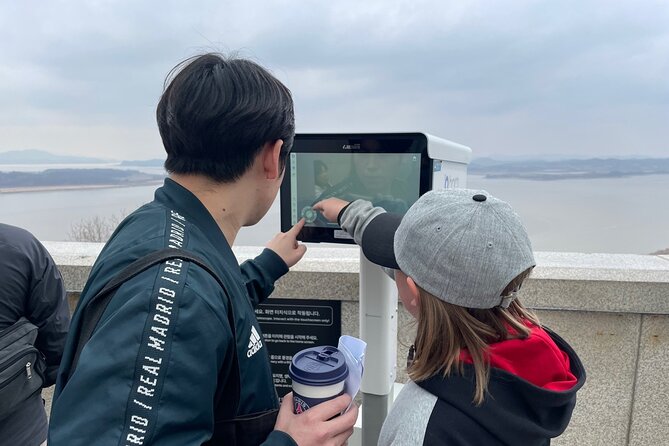
- Odusan Unification Tower views of North Korean villages about 2 km away with binocular-style looking
- Imjingak Pyeonghoa-Nuri Park and the Bridge of Freedom stop for refugee-history context
Jun and the DMZ: why this tour hits harder than bus stops
If you’re heading to the DMZ from Seoul, you have two choices: a big-group circuit of viewpoints, or a day that actually explains why those viewpoints matter. This one leans hard into the second option.
At the center of it is Jun tours and Jun himself. He’s not there to read facts off a card. He’s there to connect the place to lived consequences. That matters because DMZ sightseeing can otherwise turn into a checklist: tower, park, station. With Jun, the day becomes a story you can match to the scenery.
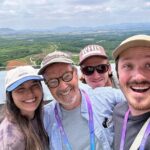
And the group size helps. With a maximum of 4 travelers, you’re not fighting for time, translation, or attention. The atmosphere stays more like a serious conversation on the road than a guided scramble. That’s a big deal for something as emotional as this.
You can also read our reviews of more private tours in Seoul
Price and logistics: what $150 buys you (and what it doesn’t)
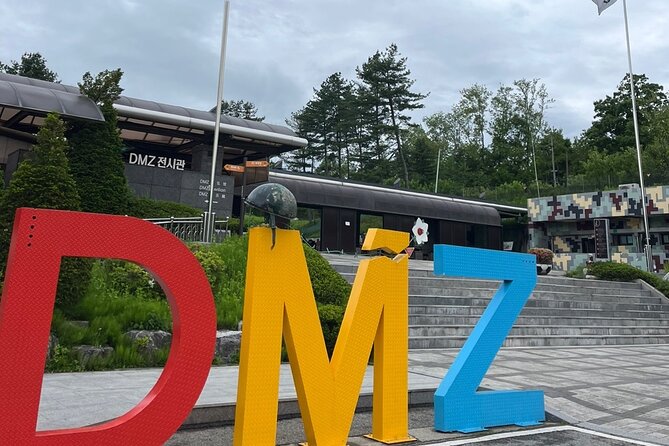
The price is $150 per person for a 7 to 8 hour private-style DMZ experience. It’s not the cheapest way to get to the border area, but it includes the things that often get “nickel-and-dimed” on other outings.
What’s included:
- Hotel pickup
- Transport to the DMZ sites
- Lunch (North Korean food)
- All admission fees
- A mobile ticket
What’s not included:
- Travel insurance
- Hotel drop-off (you’re dropped off at Hapjeong Station instead)
- Any meals beyond the included lunch (and again: no vegetarian option)
That drop-off detail is worth noting. You’ll finish at Hapjeong Station with quick access to central Seoul, including Itaewon and Yongsan. If you were hoping to return to your hotel, set your expectations a bit differently.
Also, the tour starts at 10:30 am. That early start helps you spend the day on-site and not in traffic, which is good news in Seoul.
Hotel pickup and the small-group pace you’ll feel immediately
This tour is designed so you don’t burn energy on logistics. Pickup is offered directly from your hotel, and transport is handled for you. That means less hunting for meeting points, less standing around, and more time for the actual DMZ context.
The maximum group size is 4 travelers, which is the “sweet spot” for a story-heavy day. You get a real rhythm: stop, look, listen, ask questions, move on. It’s not rushed, and it’s not slow either.
One wrinkle: if there are 2 or fewer participants, up to 2 additional guests may join. So if you’re booking solo or as a couple for maximum quiet, you still have a small group, but you might not be totally by yourselves.
Lunch in Goyang: North Korean food, served with real context
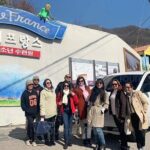
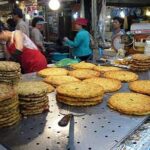
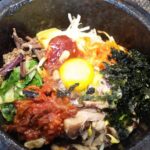
The day begins with a lunch stop in Goyang at a North Korean local food restaurant operated by a North Korean defector. This isn’t just a meal break. It’s part of the learning arc.
Food works because it’s concrete. When Jun connects a dish to daily life in North Korea and to what changes after leaving, you stop thinking only in politics and start thinking in routines—what people eat, what they miss, and what life becomes after escape.
The practical side:
- Lunch is included
- There is no vegetarian option, so if you avoid meat or fish, this is the one part of the day that could derail you
If you’re not vegetarian, this lunch stop can be a standout because it’s tied to a person, not just a culture label.
Odusan Unification Tower: village views plus propaganda context
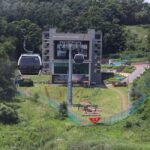
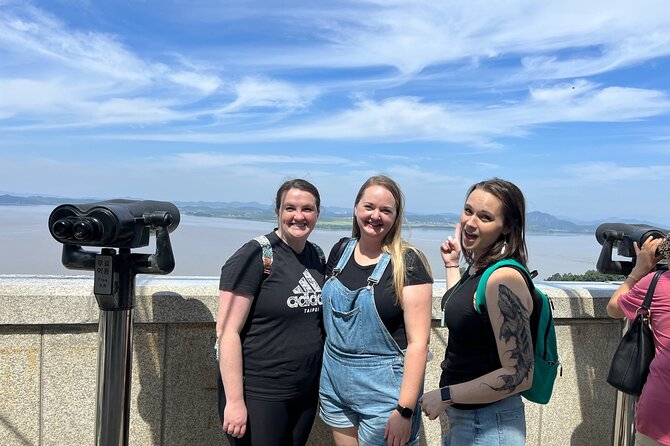
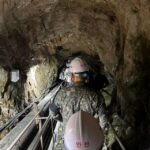
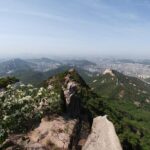
After lunch, the tour moves to Odusan Unification Tower, where you get access to views of real North Korean villages about 2 km away. You’ll use binoculars to spot what you can, and Jun explains what you’re seeing, including propaganda buildings erected by the North Korean government.
This stop is one of those places where the “view” is only half the experience. From far enough away, you can’t read signs like a movie. What you can do is recognize patterns: the layout, the presence of constructed structures, and the stark reminder of separation at human scale.
Jun’s job here is to prevent the classic DMZ problem: treating everything as scenery. With his explanation, the visuals connect to systems—why those buildings exist, why they’re positioned as they are, and what daily life looks like on the other side.
A good tip for this kind of stop is mental, not technical. Don’t obsess over what you can’t identify. Focus on the conversation that turns the distance into meaning.
You can also read our reviews of more tours and experiences in Seoul
Imjingak Pyeonghoa-Nuri Park: refugees, memory, and the Bridge of Freedom
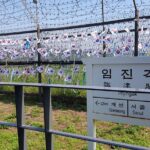
Next is Imjingak Pyeonghoa-Nuri Park, created for refugees who fled North Korea during the Korean War. You’ll also see the Bridge of Freedom, which was temporarily constructed by the U.S. Army Corps of Engineers in 1953 to release 12,773 people.
This is the emotional anchor stop in the itinerary. It shifts the day from “border mechanics” to “human movement.” Instead of only thinking about where the line is, you’re reminded why that line mattered to people trying to live.
It’s also a breather from the heavy tower viewing. You get time to stand in a place designed for remembrance and talk about how the DMZ is not just a border, but a long-term consequence of conflict and displacement.
Hapjeong Station drop-off: how to plan your return
The tour ends at Hapjeong Station (drop-off). The good news is you’re not stranded in a hard-to-reach zone. Hapjeong has quick access to central Seoul areas like Itaewon and Yongsan, so getting back to where you’re staying is generally straightforward.
Plan for a late-afternoon end. With a 7 to 8 hour day starting at 10:30 am, you’ll want your evening plans to be flexible.
Rules that matter: filming limits and staying respectful
You won’t have total freedom to record. Filming or streaming of personal information is not allowed. That rule is easy to follow: keep your phone for yourself, and focus on what Jun is sharing.
Also, the tour requires good weather. If it’s canceled due to poor conditions, you’ll be offered a different date or a full refund.
Is this DMZ tour worth $150 compared to the cheaper options?
Here’s how I think about value for a DMZ day like this.
You’re paying for:
- Private-style interaction with Jun (max 4 travelers)
- Hotel pickup and covered transport
- Included admissions
- Lunch at a defector-operated restaurant
- Most importantly, a defector-led narrative matched to the specific sites you visit
If your goal is just to tick off classic DMZ viewpoints, a low-cost group tour may satisfy the checklist. But if your goal is understanding, this is the more efficient choice because the explanation is built into every stop.
And yes, it costs more than many group options. The question is whether you can put a price on first-hand context. For many people, that’s the whole point of the DMZ in the first place.
Who should book this tour (and who should skip)
This tour is a strong fit if you:
- Want a DMZ visit with a personal story tied to real locations
- Prefer a smaller group and more room for questions
- Care about understanding the human stakes, not only the architecture
It might not be your best match if you:
- Need a vegetarian lunch option (none is offered)
- Want a purely factual, neutral sightseeing schedule with minimal emotion
Should you book? My straight answer
I’d book this tour if you’re going to the DMZ once and want the day to mean something beyond photos. The combination of Jun’s perspective, the small-group pace, and the included defector-run lunch makes it feel like more than “transport to the border.”
If you’re strict about dietary needs, sort that first. If weather is questionable, be flexible. Otherwise, this is one of the most direct ways to understand why the DMZ exists and how it affects real lives on both sides.
FAQ
What time does the DMZ tour start?
The start time is 10:30 am.
How long is the tour?
It runs about 7 to 8 hours.
Is hotel pickup included?
Yes. Hotel pickup is included.
Do I get transportation to the DMZ?
Yes. Transport is included.
Is lunch included, and what type is it?
Lunch is included, and it’s North Korean food served at a restaurant in Goyang operated by a North Korean defector.
Is there a vegetarian meal option?
No vegetarian option is listed.
How many people are in the group?
The tour has a maximum of 4 travelers. If there are 2 or fewer participants, up to 2 additional guests may join.
Will I have to pay for admissions?
No. All admission fees are included.
Where does the tour end?
You’re dropped off at Hapjeong Station, which gives easy access to central Seoul areas such as Itaewon and Yongsan.
What if the weather is bad?
The experience requires good weather. If it’s canceled due to poor weather, you’ll be offered a different date or a full refund.
Is there free cancellation?
Yes. You can cancel up to 24 hours in advance for a full refund. If you cancel less than 24 hours before the start time, it won’t be refunded.