REVIEW · SEOUL
Korean Cooking at Seoul Cooking Club
Book on Viator →Operated by Premium Cooking Class @ Seoul Cooking Club · Bookable on Viator
Korean food tastes better with your hands. At Seoul Cooking Club in Jongno, you spend about 2.5 hours making a three-course Korean meal and sampling around ten different flavors, then sit down together to eat what you cooked. The class is limited to 12 people, and they can adjust for vegan and halal diets.
What I like most is that you get a real “learn-by-doing” payoff: you’re busy in the kitchen, then you actually eat a lot. I also love the steady, step-by-step teaching style, with instructors like Olivia, Elly, Sally, Ally, and Grace called out by name in different sessions. One possible drawback: some parts can feel more like guided assembly than totally raw, scratch cooking, especially if you were hoping to handle every ingredient from start to finish.
In This Review
- Key highlights you’ll feel right away
- Where you cook in Jongno: finding Seoul Cooking Club fast
- The 2.5-hour class flow: brunch, lunch, or dinner, then dessert
- What you actually make: the Korean classics and the “why” behind them
- Dietary options are not an afterthought here
- Small-group teaching: how instructors keep it fun and doable
- Food volume, take-home leftovers, and the cookbook payoff
- Price and value at $109: what you’re paying for
- Who should book this class, and who might not
- Should you book Korean Cooking at Seoul Cooking Club?
- FAQ
- How long is Korean Cooking at Seoul Cooking Club?
- What is the price per person?
- Where do I meet the group?
- Is there a group size limit?
- What kind of meal do I cook?
- Can the class accommodate dietary preferences like vegan or halal?
- Do I get to eat what I cook?
- What do I receive besides the meal?
- What is the cancellation policy?
Key highlights you’ll feel right away
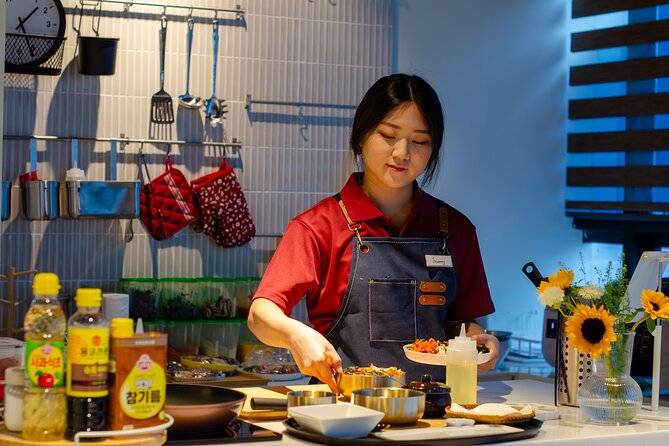
- A small group (max 12) means you get real attention, not just a demo.
- Ten Korean flavors in one session helps you taste the range, not just one dish.
- Vegan, halal, gluten-free and more are planned into the menu choices.
- You eat what you make across a brunch, lunch, or dinner format.
- Take-home items like a cookbook (and often leftovers) make the lesson stick.
Where you cook in Jongno: finding Seoul Cooking Club fast
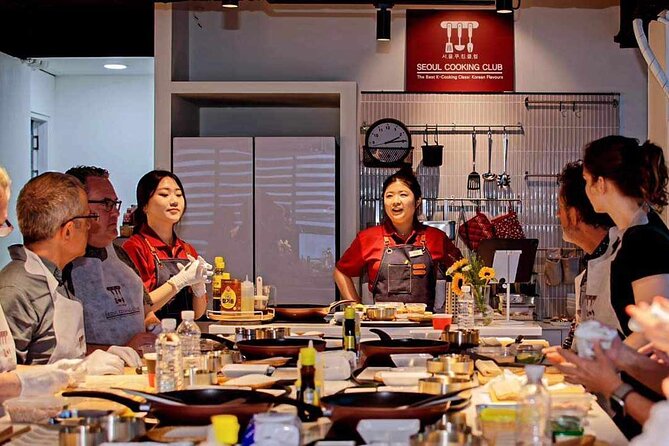
Your meeting point is at 71-6 Jongno 2(i)-ga, Jongno District, Seoul. It’s set up for easy transit access, and the activity ends back at the same spot, so you don’t need to plan a complicated end-of-night route.
This location matters because you’re not spending your class time bouncing across town. You can show up, get settled quickly, and use the full 2.5 hours for cooking, tasting, and eating. Also, if you’re juggling a busy Seoul schedule, being in central Jongno makes it simpler to fit this in before or after other plans.
You’ll use a mobile ticket, and confirmation happens at booking time. If you’re bringing a service animal, the class allows it, which is a practical plus for travelers who need that support.
You can also read our reviews of more cooking classes in Seoul
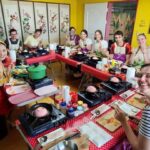
The 2.5-hour class flow: brunch, lunch, or dinner, then dessert
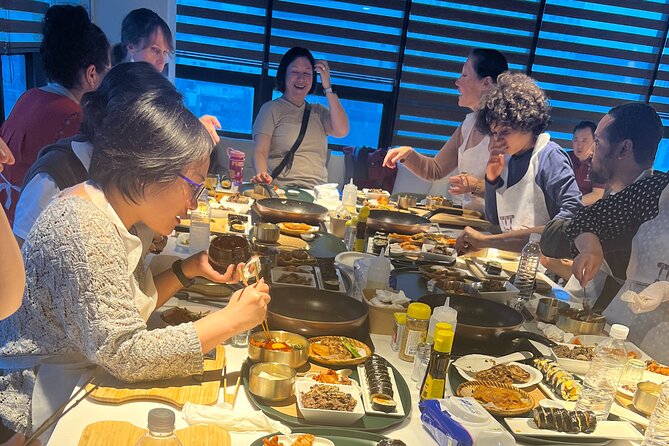
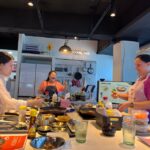
This is a hands-on class built around a full meal experience. You’ll participate in cooking while learning how each dish comes together, then you’ll taste multiple dishes that you and the group prepare.
Here’s the rhythm you can expect:
- Welcome and drinks: Many sessions include water and tea, and you may be offered a Korean sweet punch called sujeonggwa (ginger-cinnamon drink).
- Three-course cooking: The format is designed around starters/appetizers, main courses, and a dessert course.
- Taste the flavor lineup: Even when you’re cooking one part, you’ll also get to sample the broader set of dishes so you understand the range—savory plus sweet.
- Dessert and shared eating: After the hands-on work, you sit down to enjoy what you made. That shared meal time is a big part of the fun and the social vibe.
In a few reviews, people mention the class doesn’t feel like nonstop standing. There are moments where you can sit and eat while others finish, which keeps the pace comfortable even when the food volume is high.
What you actually make: the Korean classics and the “why” behind them
The menu is built around Korean staples, and you can expect a mix of popular dishes and variations. The cooking club style is practical: you’re not only copying a recipe, you’re learning the logic that makes the dish taste right.
Across sessions, you might see familiar names like:
- Bulgogi (marinated beef, often with a sweet-salty balance)
- Bibimbap (a rice bowl with toppings and a gochujang-style vibe)
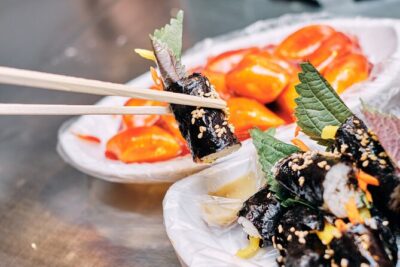
- Gimbap (Korean-style seaweed rolls)
- Japchae (stir-fried glass noodles)
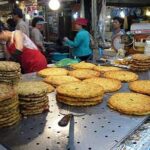
- Jeon (savory Korean pancakes, sometimes in multiple varieties—some sessions mention several types)
Several people also call out dishes like kimchi pancake and multiple jeon types. That matters because jeon is a great training ground: once you understand batter thickness and pan timing, you get a feel for how Korean kitchens manage texture.
What’s especially useful is how instructors explain foundations of flavor. Reviews mention teachers breaking down steps clearly and giving tips on ingredients and technique—things that help you cook more confidently at home. If you’ve ever stared at Korean food menus and wondered why one dish tastes different from another, this class is designed to make those differences make sense.
Dietary options are not an afterthought here
If you’re traveling with dietary needs, this is one of the main reasons people book again. The class states it can cater to a wide range of diets, including:
- Vegan
- Vegetarian
- Pescatarian
- Gluten-free
- Halal
That means you’re not stuck with a sad plate of plain rice and hope. You should expect the menu choices to be adjusted, and the class aims to keep everyone included in the full tasting and three-course structure.
From a practical standpoint, this is big value. A lot of cooking classes say they can accommodate. This one is explicitly built for dietary preferences, so you can plan confidently rather than guessing what will be possible once you arrive.
If you avoid pork or beef, or have specific allergy needs, it’s worth noting that instructors have been praised for accommodating restrictions like no beef/pork and peanut allergies. Still, you should confirm your needs at booking so the kitchen can prep appropriately.
Small-group teaching: how instructors keep it fun and doable
The class size caps at 12 travelers, and that shows in how the teaching works. You’re not just watching someone cook from across the room—you’re guided through steps, with time to ask questions and taste.
Different instructors are highlighted across bookings, including Olivia, Elly, Sally, Ally, and Grace. The consistent theme is how they keep the process clear and encouraging, especially for people who don’t cook often.
Two teaching strengths show up repeatedly:
- Clear step-by-step guidance: You get directions that make technique feel manageable, not intimidating.
- Interactive tasting and adjustment: You’re encouraged to taste and adjust as you go, which helps you learn flavor balance rather than memorizing exact measurements.
One caution, based on feedback: if you want a class where you do everything from scratch—cut, grind, prep, and cook every component—you might find parts of the process closer to guided assembly. Some ingredients may be prepped or precooked to keep the timing on track for a full meal. If you mainly want to learn Korean seasoning, cooking methods, and how dishes should come together, it’s still a strong fit.






Food volume, take-home leftovers, and the cookbook payoff
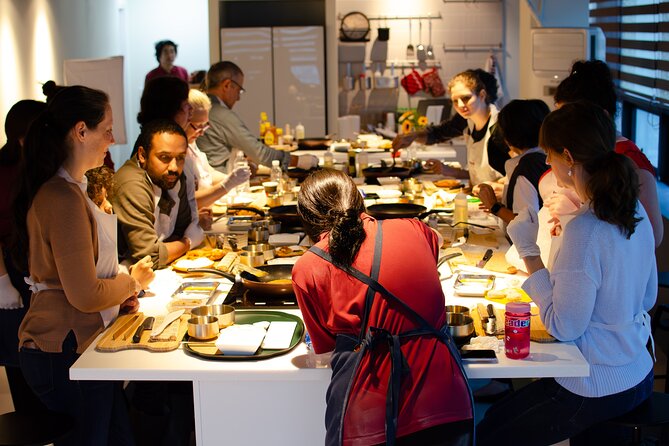
The biggest practical win is how much food you get. People consistently mention the portions are large enough that many bring leftovers home.
That’s not just about getting full. It changes the value of the class because you’re not only paying for an experience. You’re also getting a real dinner—or two—out of it.
You’ll also leave with a cookbook as a souvenir. Several reviews mention this specifically, and it’s a smart extra because Korean home cooking often comes down to repeatable steps and sauce/topping ratios. The cookbook helps you turn your memory of what you made into something you can actually recreate.
Some sessions also include a tote bag along with the cookbook, which is a small but friendly bonus when you’re sightseeing and want a useful carry.
Price and value at $109: what you’re paying for
At $109 per person for about 2 hours 30 minutes, the key question is value. Here’s what makes this one feel worth it for many people:
- A full, structured meal experience (three courses plus tasting around ten flavors)
- Hands-on instruction with a small group (max 12)
- Dietary accommodations built into the class format
- Take-home support, especially the cookbook
- Lots of food, often with leftovers
If you compare this to paying for a meal and then separately taking a cooking lesson, you’re essentially bundling both. You’re also getting feedback on taste and technique, which a restaurant meal won’t provide. The class is designed so you leave with both a memory and repeatable skills.
The one thing to weigh is your cooking expectation level. If you’re a confident home cook wanting intense prep work, you may wish for more hands-on ingredient processing. If you want a guided, delicious way to learn Korean classics, the price aligns well with the outcome: full plates, multiple dishes, and tools to cook again later.
Who should book this class, and who might not
This is a great fit if you:
- Want a first taste of Korean cooking without needing special equipment
- Like learning by doing and want a group class with attention
- Have dietary needs and need more than a quick substitution
- Want food you can recreate at home (cookbook help plus leftovers)
You might consider a different type of class if you:
- Are looking for a session that starts with every ingredient raw and uncut
- Prefer classes that focus mainly on one dish instead of several across a menu
For solo travelers, couples, or families, it also works because you eat together and end with a satisfying meal, not just a snack-sized sample.
Should you book Korean Cooking at Seoul Cooking Club?
If your goal is to learn Korean cooking in a way that feels friendly, structured, and actually delicious, I’d book it. The standout reasons are the small group size, the broad flavor menu (around ten flavors), and the clear support for vegan and halal plus other dietary needs.
One last practical tip: don’t show up hungry in the sense of expecting to snack your way through Seoul. Come ready to cook and then eat a lot. The class is built for that, and it’s part of why people leave full, satisfied, and with more confidence in Korean flavors than they started with.
FAQ
How long is Korean Cooking at Seoul Cooking Club?
The class lasts about 2 hours 30 minutes.
What is the price per person?
It is $109.00 per person.
Where do I meet the group?
The meeting point is 71-6 Jongno 2(i)-ga, Jongno District, Seoul, South Korea.
Is there a group size limit?
Yes. The class has a maximum of 12 travelers.
What kind of meal do I cook?
You’ll make a three-course Korean meal and taste multiple Korean flavors, including appetizers, main courses, and dessert. Sessions are offered as brunch, lunch, or dinner.
Can the class accommodate dietary preferences like vegan or halal?
Yes. The experience offers vegan, vegetarian, pescatarian, gluten-free, and halal options.
Do I get to eat what I cook?
Yes. The experience includes tasting and sharing the food you prepare.
What do I receive besides the meal?
You receive a cookbook as a souvenir. Some sessions also include a tote bag.
What is the cancellation policy?
Free cancellation is available up to 24 hours in advance for a full refund. If you cancel within 24 hours of the start time, the amount paid is not refunded.