REVIEW · SEOUL
Private tour guide service in Seoul, Korea
Book on Viator →Operated by Denny Yu · Bookable on Viator
A perfect day in Seoul starts with someone else handling the logistics. This private tour puts you in the driver’s seat for your itinerary, then delivers it with hotel pickup and an air-conditioned minivan. I like that it’s truly personal: you can choose where to go, how long to stay, and your English-speaking guide gives hands-on context the whole day.
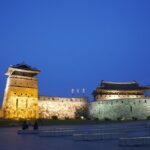
There’s also a smart mix of stops: palace-era Korea at Gyeongbokgung, shopping and craft streets in Insadong and Namdaemun, and a calmer reset at places like Jogyesa Temple and Cheonggyecheon Stream. One thing to consider is timing: Royal Palace entry is not included, so you’ll want to budget extra for the ₩3,000 per person ticket.
In This Review
- Key takeaways before you go
- A Private Seoul Day You Can Actually Shape
- Getting Picked Up and Moving Efficiently
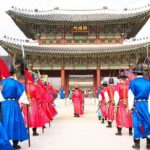
- Gyeongbokgung Palace: Big Joseon-Era Context Without the Guesswork
- Insadong for Antiques and Side Streets
- Namdaemun Market: One of Seoul’s Oldest Shopping Workhorses
- Jogyesa Temple: A Quiet Reset With Real Buddhism Context
- Cheonggyecheon Stream: A Long Stroll Through Downtown Seoul
- Bukchon Hanok Village: Traditional Houses and the Joseon Neighborhood Feel
- Myeongdong Shopping Street: Finish With Seoul’s Modern Retail Energy
- Price and Value: When $450 Makes Sense
- Who This Private Tour Fits Best
- Should You Book This Seoul Private Day?
- FAQ
- How much is the tour, and how many people can join?
- How long is the tour?
- Is hotel pickup included?
- What kind of transportation do you use?
- Is the tour admission-free at all stops?
- Will I get a mobile ticket?
- Does this tour include a private guide?
- Can I cancel for a full refund?
Key takeaways before you go
- Private, group-up-to-8 pricing means the day can be good value if you’re splitting the cost with a small crew
- Tailor-made timing lets you slow down at Insadong or speed through markets without breaking the flow
- Denny Yu as your guide brings responsive planning and flexible pacing
- A full-day minivan plan cuts down on transit stress and helps you hit multiple neighborhoods in one day
- Most major sights are admission-free except Gyeongbokgung Palace, which keeps costs manageable
A Private Seoul Day You Can Actually Shape
A full day in Seoul can be a lot, especially if you’re trying to fit palaces, temples, streams, and shopping into a single plan. This is one of those tours where you don’t just get a fixed route. You get a private guide and the chance to pick where you want to go and how long to stay at each stop.
That personalization matters more than it sounds. In Seoul, neighborhoods can feel like different cities. One block might be art and antiques, the next turns into street food and bargain stalls, and then—suddenly—you’re walking beside a historic temple or through a restored urban stream. Having an itinerary you can adjust helps you match the day to your energy level, not just someone else’s schedule.
It also helps that you ride in an air-conditioned minivan with hotel transfers. That’s not just comfort; it’s time saved. You spend less effort figuring out routes and more time using your day well.
The tour has a clear, practical rhythm too: about 7 to 8 hours, with defined time windows at each stop. That pacing keeps the day from turning into a never-ending shuffle, even though you’re covering major sights.
You can also read our reviews of more guided tours in Seoul
Getting Picked Up and Moving Efficiently
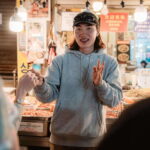
Hotel pickup is included, and you travel by air-conditioned minivan. This combo is a big deal in a city like Seoul, where public transit is excellent but connections can still eat up your day—especially if you’re carrying shopping bags or navigating between distant neighborhoods.
Because it’s private, you’re not dealing with a group that has to wait on everyone else. Your guide can adjust the order and timing to match what you want most. If you want extra time at Insadong, for example, your guide can help you make that call within the overall plan.
One small practical note: the tour is near public transportation, which is useful if you need flexibility during the day. But since pickup and transfers are part of the experience, you’ll likely rely on the car much of the time.
For comfort, think like this: you’ll be walking outdoors and through busy areas at multiple points. Wear shoes that can handle uneven pavement and crowded sidewalks. Bring a light layer—temperatures can swing, and you’ll be moving between outdoor spaces and a cool vehicle.
Gyeongbokgung Palace: Big Joseon-Era Context Without the Guesswork
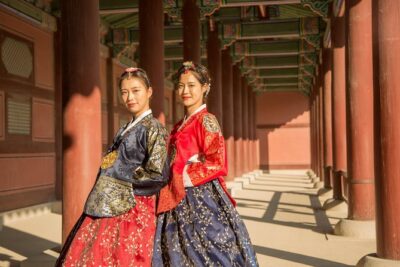
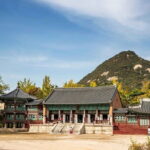
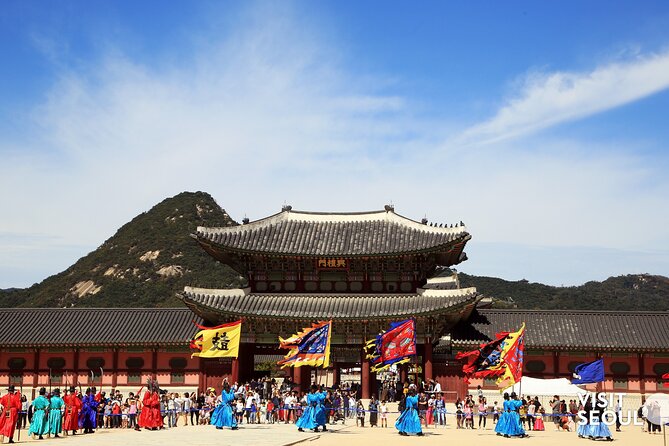
Gyeongbokgung Palace is your first major stop, and it’s a strong anchor for understanding Seoul. This palace sits north of Gwanghwamun Square and was built three years after the Joseon dynasty was founded. It served as the main palace, so it’s the kind of place where explanations help more than you’d think.
In your time there (about 50 minutes), your guide will explain the Joseon dynasty in a way that connects the palace to the bigger story. Even if you’ve read about Korea’s dynastic past, a guided framing can make the architecture and layout feel less like a random collection of buildings and more like a designed system.
A key detail: admission isn’t included for Gyeongbokgung Palace. The entrance fee is ₩3,000 per person. That’s a manageable add-on, but it’s the one cost you’ll definitely want to plan for ahead of time.
How I’d use your time there: don’t rush only the main gates and courtyards. If you can, pause and let your guide point out what each area represents. Palace grounds can look symmetrical, but their function changes. Getting those cues is what turns a walk into real understanding.
Insadong for Antiques and Side Streets
Insadong is where Seoul gets artsy and collectible. Your time here is about 30 minutes, and you’ll be in the Jongno-gu district, centered on Insadong-gil and the alley streets branching off from it.
What I like about starting here right after the palace stop is the contrast. You go from royal and formal Korea to a neighborhood built for browsing—handicrafts, traditional-style goods, and antiques. It’s the kind of place where your guide’s direction helps you avoid wasting time wandering in the wrong alleys.
Because shopping is the point, you can treat this as a “taste and trend-check” stop rather than a must-buy stop. Even if you don’t plan to purchase much, Insadong helps you understand what modern Seoul considers traditional and valuable.
Tip for your energy: keep your shopping expectations realistic. With only about half an hour, you’ll enjoy it more if you decide in advance what you’re trying to find—small souvenirs, paper goods, or antiques. Otherwise it’s easy to get decision fatigue.
Namdaemun Market: One of Seoul’s Oldest Shopping Workhorses
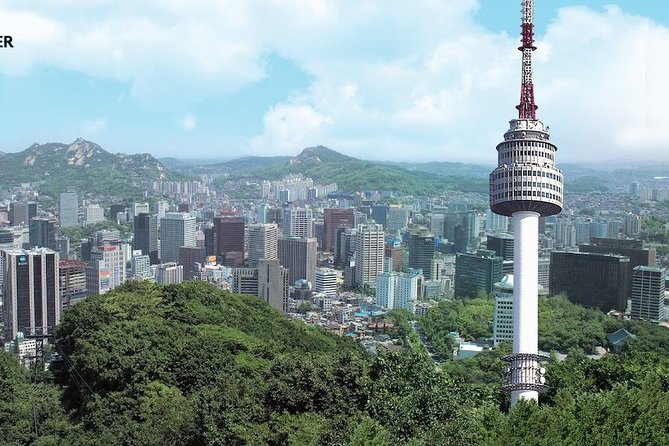
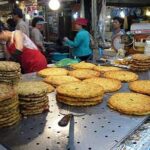
Next up is Namdaemun Market, with about an hour on the ground. This market is one of South Korea’s oldest continually running markets and also one of the largest retail markets in Seoul. That combination matters. You’re not only shopping—you’re seeing how a long-running marketplace keeps functioning through generations.
This stop is admission-free, which helps you spend your money on stuff you actually want. Namdaemun can also be a good place to pick up practical items and small edible snacks without making the day overly complicated.
What to expect in a good way: markets like this are sensory. You’ll see stalls, packaging, and signage meant for quick browsing. A guide is useful here because it helps you move efficiently, spot what’s worth your time, and understand what different sections tend to focus on.
One consideration: if you’re sensitive to crowds, Namdaemun will feel lively. A private guide gives you the option to slow down, step aside, or adjust pacing so you can still enjoy it rather than just survive it.
You can also read our reviews of more private tours in Seoul

Jogyesa Temple: A Quiet Reset With Real Buddhism Context
Jogyesa Temple is your Buddhism stop, and it’s scheduled for about 30 minutes. It’s the chief temple of the Jogye Order of Korean Buddhism, and it became so in 1936. It also plays a leading role in the current state of Seon Buddhism in South Korea.
That’s not just trivia. If your guide shares the context—who runs the tradition, what Seon is, and why Jogyesa matters—you’ll walk away with a clearer sense of what the temple represents in present-day Korean religious life.
This stop is admission-free, which is great because it gives you a low-cost calm break in the middle of shopping-heavy areas. You’ll likely appreciate it most if you step away from the shopping mindset and slow your pace a little.
Practical approach: use this stop like a reset button. Don’t try to race through photos. Take a moment to read what you can and let the guide connect the dots between what you see and what it means.
Cheonggyecheon Stream: A Long Stroll Through Downtown Seoul
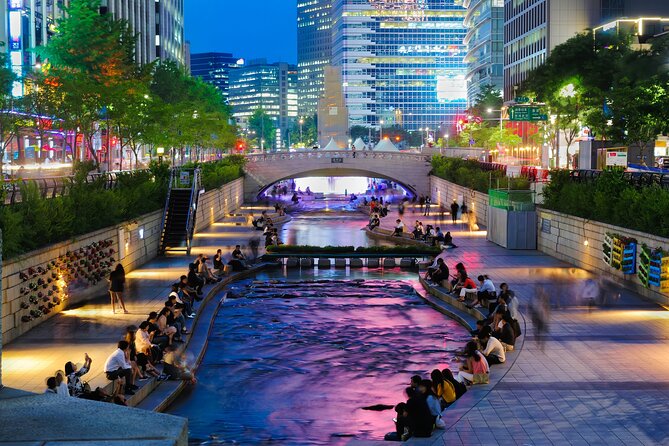
After temples and markets, you get a breather at Cheonggyecheon Stream. It’s an 8.4 km (5.2 mi) creek that flows through downtown Seoul, running west to east and meeting Jungnangcheon, which connects to the Han River. Your time here is about 30 minutes.
This is one of those Seoul experiences that can change your mood without you doing anything special. A stream corridor creates a different pace: less shopping pressure, more walking rhythm.
Your guide can also help you interpret what you’re looking at. Urban streams can feel like nature, but they’re shaped by city planning. Getting a basic framework makes the scene more meaningful than just a pretty walkway.
How I’d use the time: wear comfortable shoes and keep your camera ready, but don’t force the perfect shot every minute. In 30 minutes, you’re better off enjoying the flow of the area than sprinting for angles.
Bukchon Hanok Village: Traditional Houses and the Joseon Neighborhood Feel
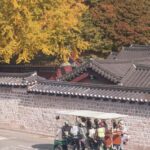
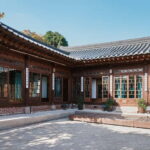
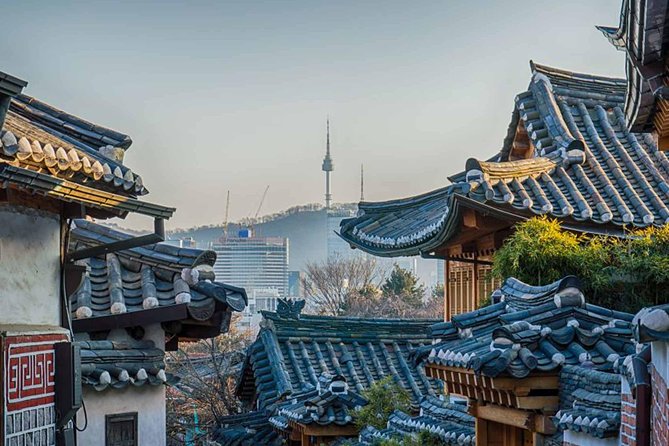
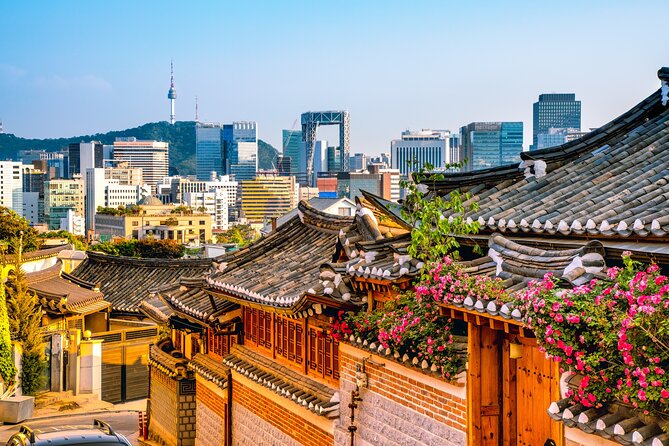
Bukchon Hanok Village is next, with about 50 minutes. This area is home to hundreds of traditional houses called hanok that date back to the Joseon dynasty. Bukchon literally translates to northern village, named for how it fits geographically in the wider Seoul landscape.
This stop is admission-free, which means you can focus on the experience without adding ticket pressure. The key here is understanding what a hanok is and why it matters. With a guide, you’ll be less likely to treat Bukchon as only a photo stop and more likely to notice how the houses relate to their surroundings and the feel of the neighborhood.
One consideration: even without tickets, this area can be crowded in the wrong moment. Because you’re on a private plan, your guide can help you move through comfortably rather than getting stuck behind tour groups.
Practical advice: if you’re planning to buy or take home any souvenirs from this part of the day, keep your shopping for later. Bukchon is about the atmosphere. If you try to do heavy shopping there, you may lose the point.
Myeongdong Shopping Street: Finish With Seoul’s Modern Retail Energy
Myeongdong Shopping Street rounds out the day with about 40 minutes. It’s one of Seoul’s primary shopping districts, and it’s famous for high foot traffic and a mix of retail options.
This is a smart way to end because it gives you choice. If you’re craving snacks, fashion-style shopping, or last-minute souvenirs, this is where you can do it fast. If you’d rather just people-watch and soak up the energy, you can still do that without needing museum-level attention.
This stop is also admission-free, so it’s more about spending your time than spending entrance fees.
A small planning thought: by the time you reach Myeongdong, you’ll probably have bags. If you plan on buying more than a few small items, keep an eye on how much you’ll carry back to your hotel. Your guide and minivan transfers can make the end of the day less stressful.
Price and Value: When $450 Makes Sense
The tour costs $450.00 per group for up to 8 people, with a typical duration of about 7 to 8 hours. Based on that pricing structure, the math is simple: if you’re traveling solo or as a couple, it can feel pricey. But if you’re in a small group, the cost per person drops quickly.
What you’re paying for isn’t only the car. You’re paying for a private guide who can adjust your pacing and answer questions in real time. That flexibility is hard to replicate with self-guided walking. And because the itinerary includes multiple major areas—palace grounds, antiques streets, market time, a temple, a city stream, hanok village, and shopping—your guide’s help reduces wasted time.
Also, most stops are admission-free. The main exception is Gyeongbokgung Palace, with the ₩3,000 per person ticket. That means the day’s out-of-pocket costs are predictable.
One more subtle value point: this tour is commonly booked about 46 days in advance. If your dates are flexible, you might find options later. But if you’re aiming for peak weekends or limited time in Seoul, planning earlier makes sense.
Who This Private Tour Fits Best
This tour fits best if you want a full day with control. You’ll like it if you:
- Prefer a private, English-speaking guide over self-guided guessing
- Want to cover multiple neighborhoods without spending half the day on transit
- Have moderate walking ability and can handle outdoor stops across the day
- Enjoy both cultural stops and shopping areas, not just one side
It might be less ideal if you have only a tiny attention span for guided explanations and you’d rather roam freely. But even then, the private setup can still help you move faster and choose what to skip.
Should You Book This Seoul Private Day?
I’d book this if your goal is a smooth, well-paced Seoul sampler that you can shape. The standout is the guide experience—Denny Yu specifically has a track record for being responsive to requests and flexible with timing, which is exactly what you want when your interests shift mid-day.
You should think twice only if budget is your top priority and you don’t have a group to split the cost. Also, remember Gyeongbokgung Palace entry isn’t included, so plan on the ₩3,000 per person ticket.
If you want a practical way to see palaces, temples, markets, traditional houses, and shopping in one day—with a guide driving the context and the pacing—this is a strong choice.
FAQ
How much is the tour, and how many people can join?
It’s $450.00 per group for up to 8 people.
How long is the tour?
The tour runs about 7 to 8 hours.
Is hotel pickup included?
Yes, hotel pickup and transfers are included.
What kind of transportation do you use?
You ride in an air-conditioned minivan, with tolls and parking fees included.
Is the tour admission-free at all stops?
Most stops are admission-free, but Gyeongbokgung Palace has an entrance fee of ₩3,000 per person.
Will I get a mobile ticket?
Mobile ticket delivery is listed as a feature.
Does this tour include a private guide?
Yes. It’s a private tour, so only your group participates, and you have your own guide for the day.
Can I cancel for a full refund?
Yes. Free cancellation is available up to 24 hours before the experience starts for a full refund.