REVIEW · SEOUL
Korean Cooking Class in Seoul with a Professional Chef
Book on Viator →Operated by Traveling Spoon · Bookable on Viator
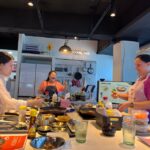
Cooking in a Seoul home beats restaurant meals. You get a private Korean cooking class in central Seoul, where the focus is on what you actually touch—fresh ingredients, real technique, and a sit-down meal you made yourself. You may also add a walk through Mangwon Market to pick up seasonal flavors and snack along the way.
I especially like the hands-on setup: you’re guided through classic dishes like bulgogi and bibimbap, and the goal is confidence, not just watching. I also like that the meal is part of the experience—soup, kimchi, and a glass of soju—so you finish by tasting what you cooked with Korean hospitality.
One thing to consider: there’s no hotel pickup, and the class starts from a specific address in Mapo-gu. Also, the exact menu can change with the season, so you should plan for some variation in what you make.
In This Review
- Key takeaways before you book
- A Seoul home kitchen in Mapo-gu: what the 3-hour rhythm feels like
- Mangwon Market walk: picking ingredients and tasting Korean street snacks
- Bulgogi, bibimbap, and kimchi basics: the hands-on cooking part that sticks
- Sit-down meal with soup, kimchi, and a glass of soju
- Price and value: is $122 worth it in Seoul?
- Who should book this class, and who should skip it
- Practical tips that make the experience easier
- Should you book this Korean cooking class in Seoul?
- FAQ
- Where does the cooking class meet?
- How long is the class?
- Is this a private experience?
- What dishes will I prepare?
- Is Mangwon Market included?
- Are dietary requirements accommodated?
- What is the cancellation policy?
Key takeaways before you book
- A true private class in someone’s home: you cook and eat as a small group with your host.
- Dishes with payoff: bulgogi and bibimbap are common, and you’ll eat them right away.
- Mangwon Market option: a short, practical market walk (about 30 minutes) for seasonal ingredients and a snack.
- Korean meal rhythm: soup, kimchi, and a glass of soju come with your finished cooking.
- Dietary needs can be handled: gluten free, vegetarian, and vegan options are available with advance notice.
A Seoul home kitchen in Mapo-gu: what the 3-hour rhythm feels like
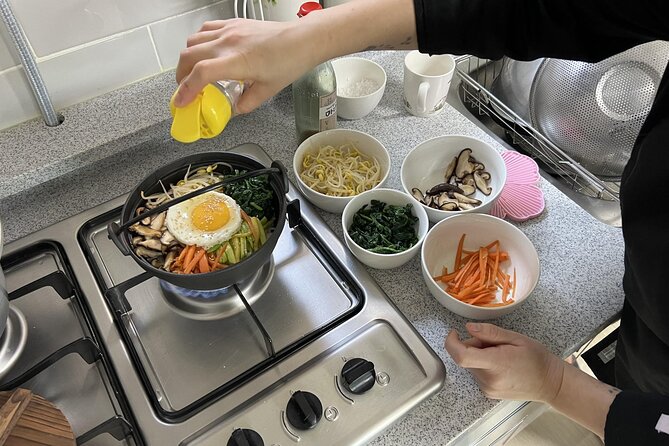
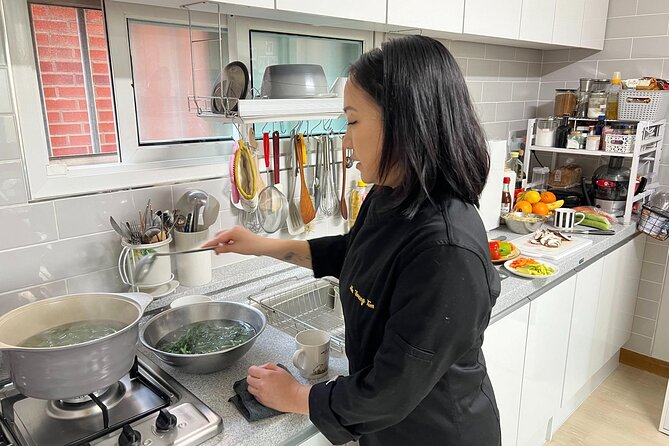
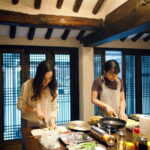
This is the kind of activity that changes your sense of Seoul. Instead of bouncing between tourist stops, you spend your time in one place that feels daily-life normal: a kitchen in central Seoul, run by your host, Na Young. Your total time is about 3 hours, and it’s built around two parts—cooking, and then eating.
The class meets at 247-111 Seogyo-dong, Mapo-gu, and it ends back at the same spot. That means you’ll want to treat this like a neighborhood experience, not a packaged shuttle day. There’s no hotel pickup, so plan to get yourself there by public transport and a short walk.
When you arrive, remember the home rule: you take off your shoes. Na Young provides indoor sandals for walking inside the house. It’s a small thing, but it’s also a quick cultural “this is how locals do it” moment, and it helps you feel comfortable right away.
Because it’s private, you won’t be squeezed into a big group schedule. The vibe is closer to a friendly lesson than a factory-style class. In past sessions, the hosts highlighted in the experience have been praised for being warm and talkative—people like Jessie and Steven show up in the feedback as standout teachers. The shared thread: you’re not left alone with recipes; you’re guided through the why and the how.
If you’re the type who likes to know what happens from the moment you step out the door, this one is clear: show up, meet your host, follow the plan, cook, then sit down together.
You can also read our reviews of more cooking classes in Seoul
Mangwon Market walk: picking ingredients and tasting Korean street snacks
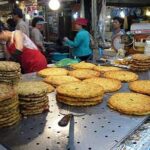
One of the smartest parts of this experience is the optional Mangwon Market stop. If you choose it, you’ll join Na Young for about 30 minutes in an indoor market setting. The market is known for fresh local produce and spicy snack options, plus prepared foods you can spot from stall to stall.
The practical benefit is that you see ingredients as ingredient people, not just as items in a grocery aisle. You’ll learn what’s in season, and why certain flavors matter for Korean cooking. That helps later when you’re cooking—because seasoning decisions feel less mysterious.
The timing also makes sense. You’re not trapped in a shopping marathon. It’s short enough to stay energetic, and close enough to the home that you can reach it on foot. The walk is described as about 10–12 minutes, so you’re getting a real neighborhood feel without losing the whole day.
And yes, you’ll sample something along the way. The experience notes a traditional snack during the market time, which is a nice bridge between “watching food culture” and “learning food culture.” It’s also a good way to figure out your own preferences before you sit down to cook.
Possible drawback? This part may not be your favorite if you want only cooking and zero wandering. But if you like food markets, this is one of the best value add-ons because the ingredients you learn about have a direct link to what ends up on your table.
Bulgogi, bibimbap, and kimchi basics: the hands-on cooking part that sticks
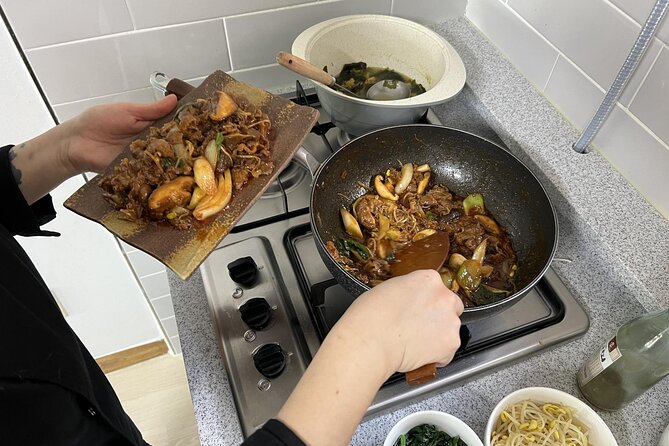
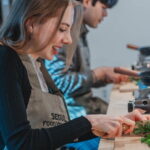
The heart of the class is the cooking itself—built around a hands-on, from-scratch approach. Your session starts in the kitchen with Na Young, and the instruction is organized to get you actively involved. Depending on the day, the class may cover a main dish and a side dish.
The two dishes you should expect to be in the mix are bulgogi and bibimbap. That’s a great pairing because they teach different sides of Korean cooking: one leans into marinated meat flavor and grilling/pan technique, while the other teaches assembly and balance—rice plus toppings plus sauce and seasoning.
There’s also kimchi in the meal. Even if you’re not making every component from scratch every time, kimchi is part of the eating experience, and it’s tied to the broader lessons about Korean flavor profiles. You’ll be introduced to how ingredients work together—especially the role of spicy, fermented, and savory elements that show up across the cuisine.
What makes this class feel genuinely useful is that you’re not just copying steps. You’re learning how to manage texture and timing. Korean cooking is often about layering flavor rather than relying on one heavy ingredient. In a home setting, that lesson lands quickly.
Menu variation is part of the deal. The experience specifically notes that the menu may change by season. That’s not a bad thing—it keeps the class tied to what’s available now—but it does mean you can’t assume the exact lineup on every date. If you have firm favorites or restrictions, tell your host at booking.
Dietary needs are supported with advance notice, including gluten free, vegetarian, and vegan options. That matters because Korean cooking can involve hidden ingredients depending on sauces and sides. Having an accommodation pathway means you won’t have to sit out the meal after you’ve cooked.
Also, practical note: this is a private experience, but it’s not a “bring a whole daycare” setup. Na Young can host only one child per experience, so if you’re traveling with kids, check that number early.
Sit-down meal with soup, kimchi, and a glass of soju
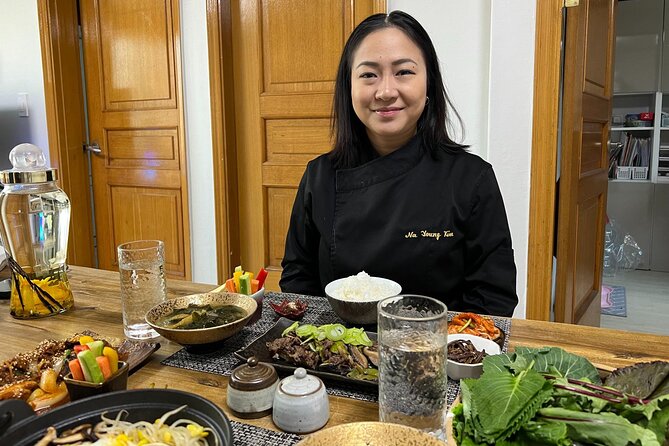
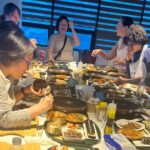
After cooking, you eat what you made. That’s the part I think most people underestimate: the lesson only really becomes real when you taste it in the same sitting. Here, the meal comes with soup and kimchi, plus a glass of soju.
Soju isn’t just a token garnish. It’s part of the Korean table culture—an easy, commonly shared drink that fits the meal’s comfort-food vibe. The experience frames it as a glass to enjoy with your traditional meal, which keeps it simple and respectful rather than turning it into a party.
What you get from sitting down with your host matters as much as the food. You’ll enjoy the meal together, and the tone in the feedback points to genuine hospitality—hosts like Jessie and Steven are described as friendly teachers and good company. You’re not rushed out the door; you have time to talk about ingredients, cooking styles, and what you’re eating.
Why this matters for you: it turns the class into a cultural interaction, not only a cooking skill. If you want Seoul that feels like real life, this is a strong path—because you learn how people talk about food in their own space.
Price and value: is $122 worth it in Seoul?
At $122 per person, this isn’t a bargain-basement activity. But it’s also not priced like a big, impersonal group tour. It’s closer to paying for a one-on-one (or small group) experience with a real kitchen setup, plus your finished meal.
Here’s what you’re paying for, in plain terms:
- Private time with your host, focused on you cooking.
- A home-cooked Korean meal, including soup, kimchi, and a glass of soju.
- The chance to learn specific dishes (often bulgogi and bibimbap).
- Potentially, Mangwon Market guided time with sampling and ingredient shopping if you select that add-on.
What you don’t get: hotel pickup and drop-off. So factor in how you’ll get yourself to the meeting point in Mapo-gu. If you’re already comfortable using public transport, that’s not a big issue. If you prefer door-to-door convenience, this is the main friction.
When I judge value, I look at “skill + meal + access.” Many activities give you one of those. This one gives you all three, and it does it in a setting you can’t replicate by yourself easily—because the whole point is having a local host explain technique, ingredients, and table style in real time.
Also, the timing tends to be in decent demand; the experience is typically booked about 52 days in advance on average. That’s a sign it’s popular with people who want something more personal than standard sightseeing.
You can also read our reviews of more tours and experiences in Seoul


Who should book this class, and who should skip it
This is a great fit if:
- You want hands-on food education rather than watching someone cook.
- You’re interested in learning how Korean flavors are built—especially dishes like bulgogi and bibimbap.
- You like neighborhood experiences, like short walks and market browsing, and you enjoy learning as you go.
- You want a meal that ends the day with something you made, not just something you bought.
You might want to think twice if:
- You strongly dislike walking short distances. The market add-on includes a 10–12 minute walk from home.
- You’re looking for major sightseeing. This is food-focused, and the schedule won’t feel like a “see Seoul” day.
- You need highly structured, fixed menus with no seasonal changes. The menu can vary, so flexibility helps.
For families, this is doable but limited: Na Young can host only one child per experience. If that matches your group size, it can be a meaningful family activity because everyone can participate in the cooking and eating.
If you have dietary restrictions, this is also a strong option because gluten free, vegetarian, and vegan arrangements are available with advance notice. That’s valuable in Seoul, where it’s easy to miss hidden ingredients without planning.
Practical tips that make the experience easier
A few small things will make the day smoother:
- Take off your shoes when you arrive. Na Young provides sandals for indoors.
- If directions are tricky, use WhatsApp or call your host for help if you’re running late. This is explicitly encouraged.
- Expect that the menu may vary by season, so don’t plan your day around a single exact dish unless it’s a top priority for you.
- Tell your host about dietary requirements ahead of time so adjustments can be made correctly.
Also, go in with a beginner mindset. You don’t need to be a “cook.” You do need to be ready to chop, stir, and ask questions. That’s where the learning happens.
Should you book this Korean cooking class in Seoul?
I’d book it if you want a Seoul experience that feels personal, practical, and food-centered. The private home setting, the hands-on teaching, and the fact that you sit down to eat what you made are a winning combo. Add Mangwon Market if you like markets and seasonal produce—it makes the cooking feel connected to real ingredients.
I’d skip it if you want a classic tour format with hotel pickup, or if you’re looking for a fixed, never-changing menu. But if you’re excited by Korean flavors and want the kind of lesson that sticks beyond the day, this is a smart choice.
FAQ
Where does the cooking class meet?
The meeting point is 247-111 Seogyo-dong, Mapo-gu, Seoul, South Korea. The activity ends back at the meeting point.
How long is the class?
The duration is about 3 hours (approx.).
Is this a private experience?
Yes. It’s listed as a private tour/activity, and only your group participates.
What dishes will I prepare?
You’ll prepare traditional Korean dishes from scratch, and bulgogi and bibimbap are specifically mentioned. The exact menu can vary by season, and you may also prepare a side dish.
Is Mangwon Market included?
Mangwon Market is included only if you select the market tour. If selected, you’ll get a guided tour of the market for about 30 minutes.
Are dietary requirements accommodated?
Yes. Gluten free, vegetarian, and vegan diets are available if you advise at time of booking.
What is the cancellation policy?
The cancellation policy states it is non-refundable and cannot be changed. The experience description also says they’re happy to offer a 48-hour cancellation instead, so it’s worth confirming which option applies to your booking.